
Author: aluna Analytics | Date: 30 April 2026 | Category: Market Intelligence
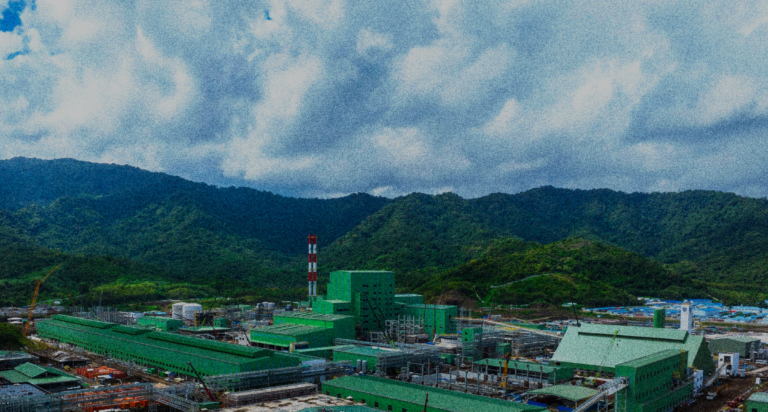
PT TBS Energi Utama Tbk ($TOBA) presents one of the most profound and structurally complex corporate transformations currently observable within the Southeast Asian equity markets. Historically tethered to the highly cyclical, carbon-intensive economics of thermal coal mining and coal-fired power generation, the enterprise is in the advanced stages of systematically dismantling its legacy operations. In their place, management is aggressively constructing a structurally resilient, green-infrastructure conglomerate anchored by waste management, renewable energy, and electric mobility. Guided by the overarching “TBS2030” strategic roadmap, this metamorphosis is not merely an exercise in environmental, social, and governance compliance; it represents a fundamental rewiring of capital allocation frameworks, earnings quality, and long-term risk profiles. By the close of the first quarter of 2026, the financial evidence demonstrates that the severe friction costs associated with this transition have largely been absorbed, leaving behind an enterprise with a radically altered unit economic structure. The core thesis surrounding the current financial condition revolves around the massive dislocation between statutory accounting figures and underlying cash generation capabilities. A superficial reading of the most recent annual reports would suggest severe operational distress, but a forensic analysis of the income statement, balance sheet, and cash flow dynamics reveals a highly disciplined capital recycling strategy that is currently being mispriced by the public markets.
To understand the financial architecture of the entity, one must first dissect the mechanics of how the enterprise historically generated its revenue, and how the quality of that revenue is currently changing. The business profile operates across four distinct pillars: legacy coal mining and trading, power generation, waste management, and electric vehicles. Historically, the economic engine was almost entirely reliant on the coal segment, operating through subsidiaries such as PT Adimitra Baratama Nusantara and PT Trisensa Mineral Utama. The mechanics of this business are inherently cyclical, dictated by the supply and demand imbalances reflected in global thermal coal indices such as the Newcastle index and the Indonesia Coal Index. During the commodity supercycle that peaked around 2022, this segment generated massive cash windfalls, with average selling prices frequently exceeding USD 100 per ton, leading to unprecedented gross profit expansions and highly elevated operating margins. However, the unit economics of coal mining are structurally vulnerable to exogenous macroeconomic shocks, stringent regulatory interventions such as Indonesia’s Domestic Market Obligations, and geological constraints including fluctuating stripping ratios.
As global supply chains normalized and major consumers such as China and India moderated their import demand through 2024 and 2025, global coal prices normalized downward. This macroeconomic shift exerted predictable downward pressure on legacy top-line revenue. Average selling prices in the mining segment contracted sharply, dropping from their previous peaks to approximately USD 49.1 per ton by late 2025, while trading segment prices similarly declined. Rather than deploying new capital expenditure into extending mine lives or aggressively expanding exploratory perimeters in a declining price environment, management has treated the coal operations strictly as a run-off cash-harvesting mechanism. By utilizing the remaining operating cash flow generated from these depleting assets, green acquisitions are being directly funded. Despite the challenging pricing environment, a highly disciplined and stable gross profit margin of approximately 15.8 percent in the mining segment was maintained through the first quarter of 2026. This operational discipline ensures that the legacy business continues to provide vital liquidity to support holding company obligations and debt servicing requirements, rather than becoming a cash drain on the transitioning enterprise.

Rp 510
The power generation segment historically served as a critical stabilizing force against the inherent volatility of spot-market coal prices. Operating under long-term, structurally secure Power Purchase Agreements with the state-owned utility company PLN, the coal-fired power plants provided highly steady, utility-like returns. The crown jewels of this segment were the PT Minahasa Cahaya Lestari plant and the PT Gorontalo Listrik Perdana plant, each boasting a capacity of 2×50 megawatts, located in North Minahasa and North Gorontalo respectively. While these assets were financially sound and highly accretive to consolidated EBITDA, they represented a massive, long-duration carbon liability that directly contradicted the stated mandate of the carbon neutrality initiative. In a definitive and irreversible strategic move, the complete divestment of these assets was executed. The Minahasa Cahaya Lestari plant was divested in March 2025, followed rapidly by the sale of the 80 percent shareholding in the Gorontalo Listrik Perdana plant to PT Kalibiru Sulawesi Abadi in May 2025. By relinquishing these 200 megawatts of fossil-fuel capacity, the operational carbon footprint was successfully slashed by an estimated 85 percent, eliminating approximately 1.3 million tonnes of carbon dioxide equivalent emissions annually. From a pure revenue mechanics perspective, these divestments removed a significant chunk of highly predictable top-line revenue and operating profit. However, they drastically de-risked the long-term viability of the enterprise against the looming threats of global carbon taxation, cross-border adjustment mechanisms, and the increasingly exclusionary mandates of global green-financing institutions.
The void left on the income statement by the coal power divestments has been forcefully filled by the waste management division, which has rapidly evolved into the paramount driver of future enterprise value. The underlying economic characteristics of waste management are diametrically opposed to the price-taking nature of commodity extraction. Rather than relying on global spot markets, waste management operators function on long-term, often inflation-linked contracts with municipalities, hospitals, and industrial clients, resulting in highly defensive demand inelasticity. The foundational layer in this sector was established through the acquisitions of Asia Medical Enviro Services and ARAH Environmental. Asia Medical Enviro Services commands a dominant, almost monopolistic position in Singapore, holding approximately 45 percent of the highly specialized medical waste market. The processing of medical and pharmaceutical waste requires stringent regulatory licenses, specialized incineration infrastructure, and rigorous handling protocols, creating virtually insurmountable barriers to entry for new competitors and ensuring a deeply entrenched competitive moat. ARAH Environmental replicates a similar, highly scalable model within Indonesia, operating across 15 provinces and serving over 5,000 industrial and medical clients nationwide.
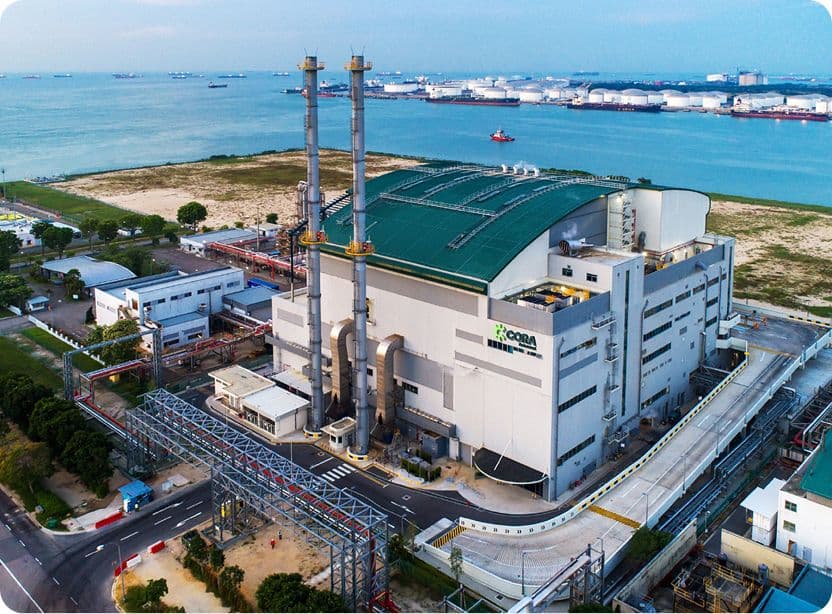
The definitive catalyst for the structural transformation, however, was the landmark acquisition of Cora Environment, formerly known as Sembcorp Environment. Completed in the first quarter of 2025, this transaction secured ownership of Singapore’s largest integrated waste management entity. Cora serves over 400,000 municipal, commercial, and industrial customers, effectively monopolizing key waste collection sectors in the city-state. Crucially, Cora Environment operates fully integrated downstream processing facilities, including a state-of-the-art material recovery facility and an energy-from-waste plant located on Jurong Island. The economic implications of integrating Cora are profound and multi-layered. Firstly, it introduces massive revenue scale. Management projections indicate that the inclusion of Cora will catapult the waste segment’s EBITDA from a mere USD 4.6 million in 2024 to an estimated USD 50 million by the end of 2025. Secondly, it creates a highly lucrative circular economy loop where value is captured at every stage of the waste lifecycle: from initial collection fees to secondary recycling revenues, and ultimately to power generation revenues through waste incineration. Cora has actively committed USD 200 million to upgrade its waste-to-resource capabilities over a five-year roadmap, ensuring its infrastructure remains perfectly aligned with the stringent targets of the Singapore Green Plan 2030, further locking in its technological advantage over regional peers.
| Segment Revenue Mix (USD Millions) | FY 2023 | FY 2024 | Q1 2026 (Annualized Projection) |
|---|---|---|---|
| Coal Mining & Trading | 442.26 | 355.00 | Declining Structural Run-off |
| Power Generation (CFPPs) | 59.00 | 60.00 | Divested mid-2025 |
| Waste Management | Negligible | 13.10 | ~ 155.42 |
| Others (Renewables & EV) | 0.00 | 17.55 | Scaling Phase |
| Total Consolidated Revenue | 501.26 | 445.65 | Transitioning Base |
A rigorous, line-by-line examination of the income statement from 2023 through the first quarter of 2026 illustrates this profound structural shift in the quality and composition of earnings. The trajectory requires careful and nuanced contextualization, as a superficial analysis of bottom-line net income over this period would yield a deeply flawed assessment of true operational health. The moderation of top-line revenue from USD 501.26 million in 2023 to USD 445.65 million in 2024 was structurally driven by the aforementioned cooling of global coal markets. Despite this top-line contraction, exceptional cost discipline was demonstrated throughout 2024. The consolidated gross profit paradoxically expanded from USD 63.83 million in 2023 to USD 81.10 million in 2024. This margin expansion reflected optimized stripping ratios in the legacy mining operations, a deliberate and strategic shedding of low-margin coal trading volumes, and the high-margin initial contributions from the newly acquired Asia Medical Enviro Services and ARAH waste entities. Consequently, the statutory net profit attributable to the parent owners in 2024 demonstrated robust health, printing at USD 28.47 million, a significant year-over-year improvement.
However, the income statement for the fiscal year 2025 requires substantial analytical adjustments to interpret the true economic reality of the enterprise. The reported full-year revenue further declined to approximately USD 365.86 million, reflecting both the continued softening of coal prices and the mid-year deconsolidation of the highly reliable power generation revenues following the plant divestments. The most striking and alarming feature of the 2025 income statement is the precipitous drop into a statutory net loss of USD 170.15 million. To an untrained observer, a loss of this magnitude signals catastrophic business failure. However, this massive deficit is the classic hallmark of a corporate restructuring and must be heavily discounted when assessing the ongoing earnings quality of the newly structured entity. The divestment of the coal-fired power plant assets was executed specifically to meet zero-carbon targets, necessitating a transaction that booked a severe non-cash accounting impairment and loss on the sale of assets of roughly USD 97 million. Because the book value of these long-duration assets significantly exceeded their transitional market value in a world increasingly hostile to coal power, accounting rules required the absorption of this difference through the income statement.
Furthermore, the accelerated depreciation schedules and restructuring provisions associated with winding down legacy coal infrastructure artificially inflated operating expenses, contributing to the statutory deficit. Because these losses are entirely structural, non-recurring, and largely non-cash accounting entries, the statutory net income metric for 2025 is functionally decoupled from real cash-generating capacity. To evaluate the true quality of earnings entering 2026, analysts must look past the net income line and focus on Adjusted EBITDA, which strips out the accounting friction of the divestments and focuses on core operational cash profitability. Following the full integration of Cora Environment, the earning power of the enterprise has been fundamentally restructured. By the first quarter of 2026, the waste management segment is actively absorbing the margin pressure lost from the shrinking coal division. Market projections indicate that waste-related EBITDA is rapidly scaling to account for roughly 67 to 74 percent of total operational earnings by 2026, fundamentally altering the margin profile from cyclical and unpredictable to defensive and recurring.
| Key Income Statement Metrics (USD Millions) | FY 2023 | FY 2024 | FY 2025 |
|---|---|---|---|
| Total Revenue | 501.26 | 445.65 | 365.86 |
| Cost of Revenue | (437.46) | (309.21) | (336.17) |
| Gross Profit | 63.80 | 76.57 | 29.69 |
| Operating Income | 12.23 | 36.42 | (36.16) |
| Pretax Income | 32.85 | 36.93 | (168.99) |
| Net Income to Company | 20.85 | 44.87 | (162.97) |
| Reported Earnings (After MI) | 7.91 | 28.47 | (170.15) |
A rigorous assessment of the Cash Flow Statement validates the thesis that the 2025 net loss was an accounting anomaly rather than an operational hemorrhage. The relationship between operating, investing, and financing cash flows provides a highly transparent view of capital allocation strategy and definitively proves that the reported operating earnings are supported by real, tangible liquidity. Through the transition period of 2024, highly resilient operating cash flows were generated. In the first quarter of 2024 alone, operating activities generated USD 27.1 million, a massive improvement from the cash outflows experienced in the prior year, demonstrating that the underlying core businesses—despite falling coal prices—were highly cash-generative. This liquidity generation was absolutely essential, as it provided the internal funding required for the aggressive mergers and acquisitions strategy mapped out in the transition plan.
The Cash Flow from Investing Activities highlights the aggressive and deliberate deployment of capital into the new corporate paradigm. The cash generated from legacy operations, supplemented by the upfront proceeds received from the coal-fired power plant divestments, was immediately rotated into the acquisition of Cora Environment in late 2024 and early 2025. This maneuver represents a textbook example of highly effective capital recycling: liquidating peak-cycle, carbon-heavy assets that face terminal value risks to acquire long-duration, sustainable infrastructure with compounding returns. A USD 600 million investment plan through 2030 has been committed to accelerate low-carbon businesses, with over USD 374 million already deployed by the first quarter of 2025, directing nearly all capital expenditure toward non-coal segments. The acquisition of Cora Environment ensures that these capital expenditures translate directly into immediate cash-flow-producing assets, bypassing the speculative risks associated with greenfield developments that carry long, uncertain gestation periods.
From a financing perspective, a sophisticated mix of green financing, domestic bond markets, and internal cash generation has been utilized to optimize the capital structure. Blended concessional financing from the Asian Development Bank was successfully secured in late 2024, an achievement that significantly lowers the weighted average cost of capital for green initiatives and validates the credibility of the transition plan to international lenders. The true test of cash flow resilience occurred in the first quarter of 2026. Despite the massive statutory losses recorded on the 2025 income statement that mathematically eroded total equity, the underlying cash generation remained so robust that a formidable cash and cash equivalents position of USD 103.3 million was reported.
This substantial liquidity buffer enabled two highly shareholder-friendly capital allocation decisions that definitively prove the health of the cash flow cycle and shatter any thesis of operational insolvency. First, a final dividend distribution of USD 8.88 million was declared, equating to a dividend per share of USD 0.00107766, to be paid in May 2026, drawn entirely from retained earnings. A company suffering from genuine operational distress and structural cash burn simply does not authorize millions of dollars in discretionary dividend payouts. Second, impeccable balance sheet discipline was demonstrated by allocating IDR 434.35 billion (approximately USD 27 million) to fully retire the principal and interest of the Series A Bond maturing in early March 2026. The ability to seamlessly self-fund major merger and acquisition activity, service maturing domestic bond obligations without relying on distressed refinancing, and distribute dividends to equity holders while navigating a total portfolio overhaul is the strongest possible indicator of high-quality, durable cash flow generation.
The balance sheet has undergone a deliberate contraction and subsequent stabilization, perfectly reflecting the divestiture of heavy fossil-fuel infrastructure and the ingestion of asset-light, service-oriented environmental businesses. Total assets peaked in 2023 at USD 947.84 million before moderating to USD 893.74 million in 2024 as the depreciation of coal assets accelerated. By the end of 2025 and moving into the first quarter of 2026, total assets stabilized near the USD 890 million mark, equivalent to roughly IDR 13.3 trillion. This stabilization in total asset value masks a massive internal reconstitution of the asset base. The heavy property, plant, and equipment lines associated with the Gorontalo and Minahasa power plants have been wiped from the books, replaced by the intangible assets, goodwill, and high-velocity receivables generated by the Cora Environment and Asia Medical Enviro Services acquisitions.
| Key Balance Sheet Metrics (USD Millions) | FY 2023 | FY 2024 | Q1 2026 (Approximate) |
|---|---|---|---|
| Total Assets | 947.84 | 893.74 | ~ 890.00 |
| Current Liabilities | 148.36 | 132.12 | Fluctuating |
| Non-current Liabilities | 375.79 | 324.95 | Fluctuating |
| Total Liabilities | 524.15 | 457.08 | ~ 600.00 |
| Total Equity | 423.69 | 436.66 | ~ 240.00 |
The liability structure exhibits prudent, proactive financial management. Total liabilities stood at USD 457.08 million at the end of 2024, down significantly from previous years as cash was actively utilized to deleverage the legacy coal operations. In 2025, total liabilities experienced an uptick to roughly IDR 9.6 trillion (approximately USD 600 million), primarily related to the consolidation of debt from the newly acquired Singaporean waste entities and short-term bridge financing utilized during the transition phase. When analyzing the financial fragility of any transitioning enterprise, debt maturity walls are the primary focal point. A staggered, highly manageable maturity profile is maintained, composed of continuous Indonesian Rupiah bond issuances and localized bank facilities.
The most immediate pressure point on the balance sheet was the IDR 425 billion Series A bond from 2023, which carried an 8.80 percent coupon and matured on March 3, 2026. As previously established, this hurdle was effortlessly cleared, utilizing internal liquidity to retire the obligation entirely without resorting to dilutive equity raises or expensive refinancing structures. Looking forward, the maturity schedule is comfortably laddered. The balance sheet faces a smaller IDR 75 billion Series B maturity carrying a 10.00 percent coupon in 2028, an IDR 100 billion maturity in 2029, and longer-term Syariah Wakalah bonds stretching out to 2034 and 2035.
| Outstanding IDR Debt Maturities | Amount (IDR) | Coupon / Rate | Maturity Date |
|---|---|---|---|
| Bond I Year 2023 – Series A | 425,000,000,000 | 8.80% | Retired Mar 2026 |
| Bond I Year 2023 – Series B | 75,000,000,000 | 10.00% | Mar 2028 |
| Phase I Year 2025 – Series A | 20,000,000,000 | 8.50% | Jul 2028 |
| Phase II Year 2026 – Series A | 100,000,000,000 | 7.25% | Jan 2029 |
| Phase I Year 2025 – Series B | 105,000,000,000 | 9.00% | Jul 2030 |
| Phase II Year 2026 – Series B | 175,000,000,000 | N/A | Jan 2031 |
| Phase II Year 2026 – Series C | 225,000,000,000 | N/A | Jan 2033 |
| Syariah Wakalah I Year 2025 | 308,475,000,000 | 9.55% | Mar 2035 |
This long-dated debt architecture aligns perfectly with the cash flow profile of the new waste management contracts, immunizing the firm against short-term refinancing risks in a volatile global interest rate environment. Total equity took a significant accounting hit in 2025, dropping from USD 436.66 million in 2024 to approximately USD 240 million. This contraction was the direct mathematical consequence of the net losses absorbed during the power plant divestitures flowing through retained earnings. However, because the debt load is adequately covered by the new, higher-quality baseline of waste-management EBITDA, the resulting spike in the debt-to-equity ratio is a deceptive indicator of insolvency. A far more accurate measure of solvency—Net Debt to Adjusted EBITDA—remains robust. Holding-level debt coverage, which excludes ring-fenced project financing for specific assets, maintained a highly secure 1.2x Net Debt to EBITDA ratio and a 3.1x Interest Coverage ratio, providing ample headroom for further operational expansion without breaching stringent debt covenants.
While waste management provides the defensive baseline and the bulk of current enterprise value, the electric vehicle and renewable energy divisions represent high-growth, long-duration optionality. The objective here is to position the enterprise at the absolute forefront of Indonesia’s mandated, state-sponsored energy transition. The electric mobility initiative is spearheaded by “Electrum,” a strategic joint venture established with the Indonesian technology conglomerate GoTo ($GOTO). By early 2025, Electrum had successfully deployed over 6,400 electric two-wheelers and systematically scaled a network of battery-swapping stations across the greater Jakarta metropolitan area.
The financial mechanics and operational requirements of the electric vehicle segment differ starkly from those of waste management. Electrum is currently entrenched in an intensive capital-expenditure phase, requiring deliberate cash burn to build physical swapping infrastructure and subsidize initial consumer adoption to achieve network effects. The competitive positioning in the Indonesian electric vehicle space is highly complex and fiercely contested. The market is currently facing a massive influx of heavily subsidized Chinese and Vietnamese electric vehicle manufacturers, such as BYD, Wuling, and Vinfast, which are rapidly capturing market share from legacy Japanese internal combustion engine incumbents like Toyota. Electrum’s specific competitive moat relies heavily on its deep integration with the massive ride-hailing fleet operated by GoTo, providing a captive initial customer base required to achieve the necessary network density in its battery-swapping infrastructure.
While this segment currently operates at an operating loss in the near term, it provides vital strategic leverage. Should the Indonesian government strictly enforce proposed local content requirements, known as TKDN, which are slated to increase to 60 percent, and phase out internal combustion engine sales as proposed for the coming decades, Electrum’s early-mover infrastructure advantage will translate into significant, defensible platform value. In the renewable energy sector, the focus is on hydro and floating solar photovoltaics. Notable operational assets include a 6-megawatt mini-hydro power plant in Lampung, which successfully achieved its Commercial Operation Date in early 2025. Furthermore, financial closure was successfully reached and a Power Purchase Agreement signed with PLN Batam for a 46-megawatt peak floating solar project. These renewable assets mimic the favorable financial profile of the divested coal plants—providing highly steady, long-term contracted cash flows with exceptional EBITDA margins—but entirely without the associated carbon liabilities. Though currently a smaller portion of the overall consolidated revenue mix compared to the booming waste segment, the renewable pipeline ensures a highly profitable footprint is retained in domestic power generation as Indonesia urgently modernizes its electrical grid.
Line chart of TBS Energi Utama Tbk (TOBA) with timeframe 1 Year.
The financial performance is intricately linked to several observable macroeconomic trends and regulatory shifts across the Southeast Asian region. The most immediate historical linkage was the structural decline in global thermal coal prices. Between late 2023 and the third quarter of 2025, both the Newcastle index and the Indonesian Coal Index suffered severe double-digit percentage declines as global supply chains normalized, European energy fears abated, and major consumers like China and India moderated their import demand. For a traditional, undiversified coal miner, this macro environment signals a prolonged period of severe margin compression, cash burn, and capital destruction. However, because management preemptively utilized the peak-cycle cash flows of 2022 to diversify away from extraction, the consolidated balance sheet was successfully insulated from the full, devastating brunt of this commodity downcycle.
Conversely, the macroeconomic environment for the new core business—waste management—is experiencing powerful, structural tailwinds that guarantee long-term growth. In Singapore, the regulatory environment is hyper-focused on executing the Singapore Green Plan 2030, a state-sponsored mandate requiring significantly higher national recycling rates and far stricter commercial waste processing protocols. This intense regulatory pressure acts as a direct, non-cyclical demand multiplier for Cora Environment’s advanced material recovery facilities. In Indonesia, the macroeconomic narrative is equally, if not more, favorable. The Indonesian government is actively advancing Waste-to-Energy frameworks to address critical landfill shortages in major urban centers. Anticipated presidential decrees are expected to lift feed-in tariffs for Waste-to-Energy projects from USD 0.13 to USD 0.19 per kilowatt-hour. This policy shift radically alters the unit economics of municipal waste processing in sprawling cities like Jakarta, which generates roughly 7,000 tons of waste daily. The higher tariffs push project Internal Rates of Return into the low double digits and dramatically reduce capital payback periods. Positioned as the largest integrated waste operator in the region post-acquisitions, the company is optimally placed to monopolize these macro-level regulatory incentives.
Despite the highly successful execution of the portfolio transition to date, specific financial and operational fragilities remain. A comprehensive risk assessment must evaluate vulnerabilities across multiple internal and external vectors. Firstly, operational integration risk is paramount. The acquisition of Cora Environment is a massive operational undertaking, demanding the seamless assimilation of hundreds of employees, highly complex fleet logistics, and the continuous operation of advanced incineration technologies. Any operational friction in integrating these complex Singaporean operations with the broader infrastructure could lead to margin leakage and delay the projected realization of the crucial USD 50 million EBITDA target by end-2025.
Secondly, inherent financial risks related to ongoing capital requirements must be monitored. While the debt maturity schedule is well-laddered and liquidity was proven exceptionally strong in the first quarter of 2026, the electric vehicle segment and the renewable energy pipeline remain highly capital-intensive endeavors. If Electrum fails to achieve critical mass against heavily subsidized foreign competitors, it could devolve into a sustained, multi-year cash drain, requiring vital cash flow to be siphoned away from the highly profitable waste segment to plug the deficit. Furthermore, while holding-level debt coverage is currently healthy, the aggressive acquisition strategy has heavily compressed total equity due to the accounting losses on the power plant divestitures. Any unforeseen macroeconomic shocks that tighten domestic credit markets could marginally increase the cost of future debt issuances needed to fund further renewable projects, stressing the balance sheet.
Thirdly, the legacy coal operations, while officially in phase-out mode, still pose a transitional physical and reputational risk. Although the major power plants have been successfully sold, the remaining open-pit mining operations are highly subject to extreme weather disruptions. Heavy rainfall directly impacts stripping ratios, inflating operational costs and reducing the cash flow available to be harvested for green investments. The drawdown of these extraction assets must be meticulously managed through 2027 to prevent stranded asset costs, unanticipated environmental rehabilitation liabilities, or worker severance issues from eroding the balance sheet before the transition is officially complete. Finally, foreign exchange and geographic concentration risks must be noted. A substantial and growing portion of new EBITDA generation is denominated in Singapore Dollars via the Cora and Asia Medical Enviro Services subsidiaries, while corporate debt, legacy operations, and electric vehicle investments are tied to the Indonesian Rupiah and the US Dollar. Mismatches in currency fluctuations could result in non-operational translation losses that artificially impact the bottom line.
Incorporating valuation thinking into this analysis requires bridging the massive gap between currently distorted statutory earnings and true underlying economic value. In early 2026, the Indonesian equity market continued to price $TOBA largely on its historical identity as a coal miner and the headline net loss reported in the 2025 annual report. Consequently, the stock traded at highly depressed levels, hovering around IDR 600 per share with an implied market capitalization of roughly IDR 4.5 trillion. However, attempting to price the equity using backward-looking Price-to-Earnings multiples is fundamentally flawed and analytically useless due to the massive, non-cash divestment write-downs that entirely obliterated the 2025 net income metric. The academically rigorous and practically sound approach for valuing a conglomerate undergoing such a profound structural pivot is a Sum-of-the-Parts framework combined with forward EV/EBITDA multiples.
The legacy coal operations, explicitly in run-off mode, command a deeply discounted multiple, typically 2x to 4x EV/EBITDA, due to severe terminal value risks and ESG exclusion policies. However, the waste management segment—which now dictates up to 88 percent of Adjusted EBITDA—warrants a massive premium infrastructure multiple. Regional and global peers operating in regulated waste management and environmental services routinely trade at 10x to 15x EV/EBITDA, reflecting their deep regulatory moats, inflation-protected government contracts, and incredibly low-volatility cash flows. When applying these blended multiples to the newly structured, post-acquisition earning power, a massive valuation disconnect emerges. Market intelligence points to an implied intrinsic value ranging from IDR 1,857 under a moderate execution scenario to a target price of IDR 2,100 based on the massive earnings accretion from the Cora Environment integration and upcoming Waste-to-Energy regulatory tailwinds. At the current market pricing near IDR 600, the stock trades at an implied forward EV/EBITDA of approximately 5.8x. This metric indicates that the market is entirely ignoring the quality upgrade of the earnings stream, irrationally valuing the highly stable, utility-like waste management cash flows as if they were volatile, sunsetting spot-market coal revenues. This creates an exceptionally wide margin of safety for the intelligent investor, presenting a classic market mispricing driven by accounting noise and sector misclassification.
The financial evidence available through the first quarter of 2026 supports a high-conviction, favorable investment perspective on the enterprise. It represents a rare, fully funded, and successfully executed pivot from a structurally challenged, cyclical operator into a high-quality, defensive infrastructure compounder. The headline statutory losses recorded in 2025 must be entirely disregarded as the necessary, non-cash friction costs of aggressive corporate decarbonization, as they actively mask the profound health of the underlying operating cash flows. The ability to organically fund the retirement of the March 2026 bond maturity and declare consecutive shareholder dividends demonstrates unimpeachable liquidity and balance sheet strength that contradicts the statutory deficit.
The seamless integration of the Singaporean waste management assets has fundamentally re-rated business quality. By systematically replacing volatile, price-taking commodity revenues with monopolistic, long-duration environmental service contracts, the income statement has been permanently insulated from macroeconomic commodity shocks. While execution risks remain regarding the capital intensity of the electric vehicle rollout and the operational integration of Cora Environment, these vulnerabilities are massively overcompensated by the deeply depressed current market valuation. Trading at a severe discount to its Sum-of-the-Parts intrinsic value, the entity suffers from a profound identity crisis in the public markets. It is being heavily penalized for the accounting artifacts of its transition while receiving absolutely no valuation credit for the premium, monopoly-like infrastructure assets it has successfully acquired. For institutional capital focused on fundamental value, earnings durability, and tangible ESG impact, a deeply mispriced opportunity is present. It is a highly conditional case where the core conditions—successful divestment of stranded coal assets, acquisition of market-leading green infrastructure, and maintenance of ample liquidity—have already been successfully met. Therefore, the financial and operational profile unconditionally justifies a substantial premium re-rating, positioning the enterprise as a highly resilient, cash-generative cornerstone asset for the coming decade of the Southeast Asian energy transition.
Disclaimer
aluna Analytics is an independent research collective that operates without affiliation to any financial institution, broker, or advisory firm. We do not hold licenses as a securities dealer, investment advisor, or portfolio manager.
All materials published by aluna Analytics are created solely for informational and educational purposes. They reflect independent analytical interpretation and should not be regarded as personalized investment advice, solicitation, or endorsement of any security or strategy.
Market data, opinions, and projections presented herein are subject to change and may not predict future results. Readers remain fully responsible for any financial decisions made based on the information provided. We strongly encourage conducting personal due diligence and consulting a licensed professional before making investment commitments.
aluna Analytics is not regulated by the Financial Services Authority of Indonesia (OJK) and does not offer investment management or brokerage services. All content is presented in good faith, aiming to foster research literacy and informed market perspectives.