
Author: aluna Analytics | Date: 30 April 2026 | Category: Market Intelligence
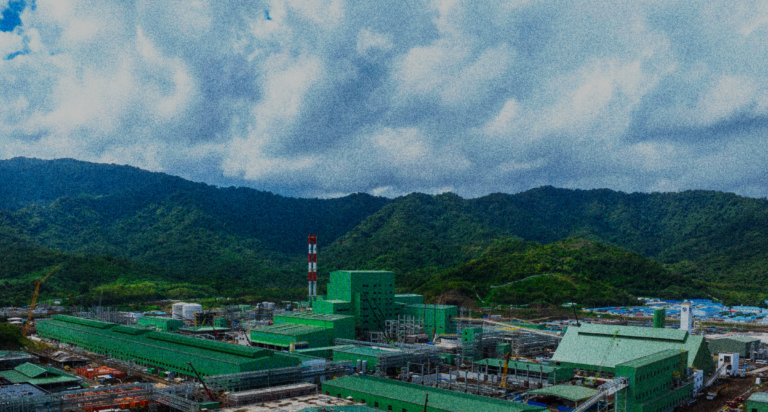
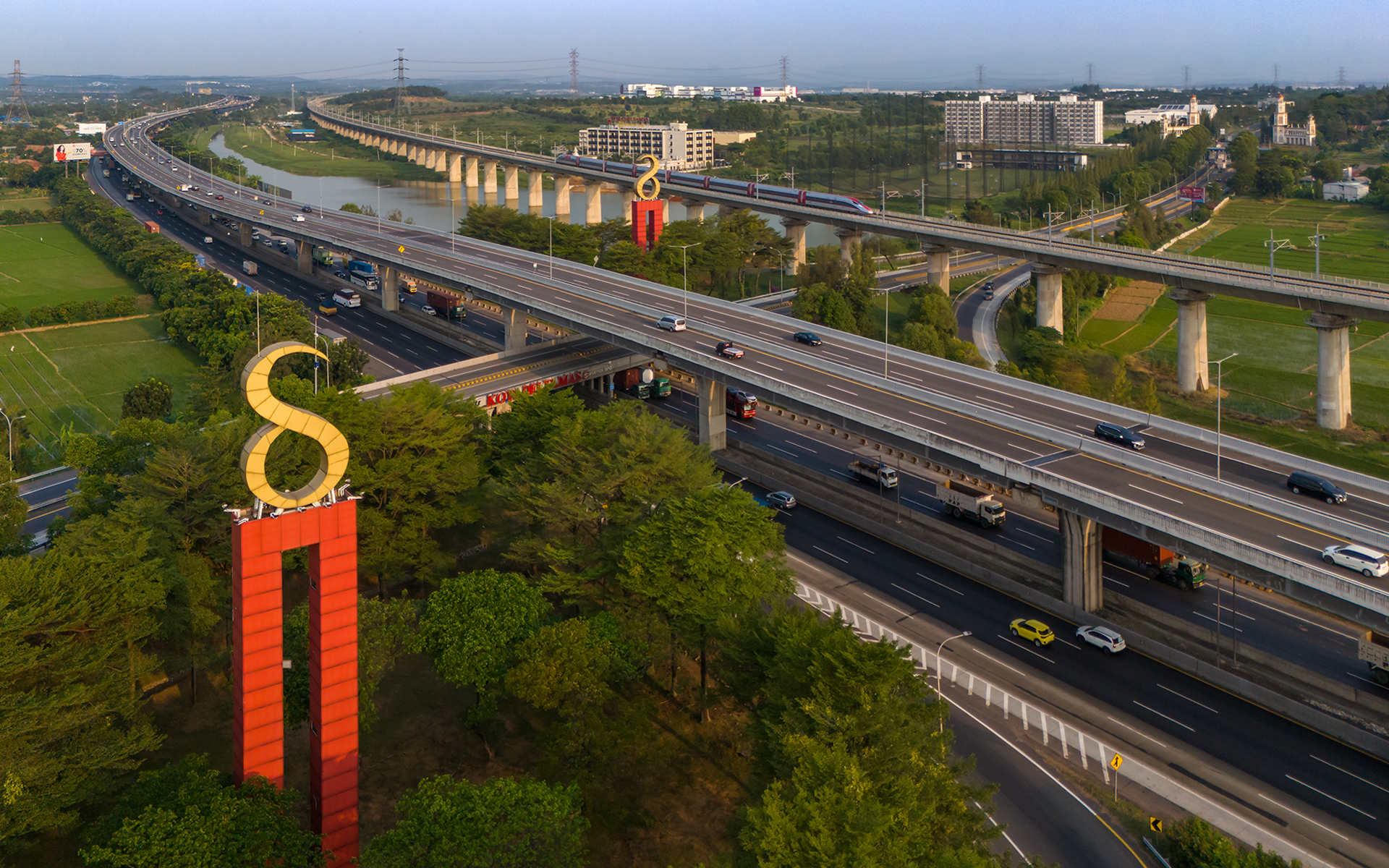
PT Puradelta Lestari Tbk, operating within the public markets under the ticker symbol $DMAS on the Indonesia Stock Exchange, represents a highly specialized infrastructure and real estate development entity. The enterprise functions primarily as the master developer and operator of Kota Deltamas, a sprawling 3,200-hectare integrated modern township located strategically at kilometer 37 of the Jakarta-Cikampek toll road in Central Cikarang, east of Jakarta. From a foundational perspective, the business model of the company bridges the traditional gap between passive land banking and advanced digital infrastructure provisioning. The firm does not merely acquire and sell undeveloped acreage; rather, it navigates complex regulatory zoning frameworks, installs institutional-grade utilities, develops comprehensive urban ecosystems, and subsequently monetizes these highly enhanced land parcels at a significant premium. The commercial viability of this township is heavily fortified by the company’s dual sponsorship. The entity operates as a strategic joint venture between Sinar Mas Land, a prominent Indonesian property conglomerate holding a 57.28% controlling stake, and Sojitz Corporation, a leading Japanese general trading company holding a 25.00% interest. This specific ownership architecture provides a formidable economic moat that is difficult for domestic competitors to replicate. Sinar Mas Land delivers unparalleled local operational expertise, regulatory navigation, and master-planning capabilities within the complex Indonesian property landscape. Conversely, Sojitz Corporation acts as a high-value conduit for foreign direct investment, directly funneling a robust and highly curated pipeline of Japanese and multinational corporate clients into the industrial estate.
The primary economic engine and profit center of the company is its industrial segment, specifically branded as the Greenland International Industrial Center (GIIC). While the developers have successfully diversified the estate into residential, commercial, and hospitality segments to create a self-sustaining, live-work-play urban ecosystem, these auxiliary segments function primarily as supporting infrastructure designed to maximize the value proposition of the industrial core. Historically, the GIIC catered predominantly to the automotive, logistics, and fast-moving consumer goods manufacturing sectors, securing massive anchor tenants such as Suzuki, Mitsubishi Motors, SAIC GM Wuling, and Hyundai Motors, alongside major consumer brands like Unilever and Kalbe. However, the strategic trajectory of the company has fundamentally shifted in recent years. The firm is currently undergoing a profound structural evolution, transitioning its prime acreage from a traditional heavy manufacturing hub into a premier destination for hyperscale data centers, cloud service providers, and advanced digital infrastructure. This transition is not merely a change in the customer base; it represents a fundamental upgrading of the estate’s economic yield, as digital infrastructure tenants exhibit dramatically lower price sensitivity for land that meets their stringent utility and connectivity requirements.
Understanding how the company generates its outsized returns requires a precise analysis of its product lifecycle and accounting mechanics. Revenue is generated predominantly through the outright sale of industrial, commercial, and residential land plots, supplemented by minor, yet highly stable, recurring revenue streams derived from estate management, water treatment services, and commercial property rentals. The core economics of this business model are highly favorable due to the exceptionally low historical cost basis of its underlying land bank, which was aggregated decades ago. When this deeply amortized, legacy-priced land is sold in the current market environment—especially to multinational data center operators who require highly specific, premium-priced plots with robust, redundant utility access—the resulting profit margins resemble the economics of high-margin software enterprises rather than traditional, capital-intensive construction firms. The company effectively captures the multi-decade appreciation of land values in the Greater Jakarta industrial corridor, augmented by the premium commanded by its proprietary infrastructure, translating directly into vast equity accumulation.

Rp 212
The financial results for the first quarter ending March 31, 2026, demonstrate a period of explosive, structural growth, revealing a company operating at absolute peak financial efficiency. The reported figures are driven by the successful accounting realization of its targeted marketing sales strategy, reflecting strong fundamental demand rather than temporary market distortions. For the first quarter of 2026, the company reported total operating revenues of IDR 1.05 trillion, representing a staggering 107% year-over-year increase from the IDR 507.89 billion recorded in the first quarter of 2025. This revenue surge is almost entirely attributable to the industrial segment, which contributed an overwhelming IDR 1.03 trillion, accounting for more than 90% of the aggregate top line. The commercial and residential segments provided supplementary, albeit minor, contributions of IDR 11.20 billion and IDR 8.15 billion, respectively. Meanwhile, the recurring revenue streams from the rental and hotel segments added a combined IDR 8.48 billion. The sheer scale of this revenue expansion must be analyzed through the specific lens of real estate revenue recognition standards. In the property development sector, revenue is typically recognized upon the formal transfer of risks and rewards to the buyer—often at the point of physical handover—which consistently lags behind the initial signing of marketing sales contracts and the receipt of cash deposits. Therefore, the exceptional top-line performance in the first quarter of 2026 is the direct accounting realization of robust marketing sales secured in prior fiscal periods, specifically driven by the rapid, aggressive absorption of land by hyperscale data center operators who committed to the estate in 2024 and 2025.
The profitability metrics associated with this revenue expansion are exceptionally strong, indicating massive pricing power and operational efficiency. Gross profit for the period reached IDR 864.92 billion, representing a 138.70% surge from the IDR 362.35 billion achieved in the same three-month period the previous year. This translates to a gross profit margin of approximately 82%, a figure that is virtually unheard of in traditional real estate development. A gross margin of this magnitude unequivocally indicates that the cost of goods sold—primarily the capitalized historical cost of land acquisition and foundational infrastructure development—is fractionally small compared to the currently realized selling prices. By early 2026, average industrial land prices in the Greater Jakarta area had steadily appreciated to approximately IDR 2.96 million per square meter, sustaining a 3.7% year-over-year upward trajectory despite broader macroeconomic uncertainties. Because the company acquired its vast land bank at historically suppressed valuations prior to the region’s rapid industrialization, the massive spread captured upon sale flows almost entirely and directly into gross equity, unimpeded by rising contemporary construction or acquisition costs.
| Key Income Statement Metrics (IDR Billion) | Q1 2025 | Q1 2026 | Year-over-Year Growth | Margin Q1 2025 | Margin Q1 2026 |
|---|---|---|---|---|---|
| Operating Revenue | 507.89 | 1,050.00 | +107.0% | 100.0% | 100.0% |
| Gross Profit | 362.35 | 864.92 | +138.7% | 71.3% | 82.4% |
| Operating Profit | 299.17 | 769.56 | +157.0% | 58.9% | 73.3% |
| Net Profit | 355.45 | 818.27 | +130.0% | 70.0% | 77.9% |
The company’s operating profit exhibited even greater leverage, expanding by a remarkable 157% to IDR 769.56 billion in the first quarter of 2026, compared to IDR 299.17 billion in the corresponding period of 2025. Consequently, the operating profit margin expanded significantly, scaling from 59% in the first quarter of 2025 to 73% in the current period. This rapid margin expansion serves as a textbook demonstration of structural operating leverage. General and administrative expenses—which encompass corporate overhead, marketing initiatives, employee compensation, and baseline estate maintenance—are largely fixed and do not scale linearly with land sales. As top-line revenue effectively doubled year-over-year, these fixed operational costs were easily absorbed, allowing an outsized, disproportionate portion of the gross profit to drop cleanly to the operating line.
Net profit for the quarter stood at IDR 818.27 billion, marking a 130% year-over-year increase and yielding an extraordinary net profit margin of 78%. An analytical anomaly is immediately apparent upon reviewing these figures: the reported net profit of IDR 818.27 billion exceeds the operating profit of IDR 769.56 billion. In fundamental financial analysis, when the bottom-line net income eclipses the core operating income, it decisively points to the presence of substantial, positive non-operating financial flows. Given the company’s massive cash reserves and its strict zero-debt capital structure, this inversion is primarily driven by massive interest income generated from short-term treasury placements and time deposits. Furthermore, this is supplemented by potential foreign exchange gains. As the Indonesian Rupiah faced depreciatory macroeconomic pressures, weakening to levels around IDR 17,172 per United States Dollar in early 2026 due to shifts in global monetary policy and the US Federal Reserve maintaining elevated rates, any US Dollar-denominated cash holdings or receivables held by the company would have generated favorable translation adjustments, further padding the net income line above the core operating results.
The structural integrity of a real estate developer is best assessed not merely by its income statement, but via the resilience of its balance sheet. The financial position of the company as of March 31, 2026, is characterized by extreme liquidity and an absolute absence of financial leverage. Total assets increased by 14% to IDR 8.11 trillion, up from IDR 7.12 trillion at the close of the 2025 fiscal year. This asset expansion was driven almost entirely by an extraordinary influx of liquid capital. Cash and cash equivalents surged by an astonishing 238%, escalating from IDR 377.00 billion on December 31, 2025, to an imposing IDR 1.28 trillion by the end of March 2026. The velocity and magnitude of this cash accumulation confirm beyond doubt that the reported earnings are of the highest possible quality. In many segments of the commercial and residential real estate industry, developers report high net income based on non-cash fair-value adjustments of investment properties, or they recognize revenues where actual cash collection is deferred via long-term, risky receivables. For this company, the IDR 898.10 billion absolute increase in cash balances over the three-month period cleanly corroborates the IDR 818.27 billion in reported net profit, demonstrating a cash conversion ratio that comfortably exceeds 100%.
On the liabilities side of the ledger, total obligations increased by 34% to IDR 679.56 billion. This increase, however, does not introduce any degree of financial risk or solvency concern. The rise in total liabilities was primarily caused by a 33% increase in trade accounts payable, which grew by IDR 76.06 billion. In corporate finance, an expansion in trade payables, when matched with soaring cash balances, indicates highly efficient working capital management. The company is effectively utilizing vendor financing—delaying payments to contractors and suppliers within acceptable credit terms—to fund its ongoing, low-intensity capital expenditures for infrastructure maintenance, thereby preserving its own capital and maximizing interest income on its treasury holdings.
Crucially, the company maintains a debt-to-equity ratio of absolute zero. The firm carries no short-term or long-term bank loans, nor does it have any outstanding corporate bonds or commercial paper. Total equity expanded by 12% to IDR 7.43 trillion, reflecting the retention of the quarter’s robust earnings prior to any subsequent dividend declarations. The complete absence of interest-bearing debt renders the company completely immune to the tightening monetary conditions, credit crunches, and elevated interest rates that currently plague highly leveraged peers within the broader Indonesian property sector. This balance sheet fortresses the company against macroeconomic shocks and provides management with maximum strategic flexibility.
| Balance Sheet and Liquidity Profile (IDR Billion) | 31 December 2025 | 31 March 2026 | Period Growth |
|---|---|---|---|
| Cash and Cash Equivalents | 377.00 | 1,280.00 | +239.5% |
| Total Assets | 7,120.00 | 8,110.00 | +13.9% |
| Trade Accounts Payable | 230.48 | 306.54 | +33.0% |
| Total Liabilities | 508.54 | 679.56 | +33.6% |
| Total Equity (Net) | 6,610.00 | 7,430.00 | +12.4% |
| Total Interest-Bearing Debt | 0.00 | 0.00 | 0.0% |
A deep examination of cash flow dynamics and the underlying quality of earnings is essential to contextualize the narrative. The fundamental question surrounding any high-margin, asset-heavy business is the durability and tangible reality of its reported profits. The financial evidence presented up to April 2026 definitively categorizes the firm as a high-quality cash compounder, albeit one operating with a finite core asset. The correlation between the income statement and the cash flow statement is exceptionally tight, driven by the structural mechanics of industrial land sales in Indonesia. When global hyperscalers or multinational corporations commit to purchasing land for a massive data center or a manufacturing facility, the transaction structures typically involve substantial upfront cash deposits or highly accelerated milestone payments during the site preparation phase. Consequently, the company collects the cash flow either simultaneously with, or significantly prior to, the formal accounting recognition of the revenue. This creates a highly favorable, negative working capital cycle where the company is consistently cash-positive throughout the development and handover phase.
Furthermore, the capital expenditure required to prepare these specific land plots is heavily front-loaded in the historical timeline of the company. The foundational master planning, the construction of primary arterial roads, the excavation of major drainage systems, and the initial high-voltage utility grid connections were funded and completed years, or even decades, ago. The incremental capital expenditure required today to finalize a plot for a new digital tenant is minimal compared to the incoming, premium purchase price. Therefore, the operating cash flow translates almost directly into free cash flow without being absorbed by massive maintenance or expansion capex. This dynamic is sharply contrasted by traditional residential developers who must engage in continuous, heavy capital expenditures to construct high-rise apartment towers or sprawling residential neighborhoods, bleeding cash for years before recognizing the bulk of their inflows upon unit handover. By operating strictly in the specialized niche of premium, infrastructure-ready industrial land, the company entirely bypasses the heavy construction risk and working capital drain that characterizes the broader property sector.
To evaluate whether these spectacular growth trends are durable or vulnerable to sudden reversal, one must analyze the underlying customer demand and the broader macroeconomic shifts driving it. The defining narrative of the company in recent years, culminating in the exceptional Q1 2026 results, is its successful pivot from a traditional manufacturing estate to becoming a critical, foundational enabler of the global digital economy. Historically, the growth and absorption rate of Kota Deltamas were intrinsically linked to the Japanese automotive supply chain and domestic consumer goods manufacturing. While these legacy tenants provided a solid, reliable foundation that built the city, automotive capacity expansion is highly cyclical and vulnerable to consumer credit trends. The recent explosion in land demand is driven entirely by a different, structurally resilient, and hyper-growth vector: hyperscale data centers.
As of the first quarter of 2026, data centers thoroughly dominate the operational and marketing pipeline. Out of approximately 75 hectares of active industrial land inquiries recorded early in the year, more than half—and in some periods up to 75% of actual marketing sales—are derived directly from the data center sector. By the end of 2026, the company expects to house at least 16 different major data center operators within a dedicated 300-hectare digital infrastructure zone established within the GIIC. This transition is not a temporary, cyclical phenomenon; it is a permanent structural realignment driven by global macroeconomic and technological imperatives. The global proliferation of cloud computing, coupled with the exponential compute requirements of artificial intelligence (AI) inferencing and training models, has created an insatiable, inelastic demand for data center capacity globally. However, data centers cannot be built anywhere; they require three non-negotiable components: secure and stable land, robust carrier-neutral fiber-optic connectivity, and, most critically, massive, redundant, and uninterrupted power supply.
Neighboring tier-one digital markets, most notably Singapore, have faced severe land scarcity and crippling power grid constraints, leading to strict regulatory moratoriums on new data center builds in the recent past, and stringent, costly sustainability limitations currently. This regulatory friction and capacity ceiling in Singapore has forced global hyperscalers to aggressively seek alternative hubs in Southeast Asia to deploy their capital. Indonesia, boasting a rapidly digitizing domestic population of over 270 million, a burgeoning e-commerce sector, and close proximity to Singapore via established submarine cables, emerged as the natural, inevitable beneficiary of this geographic spillover. The company meticulously engineered a highly competitive positioning to capture this precise overflow. Management secured an unprecedented commitment from the state utility provider, PT Perusahaan Listrik Negara (PLN), for nearly 1,000 Megavolt Amperes (993 MVA) of premium, high-voltage electricity supply directly into the estate.
This massive power allocation serves as the ultimate economic moat in the current real estate and digital infrastructure landscape. In the highly competitive data center industry, “time-to-market” is the single most critical metric for hyperscalers racing to deploy AI clusters. A global technology firm cannot afford to wait three to five years for a local municipality to upgrade a regional power grid to support a 50 MW campus. Because the company can offer shovel-ready land with guaranteed, immediate access to industrial-scale power, alongside carrier-neutral fiber networks and advanced water recycling plants necessary for sophisticated liquid cooling systems, it commands exceptional, undisputed pricing power. Operators such as Princeton Digital Group have already established massive 28+ MW facilities on the campus, demanding stringent Power Usage Effectiveness (PUE) ratios below 1.4, which the estate’s infrastructure easily accommodates. The 82% gross margin reported in Q1 2026 is the direct, tangible financial manifestation of this specific, deeply entrenched economic moat.
Assessing business quality requires comparing the company against its direct peers within the Indonesian industrial estate and broader property development sector, such as PT Bekasi Fajar Industrial Estate Tbk ($BEST), PT Surya Semesta Internusa Tbk ($SSIA), and PT Kawasan Industri Jababeka Tbk ($KIJA). When viewed through the lens of competitive positioning, capital structure, and margin profile, the company exhibits the characteristics of a structurally superior business operating in a league of its own.
| Peer Comparison Matrix (April 2026) | Primary Operating Focus | Capital Structure | Net Profit Margin | Dividend Posture |
|---|---|---|---|---|
| DMAS (Puradelta Lestari) | Data Centers / Digital Infra | Zero Debt, High Cash | ~78% | High Yield (>20%) |
| BEST (Bekasi Fajar) | General Manufacturing | Highly Leveraged | ~7% | Non-Paying |
| SSIA (Surya Semesta) | Subang Smartpolitan Dev. | Capex-Heavy Expansion | Developing | Minimal/Non-Paying |
| KIJA (Jababeka) | Mixed Industrial / Residential | Leveraged | Moderate | Minimal/Non-Paying |
While peers like $BEST operate directly adjacent land banks in the Bekasi corridor, their financial outcomes are radically divergent. The competitor struggles with a highly leveraged balance sheet. As of the end of 2025, they carried substantial short and long-term debt burdens, including IDR 353.6 billion in short-term debt and IDR 995.0 billion in long-term debt. This leverage results in heavy, inescapable interest expenses that severely compress profitability. Consequently, while generating a respectable gross margin of 58.6%, the net margin is crushed down to a mere 7.0%, compared to the staggering 78% net margin enjoyed by $DMAS. In an environment where Bank Indonesia holds interest rates steady at elevated levels of 4.75%, heavily indebted developers face severe margin compression, floating-rate interest risks, and daunting refinancing hurdles. The subject company, operating entirely on accumulated equity and zero interest-bearing debt, is completely shielded from this systemic financial fragility.
Similarly, $SSIA is currently navigating a highly capital-intensive phase, pouring immense resources into developing its new Subang Smartpolitan estate and banking on future connectivity to the Patimban Seaport. While this represents viable long-term growth, it requires heavy cash burn today, precluding the kind of massive capital returns currently being generated by Deltamas. The business quality is further elevated by the active presence of Sojitz Corporation. Industrial real estate is fundamentally a relationship-driven enterprise. Multinational corporations, particularly risk-averse Japanese conglomerates, strongly prefer to establish billion-dollar facilities in estates where they intrinsically trust the management and understand the rigorous operational standards. Sojitz actively curates this ecosystem, ensuring that Kota Deltamas functions flawlessly at international standards—evidenced by the establishment of the Cikarang Japanese School and the ‘via alma’ serviced apartments—thereby reducing the perceived operational friction for incoming foreign direct investment.
However, analytical rigor demands that one clearly distinguish the specific business model type at play. The firm is not a perpetual compounder in the traditional sense of a software firm or a consumer monopoly. A true compounder can continuously reinvest its free cash flows back into operations at high rates of return indefinitely. Fundamentally, it operates an asset liquidation model. Its primary business is selling a finite, non-renewable resource: the 3,200 hectares of master-planned land. Once a specific plot is sold to a data center operator, the massive revenue surge is recognized, the cash is collected, but the inventory is permanently depleted. While recurring revenues from estate management, security, water provision, and hotel operations exist and are growing, they represent a fraction of the massive land sales revenue. Therefore, the business quality is exceptionally high in the present monetization phase, but the long-term terminal value is strictly capped by the remaining sellable land bank.
The intersection of a finite land bank and massive, unencumbered free cash flow brings the analysis to capital allocation, specifically the company’s aggressive, unconventional dividend policy. In the public equity markets, a stock trading with a dividend yield exceeding 20% is almost universally interpreted by algorithmic models and traditional financial analysts as a dangerous “value trap”—a blaring signal that the market believes the dividend is entirely unsustainable and an imminent, severe cut is already priced into the equity. As of April 2026, the company exhibits a trailing dividend yield in excess of 21.32%, with an apparent payout ratio frequently exceeding 100% of reported net income, routinely cited at 174.65%. In a standard corporate framework, distributing substantially more capital than the company earns is a rapid path to insolvency. However, in the highly specific context of this company’s economic model, this policy is both rational, mathematically sound, and highly sustainable for the duration of the land monetization phase.
The discrepancy between the alarming payout ratio and its actual sustainability lies in the fundamental difference between accounting profit and true free cash flow. When the company sells a plot of land, the historical, accounting cost of goods sold is deducted from the revenue to reach the reported net income. However, this cost of goods sold is largely a non-cash expense in the current period; it represents cash that was spent by the company’s sponsors to acquire and clear the land decades ago. Therefore, the actual fiat cash generated from the sale today is significantly higher than the reported net income figure on the income statement. Because the company has absolute zero debt to service, and its major, heavy-infrastructure capital expenditures are already complete, it requires very little cash retention to sustain its ongoing operations. If management were to irrationally retain these massive cash inflows, the cash would simply sit idle on the balance sheet, severely degrading the company’s Return on Equity (ROE) and potentially creating agency problems where management might pursue value-destructive acquisitions outside their core competency simply to deploy the dead capital. By aggressively distributing cash back to shareholders—as evidenced by the scheduled May 2026 dividend distribution of IDR 29 per share—management is demonstrating exemplary, shareholder-aligned capital discipline. They are effectively executing a prolonged, highly orderly liquidation of the asset base, returning the proceeds directly to the equity holders. Investors must view the 21% yield not as a recurring, perpetual dividend from an infinitely growing operating business, but as a systematic, highly efficient return of capital from asset monetization.
| Dividend Metrics (Trailing 12 Months as of April 2026) | Value |
|---|---|
| Trailing Dividend Yield | 21.32% |
| Dividend Per Share (Annualized) | IDR 29.00 |
| Payout Ratio (Accounting) | 174.65% |
| Next Ex-Dividend Date | May 7, 2026 |
The performance of the company is intrinsically linked to broader macroeconomic forces, though it responds to these forces in ways that entirely defy conventional real estate logic. As of April 2026, the global and domestic macroeconomic environment presents a complex matrix of shifting variables. Bank Indonesia (BI) maintained its benchmark interest rate at 4.75% during its April 2026 Board of Governors meeting. This hawkish decision was heavily influenced by the immediate need to stabilize the Indonesian Rupiah, which faced sudden depreciatory pressures, weakening to approximately IDR 17,172 to the US Dollar amid global geopolitical uncertainties in the Middle East and shifting expectations regarding the US Federal Reserve, which maintained its own rates at 3.50% to 3.75%. Concurrently, domestic inflation in Indonesia remained highly manageable, falling to 3.48% year-over-year in March 2026, safely within the central bank’s target corridor.
In classical financial theory, a macroeconomic combination of elevated interest rates and a weakening domestic currency is highly toxic for the property sector. High rates crush mortgage affordability for prospective residential buyers, stalling sales, while simultaneously increasing floating-rate financing costs for developers, eating into margins. A weak currency inflates the cost of imported construction materials, compressing gross profits. The company under analysis, however, is structurally insulated from these headwinds and, counter-intuitively, actively benefits from them. Firstly, the zero-debt balance sheet completely neutralizes the threat of high domestic borrowing costs; the company pays no interest, regardless of what Bank Indonesia decrees. Secondly, the residential segment—which is highly sensitive to consumer mortgage rates—constitutes less than 1% of the company’s top-line revenue (IDR 8.15 billion out of IDR 1.05 trillion in Q1 2026). The core driver, industrial land sales to multinational hyperscalers, actually benefits from a weaker Rupiah. Global data center operators budget their massive capital expenditures in US Dollars or Euros. When the Rupiah weakens, the cost of acquiring premium land in Kota Deltamas becomes cheaper in foreign currency terms, instantly enhancing the global competitiveness of the estate compared to alternative digital hubs in Malaysia, Thailand, or Vietnam. Furthermore, because the company holds significant, growing cash reserves of IDR 1.28 trillion, the elevated BI rate environment allows the company to generate substantial risk-free interest income from local banks, further compounding its net profitability without taking on operational risk.
Line chart of Puradelta Lestari tbk (DMAS) with timeframe 1 Year.
Given the unique financial architecture of the company, traditional valuation multiples must be interpreted with extreme nuance. As of late April 2026, the market prices the equity at a trailing Price-to-Earnings (P/E) ratio of approximately 8.19x, a forward P/E of 4.67x, and a Price-to-Book (P/B) ratio of roughly 0.99x. A trailing P/E of 8.19x is highly compressed, representing a massive discount to both the broader Indonesian market average (10.79x) and the specialized property sector peers (12.61x). The market is effectively pricing the company as a low-quality, cyclical operator facing imminent, severe earnings decay. The rationale behind this steep market discount is the finite nature of the land bank. The market correctly assumes that the current hyper-elevated earnings, driven by the data center boom, cannot be sustained into perpetuity because the company will eventually run out of raw land to sell.
Similarly, the P/B ratio of 0.99x suggests the company is trading at exactly the liquidation value of its balance sheet. However, this metric represents a severe accounting illusion. The book value of the land held on the balance sheet is recorded strictly at historical cost. The true Net Asset Value (NAV) of the remaining land, if marked-to-market at the current industrial selling prices of nearly IDR 3 million per square meter, is vastly higher than the accounting book value. Therefore, on a true, adjusted NAV basis, the company is trading at a steep, unwarranted discount. When framing the discussion in terms of implied attractiveness, the business justifies a significant premium valuation relative to its current market price. While it is undeniably true that the land bank is finite, the sheer cash generation capability over the remaining lifespan of the estate is immense. The combination of an 82% gross margin, zero debt, a secure 21% cash yield, and direct, monopolistic exposure to the secular, non-cyclical growth of global AI infrastructure represents a profile of exceptional financial strength. The public market is disproportionately penalizing the stock for its lack of terminal value, while severely undervaluing the massive, near-term cash flows that are virtually guaranteed by the current pipeline of hyperscale deployments and the IDR 561.4 billion in marketing sales already secured in Q1 2026 alone.
| Key Valuation Metrics (April 2026) | Value | Sector Average | Implied Stance |
|---|---|---|---|
| Price-to-Earnings (TTM) | 8.19x | 12.61x | Undervalued |
| Price-to-Earnings (Forward) | 4.67x | N/A | Deeply Undervalued |
| Price-to-Book (P/B) | 0.99x | 0.98x | Fairly Valued (Unadjusted) |
| Price-to-Sales (P/S) | 5.01x | 5.89x | Undervalued |
| Enterprise Value / EBITDA | 6.83x | N/A | Highly Attractive |
While the financial posture of the company is formidable, rigorous institutional analysis requires severe stress-testing against potential vulnerabilities. The risk profile of this company is distinct from standard financial fragility; because there is no debt, the risks are entirely operational, strategic, and macro-dependent. The most critical structural vulnerability is inventory exhaustion, or depletion risk. The firm generates its staggering margins by selling a non-renewable asset. While the exact hectarage of remaining highly prime, power-ready land is a closely guarded operational metric, historical run rates provide a sobering framework. The company sold 34 hectares in the first half of 2024 and faces inquiries for another 75 hectares in early 2026. If the company successfully converts these massive inquiries into sales, it paradoxically accelerates its own operational obsolescence. The central risk for long-term equity holders is holding the asset beyond the inflection point where the prime industrial land is fully monetized, leaving a hollowed-out company reliant on low-margin estate management fees and a handful of slow-moving commercial plots.
Secondly, the highly lucrative pivot to data centers has introduced severe customer concentration risk. With over 50% to 75% of recent sales inquiries and marketing success tied exclusively to the data center and AI sector, the company is now effectively a derivative play on global technology capital expenditures. If a sudden macroeconomic shock, a shift in global data residency regulations, or a massive technological breakthrough in chip cooling or power efficiency drastically reduces the physical footprint requirements of hyperscalers, the company would face an abrupt, violent halt in its primary revenue stream. The traditional automotive manufacturing base, which previously provided excellent diversification, is currently stagnant, meaning the company lacks a reliable counter-cyclical buffer if global tech spending contracts.
Thirdly, the premium pricing of the GIIC land is entirely dependent on the continuous availability of massive electricity. The commitment of nearly 1,000 MVA from PLN is the absolute cornerstone of the company’s competitive advantage. However, this makes the entire business model highly dependent on a single third-party, state-owned enterprise. If PLN experiences grid instability, fails to deliver the promised capacity infrastructure on time, or radically alters its pricing structures for high-demand industrial consumers, the attractiveness of Kota Deltamas to hyperscalers would evaporate overnight. Furthermore, as global data center operators increasingly mandate renewable or carbon-neutral energy sources to meet stringent corporate ESG commitments, PLN’s heavy historical reliance on coal-fired generation presents a looming, hidden vulnerability. If the company and PLN cannot rapidly supply verified green energy or renewable energy certificates to incoming tenants, hyperscalers may be forced by their own shareholders to divert multi-billion dollar investments back to Malaysia or other jurisdictions with clearer, greener renewable frameworks.
Finally, there is significant transition execution risk. As the premium industrial land is eventually sold out, management intends to rely more heavily on the commercial and residential segments to support the urban ecosystem of the township. However, the company does not possess the same historical track record, brand equity, or competitive moat in retail mall development or high-density residential construction as broader, specialized developers like Bumi Serpong Damai ($BSDE) or Pakuwon Jati. Transitioning the core revenue base from high-margin, low-capex industrial land sales to lower-margin, highly competitive, capital-intensive residential and commercial development poses a significant execution risk that could permanently compress future return metrics and erode the current pristine balance sheet.
Evaluating the financial data, operational metrics, and macroeconomic positioning available up to April 2026, the firm represents a high-conviction opportunity for yield-focused institutional capital, firmly underpinned by unique, highly defensible structural advantages. The company must not be evaluated as a traditional growth equity, nor should it be mistakenly modeled as a perpetual compounder. It should be evaluated strictly as a hyper-efficient, unlevered cash-distribution engine currently undergoing a spectacularly lucrative monetization phase. The explosive 107% revenue growth and 130% net profit growth witnessed in the first quarter of 2026 are not temporary accounting illusions; they are fully supported by a staggering 238% expansion in actual, tangible cash reserves, pushing the unencumbered cash balance to an impenetrable IDR 1.28 trillion.
The strategic, highly successful pivot to cater to global hyperscale data centers has allowed the company to seamlessly arbitrage the structural power constraints and regulatory friction of neighboring nations, resulting in gross margins of 82% that are virtually unassailable by highly leveraged domestic peers. The company’s pristine zero-debt balance sheet acts as an impenetrable shield against the current macroeconomic headwinds of elevated 4.75% interest rates and severe currency depreciation, while simultaneously positioning the firm to harvest massive interest income. While the finite nature of the land bank and the heavy concentration risk in the technology sector warrant strict, ongoing monitoring, the current market valuation severely misprices the immediacy, magnitude, and certainty of the cash being generated. The market’s punitive application of an 8.19x P/E multiple fails completely to account for the mathematical reality that the business is actively returning its true intrinsic value to shareholders in real-time through a highly sustainable, >21% dividend yield. Ultimately, the asset warrants a premium allocation for income-driven mandates, serving as a robust, specialized mechanism for extracting high-quality cash flows from the highly profitable intersection of Indonesian real estate and global digital infrastructure.
Disclaimer
aluna Analytics is an independent research collective that operates without affiliation to any financial institution, broker, or advisory firm. We do not hold licenses as a securities dealer, investment advisor, or portfolio manager.
All materials published by aluna Analytics are created solely for informational and educational purposes. They reflect independent analytical interpretation and should not be regarded as personalized investment advice, solicitation, or endorsement of any security or strategy.
Market data, opinions, and projections presented herein are subject to change and may not predict future results. Readers remain fully responsible for any financial decisions made based on the information provided. We strongly encourage conducting personal due diligence and consulting a licensed professional before making investment commitments.
aluna Analytics is not regulated by the Financial Services Authority of Indonesia (OJK) and does not offer investment management or brokerage services. All content is presented in good faith, aiming to foster research literacy and informed market perspectives.