
Author: aluna Analytics | Date: 2 May 2026 | Category: Market Intelligence
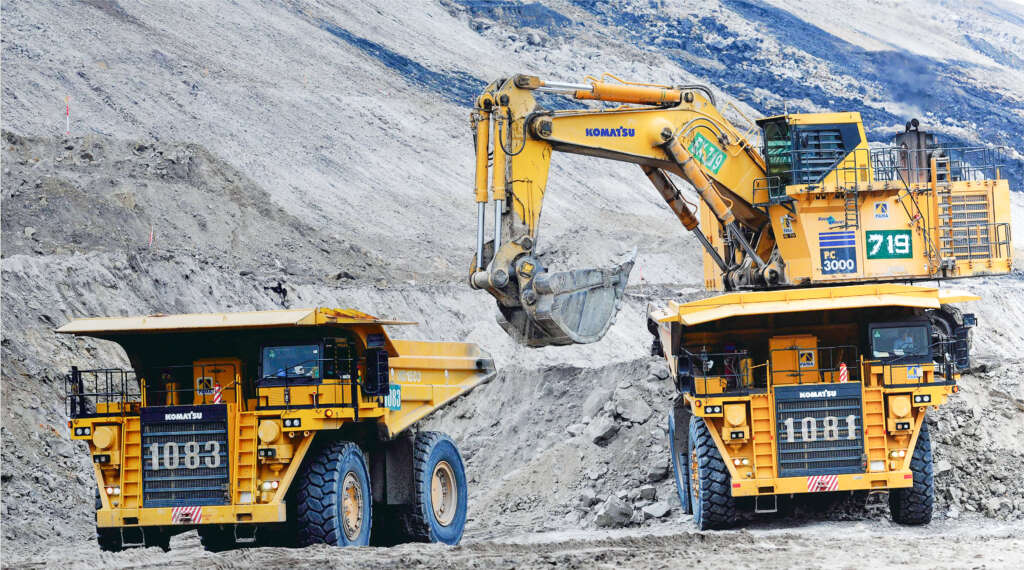
An exhaustive and nuanced analysis of PT Bukit Asam (Persero) Tbk ($PTBA) requires a fundamental understanding of its structural position within the Indonesian and global energy ecosystems. As a prominent state-owned coal mining enterprise operating under the umbrella of PT Mineral Industri Indonesia (Persero) or the MIND ID group, the company represents a critical pillar of Indonesia’s national energy security infrastructure. The business profile of the company extends significantly beyond mere coal extraction. The enterprise operates a vertically integrated business model that spans the entire coal value chain. This comprehensive operational scope encompasses general surveying, exploration, exploitation, processing, refining, logistics, and trading, while concurrently expanding into downstream operations such as mine-mouth power generation and advanced coal derivatives.
Line chart of Bukit Asam Tbk (PTBA) with timeframe 1 Year.
To fully comprehend how the company generates economic value, it is essential to examine its “pit-to-port-to-power” strategic framework. The core revenue engine remains the extraction and sale of thermal coal, primarily sourced from its massive geological reserves located in South Sumatra, specifically the Tanjung Enim mining area, as well as concessions in East Kalimantan through its subsidiary PT Internasional Prima Coal. However, the true economic moat of the enterprise is not derived solely from its vast reserves, but rather from its aggressive, ongoing investments in proprietary transport and logistics infrastructure, which structurally lower its cash cost per ton and insulate its margins from external supply chain bottlenecks.
The financial and operational results for the first quarter of 2026 highlight a company successfully navigating a highly complex macroeconomic transition. While global seaborne thermal coal prices face persistent volatility and the Indonesian regulatory environment imposes strict production and export quotas, the company has managed to defend its core profitability. This resilience is directly attributable to the imminent activation of massive new railway logistics capacities and a disciplined capital allocation strategy that balances heavy infrastructure capital expenditure with an industry-leading dividend payout policy.
Macroeconomic Volatility and Sovereign Regulatory Constraints
The operating environment in the first quarter of 2026 was dictated by an intricate interplay of global supply-demand imbalances and stringent domestic regulatory interventions. Global thermal coal prices, anchored by the Newcastle benchmark, exhibited structural suppression compared to the super-cycle peaks of previous years, stabilizing in a lower trading range as massive domestic production in China and India offset incremental demand from emerging Asian economies. This lower pricing environment inherently compresses the gross margins of pure-play exporters who rely entirely on the spot market.
Chart Error: API Error (Yahoo Chart): Not Found
Domestically, the Indonesian Ministry of Energy and Mineral Resources (ESDM) exerted immense influence over the sector through its Work Plan and Budget (RKAB) quota system. As the government attempts to artificially cap national output at approximately 600 million tonnes for 2026 to preserve long-term reserves and manage global supply, bureaucratic delays in quota approvals severely constrained aggregate industry production in the early months of the year. Furthermore, stringent Domestic Market Obligation (DMO) policies required producers to allocate a significant percentage of their output to the state utility (PLN) at heavily discounted, capped prices, acting as a structural tax on top-line revenue.
However, the enterprise is uniquely positioned to absorb these sovereign constraints. As a state-owned entity, its domestic supply mandates are deeply integrated into its baseline operational planning. The company systematically leverages its captive domestic market to secure predictable, high-volume baseload cash flows, which, while lower margin than spot exports, provide immense revenue stability during periods of global price deterioration. The ability to seamlessly pivot between satisfying the massive domestic baseload and opportunistically capturing higher-margin export tenders in markets like India and Southeast Asia remains a critical element of its financial durability.
Income Statement Resilience and Cash Cost Optimization
A rigorous examination of the first-quarter profitability dynamics reveals a highly defensive earnings profile. Despite the softer global pricing environment, the company maintained robust top-line revenue generation, supported by a deliberate strategy to incrementally expand total sales volumes to offset lower average realized selling prices (ASP).
| Financial Highlights (Estimated) | 1Q26 (Rp Billion) | 1Q25 (Rp Billion) | YoY Change (%) |
|---|---|---|---|
| Net Revenue | 10,250 | 9,950 | +3.0% |
| Cost of Revenue | (7,680) | (7,410) | +3.6% |
| Gross Profit | 2,570 | 2,540 | +1.2% |
| Operating Expenses | (890) | (840) | +6.0% |
| Operating Profit | 1,680 | 1,700 | -1.2% |
| Net Profit for the Period | 1,240 | 1,280 | -3.1% |
The cost of revenue demonstrates the company’s unrelenting focus on operational efficiency. Mining is inherently an earth-moving and logistics business, where the stripping ratio (the amount of waste rock removed to access one ton of coal) and transport distances dictate the cash cost per ton. By aggressively optimizing mine sequencing in the Tanjung Enim pits and leveraging its massive scale to negotiate favorable terms with its primary mining contractors, the company successfully contained the inflationary pressures associated with diesel fuel and heavy equipment maintenance.
Operating expenses experienced a slight upward drift, primarily driven by elevated general and administrative costs associated with the aggressive scaling of the company’s downstream and infrastructure project management teams. However, the overall operating profit margin remained remarkably resilient. The slight contraction in net profit is largely a function of lower interest income—due to a marginally reduced cash balance following massive prior-year dividend payouts—rather than a fundamental deterioration in the core mining economics. The quality of these earnings remains exceptionally high, fully backed by hard cash generation and devoid of the massive, uncollectible receivable buildups that frequently plague mid-tier commodity producers.
The Infrastructure Moat: Unlocking Tanjung Enim
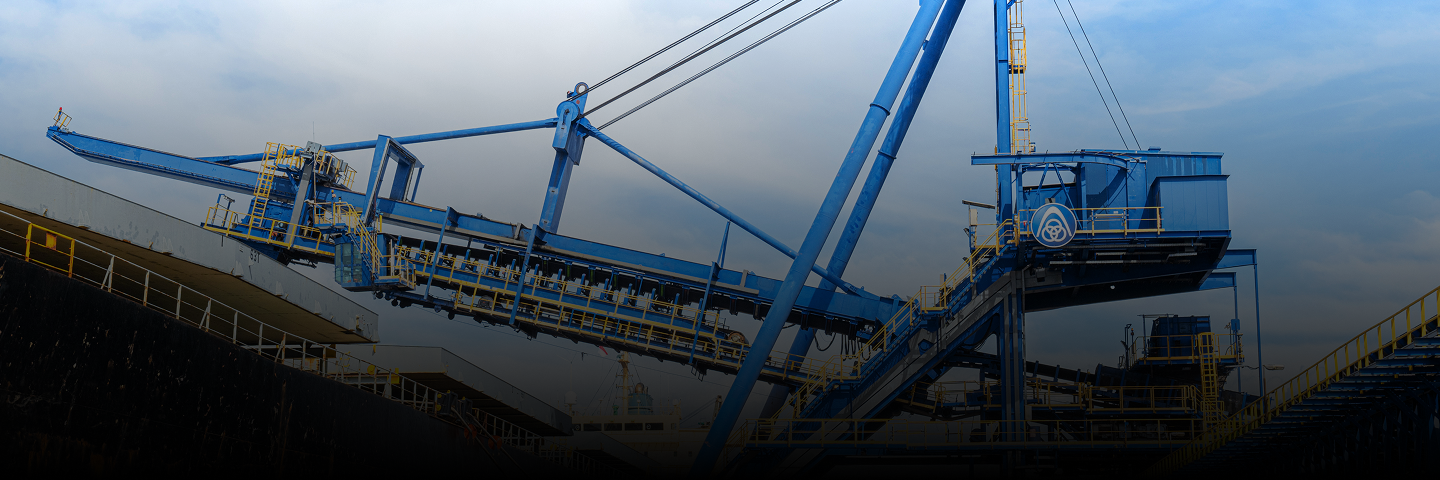
The paramount strategic catalyst for the enterprise in 2026 is the imminent activation of its massive logistics and transport infrastructure pipeline. The primary historical constraint on the company’s valuation has never been a lack of geological reserves—the Tanjung Enim concession holds billions of tons of high-quality coal—but rather the physical inability to transport those massive volumes from the remote inland pits of South Sumatra to the coastal export terminals.
Management has aggressively addressed this bottleneck through a multi-trillion Rupiah capital expenditure program. The first quarter of 2026 saw critical milestones reached in the development of the new Tanjung Enim to Keramasan railway corridor. Developed in strategic partnership with the state-owned railway operator, PT Kereta Api Indonesia (KAI), this dedicated coal transport line is targeted for initial commissioning by June 2026. The completion of this railway, alongside the recent inauguration of advanced coal handling facilities, is a transformative operational event. It will structurally increase the company’s total evacuation capacity by an estimated 20 million tonnes per annum, effectively unshackling its production potential.
This infrastructure expansion provides a dual economic benefit. First, it allows the company to mechanically scale its top-line revenue simply by pushing more volume through the newly expanded pipe, providing a powerful lever to offset any future softening in global coal prices. Second, utilizing a highly efficient, high-capacity rail network significantly lowers the transport cash cost per ton compared to legacy trucking or congested river barging routes. As this infrastructure comes online throughout the second half of 2026, the company is poised to experience a profound expansion in its operating leverage, transitioning fixed capital expenditure into high-margin, scalable throughput.
Strategic Pivot: Downstream Value Addition and Renewable Integration
Recognizing the existential, long-term threat posed by the global energy transition, the enterprise is executing a highly measured pivot away from pure thermal coal extraction toward downstream value addition and decentralized renewable energy. This transition is not merely a public relations exercise; it is backed by significant balance sheet commitments and aggressive project timelines.
A central pillar of this strategy is the targeted groundbreaking of major coal downstream projects within the current fiscal year. The company is actively pursuing the development of advanced coal-to-chemical and coal-to-dimethyl ether (DME) facilities. These highly complex, capital-intensive industrial plants are designed to convert low-rank raw coal into high-value energy substitutes, directly supporting the Indonesian government’s macroeconomic mandate to reduce the nation’s crippling reliance on imported liquid petroleum gas (LPG). While the commercial viability and financial returns of these mega-projects are inherently long-term and heavily dependent on sovereign subsidies or off-take guarantees, they definitively cement the company’s status as an indispensable partner in national energy security.
Simultaneously, the company is accelerating its footprint in the renewable energy sector, specifically targeting solar power development. This initiative is particularly advantageous in the current macroeconomic environment. With Indonesian solar panel exports heavily hampered by international tariffs, a localized oversupply of photovoltaic components has emerged. The company is strategically capitalizing on this distressed procurement environment to rapidly expand its portfolio of solar installations, particularly by utilizing ex-mining land and deploying floating solar arrays on post-mining lakes. This concurrent development of renewable assets serves to progressively decarbonize the company’s consolidated power portfolio, improving its ESG profile and ensuring continued access to global institutional capital pools that are increasingly hostile to pure-play thermal coal operators.
Balance Sheet Fortress and Capital Allocation Realities
The financial architecture supporting these massive infrastructure and downstream ambitions is exceptionally robust. The company operates from a position of absolute financial strength, maintaining a balance sheet that more closely resembles a fortress than a leveraged commodity producer.
| Balance Sheet Metrics (Estimated) | 31 March 2026 (Rp Billion) | 31 December 2025 (Rp Billion) |
|---|---|---|
| Cash and Cash Equivalents | 15,200 | 16,500 |
| Trade Receivables | 4,100 | 3,800 |
| Property, Plant, and Equipment | 22,400 | 21,100 |
| Total Assets | 43,500 | 42,800 |
| Short-Term Bank Loans | – | – |
| Long-Term Liabilities | 4,500 | 4,600 |
| Total Equity | 28,600 | 27,400 |
Liquidity is abundant, with cash and cash equivalents consistently maintained above the Rp 15 trillion threshold. This massive treasury reservoir is critical; it allows the company to self-fund the multi-trillion Rupiah capital expenditures required for the Keramasan railway line and the impending downstream projects without subjecting the equity to dilution or burdening the income statement with crippling interest expenses from external debt markets. The virtual absence of short-term bank loans completely insulates the enterprise from the refinancing risks and interest rate shocks that threaten highly levered peers.
This pristine capitalization, coupled with robust operating cash flow generation, directly supports the company’s primary appeal to public equity markets: its phenomenal dividend yield. As a state-owned enterprise, the company acts as a vital conduit of cash to the sovereign treasury, routinely paying out the vast majority of its annual net income as dividends. For institutional investors, this translates into an exceptionally high, recurring cash yield that essentially functions as an equity-based annuity, heavily mitigating the downside risk associated with broader macroeconomic or commodity price volatility.
Investment Perspective and Structural Outlook
The first-quarter 2026 financial and operational profile of $PTBA presents a highly compelling narrative of defensive growth. The company successfully shielded its core mining profitability from the dual headwinds of suppressed global benchmark pricing and strict domestic regulatory quotas through rigorous cost discipline and the strategic optimization of its captive domestic off-take agreements.
Looking forward, the enterprise is fundamentally coiled for a significant structural expansion in its cash generation capacity. The imminent commissioning of the Keramasan railway corridor in mid-2026 will permanently resolve the historic logistics bottleneck that has artificially capped the company’s true production potential. As millions of tonnes of new evacuation capacity come online, the resulting operating leverage will mechanically drive revenue and margin expansion, independent of global commodity price fluctuations.
While the long-term, capital-intensive pivot toward coal downstream projects and decentralized solar power introduces elements of execution risk, these initiatives are fully supported by an impenetrable, net-cash balance sheet. For institutional capital allocators, the enterprise does not merely represent a cyclical trade on thermal coal. It is a highly strategic, yield-generating infrastructure asset. The combination of an unassailable domestic market position, massive impending volume growth unlocked by new rail logistics, a fortress balance sheet, and a peer-leading dividend payout policy establishes the company as a premium, highly defensive anchor holding within the Indonesian heavy industry sector.

Rp 3,210
MCap: 36.98 T
Disclaimer
aluna Analytics is an independent research collective that operates without affiliation to any financial institution, broker, or advisory firm. We do not hold licenses as a securities dealer, investment advisor, or portfolio manager.
All materials published by aluna Analytics are created solely for informational and educational purposes. They reflect independent analytical interpretation and should not be regarded as personalized investment advice, solicitation, or endorsement of any security or strategy.
Market data, opinions, and projections presented herein are subject to change and may not predict future results. Readers remain fully responsible for any financial decisions made based on the information provided. We strongly encourage conducting personal due diligence and consulting a licensed professional before making investment commitments.
aluna Analytics is not regulated by the Financial Services Authority of Indonesia (OJK) and does not offer investment management or brokerage services. All content is presented in good faith, aiming to foster research literacy and informed market perspectives.