



Author: aluna Analytics | Date: 2 May 2026 | Category: Market Intelligence
PT United Tractors Tbk ($UNTR) operates as one of the most critical barometers of the Indonesian heavy industrial, infrastructure, and resource extraction economy. Founded in 1972 and operating as a heavily integrated subsidiary of PT Astra International Tbk ($ASII)—and by extension, the broader Jardine Matheson conglomerate—the company has historically generated its robust cash flows through a highly synergistic, internally reinforcing business model centered around the archipelago’s vast natural resources. The company operates across five distinct yet deeply interwoven segments: Construction Machinery, Mining Contracting, Thermal and Metallurgical Coal Mining, Gold and Other Mineral Mining, and Other Segments, which encompass construction, shipping, and renewable energy initiatives.
Line chart of United Tractors Tbk (UNTR) with timeframe 1 Year.
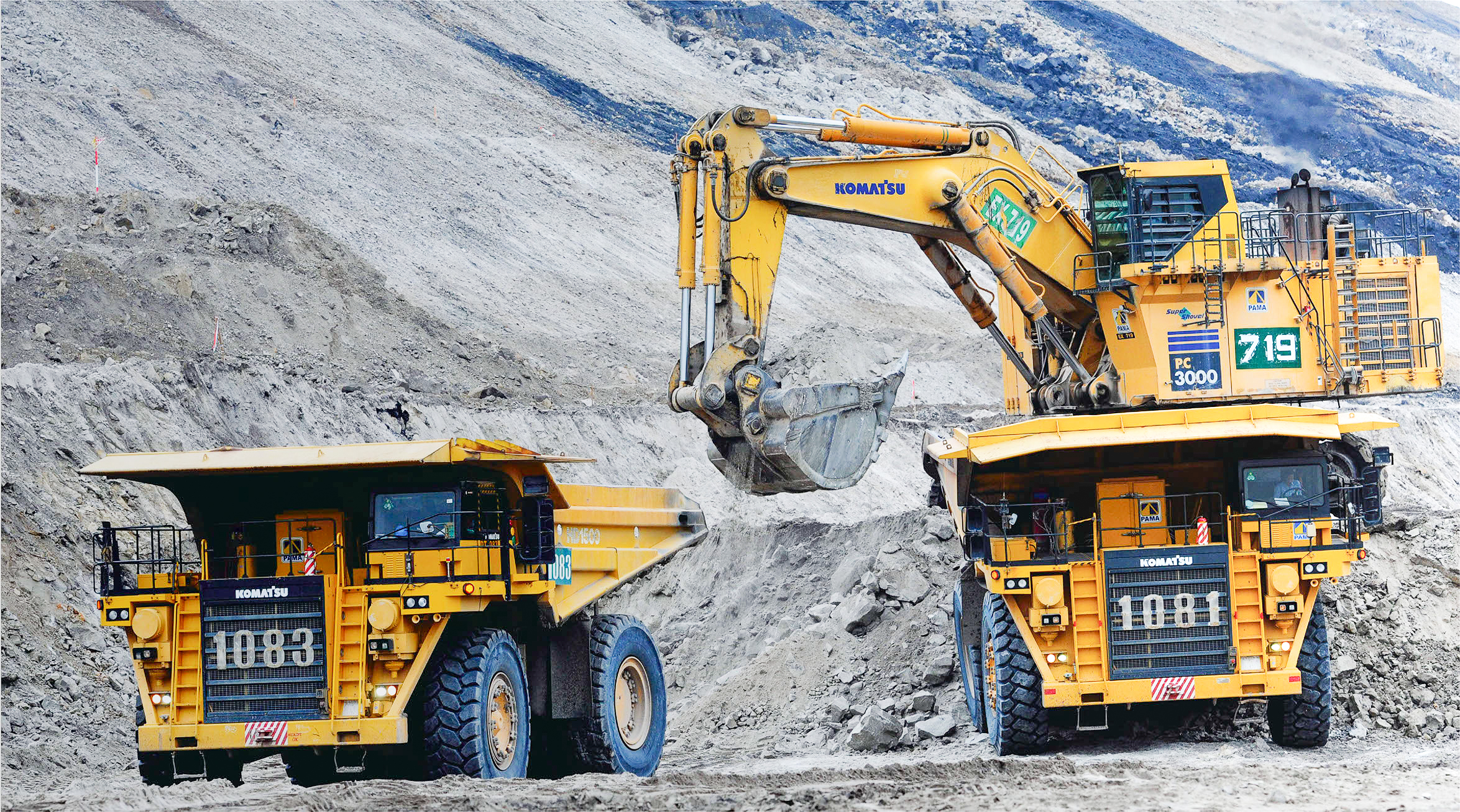
At its core, the business acts as both the premier purveyor of mining infrastructure—retaining market dominance as the sole distributor of Komatsu heavy equipment in Indonesia—and the primary operator utilizing that same infrastructure through its industry-leading mining contracting arm, PT Pamapersada Nusantara (Pama). Furthermore, the company leverages these internal capabilities to operate its own proprietary thermal coal, coking coal, gold, and nickel concessions, capturing margins across the entire vertical extraction value chain. The fundamental economics of this business model are inherently cyclical but traditionally characterized by high cash generation and robust returns on invested capital during commodity upswings. Because the company controls the equipment distribution, the contracting services, and a portfolio of the underlying mining assets, it can theoretically optimize fleet utilization, manage capital expenditure, and capture counter-cyclical benefits with a level of agility unmatched by pure-play miners or independent contractors.
However, this high degree of vertical integration also acts as a powerful double-edged sword. When macroeconomic constraints or regulatory bottlenecks restrict aggregate mining volumes at the sovereign level, the contagion spreads simultaneously across the company’s equipment sales, contracting margins, and proprietary commodity revenues. The financial results for the first quarter ending 31 March 2026 serve as a stark and severe demonstration of this operational gearing operating in reverse. During this period, the company faced an unprecedented confluence of external shocks and internal capital allocation pressures that severely distorted its earnings power and structurally altered its balance sheet.
The Indonesian government’s implementation of a highly restrictive national coal production quota, a devastating cyclone that halted the company’s primary gold operations, a massive penalty related to historical forestry regulations, and an unexpectedly aggressive surge in global gold prices that triggered catastrophic mark-to-market losses on legacy derivative hedges all collided within a single ninety-day window. Simultaneously, management executed an aggressive capital deployment strategy, spending trillions of Rupiah on share repurchases and completing a massive acquisition of a pre-production gold asset, fundamentally transitioning the company from a deeply entrenched net-cash fortress into a net-debt position facing a formidable maturity wall.
An exhaustive interpretation of the first-quarter 2026 financial condition is required. Moving beyond a mere restatement of the reported figures, it is essential to dissect the underlying cause-and-effect relationships that drove the collapse in profitability. By separating temporary regulatory and weather-related noise from structural shifts in the cost base and capital structure, the subsequent sections evaluate whether the currently depressed earnings profile is a transient anomaly or a leading indicator of deteriorating business quality and rising financial fragility.
Top-Line Contraction and Core Earnings Quality Degradation
An analysis of the consolidated income statement reveals a severe contraction in both top-line revenue and bottom-line profitability, with the pace of margin degradation far outpacing the decline in absolute sales volume. This asymmetric decline underscores the high fixed-cost base inherent in heavy industrial operations.
| Income Statement Highlights | 1Q26 (Rp Million) | 1Q25 (Rp Million) | YoY Change (%) |
|---|---|---|---|
| Net Revenue | 28,554,084 | 34,260,783 | -16.66% |
| Cost of Revenue | (23,726,279) | (27,188,658) | -12.73% |
| Gross Profit | 4,827,805 | 7,072,125 | -31.73% |
| Selling Expenses | (285,127) | (231,345) | +23.25% |
| General & Administrative Expenses | (2,336,321) | (1,412,169) | +65.44% |
| Other Income/(Expenses), Net | 4,925 | (120,553) | N/A |
| Finance Costs | (621,857) | (640,720) | -2.94% |
| Share of Net Loss of Associates | (545,558) | (501,738) | +8.73% |
| Profit Before Income Tax | 1,314,751 | 4,473,563 | -70.61% |
| Profit for the Period | 685,002 | 3,297,724 | -79.23% |
| Profit Attributable to Owners | 642,755 | 3,187,427 | -79.83% |
For the three months ended 31 March 2026, the company reported consolidated net revenue of Rp 28,554 billion, representing a 16.6% contraction from the Rp 34,261 billion generated in the corresponding quarter of 2025. This top-line decline was primarily driven by the almost complete cessation of revenue from the Agincourt Resources gold mine, compounded by significantly suppressed activity in the Construction Machinery and Mining Contracting divisions. While a 16.6% revenue decline is material, the flow-through to profitability exposes the immense operating leverage and capital intensity of the enterprise. Gross profit plummeted by 31.7% to Rp 4,828 billion, down from Rp 7,072 billion in the first quarter of 2025. This disproportionate decline illustrates that a substantial portion of the company’s cost of revenue is fixed. When heavy equipment sits idle and mine sites operate below optimal capacity due to regulatory constraints or force majeure weather events, depreciation schedules, labor costs, and baseline maintenance expenses continue to be amortized against a shrinking revenue base, severely compressing gross margins.
Operating expenses further exacerbated the profitability collapse and highlight rising structural burdens. Selling expenses increased by 23.2% to Rp 285 billion, while general and administrative expenses surged by an alarming 65.4%, climbing from Rp 1,412 billion in 1Q25 to Rp 2,336 billion in 1Q26. This massive inflation in administrative overhead is highly unusual for a company experiencing a revenue contraction and requires careful dissection. Management disclosures indicate that the company recognized Rp 1.2 trillion in non-recurring charges during the quarter. These exceptional items primarily consisted of a massive regulatory penalty related to prior activities in forest areas concerning the Forest Area Utilization Approval (PPKH) at the Stargate nickel mine, alongside an impairment provision recorded against the company’s investment in the Supreme Energy Rantau Dedap geothermal project. These charges demonstrate the escalating regulatory and environmental compliance costs associated with operating in Indonesia’s natural resource sector, particularly as the company diversifies into nickel and renewable energy assets that carry distinct operational and political risks.
The burden of these non-recurring items, combined with the loss of high-margin gold sales and the fixed-cost absorption penalty in the contracting business, decimated pre-tax profitability. Profit before income tax collapsed by 70.6% to Rp 1,315 billion, down from Rp 4,474 billion in the prior year. Below the operating line, the company continued to suffer from its equity-accounted investments. The share of net loss from associates and joint ventures widened to Rp 546 billion, compared to a loss of Rp 502 billion in 1Q25. This persistent bleed is heavily tied to the company’s 20.14% stake in Nickel Industries Limited, which has been plagued by impairments on older rotary kiln electric furnace (RKEF) processing plants and a challenging global nickel pricing environment where oversupply from Indonesia has depressed global benchmarks.
Ultimately, the company reported a net profit for the period of Rp 685 billion, an 80% collapse from the Rp 3,298 billion generated in 1Q25. Net income attributable to owners of the parent stood at a mere Rp 643 billion. If one were to normalize these earnings by adding back the Rp 1.2 trillion in non-recurring regulatory fines and impairments (assuming a standard corporate tax shield), the structural core net income would be approximately Rp 1.8 trillion. However, even this adjusted, normalized figure represents a 44% year-over-year decline in core earnings power, definitively proving that the deterioration in the financial performance is not solely the result of one-off penalties. It signifies a fundamental, albeit potentially transient, weakening in its operational cash-generation engines during the quarter.
The RKAB Policy Shock: Construction Machinery and Mining Contracting
To understand the mechanics of this core earnings collapse, it is necessary to evaluate the structural dynamics of each operating segment. The first quarter of 2026 was defined by extreme external volatility, heavily skewing the performance of the company’s legacy coal businesses. The foundational segments—Construction Machinery and Mining Contracting—were severely disrupted by a structural shift in Indonesian sovereign coal policy.
| Segmental Revenue | 1Q26 (Rp Million) | 1Q25 (Rp Million) | YoY Change (%) |
|---|---|---|---|
| Construction Machinery | 10,035,043 | 14,857,033 | -32.46% |
| Mining Contracting | 14,950,916 | 15,133,567 | -1.21% |
| Thermal & Met Coal | 9,514,558 | 8,251,946 | +15.30% |
| Gold & Other Minerals | 691,632 | 2,941,565 | -76.49% |
| Other Segments | 552,015 | 829,073 | -33.42% |
| Eliminations | (7,190,080) | (7,752,401) | N/A |
| Segmental Profit Before Tax | 1Q26 (Rp Million) | 1Q25 (Rp Million) | YoY Change (%) |
|---|---|---|---|
| Construction Machinery | 619,292 | 1,250,879 | -50.49% |
| Mining Contracting | 1,354,813 | 1,884,252 | -28.10% |
| Thermal & Met Coal | 1,006,923 | 766,910 | +31.30% |
| Gold & Other Minerals | (1,456,038) | 225,518 | -745.64% |
| Other Segments | (145,494) | 140,265 | -203.73% |
In an effort to manage global supply, support domestic reserves, and stabilize seaborne thermal coal prices, the Indonesian Ministry of Energy and Mineral Resources (ESDM) mandated a strict reduction in the national coal production target to approximately 600 million tonnes for 2026. This represents a sharp structural decline from the 790 million tonnes produced in 2025. The administrative execution of this policy through the Rencana Kerja dan Anggaran Biaya (RKAB) annual work plan system resulted in severe bureaucratic delays. During the first quarter, many miners were forced to operate under interim allowances restricted to just 25% of their proposed annual output while awaiting final quota approvals. This delay threw the domestic industry into operational limbo, with producers withholding spot offers and capping output to avoid regulatory penalties or mine closures.
This regulatory bottleneck triggered an immediate chilling effect across the entire mining supply chain. In the Construction Machinery segment, mining customers immediately froze their capital expenditure budgets in response to quota uncertainty. As a result, sales volume for Komatsu heavy equipment plummeted by 20% year-over-year to 1,107 units. Because heavy equipment sales operate as a leading indicator of broad mining activity, this volume drop reflects the pervasive uncertainty among Indonesian concession holders. Consequently, revenue for the Construction Machinery segment contracted from Rp 14.86 trillion in 1Q25 to Rp 10.04 trillion in 1Q26, a 32.5% decline. Segmental profit before tax was essentially halved, falling from Rp 1.25 trillion to Rp 619 billion.
While Komatsu retained its dominant market leadership with an 18% market share—signaling that the company is not losing ground to competitors like Caterpillar or aggressive Chinese OEMs—the absolute collapse in aggregate market demand left the segment with significant unabsorbed fixed distribution and inventory carrying costs. Revenue from high-margin spare parts and maintenance services also decreased by 4% to Rp 2.7 trillion, as miners deferred non-essential maintenance on idled fleets.
The Mining Contracting segment, operated by Pama, faced a similar but distinct margin pressure. Because Pama is compensated based on the sheer volume of overburden removed and raw coal extracted, the RKAB quota restrictions directly capped its revenue potential. Furthermore, severe weather patterns, including heavy rainfall and localized flooding associated with regional climate anomalies, physically hampered earth-moving activities at major pit sites. Despite these dual headwinds of quota limits and weather disruptions, Pama managed to report relatively flat revenue of Rp 14.95 trillion, compared to Rp 15.13 trillion in the prior year.
However, the segment’s profitability revealed the underlying operational strain. Profit before tax for Mining Contracting fell by 28.1% from Rp 1.88 trillion to Rp 1.35 trillion, indicating severe margin compression. Heavy equipment contracting is extremely capital-intensive; depreciation and amortization expenses for this segment alone were Rp 2.39 trillion during the quarter. When utilization rates fall due to rain or client quota limits, the massive, unyielding depreciation schedule of the equipment fleet and the fixed costs of maintaining a highly specialized labor force rapidly erode operating margins. The flat revenue masking a 28% drop in profit is a textbook demonstration of negative operating leverage during a cyclical trough.
Thermal and Metallurgical Coal: The Singular Stabilizing Force
In a quarter otherwise defined by operational distress and regulatory bottlenecks, the Thermal and Metallurgical Coal Mining segment acted as the company’s only stabilizing force. This segment, which operates proprietary concessions through subsidiaries such as PT Tuah Turangga Agung and PT Suprabari Mapanindo Mineral, reported a significant increase in revenue to Rp 9.51 trillion, up 15.3% from Rp 8.25 trillion in 1Q25. Profit before tax for the division expanded meaningfully by 31.3% to Rp 1.01 trillion, compared to Rp 767 billion in the previous year.
Chart Error: API Error (Yahoo Chart): Not Found
This outperformance was entirely price-driven and highlights a fascinating macroeconomic paradox. The broader market dynamics created by the Indonesian government’s 600 million tonne quota restriction—the very policy that choked the company’s equipment and contracting divisions—successfully tightened regional supply and supported higher average realized coal prices in the seaborne market. Global demand for 2026 is expected to remain robust at around 8.78 billion tons, and restricting Indonesian output directly addresses the 320 million ton global surplus that had previously suppressed pricing. By leveraging inventory accumulated in the prior quarter and capitalizing on the structurally higher pricing environment, the company was able to expand cash margins in its proprietary mining operations even as aggregate national volumes were suppressed.
This dynamic perfectly illustrates the internal hedging benefit of the company’s vertical integration. The regulatory quota that crippled the service-oriented divisions simultaneously elevated the unit economics of the company’s owned coal assets. However, while this segment provided a vital cash buffer during the quarter, it remains exposed to the eventual normalization of global supply chains and the long-term structural decline in thermal coal demand driven by the global energy transition.
The Gold and Mineral Crisis: Cyclones, Suspensions, and Toxic Hedges
The most dramatic deterioration in the company’s portfolio occurred within the Gold and Other Mineral Mining segment. Historically framed as a high-margin strategic diversifier intended to reduce the company’s reliance on thermal coal, this division transformed into a massive financial and operational liability during the first quarter. Segmental revenue collapsed by 76.5%, falling from Rp 2.94 trillion in 1Q25 to a mere Rp 691 billion. The bottom line swung violently from a pre-tax profit of Rp 225 billion to a staggering pre-tax loss of Rp 1.46 trillion.
The primary physical catalyst for this collapse was the complete cessation of output at the company’s flagship Martabe gold mine in North Sumatra, operated by PT Agincourt Resources. In late 2025, Cyclone Senyar triggered catastrophic flash floods and landslides in the region, causing devastating loss of life and infrastructure damage. In the aftermath, the Indonesian government, under pressure from environmental advocacy groups, initiated a sweeping review of environmental compliance and disaster resilience. This resulted in the suspension and threatened revocation of licenses for 28 companies, including Agincourt.
Line chart of Visi Telekomunikasi Infrastruktur Tbk (GOLD) with timeframe 1 Year.
While the Ministry of Environment (KLH) eventually granted approval for Martabe to resume operations in March 2026, the mine was functionally offline for almost the entirety of the first quarter. Consequently, gold sales volume plummeted to a negligible 4,000 ounces, effectively wiping out the segment’s primary revenue stream. This event highlights the severe geographic, environmental, and political concentration risks associated with operating tropical open-pit mines.
However, the suspension of the physical gold mine was drastically compounded by a severe financial disruption hidden within the company’s derivative hedging book. To protect against commodity downside risk, the company had previously entered into zero-cost collar derivative contracts covering its forecasted gold sales for the period extending from January 2028 to December 2032. A zero-cost collar involves purchasing a put option to establish a price floor while simultaneously selling a call option to finance the premium, thereby capping the upside price realization.
During the first quarter of 2026, global macroeconomic instability and geopolitical tensions drove gold prices to unprecedented all-time highs. Spot markets eclipsed $4,500 per ounce, with prices surging as high as $5,589 per ounce by late January, fueled by massive OTC investment demand and central bank purchasing. Because the company had sold call options with strike prices presumably set far below these historic market highs to counterparties including HSBC, ANZ, Morgan Stanley, and Bank of America, the zero-cost collars became deeply out-of-the-money liabilities.
As per the fair value measurement requirements under PSAK 71, the mark-to-market value of these commodity contracts ballooned into a massive balance sheet liability. The company reported an increase in “Other non-current liability” related to these commodity contracts from Rp 3,555 billion at the end of 2025 to a staggering Rp 5,793 billion by 31 March 2026. Because these derivatives qualify for hedge accounting, the effective portion of the loss bypassed the immediate income statement and was recorded in Other Comprehensive Income. This resulted in a net-of-tax deduction of Rp 1.66 trillion, deeply impairing the company’s equity through the Hedging Reserve account, which swelled to a negative Rp 3.62 trillion.
While this specific accounting treatment shields reported net income from immediate volatility, it represents a profound economic opportunity cost and a looming cash liability. The company is now trapped in a scenario where its physical gold production was halted, yet it is accruing massive financial liabilities on unfulfilled gold hedges that limit its ability to participate in the strongest gold bull market in history. If gold prices remain structurally elevated above $4,000 per ounce, the settlement of these zero-cost collars between 2028 and 2032 will require massive actual cash outflows, further competing for capital.
The nickel operations within this segment provided limited operational relief. PT Stargate Pasific Resources managed to sell 597 thousand wet metric tonnes (wmt) of nickel ore during the quarter, comprising 171 thousand wmt of saprolite and 426 thousand wmt of limonite. Furthermore, the associate company NIC received a new RKAB quota for 2026 nickel ore sales, which increased substantially from 9.0 million wmt to 14.3 million wmt. However, the segment’s profitability was entirely erased by the aforementioned PPKH forestry penalty at the Stargate site and the ongoing equity-method losses from NIC. The convergence of natural disaster, regulatory enforcement, and poorly positioned derivative hedges transformed the mineral diversification strategy into the primary driver of the company’s first-quarter earnings collapse.
Balance Sheet Metamorphosis and Capital Allocation Strategy
The operational shocks detailed above were accompanied by a radical transformation of the company’s balance sheet. Driven by aggressive mergers and acquisitions, substantial shareholder returns, and the absorption of working capital, the company rapidly transitioned from a highly liquid, cash-rich entity into a moderately levered operation facing an imminent maturity wall.
| Balance Sheet Metric | 31 March 2026 (Rp Million) | 31 December 2025 (Rp Million) | Change (%) |
|---|---|---|---|
| Cash and Cash Equivalents | 20,562,639 | 26,570,772 | -22.61% |
| Trade Receivables (Third Party) | 18,694,179 | 18,559,795 | +0.72% |
| Inventories | 15,366,446 | 16,729,809 | -8.15% |
| Mining Properties | 21,845,852 | 14,809,384 | +47.51% |
| Deferred Exploration Costs | 5,077,717 | 2,768,518 | +83.41% |
| Goodwill | 3,587,805 | 3,510,559 | +2.20% |
| Trade Payables (Third Party) | 25,425,880 | 29,095,249 | -12.61% |
| Current Portion of LT Bank Loans | 17,751,229 | 9,682,666 | +83.33% |
| Long-Term Bank Loans | 4,880,415 | 6,054,620 | -19.39% |
| Treasury Shares | (6,255,124) | (4,902,237) | +27.60% |
| Total Assets | 182,480,938 | 177,637,299 | +2.73% |
The most immediately observable trend is the rapid depletion of baseline liquidity. The company’s cash and cash equivalents contracted by over Rp 6 trillion, falling from Rp 26.57 trillion to Rp 20.56 trillion in just three months. A significant portion of this cash burn was driven by a negative working capital cycle. Despite the severe 16.6% contraction in revenue, trade receivables actually increased slightly to Rp 18.69 trillion, indicating slower cash collections from mining customers who were themselves likely squeezed by the RKAB quota delays and halting their own payment cycles.
Simultaneously, the company engaged in a massive deleveraging of its trade obligations, reducing third-party trade payables by Rp 3.67 trillion (from Rp 29.09 trillion down to Rp 25.42 trillion). When a company continues to pay its suppliers rapidly while its own sales and collections stall, it results in a severe absorption of operating cash flow. The company reported a net cash outflow from operating activities of Rp 821 billion, a massive reversal from the Rp 7.49 trillion generated in the first quarter of 2025. This highlights that the reported earnings, already depressed, were not supported by real cash generation during the quarter.
However, the primary catalyst for the balance sheet transformation was aggressive investing activity. Seeking to expand its precious metals portfolio despite the operational catastrophe at Martabe, the company finalized the acquisition of PT Arafura Surya Alam (ASA), a gold mining asset located in North Sulawesi. The transaction was executed through the company’s subsidiaries, PT Danusa Tambang Nusantara and PT Energia Prima Nusantara, buying out PT J Resources Nusantara for a total enterprise value of USD 540 million (approximately Rp 8.7 trillion to Rp 8.88 trillion depending on exchange rates). The deal included a 99.99% stake in ASA, shareholder loans, and a minor stake in PT Mulia Bumi Persada.
The accounting mechanics of this acquisition are clearly visible in the massive inflation of the company’s non-current asset base. The consolidated cash flow statement explicitly shows Rp 8.73 trillion utilized for the acquisition of subsidiaries, net of cash acquired. Consequently, the carrying value of Mining Properties surged by over Rp 7 trillion, rising from Rp 14.80 trillion to Rp 21.84 trillion, representing the fair value allocation of the ASA mineral reserves under PSAK 22. Furthermore, Deferred Exploration and Development Expenditures nearly doubled to Rp 5.07 trillion, reflecting the capitalization of pre-production assets and geological data acquired in the transaction.
To fund this massive USD 540 million acquisition alongside simultaneous shareholder return initiatives, the company leaned heavily on external debt financing. During the quarter, the company expended Rp 1.35 trillion on the repurchase of its own stock, increasing the contra-equity Treasury Shares account from Rp 4.90 trillion to Rp 6.25 trillion as part of a multi-tranche buyback program. To bridge the massive funding gap caused by the operating cash flow compression, the ASA acquisition, and the share buybacks, the company’s debt profile shifted dangerously toward the short term.
Financial Risk, Liquidity, and the Imminent Maturity Wall
The most concerning development on the balance sheet is the explosion in short-term liabilities. The current portion of long-term bank loans skyrocketed by 83.3%, inflating from Rp 9.68 trillion to an immense Rp 17.75 trillion. Short-term bank loans also increased to Rp 731 billion. This reclassification indicates that a massive syndicate of the company’s long-term debt has breached the twelve-month maturity window and is now classified as a current liability.
With total bank debt sitting at approximately Rp 22.6 trillion against a cash balance of Rp 20.56 trillion, the company officially reported a net debt position of Rp 5.5 trillion, breaking its long-standing tradition of operating as a highly conservative, net-cash fortress (it held Rp 7.7 trillion in net cash as of December 2025). While management notes that the net gearing ratio remains ostensibly low at 5%, evaluating leverage solely through gearing ignores the acute maturity profile.
The company now faces an imminent maturity wall where nearly Rp 18 trillion in bank debt must be refinanced or settled using internal cash flows in a macro-environment where global interest rates remain restrictive and the company’s core gold and equipment sales revenues are severely depressed. The debt portfolio includes significant club deals with floating rates tied to Compounded IndONIA and Term-SOFR, exposing the company to elevated interest expenses if rates remain “higher for longer”. Finance costs are already running at Rp 621 billion per quarter.
This financial structure poses a latent but significant liquidity risk. The company’s current ratio has deteriorated as current liabilities surged to Rp 57.11 trillion against current assets of Rp 66.23 trillion. Furthermore, the massive Rp 5.79 trillion derivative liability sitting in the non-current section serves as a ticking time bomb. If gold prices remain structurally elevated above $4,000 per ounce, the settlement of these zero-cost collars will require massive cash outflows in the coming years, further competing for capital against the debt maturity wall, dividend obligations, and the necessary capital expenditures required to bring the newly acquired ASA gold mine into commercial production.
Assessment of Business Quality and Structural Economics
Evaluating the company’s business quality requires separating the structural economics of the enterprise from the extraordinary noise of the first quarter. Fundamentally, $UNTR is not a steady compounder; it is a highly sophisticated, integrated cyclical operator. Its competitive positioning within the Indonesian heavy equipment and mining contracting space is virtually unassailable. Holding an 18% market share with the Komatsu brand and operating the largest mining contracting fleet in the country provides the company with deep economies of scale and unparalleled operational data regarding the domestic mining sector.
However, the events of 1Q26 expose the immense dependency risks inherent in this model. The company is completely tethered to the regulatory whims of the Indonesian government. The implementation of the 600 million tonne RKAB quota paralyzed the company’s two largest segments instantly. The inability of mining clients to secure production approvals translated directly into canceled equipment orders and idle contracting fleets. This demonstrates a critical operational fragility: despite its massive scale, the company has no pricing power or volumetric control when the sovereign authority decides to throttle the aggregate output of the industry for strategic or environmental reasons.
Furthermore, the company’s strategic attempts to diversify away from this thermal coal dependency have, thus far, yielded highly volatile and value-destructive results. The pivot into precious metals, battery metals, and renewable energy was intended to provide counter-cyclical stability. Instead, the gold, nickel, and geothermal segments generated the largest losses in the portfolio. The suspension of the Martabe mine due to cyclone damage and subsequent environmental audits highlights the severe geographic and environmental concentration risks associated with operating tropical open-pit mines.
Moreover, the financial engineering utilized to manage the risk of these new assets—specifically the zero-cost collars on gold production—demonstrates a failure in risk management forecasting. By capping gold upside to finance downside protection, the company engineered a scenario where it suffers massive opportunity costs and margin calls precisely during a period when the underlying commodity is experiencing a historic super-cycle.
The durability of the company’s margins is highly vulnerable in the short term. The fixed costs of the Pama fleet and the Komatsu distribution network require high volumetric throughput to maintain profitability. Until the ESDM fully clears the RKAB backlog and authorizes higher production volumes, the company’s return on invested capital will remain depressed. Furthermore, the newly acquired ASA asset will require significant developmental capital expenditure before it yields free cash flow, adding a drag on overall corporate returns in the interim.
Valuation Considerations and Investment Perspective
From a valuation perspective, the equity currently presents a complex paradox for institutional investors. The reported 80% collapse in statutory net income, the 44% decline in core earnings, and the negative operating cash flow will inevitably screen poorly on standard trailing valuation metrics. Furthermore, the optical deterioration of the balance sheet—transitioning to net debt, facing an Rp 17.7 trillion current maturity wall, and carrying a Rp 5.79 trillion toxic derivative liability—will deter risk-averse capital.
However, viewing the business solely through the lens of the 1Q26 disaster ignores the structural rebound potential. The market environment that caused the revenue collapse is largely transient. The RKAB quota delays are administrative bottlenecks, not a permanent destruction of Indonesian coal reserves. As the government finalizes quota allocations throughout the remainder of 2026, volume throughput in both the Construction Machinery and Mining Contracting segments is highly likely to normalize. Pama’s fleets will return to optimal utilization, and the deferred capital expenditure by mining clients will eventually translate into a backlog of Komatsu orders. Similarly, the Martabe gold mine received clearance to resume operations in March, meaning the absolute lack of gold sales in the first quarter will not be repeated in subsequent periods. The company also received a positive tax assessment letter (SKPLB) in April 2026 for an overpayment of Rp 807.5 billion, which will provide an immediate liquidity injection.
The fact that management executed a Rp 1.35 trillion share repurchase during the quarter, despite the cash flow constraints and the ASA acquisition, indicates a deep internal conviction that the intrinsic value of the enterprise far exceeds its current market capitalization. The underlying cash-generation capacity of the coal operations remains robust, as evidenced by the expansion in margins within the Thermal and Metallurgical Coal segment due to tighter market pricing.
Therefore, the company represents a conditional investment opportunity that warrants a cautious but opportunistic stance. It does not justify a premium valuation characteristic of high-quality compounders, given its intense cyclicality, exposure to sovereign regulatory shocks, and the severe execution missteps evident in its hedging and environmental compliance frameworks. It is a structurally challenged business navigating a peak-stress environment. However, at a discounted valuation, the normalization of the regulatory environment provides a clear catalyst for a sharp earnings rebound.
Investors must closely monitor two specific vulnerabilities that could invalidate this recovery thesis: the successful refinancing of the Rp 17.7 trillion current debt wall, and the cash flow mechanics of the zero-cost collar settlements in a $4,500+ gold environment. Should the company successfully roll over its short-term debt and resume full operations at Martabe without further environmental suspensions, the extreme margin compression witnessed in 1Q26 will reverse, unlocking the underlying equity value masked by this quarter’s perfect storm of operational, climatic, and regulatory disruptions.

Rp 25,175
MCap: 93.91 T
Disclaimer
aluna Analytics is an independent research collective that operates without affiliation to any financial institution, broker, or advisory firm. We do not hold licenses as a securities dealer, investment advisor, or portfolio manager.
All materials published by aluna Analytics are created solely for informational and educational purposes. They reflect independent analytical interpretation and should not be regarded as personalized investment advice, solicitation, or endorsement of any security or strategy.
Market data, opinions, and projections presented herein are subject to change and may not predict future results. Readers remain fully responsible for any financial decisions made based on the information provided. We strongly encourage conducting personal due diligence and consulting a licensed professional before making investment commitments.
aluna Analytics is not regulated by the Financial Services Authority of Indonesia (OJK) and does not offer investment management or brokerage services. All content is presented in good faith, aiming to foster research literacy and informed market perspectives.


