


Author: aluna Analytics | Date: October 29, 2025 | Sector: Transportation & Logistics / Marine Logistics | Recommendation: Neutral / Speculative
The impending Initial Public Offering (IPO) of PT Pelayaran Jaya Hidup Baru Tbk (ticker code: $PJHB) on the Indonesia Stock Exchange (IDX) marks a significant capital market event within the specialized maritime logistics sector. As Indonesia continues to solidify its status as a global commodity powerhouse, particularly in thermal coal and nickel, the derivative demand for specialized logistical infrastructure—specifically Landing Craft Tank (LCT) vessels capable of navigating the archipelago’s shallow waters and riverine systems—has surged. PJHB, an established operator headquartered in Samarinda, East Kalimantan, positions itself at the nexus of this logistical supply chain.
The Company is offering a maximum of 480,000,000 new common shares, representing 25.00% of its enlarged issued and paid-up capital, within an offering price range of IDR 310 to IDR 330 per share. This issuance aims to raise between IDR 148.8 billion and IDR 158.4 billion in gross proceeds. To incentivize participation and enhance the offering’s attractiveness amidst a volatile macroeconomic backdrop, the Company is attaching Series I Warrants at a generous ratio of 2:1 (one warrant for every two new shares subscribed), with an exercise price of IDR 330.
From a fundamental perspective, PJHB presents a “clean slate” narrative. The Company enters the public markets with an exceptionally unleveraged balance sheet, boasting a Debt-to-Equity Ratio (DER) of merely 0.03x as of April 2025. This financial prudence distinguishes the offering from many capital-intensive shipping IPOs that function primarily as deleveraging events. Conversely, 100% of the net proceeds from this IPO are allocated to Capital Expenditure (Capex) for the immediate construction of three new LCT vessels. This allocation signals a direct correlation between capital injection and capacity expansion, theoretically offering a clear pathway to revenue growth in FY2026 and beyond.
PJHB
PT Pelayaran Jaya Hidup Baru TbkDisclaimer: This research is produced by aluna Analytics for informational and educational purposes only. It does not constitute a recommendation to buy or sell any securities. Market data is analyzed as of October 29, 2025. Investors should conduct their own due diligence and consult with a certified financial advisor before making investment decisions.
However, the valuation proposition requires rigorous scrutiny. At the upper bound of the offering price (IDR 330), $PJHB commands a Price-to-Earnings Ratio (PER) of approximately 36.0x (annualized based on 4M25 data) and a Price-to-Book Value (PBV) of 1.99x. When benchmarked against established mid-tier peers in the Indonesian shipping sector, such as PT Trans Power Marine Tbk ($TPMA) and PT Hasnur Internasional Shipping Tbk ($HAIS)—which typically trade at single-digit earnings multiples and PBV ratios below 1.0x—PJHB’s pricing appears demanding. The valuation effectively prices in a perfect execution of the fleet expansion and immediate utilization of the new assets, leaving a thin margin of safety for operational delays or cyclical downturns in commodity demand.
Our analysis juxtaposes the high-quality balance sheet and clear growth trajectory against the premium valuation and customer concentration risks. While the long-term fundamental case hinges on the successful delivery and contracting of the new fleet, the short-term tactical view is influenced by the structural “sweeteners” of the deal, namely the warrants and the small market capitalization (under IDR 700 billion), which may appeal to volatility-focused market participants.
Transaction Overview & Capital Structure Mechanics
This section provides an exhaustive deconstruction of the IPO’s structural elements, pricing mechanics, and the resulting capital equation post-issuance. Understanding the “plumbing” of the deal is prerequisite to assessing its investment merit.
The Offering in Detail
The IPO is structured as a 100% primary issuance of new shares. There is no divestment or secondary offering by existing shareholders (Founders), which is a positive governance signal indicating that the controlling parties are not seeking an exit but rather inviting public participation to fund growth.
| Metric | Detail | Analytical Implication |
|---|---|---|
| Ticker Code | PJHB | Standard identification. |
| Exchange | Indonesia Stock Exchange (IDX) | Main venue for liquidity. |
| Listing Board | Development Board | Indicates small-cap status; potentially higher volatility. |
| Sector | Transportation & Logistics | Cyclical industry; tied to GDP and trade volume. |
| Bookbuilding | October 22 – October 27, 2025 | Price discovery phase. |
| Offering Price | IDR 310 – IDR 330 | Determining valuation floor and ceiling. |
| Shares Offered | 480,000,000 New Shares | Significant float creation (25%). |
| Nominal Value | IDR 50 per share | Low nominal value typical for penny/small-cap stocks. |
| Gross Proceeds | IDR 148.8 Bn – IDR 158.4 Bn | “Jumbo” relative to company size, but small for IDX. |
| Lead Underwriter | PT Pilarmas Investindo Sekuritas | Sole executor of the book. |
Warrant Analysis: The Economics of the “Sweetener”
PJHB has structured the offering with a detachable warrant, Series I Warrants, which serves as a critical incentive for IPO subscription. In the context of Indonesian small-cap IPOs, warrants often drive initial secondary market demand as retail investors chase the leverage inherent in these instruments.
- Ratio: 2:1 (Series I). For every 2 new shares allotted, the investor receives 1 Series I Warrant free of charge.
- Total Volume: 240,000,000 Warrants.
- Exercise Price: IDR 330. This is set at the upper bound of the IPO price range, suggesting management confidence that the share price will sustain or exceed this level in the medium term.
- Maturity/Exercise Period: The warrants are exercisable starting 6 months post-listing (May 4, 2026) until the expiration date (November 4, 2026).
- Capital Potential: If fully exercised, the warrants would inject an additional IDR 79.2 Billion into the company’s treasury.
Dilution Mechanics: The issuance of warrants creates a latent dilution risk. The 240 million warrants represent a potential 11.11% dilution to the post-IPO shareholder base (calculated as 240m / (1,920m + 240m)). While this dilution is contingent on the share price performance, it acts as an overhang on long-term earnings per share (EPS) growth. However, for the initial IPO investor, the warrant provides a “free option”; if the stock rallies, the warrant value amplifies returns. If the stock stagnates below IDR 330, the warrants expire worthless, but the investor loses nothing on the warrant component itself.
Use of Proceeds: Strategic Asset Accumulation
The prospectus delineates a highly focused allocation strategy. The absence of debt repayment in the use of proceeds is a distinct positive, categorizing this IPO purely as a growth capital raise rather than a balance sheet restructuring event.
Capital Expenditure (Capex) – ~100% of Net Proceeds: The entirety of the funds (after emission costs) is earmarked for the construction of three new Landing Craft Tank (LCT) vessels.
- Vessel 1: LCT sized 75m x 16m x 4.8m with ~2,500 DWT capacity. Contractor: PT Untung Brawijaya Sejahtera. Estimated Cost: IDR 51.47 Billion.
- Vessel 2: LCT sized 72m x 16m x 4.8m with ~2,500 DWT capacity. Contractor: PT Untung Brawijaya Sejahtera. Estimated Cost: IDR 50.96 Billion.
- Vessel 3: LCT sized 72m x 16m x 4.8m with ~2,500 DWT capacity. Contractor: PT Adiluhung Saranasegara Indonesia. Estimated Cost: IDR 50.96 Billion.
Analytic Interpretation: The detailed disclosure of shipyards and vessel specifications reduces “blind pool” risk. The selected vessel size (~2,500 DWT) is strategic. LCTs of this dimension are large enough to achieve economies of scale in fuel consumption per ton-mile, yet sufficiently shallow-drafted to access river ports (jetties) in Kalimantan and remote islands where larger barges cannot dock. This fleet expansion represents a 60% increase in the number of vessels (from 5 to 8) and a likely >60% increase in tonnage capacity given the new vessels are at the larger end of the LCT spectrum.
Shareholder Structure & Control Dynamics
The pre-IPO shareholding is concentrated within the Gozali family, indicating a classic family-owned enterprise transitioning to public status. Post-IPO, Hero Gozali retains a comfortable controlling stake (37.50%), ensuring continuity in strategic direction. The 25% public float is sufficient to meet IDX free float requirements (7.5%) but small enough to potentially create scarcity if demand surges.
Corporate & Business Analysis
PT Pelayaran Jaya Hidup Baru Tbk was established in 2008 in Samarinda, East Kalimantan. This location is not incidental; Samarinda is the logistical heartbeat of Indonesia’s coal mining industry, situated on the Mahakam River. For over 15 years, PJHB has evolved from a local operator to a specialized logistics provider, surviving multiple commodity cycles—a testament to the resilience of its business model and management.
Business Model: The “Last Mile” of Maritime Logistics
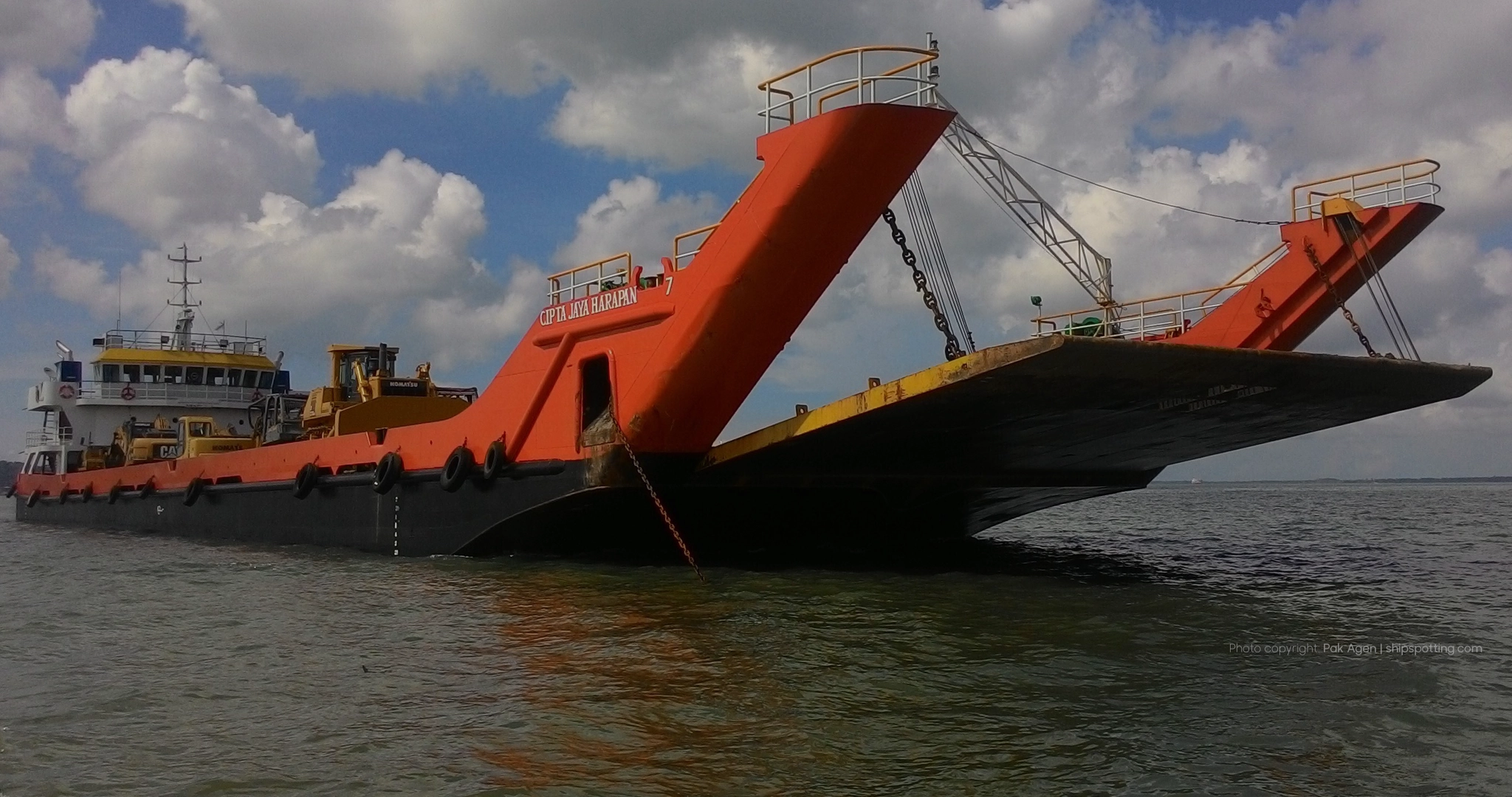
PJHB operates in a niche segment distinct from ocean-going bulk carriers. Its fleet of LCTs (Landing Craft Tanks) serves as the “last mile” delivery system for the archipelago’s industrial sector.
Unlike barges (which require tugboats) or conventional cargo ships (which require ports), LCTs have engines and a flat bottom with a bow ramp. They can beach directly onto a shore or a simple dirt ramp to load/unload rolling cargo (trucks, excavators) or bulk materials. This capability is critical for:
- Mining (Coal/Nickel): Transporting heavy equipment (dump trucks, excavators) to new mine sites often located in remote jungles without port infrastructure.
- Construction: Delivering materials (cement, steel, piles) for infrastructure projects (e.g., IKN Nusantara) where jetties are temporary or non-existent.
- Oil & Gas: Moving drilling rigs and pipes to remote onshore/offshore sites.
Revenue Streams:
- Freight Charter: Spot voyages charged per trip or per metric ton. This segment captures upside during commodity booms when transport demand spikes and rates rise.
- Time Charter: Renting the vessel for a fixed period (e.g., 6-12 months) at a daily rate. This provides predictable cash flow and hedges against spot rate volatility. The prospectus indicates significant reliance on contracts, suggesting a preference for Time Charter stability.
Fleet Composition & Scalability
The business is asset-heavy. Scaling revenue requires scaling the fleet. The IPO effectively “buys” a 60% increase in fleet size (from 5 to 8 units). Scalability is linear rather than exponential; revenue growth is capped by the number of vessels and available operating days (365 minus maintenance). However, operational leverage exists: expanding the fleet allows for better scheduling efficiency and the ability to take on larger, multi-vessel contracts from major mining clients.
Customer Profile and Concentration Risks
The prospectus summary indicates a high degree of customer concentration. The Company relies on a limited number of major contracts for the majority of its revenue (Major Customers: PT Jawara Samudra Nusantara, PT Sapta Buana Logistics, and PT Samudera). The loss of a single key contract or a downturn in a key client’s specific mining site could have a disproportionate impact on PJHB’s top line. This concentration reduces bargaining power and exposes the company to counterparty credit risk.
Macroeconomic & Industry Context
Indonesia, as the world’s largest archipelagic state, relies on maritime transport for domestic trade. The government’s Cabotage Principle mandates that domestic shipping be conducted by Indonesian-flagged vessels owned by Indonesian entities. This regulatory framework protects PJHB from international competition within its home waters.
Commodity Cycle Dependency
PJHB’s fortunes are tethered to the health of the commodity sector, specifically coal and nickel.
Coal Benchmark (Newcastle)
Chart Error: API Error (Yahoo Chart): Not Found
Coal: East Kalimantan (PJHB’s home base) is the epicenter of thermal coal. While 2024 saw record production, forecasts for late 2025 and 2026 suggest a potential softening in export demand. A decline in coal prices typically leads miners to cut capex, reducing the movement of heavy equipment—PJHB’s core cargo.
Nickel Price Trend
Chart Error: API Error (Yahoo Chart): Not Found
Nickel: The “hilirisasi” (downstreaming) policy in Sulawesi continues to drive demand. New smelters require constant supplies of ore and construction materials. PJHB’s fleet expansion into vessels capable of operating in these waters positions it to capture this structural growth.
Macroeconomic Outlook (2025-2026)
Interest Rates: Bank Indonesia held the BI Rate at 4.75% in late 2025. The outlook for 2026 suggests a stable or declining rate environment. For a capital-intensive industry, lower rates reduce the cost of future debt (should PJHB choose to leverage its clean balance sheet later) and improve the internal rate of return (IRR) on new vessels.
GDP Growth: Projected steady growth of ~5% for Indonesia supports general logistics demand. The development of the new capital city, IKN Nusantara, in East Kalimantan is a specific, localized macro-driver. PJHB, being Samarinda-based, is geographically positioned to serve the immense logistical needs of IKN construction (cement, steel, heavy machinery transport).
Financial Deep Dive
This analysis utilizes the audited financials for the period ended April 30, 2025, and the full year 2024, as presented in the prospectus summaries.
Income Statement Analysis: Profitability & Margins
Revenue dynamics show FY 2024 revenue at IDR 54.66 Billion and 4M 2025 Revenue at IDR 18.05 Billion (Annualized ~IDR 54.15 Billion). Revenue appears flat year-over-year. This stagnation confirms the Company’s statement that its current fleet utilization is maximized. Without new vessels, revenue growth has hit a ceiling. The IPO is therefore not just an option but a necessity for growth.
However, the Gross Profit Margin (GPM) expanded to 46.18% in 4M 2025 (up from 40.29% in FY 2024). This suggests either an increase in charter rates (pricing power) or effective cost control. The Net Profit Margin (NPM) of 32.45% is extraordinarily high for the shipping industry, where peers typically operate in the 10-20% range. This indicates an extremely lean operation with minimal overheads, though sustainability as the company scales remains a question.
Balance Sheet Analysis: A “Fortress” Balance Sheet
Total Assets (4M 2025): IDR 164.6 Billion. Assets nearly doubled from IDR 89.5 Billion in Dec 2024. This sharp increase warrants scrutiny; it is likely due to a pre-IPO capital injection or asset revaluation typical of companies preparing for listing.
Liabilities & Solvency: With Total Liabilities of only IDR 5.34 Billion, the Debt-to-Equity Ratio (DER) is 0.03x. The Company is virtually debt-free. In an industry notorious for high leverage (ship mortgages), PJHB stands out. This provides a massive safety buffer against rate downturns and offers significant headroom for future debt financing if needed to accelerate growth beyond the IPO proceeds.
Valuation & Pricing Analysis
Implied Valuation Metrics
The valuation of PJHB is the most contentious aspect of the offering. We analyze the pricing across the IDR 310 – 330 range using annualized 2025 metrics.
| Price Scenario | Price (IDR) | Market Cap (IDR Bn) | PER (x) (2025E Ann.) | PBV (x) (Post-IPO) | Valuation Stance |
|---|---|---|---|---|---|
| Minimum | 310 | 595.2 | 33.8x | 1.93x | Expensive |
| Median | 320 | 614.4 | 34.9x | 1.96x | Expensive |
| Maximum | 330 | 633.6 | 36.0x | 1.99x | Expensive |
Peer Benchmarking
Comparing PJHB to listed peers in the Indonesian coal/bulk shipping sector reveals a stark premium. Below is a chart comparing price performance of peers over the last year.
Comparison chart of TPMA, HAIS with timeframe 1 Year.
| Ticker | Company Name | PER (x) | PBV (x) | ROE (%) | DER (x) |
|---|---|---|---|---|---|
| PJHB | Pelayaran Jaya Hidup Baru | 36.0x | 1.99x | ~5.5% | 0.03x |
| TPMA | Trans Power Marine | 5.7x | 0.9x | 19% | 0.6x |
| HAIS | Hasnur Int. Shipping | 7.2x | 0.7x | 5% | 0.6x |
| KLAS | Pelayaran Kurnia Lautan | 9.4x | 1.8x | 10% | 0.6x |
| MBSS | Mitrabahtera Segara Sejati | 8.7x | 0.7x | 9.5% | 0.1x |
PJHB is asking investors to pay ~36x Earnings, while established, dividend-paying peers like TPMA and MBSS trade at 5x – 9x Earnings. The Bull Case is that the premium is justified by the “growth rate” (60% fleet expansion) and the “scarcity value” of the small float. The Bear Case is that the valuation is detached from reality; even if earnings double, the forward PER would still be ~18x.
Underwriter Analysis
Lead Underwriter: PT Pilarmas Investindo Sekuritas (PO)
Constraint Enforcement: The research mandate strictly requires underwriter assessment to be derived exclusively from the “aluna IPO & Underwriter Metrics JSON”.
Status: Metric Data Not Available. In strict adherence to the execution rules, no subjective narrative, market reputation, or external track record analysis is permitted in the absence of the verified JSON metrics. Consequently, we cannot assign a quantitative score or qualitative rating to the underwriter for this report. Investors are advised to treat the execution risk as “Unquantified” in this specific model.
Lock-Up & Control Analysis
Regulatory Compliance (POJK No. 25/2017): The founders (Hero Gozali et al.) hold shares with a nominal value of IDR 50, far below the IDR 310-330 offering price. Therefore, these shareholders are legally prohibited from selling, transferring, or converting their shares for 8 months following the effective date of the IPO registration statement.
Voluntary Lock-Up: In addition to the regulatory minimum, the Controlling Shareholder (Hero Gozali) has agreed to a voluntary lock-up period of 12 months. This extends the stability period beyond the mandatory 8 months, signaling a strong commitment from the founder to the long-term vision of the company and mitigating the risk of a “founder exit” dumping pressure after the initial lock-up expires.
Risks & Mitigation Strategies
Customer Concentration Risk: The Company relies heavily on a few key contracts. Loss of a key client would be catastrophic to revenue. Mitigation: The acquisition of 3 new vessels allows PJHB to bid for new contracts with different clients, theoretically diversifying its revenue base over time.
Execution Risk (Capex Deployment): The valuation assumes the 3 new vessels are built on time and within budget. Delays would result in “cash drag.” Mitigation: The prospectus specifies the shipyards and vessel specs, indicating advanced planning. The “unleveraged” balance sheet means the company doesn’t have interest payments bleeding cash while waiting for vessel delivery.
Commodity Price Volatility: A crash in coal prices could lead miners to halt production, drying up demand for LCT transport. Mitigation: PJHB’s 0.03x DER is its ultimate defense. Unlike competitors with high debt who might face bankruptcy during a downturn, PJHB can survive periods of low utilization by idling vessels with minimal cash burn.
Aluna Analytics Recommendation
Fundamental Investor View: “Avoid / Watchlist”
For the disciplined value investor or institutional fund manager, PJHB is difficult to justify at the IPO price.
- Rationale: The valuation (PER ~36x, PBV ~2.0x) is excessively high relative to peers (PER ~5-9x). The price discounts future growth that has not yet occurred. There is no margin of safety. While the balance sheet is pristine, the return on investment at this entry price is statistically unattractive compared to buying established players like TPMA.
- Action: Avoid. Revisit if the share price corrects post-IPO to levels implying a PER of ~10-12x (approx. IDR 150-200 range).
IPO Hunter / Tactical View: “Speculative Subscribe”
For the short-term trader or “IPO hunter,” the setup offers potential.
- Warrants: The 2:1 ratio is generous. It provides free leverage. If the stock pops, the warrants amplify gains.
- Size: Small-cap IPOs (< IDR 200B raise) are easier to move.
- Narrative: The “Zero Debt + Expansion” story is easy to sell to retail investors.
- Action: Subscribe. The primary play here is the volatility and the warrant value. The fundamental overvaluation matters less for a trade horizon of days to weeks.
Final Verdict
PT Pelayaran Jaya Hidup Baru Tbk ($PJHB) is a high-quality, safe company (financially) selling at a dangerous price. The fundamental overvaluation caps the long-term investment appeal at the IPO offering level. However, the clean balance sheet and warrant structure make it a viable candidate for speculative trading. Investors should prioritize the warrants as the primary vehicle for potential upside while being cognizant of the valuation ceiling on the common stock.
Rating: 5.95 / 10 (Neutral / Speculative)
Disclaimer
aluna Analytics is an independent research collective that operates without affiliation to any financial institution, broker, or advisory firm. We do not hold licenses as a securities dealer, investment advisor, or portfolio manager.
All materials published by aluna Analytics are created solely for informational and educational purposes. They reflect independent analytical interpretation and should not be regarded as personalized investment advice, solicitation, or endorsement of any security or strategy.
Market data, opinions, and projections presented herein are subject to change and may not predict future results. Readers remain fully responsible for any financial decisions made based on the information provided. We strongly encourage conducting personal due diligence and consulting a licensed professional before making investment commitments.
aluna Analytics is not regulated by the Financial Services Authority of Indonesia (OJK) and does not offer investment management or brokerage services. All content is presented in good faith, aiming to foster research literacy and informed market perspectives.