

Author: aluna Analytics | Date: 21 June 2026 | Sector: Healthcare (Healthcare Equipment & Supplies) | Recommendation: Neutral / Conditional Participate (High Risk)
The transaction context surrounding the Initial Public Offering of PT Esa Medika Mandiri Tbk, operating under the designated ticker symbol $EMMI, represents a highly complex, structurally defensive capital market transaction. Stripping away the conventional growth narrative, this issuance functions primarily as a critical liquidity bridge and an emergency balance sheet restructuring mechanism. The chronological execution timeline is initiated with the bookbuilding period, strategically scheduled from June 22 to June 24, 2026.
Following the anticipated effective declaration from the Indonesian Financial Services Authority (Otoritas Jasa Keuangan) on June 30, 2026, the formal public offering period will span a highly concentrated window from July 2 to July 6, 2026. The statutory allotment of shares is slated for July 6, 2026, with the electronic distribution of equity securities into the collective custody of KSEI following immediately on July 7, 2026. Ultimately, the asset is scheduled to be officially listed and commence active secondary market trading on the Indonesia Stock Exchange on July 8, 2026.
Pricing parameters for this liquidity event have been established within a demanding indicative bookbuilding range of Rp446 to Rp515 per share. The enterprise is offering a maximum volume of 522,857,000 ordinary registered shares to the investing public. This tranche will constitute exactly 30.00% of the total issued and paid-up capital of the enterprise post-offering, bringing the total outstanding shares to a fully diluted aggregate of 1,742,857,000 shares. Crucially, the structural architecture of this offering consists entirely of newly issued primary shares originating directly from the corporate treasury. It is completely devoid of any secondary shares being divested by legacy shareholders.
EMMI
PT Esa Medika Mandiri TbkDepending on the final pricing discovery mechanics achieved within the established bookbuilding boundaries, the gross capital proceeds extracted from the public market will span up to a maximum ceiling of Rp269.27 billion. The 100% primary nature of this issuance serves as a potent structural signal: the controlling entities are not utilizing this IPO as a predatory liquidity exit, but rather accepting massive equity dilution out of sheer necessity to recapitalize a distressed balance sheet.
The ESA Sinkhole and Earnings Depression Mechanics
Embedded deeply within the primary issuance structure is an Employee Stock Allocation (ESA) program that sequesters a maximum of 10.00% of the total offered shares, equating to exactly 52,285,700 shares. Mechanically, this allocation instantly reduces the true public free float available to external retail and institutional investors down to 470,571,300 shares, representing a tradable day-one float of just 27.00%. While the transaction cleanly lacks derivative overhangs such as accompanying warrants, the financial execution of the ESA program introduces a profound, immediate headwind to fundamental valuation.
According to the prospectus disclosures, the company will utilize internal cash reserves to fund this employee purchase. Under strict PSAK 53 (Share-based Payment) accounting standards, this maneuver triggers a massive, non-cash share-based compensation expense. This accounting reality threatens to heavily depress reported net profit for the fiscal year 2026, severely inflating trailing valuation multiples shortly after listing and effectively neutralizing any near-term dividend potential for public participants.
Disclaimer: This research report is produced by aluna Analytics for informational and educational purposes only. It does not constitute a recommendation to buy or sell any securities. Market data is analyzed as of June 21, 2026. Investors should conduct their own due diligence and consult with a certified financial advisor before making investment decisions.
Strategic Capital Allocation and the Syndicate Conflict
The strategic deployment blueprint for the raised capital strips away any illusion of aggressive market expansion, illuminating the purely defensive drivers underlying the company’s decision to access the capital markets. The utilization of proceeds is drastically prioritized toward emergency balance sheet deleveraging and the critical replenishment of a severely paralyzed working capital cycle.
| Allocation Category | Nominal / Percentage | Strategic Purpose and Intended Deployment |
|---|---|---|
| Debt Deleveraging (PT Bank Ina Perdana Tbk) | Rp50.0 Billion (Fixed) | Emergency partial repayment of a Demand Loan facility carrying a floating 10.5% interest rate, addressing covenant breaches. |
| Capital Expenditure (Cikupa Factory) | ~11.80% of Remaining | Construction and physical development of a manufacturing facility to transition toward localized medical device production. |
| Operational Working Capital | ~68.70% of Remaining | Urgent financing for the procurement of medical inventory and raw materials required to fulfill institutional government tenders. |
The most glaring anomaly within the capital allocation strategy is the fixed tranche of Rp50.0 billion explicitly earmarked to retire a portion of a highly burdensome Demand Loan from PT Bank Ina Perdana Tbk ($BINA). Operating with a floating interest rate of 10.5%, this facility has crippled EMMI’s interest coverage ratios. Repaying this debt is not a strategic luxury; it is an absolute necessity to repair a balance sheet currently surviving on temporary covenant waivers, theoretically freeing up roughly Rp5.25 billion in annualized interest bleed.
However, this deleveraging maneuver introduces a massive structural conflict of interest that retail participants must not ignore. The joint lead underwriter for this transaction is PT Ina Sekuritas Indonesia (RB)—a direct corporate affiliate of the exact creditor, Bank Ina Perdana, receiving the bailout funds. This setup strongly suggests the IPO was engineered partially by the creditor ecosystem to secure an exit from a distressed corporate loan facility, transferring the systemic risk directly onto the shoulders of the incoming public equity float.
Following this debt extraction, a mere 11.8% of the remaining net proceeds will target the physical development of the Cikupa manufacturing facility. The vast majority, constituting up to 68.7%, will be absorbed directly into the company’s working capital vacuum. This heavy reliance on baseline liquidity funding underscores the capital-intensive vulnerability of the enterprise’s current operating model, where extended accounts receivable cycles from state-backed institutional clients necessitate massive upfront liquidity buffers to prevent supply chain paralysis.
Float Architecture and Supply Restriction Mechanics
An exhaustive forensic analysis of the pre- and post-IPO capitalization table is essential for deciphering the underlying economic incentives of the controlling entities. The willingness of the founders to accept substantial equity dilution without monetizing a single secondary share confirms the urgent, systemic requirement for enterprise-level liquidity over personal wealth extraction.
| Shareholder Entity | Pre-IPO Shares | Pre-IPO % | Post-IPO Shares | Post-IPO % | Float Classification |
|---|---|---|---|---|---|
| Surya Gunawan Widjaja | 367,246,000 | 30.10% | 367,246,000 | 21.00% | Controlling Shareholder |
| Andrew Ignatius Widjaja | 285,410,000 | 23.40% | 285,410,000 | 16.00% | Legacy Shareholder |
| Other Founders (Florian, Andrian, Eddy) | 567,344,000 | 46.50% | 567,344,000 | 32.00% | Legacy Shareholders |
| Public Investors (Tradable) | 0 | 0.00% | 470,571,300 | 27.00% | Active Free Float |
| Employee Stock Allocation (ESA) | 0 | 0.00% | 52,285,700 | 3.00% | Sterilized Internal Float |
| Total Enterprise Capitalization | 1,220,000,000 | 100.00% | 1,742,857,000 | 100.00% |
From a granular secondary market supply perspective, the effective free float entering the tape on the first day of trading is mathematically engineered to be tighter than the headline figures suggest. While a gross total of 30.00% is being issued to the public, the 3.00% allocated to the internal ESA program is immediately sterilized by a draconian 30-month lock-up provision. Therefore, the absolute maximum theoretical supply available for active daily trading upon listing is strictly reduced to 27.00% of the outstanding capitalization. At the maximum offering price of Rp515, this equates to a tradable liquidity pool of roughly Rp242 billion, creating a moderately constrained initial supply environment that market makers can more easily defend.
Regulatory Lock-Up Integrity and Cliff Overhangs
The stability of the post-IPO market capitalization relies entirely on the integrity of the sponsor lock-up provisions. While a forensic review of historical equity table changes confirms no transactions trigger the statutory POJK No. 25/POJK.04/2017 eight-month restriction based on discounted pre-IPO issuances, the market is not left defenseless. Surya Gunawan Widjaja, acting as the Ultimate Beneficial Owner, has executed a legally binding, voluntary declaration confirming his absolute commitment to retain control and restrict share distribution for a minimum of twelve months following the effective date.
This voluntary lock-up serves as the primary stabilization mechanism, shielding the fragile secondary market from a catastrophic supply shock driven by insider distribution. Furthermore, the extensive 30-month lock-up applied to the ESA shares ensures the internal employee base cannot immediately dump their subsidized equity into public bids. Intersecting these agreements creates a highly predictable, sanitized liquidity environment for the first year of public trading, effectively isolating the 27.00% public float until the inevitable 12-month cliff effect materializes.
Underwriter Execution Analytics and Stabilization Mechanics
PT BRI Danareksa Sekuritas (OD) & PT Ina Sekuritas Indonesia (RB): Joint Lead Underwriters.
Evaluating the expected Day-1 stabilization mechanics requires parsing algorithmic execution signals against syndicate history. The $EMMI transaction is spearheaded by PT BRI Danareksa Sekuritas (Broker Code: OD) alongside the conflicted PT Ina Sekuritas Indonesia (RB). While OD carries a highly respected tier-1 institutional pedigree, evaluating their specific execution archetype within this mid-cap, distressed healthcare structure points to a heavy reliance on a aluna Plus aluna Plus Exclusive This content is exclusive for aluna Plus (Registered Members). Join for FREE to unlock access. Register for Free strategy.
To defend the demanding issue price, the syndicate will necessitate robust Control Scores and elevated Absorption Metrics. Without the backing of explosive algorithmic demand momentum or massive verified oversubscription ratios, the burden of managing the Rp242 billion tradable float will severely test OD’s distribution network. A failure to secure high-conviction, long-only institutional anchors could easily drive the Retail Trap Probability to critical levels above 65.00% on the debut session.
Crucially, the underwriters must effectively utilize the mathematically constrained ESA float and the 100% primary issuance structure to engineer an artificially tight order book. By suppressing perceived supply, they must counteract the natural selling pressure expected from retail participants who are highly likely to distribute early, wary of the demanding valuation multiples and the underlying banking covenant distress.
Aluna Analytics Insight: The complete absence of verified algorithmic demand momentum shifts the entire burden of post-listing performance onto structural defense mechanics. OD and RB are tasked with guarding a fundamentally fragile, highly leveraged asset priced for absolute perfection. The solitary saving grace for day-one traders is the 100% primary nature and the multi-year ESA lock-ups, which provide the underwriters with a mathematically tighter sandbox to manage liquidity flow. Ultimately, this IPO will live or die on the quality of the institutional book OD can forcefully construct to absorb the maximum proceeds.
Enterprise Ecosystem and Severe Concentration Risks
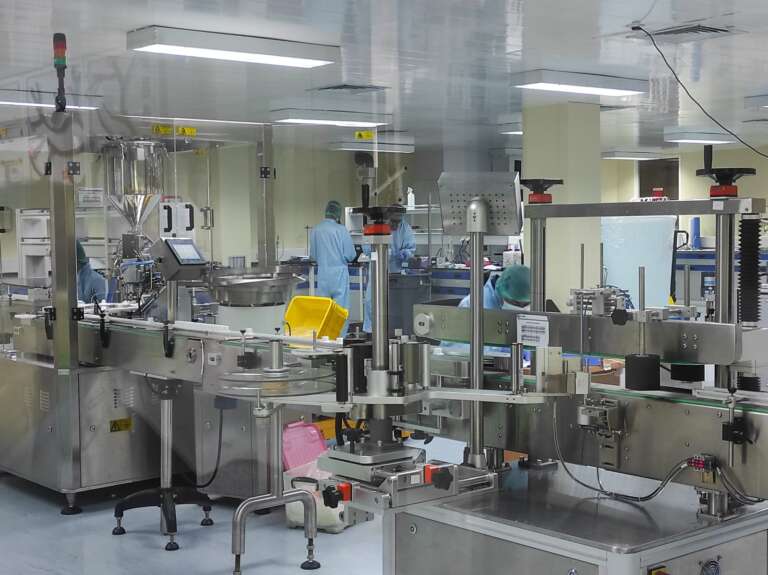
Transitioning from the structural topography to the corporate reality, PT Esa Medika Mandiri Tbk operates as a highly integrated, yet existentially concentrated enterprise within the Indonesian healthcare supply chain. Rather than functioning merely as a localized, low-margin vendor, the company specializes in the deployment of high-acuity capital medical equipment destined for operating theaters and intensive care units, acting as the exclusive distributor for prominent international medical technology principals.
However, this specific business model generates severe, systemic concentration risks. The company’s consolidated revenue streams are overwhelmingly tethered to unpredictable state procurement cycles and bilateral development funding. In the fiscal year 2025, a staggering 98.49% of the total consolidated revenue was derived directly from the government segment via the national e-Katalog procurement system. This extreme customer homogeneity exposes the enterprise to devastating bureaucratic vulnerabilities. Any administrative delays in tender disbursements, or shifts in Ministry of Health budget allocations, result in immediate, catastrophic cash flow contractions.
The TKDN Pivot and Macroeconomic Topography
To systematically mitigate this erratic cash flow volatility, the company is attempting a massive strategic pivot toward the localized production of surgical sutures through its joint venture, PT Esa Wego Indonesia. This pivot is inextricably linked to shifting macroeconomic dynamics and an increasingly protectionist regulatory environment. While the Indonesian government has expanded the 2025-2026 national health budget to a massive Rp217.3 trillion, accessing this sovereign capital is now strictly governed by the enforcement of Domestic Component Level (TKDN) regulations.
In a targeted effort to build sovereign health resilience, the state heavily penalizes pure importers, effectively restructuring the medical supply industry into a domestic manufacturing oligopoly. The company’s decision to allocate 11.8% of IPO capital toward the construction of the Cikupa manufacturing facility is a direct, survival-mandated response to this TKDN policy. By localizing production, the company ensures its portfolio remains eligible for mandatory state procurement. The macroeconomic tailwinds are undeniably massive, but capturing them requires the flawless execution of an industrial pivot that the company’s current balance sheet is ill-equipped to fund without public market intervention.
IHSG Market Context
Line chart of Jakarta Composite Index (IHSG) with timeframe 1 Year.
Fiscal Architecture and Earnings Quality Forensics
A deep forensic analysis of the prospectus financial data reveals a highly volatile, highly engineered financial trajectory. The optical narrative of explosive, tender-driven revenue growth aggressively masks severe underlying working capital constraints and critical cosmetic adjustments applied to the equity base to dress the asset up for public markets.
| Financial Metric (Audited) | FY 2023 | FY 2024 | FY 2025 | YoY Growth (’24-’25) |
|---|---|---|---|---|
| Net Revenue (Rp Billion) | 172.98 | 384.93 | 454.63 | +18.11% |
| Total Assets (Rp Billion) | 340.63 | 714.39 | 564.44 | -21.00% |
| Total Liabilities (Rp Billion) | 284.57 | 641.02 | 419.42 | -34.57% |
| Reported Total Equity (Rp Billion) | 56.06 | 73.37 | 145.01 | +97.64% |
| Current Ratio (x) | 0.48x | 0.82x | 0.92x | +12.19% |
| Reported Debt-to-Equity (x) | 5.08x | 8.74x | 2.89x | -66.93% |
While top-line revenue expanded massively by 122.53% in 2024 and sustained an 18.11% growth rate into 2025 (heavily driven by major, non-recurring Islamic Development Bank and World Bank tenders), the long-term sustainability of this project-based revenue is highly questionable. Fulfilling these colossal state tenders strained the enterprise’s balance sheet to an absolute breaking point, pushing total liabilities to an unsustainable zenith of Rp641.02 billion in 2024.
Although the reported Debt-to-Equity (DER) ratio optically compressed to a more palatable 2.89x in 2025, this improvement was heavily engineered. The company executed a massive Rp37.65 billion non-cash revaluation of fixed land assets under PSAK 16, injecting the surplus directly into the equity account. Stripping out this cosmetic revaluation reveals a true operational equity base of roughly Rp107.36 billion and a deeply distressed real operational DER hovering near 3.9x. Furthermore, the company suffers from a critical, ongoing liquidity deficit. Operating with a negative working capital position (evidenced by a Current Ratio of just 0.92x), the company triggered an official debt covenant breach with PT Bank OCBC NISP Tbk. The financial durability of this enterprise post-IPO relies entirely on this exact public capital injection to stave off severe insolvency risks.
Valuation Matrix and Comparative Pricing
The valuation framework must be meticulously assessed across the minimum and maximum boundaries of the bookbuilding range, heavily contextualized against the highly engineered 2025 earnings base and the impending dilution of the ESA program.
| Valuation Metric | Minimum Scenario (Rp446) | Maximum Scenario (Rp515) |
|---|---|---|
| Outstanding Shares Post-IPO | 1,742,857,000 | 1,742,857,000 |
| Market Capitalization (Rp Billion) | 777.31 | 897.57 |
| Trailing P/E Ratio (2025 Base) | 23.9x | 27.6x |
| Reported Post-IPO P/BV Ratio | 1.92x | 2.22x |
| Adjusted P/BV (Ex-Revaluation) | 2.12x | 2.45x |
Utilizing the estimated, peak-cycle 2025 net profit, the Price-to-Earnings (PER) ratio is established firmly between 23.9x and 27.6x. This represents an incredibly demanding, premium valuation for a wholesale distribution business reliant entirely on unpredictable sovereign tenders. Investors are essentially being asked to pay a growth multiple for earnings inflated by specific development milestones that have a statistically low probability of annual replication. Furthermore, the “conservative” Price-to-Book Value (PBV) touted in the prospectus rests entirely on the cosmetically inflated land revaluations. When adjusted for true, tangible operational equity, the PBV expands to a frictional 2.12x to 2.45x.
Integrated Investment Perspectives
Synthesizing these disparate analytical threads requires balancing severe fundamental distress against highly orchestrated structural defense. From a long-term, fundamental vantage point, the investment case is heavily impaired. An extreme 98.49% concentration in government e-Katalog revenue creates lumpy, unpredictable cash flows that have resulted in chronic working capital deficits and technical banking covenant breaches. The valuation is aggressively demanding, particularly given the upcoming anvil of non-cash share-based compensation expenses required to fund the ESA program, which will decimate 2026 earnings.
Conversely, from a purely structural IPO trading perspective, the transaction is engineered with highly protective parameters. The 100% primary issuance, combined with a 12-month voluntary controller lock-up and a draconian 30-month ESA lock-up, mathematically restricts the immediate tradable float to exactly 27.00%. The capital raised is urgently deployed to high-barrier TKDN manufacturing pivots and necessary debt retirement (albeit conflicted), demonstrating functional capital stewardship out of absolute survival necessity rather than predatory sponsor intent.
Final Verdict & Aluna Rating
The Initial Public Offering of PT Esa Medika Mandiri Tbk ($EMMI) represents a highly conditional, extreme-risk distressed recapitalization event. It is unequivocally not a fundamentally supported, wide-moat investment at the current demanding valuation multiples. Instead, it is a necessary, syndicate-driven balance-sheet rescue mission disguised as a growth offering. Because the day-one supply dynamics are tightly controlled by intersecting multi-year lock-ups and the proceeds address vital, state-mandated TKDN transitions, the equity may find synthetic, structure-driven support in the secondary market orchestrated by the underwriters. However, active participants must ruthlessly weigh the highly precarious financial reality against this defensive IPO architecture.
aluna Analytics Rating: Neutral / Conditional Participate (High Risk)
Market participants are advised to proceed with extreme caution, treating this asset strictly as a supply-constrained, highly volatile trading vehicle dependent entirely on underwriter defense, rather than a durable fundamental portfolio allocation.
Disclaimer
aluna Analytics is an independent research collective that operates without affiliation to any financial institution, broker, or advisory firm. We do not hold licenses as a securities dealer, investment advisor, or portfolio manager.
All materials published by aluna Analytics are created solely for informational and educational purposes. They reflect independent analytical interpretation and should not be regarded as personalized investment advice, solicitation, or endorsement of any security or strategy.
Market data, opinions, and projections presented herein are subject to change and may not predict future results. Readers remain fully responsible for any financial decisions made based on the information provided. We strongly encourage conducting personal due diligence and consulting a licensed professional before making investment commitments.
aluna Analytics is not regulated by the Financial Services Authority of Indonesia (OJK) and does not offer investment management or brokerage services. All content is presented in good faith, aiming to foster research literacy and informed market perspectives.