
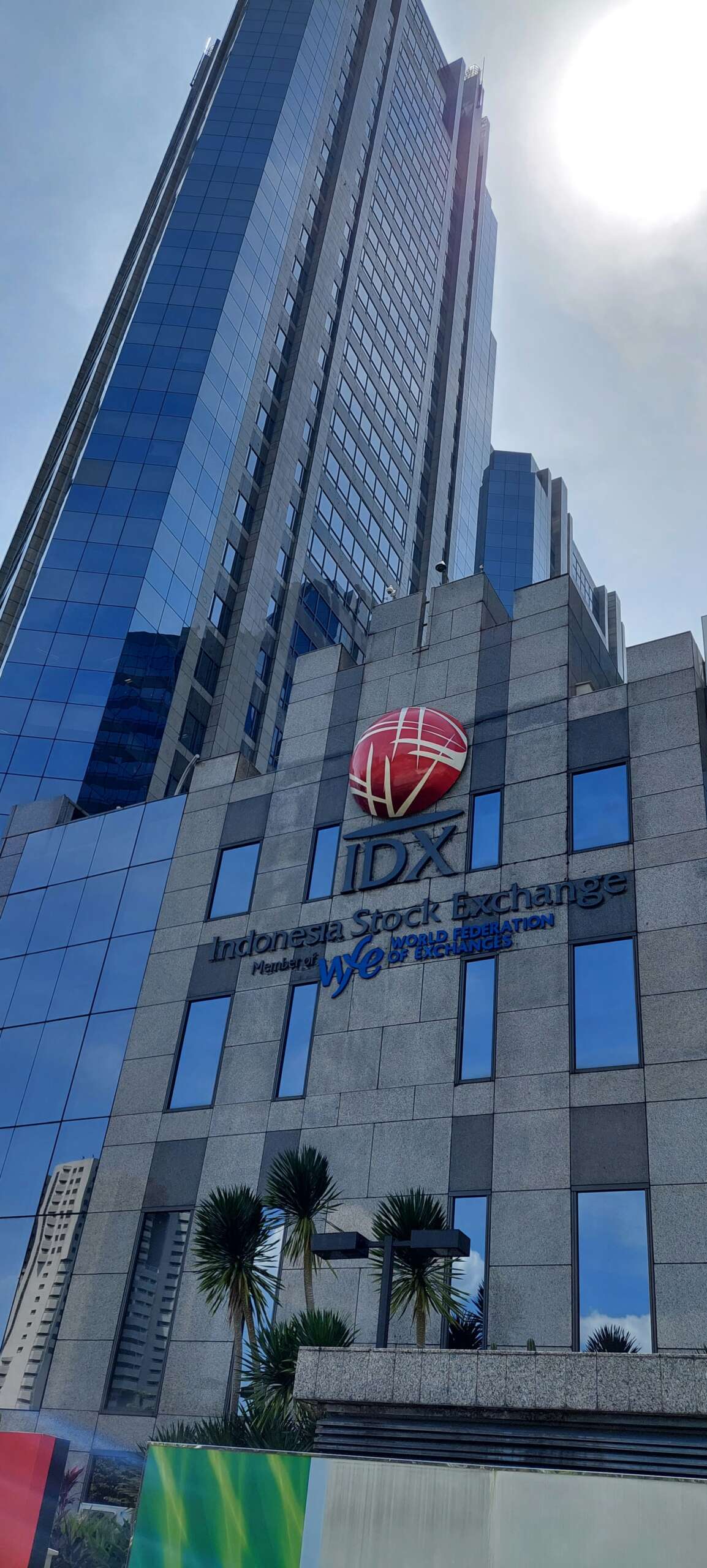

Author: aluna Analytics | Date: 1 May 2026 | Category: Market Intelligence
The strategic management of a corporation’s capital structure represents one of the most complex disciplines within corporate finance, requiring a continuous and delicate equilibrium between securing essential liquidity for expansion and preserving the foundational control of the enterprise. In the context of the Indonesian capital market, encompassing the vast and dynamic landscape of the Indonesia Stock Exchange (IHSG), these practices are collectively understood through the lens of dilution engineering. Dilution engineering is the highly sophisticated, deliberate practice of calibrating capital raising instruments to minimize the erosion of absolute or relative voting power, to mitigate adverse market perceptions, and to optimize the weighted average cost of capital while satisfying strict regulatory mandates.
The Indonesian market presents a unique ecosystem for these practices, defined by a highly specific regulatory architecture enforced by the Financial Services Authority (Otoritas Jasa Keuangan, or OJK), the profound behavioral dynamics of both domestic retail and foreign institutional investors, and the historical dominance of highly concentrated family and state ownership models.
At its fundamental core, equity dilution manifests in two distinct but inextricably linked forms: economic dilution and control dilution. Economic dilution occurs when a corporate entity issues new equity securities at a valuation or price point below its intrinsic or prevailing secondary market value. This mathematical reality inevitably results in the transfer of underlying economic value from the pre-existing shareholders to the new subscribers or capital providers. Control dilution, conversely, refers to the absolute reduction in the proportionate voting power of the existing shareholders. When new shares are issued and absorbed by external parties, the fractional ownership of any shareholder who does not participate in the new issuance is instantly compressed, fundamentally altering the governance dynamics, the capacity to form blocking minorities, and the ultimate strategic direction of the enterprise.
To navigate and manage these dual existential risks, corporate management boards and their external financial advisors employ a diverse spectrum of financial instruments. Within the IHSG, the most prominent mechanisms utilized for these purposes include pre-emptive rights issues (Hak Memesan Efek Terlebih Dahulu, or HMETD), private placements (Penambahan Modal Tanpa Hak Memesan Efek Terlebih Dahulu, or PMTHMETD), and the strategic attachment of derivative sweeteners such as share warrants. The selection and structural design of these instruments are not arbitrary; they are heavily influenced by the firm’s immediate leverage requirements, its historical profitability, the tangibility of its assets, and the unique business risks it faces. Empirical analysis of Indonesian manufacturing firms demonstrates that capital structure functions as a highly selective transmission mechanism. Specific firm attributes, such as debt tax shields, non-debt tax shields, and collateral quality, are converted into ultimate firm value exclusively through highly disciplined financing choices, underscoring the critical importance of dilution engineering in sustainable corporate value creation.
Line chart of Jakarta Composite Index (IHSG) with timeframe 1 Year.
The Mathematical Architecture of Dilution Measurement
The precise measurement and forecasting of economic dilution rely heavily on established financial models and rigorous accounting standards. For primary equity issuances such as rights issues, the market relies on the Theoretical Ex-Rights Price (TERP) to establish a baseline valuation. The Theoretical Ex-Rights Price calculates the mathematically adjusted per-share value of the corporation immediately following the execution of a rights offering, serving as the essential benchmark for market participants, arbitrageurs, and institutional investors to assess the true dilutive impact of the corporate action.
The mathematical relationship governing this valuation adjustment is expressed through the following formula:
$$St+1 = \frac{(St \times N) + (X \times n)}{N + n}$$
Within this structural equation, $St+1$ represents the theoretical ex-rights price, $St$ denotes the prevailing pre-announcement secondary market price of the security, $N$ is the absolute number of existing shares currently outstanding, $X$ signifies the precise exercise or subscription price of the newly offered equity, and $n$ represents the total number of newly issued shares introduced to the capital table. The critical variable within this framework is the differential between the subscription price and the prevailing market price, which dictates the depth of the discount—a foundational element in the practice of dilution engineering.
A discount of zero percent mathematically implies a pure one-to-one value transfer, resulting in zero implied economic dilution to the share price, as the new capital injected perfectly matches the prevailing market capitalization on a per-share basis. However, deeper discounts mathematically force a lower ex-rights valuation, effectively transferring immediate paper value from the underlying common stock to the tradable rights themselves.
| Discount Strategy | Impact on Subscription Price | Implied Economic Dilution | Market Perception |
|---|---|---|---|
| Zero Discount (0%) | Equal to current market price | No dilution to underlying share value | Highly confident; signals strong intrinsic value. |
| Moderate Discount (10-20%) | Slightly below market price | Moderate dilution | Standard practice; provides necessary subscription incentive. |
| Deep Discount (>40%) | Severely below market price | Severe dilution; sharp TERP drop | Distressed signal; indicates urgent liquidity needs or high failure risk. |
Conversely, the calculation of dilution resulting from the issuance of derivative instruments, such as warrants or employee stock options, necessitates the strict application of the Treasury Stock Method (TSM). Under the comprehensive guidelines formalized in global accounting frameworks such as ASC 260-10, the Treasury Stock Method systematically isolates the net dilutive effect of in-the-money securities. The underlying premise of this methodology assumes that upon the exercise of the outstanding warrants, the corporation utilizes the total cash proceeds generated from the subscription to actively repurchase its own common shares from the open market at the average market price observed during the specific reporting period.
Because the predetermined exercise price of an in-the-money warrant is inherently lower than the prevailing market price of the stock, the cash proceeds generated are mathematically insufficient to repurchase the entirety of the newly issued shares. The remaining, un-repurchased shares constitute the net economic dilution. These net additional shares permanently expand the denominator utilized in the calculation of the corporation’s earnings per share (EPS). As the denominator expands without a corresponding instantaneous increase in net income, the EPS is inherently driven down. Consequently, if the market maintains a constant price-to-earnings (P/E) multiple for the security, the overarching share price must decline proportionally to reflect this earnings dilution.
The Regulatory Framework Governing Capital Raising in Indonesia
The orchestration of capital raising and dilution engineering within Indonesia operates under the stringent, evolving oversight of the Financial Services Authority (OJK) and the Indonesia Stock Exchange (IDX). This regulatory architecture is deeply rooted in the foundational Law Number 8 of 1995 concerning Capital Markets, which was recently modernized and expanded by Law Number 4 of 2023 regarding the Development and Strengthening of the Financial Sector. Within this overarching legal superstructure, the precise execution mechanics of rights issues and private placements are governed by highly specific OJK regulations that seek to balance the crucial need for corporate financial flexibility with the absolute necessity of protecting minority shareholders from predatory expropriation.
The primary regulatory framework dictating the parameters of rights issues is OJK Regulation No. 32/POJK.04/2015, which was subsequently amended, refined, and significantly expanded by OJK Regulation No. 14/POJK.04/2019. This regulatory evolution marked a definitive and necessary shift toward enhanced minority shareholder protection in the Indonesian market. Under the established provisions of POJK 32/2015, public companies are granted a strictly enforced maximum window of twelve months between the formal approval of the rights issue by the Extraordinary General Meeting of Shareholders (EGMS) and the ultimate effectiveness of the registration statement issued by the OJK. This temporal boundary acts as a critical safeguard; it ensures that the macroeconomic assumptions, financial projections, and strategic rationales presented to the shareholders during the EGMS remain materially valid and relevant at the time of execution, preventing management from holding open-ended authorization to dilute equity in fundamentally altered market conditions.
POJK 14/2019 introduced critical amendments to this landscape, primarily by consolidating previous regulatory fragments and significantly tightening the approval requirements for Capital Increases Without Pre-Emptive Rights, commonly known as Private Placements. Recognizing that private placements fundamentally bypass the inherent democratic right of existing shareholders to maintain their proportionate economic and control ownership, the OJK mandated strict new barriers. Specifically, non-preemptive issuances executed by public companies that are not suffering from severe, demonstrable financial distress now require the explicit, affirmative approval of independent and unaffiliated shareholders. This regulatory barrier forces controlling blockholders and corporate management to publicly justify the strategic necessity of the dilution to the broader market, stripping them of the unilateral power to dilute the public float at will.
To prevent the systemic abuse of the financial distress exemption by management teams seeking rapid capital injections without independent oversight, POJK 14/2019 rigidly defines the exact parameters of corporate distress. For banking institutions, financial distress is legally recognized only if the entity has received emergency liquidity assistance or loans from Bank Indonesia (the central bank) or another relevant government agency in an amount exceeding one hundred percent of the bank’s total paid-up capital, or if the institution faces an imminent state of mandatory regulatory restructuring.
For non-banking commercial entities, the criteria are equally stringent. Distress is recognized if the company suffers from negative net working capital combined concurrently with total liabilities exceeding eighty percent of its total corporate assets at the time of the EGMS. Furthermore, an entity is deemed to be in legal financial distress if it actively fails to satisfy its maturing financial liabilities to an unaffiliated creditor, and that specific creditor formally agrees to accept newly issued shares or convertible bonds as a direct settlement of the outstanding liability in a debt-for-equity swap. For companies operating safely outside these narrowly defined distress parameters, the issuance of private placement shares is strictly capped at a maximum of ten percent of the total paid-up capital over any rolling two-year period.
Rights Issues (HMETD) and the Strategy of Pre-Emptive Control
The Pre-Emptive Rights Issue (HMETD) remains the paramount and most frequently utilized instrument for substantial equity capitalization in the Indonesian capital market. From a theoretical corporate governance perspective, a rights issue is fundamentally democratic and equitable; it actively mitigates the severe risk of non-consensual control dilution by offering all new shares proportionally to the existing capital table before any external parties are permitted to subscribe. If every existing shareholder fully exercises their basic entitlement, the corporation raises the desired capital while the relative ownership structure, voting dynamics, and control premiums remain entirely frozen in their pre-issuance state. However, the structural design of a rights issue—specifically its pricing strategy, its duration, and the complex architecture of its standby buyer agreements—requires sophisticated dilution engineering to ensure successful execution.
Pricing Strategies, Discount Mechanics, and Market Psychology
The pricing mechanism of a rights issue is arguably the most critical determinant of its ultimate success, acting simultaneously as a financial lure and a profound signaling mechanism to the broader market. In standard practice across global exchanges, including the IHSG, new shares in a rights issue are overwhelmingly offered at a deliberate discount to the pre-announcement secondary market price. The necessity of this engineered discount is twofold. First, it provides a tangible, intrinsic financial incentive for existing shareholders to subscribe, directly compensating them for the opportunity cost of deploying additional liquid capital into the enterprise. Second, and perhaps more importantly from a risk management perspective, the discount serves as a vital structural shock absorber against systemic volatility.
During the precarious period between the public announcement of the terms and the ultimate expiration of the rights trading window, the underlying equity remains fully exposed to systemic market volatility, macroeconomic shocks, and sector-specific downturns. If the secondary market price were to fall below the mandated subscription price due to a sudden market correction, the rights would be rendered instantly “out-of-the-money” and expire completely worthless, leading to a catastrophic failure of the capital raising effort and leaving the company severely undercapitalized. By engineering a significant discount, corporate managers effectively insulate the issuance against these adverse macroeconomic shocks, ensuring that the rights maintain intrinsic value even in a declining market.
However, the precise magnitude of the discount signals management’s underlying anxieties regarding the capital raise, creating a complex behavioral dynamic among investors. Empirical analyses of corporate finance behavior demonstrate that deep discounts are generally disfavored by the market due to the aggressive short-term downward pressure they place on the ex-rights share price. Examining comparative global precedents reveals that managers consistently resort to steeper discounts when the absolute risks of issue failure are heightened—specifically when the firm operates with excessive debt leverage, suffers from chronic profitability losses, exhibits high historical stock volatility, or faces a broadly adverse macroeconomic climate.
In these distressed scenarios, the management board is forced to balance the inevitable negative market reaction to the dilutive discount against the existential corporate risk of failing to secure solvency. The psychological impact on the market is profound; analysts often interpret incredibly deep discounts as a desperate signal of exactly how much a company needs the capital, frequently resulting in disproportionate sell-offs immediately following the announcement. Furthermore, the mechanics of the discount directly influence the trading efficiency of the rights themselves on the secondary market. Subscription rights engineered with a higher intrinsic nominal value—generated by a steeper discount relative to the prevailing market price—tend to exhibit vastly more efficient secondary market trading dynamics during the short subscription window than those with marginal discounts. This efficiency allows shareholders who lack the liquid capital to exercise their rights to sell them on the open market, actively recovering a portion of the economic value that would otherwise be permanently lost to dilution.
The Role of the Standby Buyer and Mandatory Tender Offer (MTO) Triggers
While rights issues inherently offer a democratic right of first refusal to all existing shareholders, the ultimate financial success of the capital raise is frequently guaranteed by the presence of a Standby Buyer (Pembeli Siaga). The standby buyer contractually commits, via a legally binding notarial deed, to absorbing any and all unsubscribed shares at the predetermined exercise price, ensuring the company receives the targeted aggregate capital regardless of retail or institutional participation. In the complex landscape of Indonesian corporate governance, the identity, affiliation, and regulatory treatment of the standby buyer constitute a central pillar of control engineering.
The regulatory environment governing the actions of standby buyers was fundamentally altered by the ratification of OJK Regulation No. 9/POJK.04/2018 regarding the Acquisition of Public Companies. Prior to the implementation of this regulation in 2018, acquiring control of a public company through the mechanism of a rights issue was widely utilized by corporate raiders and existing blockholders as a highly effective backdoor mechanism to bypass Mandatory Tender Offer (MTO) requirements. However, POJK 9/2018 completely redefined these legal boundaries. Under the current regulatory regime, an exemption from MTO obligations is only granted if the new controlling party acquires their dominant position strictly by exercising their own pre-existing preemptive rights in exact accordance with their proportional ownership.
If a completely new entity, or an existing minority shareholder operating in the capacity of a standby buyer, absorbs a massive block of unsubscribed shares and inadvertently or intentionally breaches the statutory control threshold, they instantly trigger a Rights Issue-MTO. In Indonesia, this control threshold is legally defined as the direct or indirect ownership of fifty percent or more of total voting rights, or the practical, demonstrable authority to appoint the board of directors and dictate financial policy. Furthermore, the OJK decisively closed a critical regulatory loophole by explicitly stating that the MTO exemption does not apply if a party acquires control by exercising rights that were purchased or transferred from another shareholder during the secondary trading window, preventing blockholders from surreptitiously consolidating control through proxy rights acquisitions.
The pricing of this triggered Rights Issue-MTO is rigorously structured by the OJK to protect the remaining minority shareholders who face unprecedented, sudden control dilution. The standby buyer is legally compelled to offer to purchase the remaining public shares at the higher of two distinct values: the average of the highest daily trading prices over the ninety days immediately preceding the formal disclosure of the rights issue, or the actual subscription price agreed upon in the private standby buyer agreement. If the ultimate execution of the MTO results in the new controlling party commanding more than eighty percent of the public company’s paid-up capital, OJK Regulation 9/2018 enforces a strict refloating mandate. The newly established controlling party is legally obligated to divest shares back into the public market to restore the minimum twenty percent public float, and this divestment must be entirely completed within a strict, non-extendable two-year timeframe.
Strategic Case Study: PT Sarana Menara Nusantara Tbk

Rp 402
MCap: 23.76 T
The intricate mechanics of standby buyer engineering, and the deliberate use of rights issues to consolidate corporate control, are highly visible in the capital maneuvers of PT Sarana Menara Nusantara Tbk ($TOWR). The company’s corporate action illustrates the deliberate orchestration of equity dilution to transfer proportionate ownership seamlessly while simultaneously securing vast amounts of capital.
Prior to the execution of the rights issue, the shareholder composition of the telecommunications infrastructure giant heavily favored PT Sapta Adhikari Investama (SAI), which held 52.46 percent of the total issued and paid-up capital. PT Dwimuria Investama Andalan (DIA) held a minority block of 8.33 percent, while the dispersed public and other minority holders controlled 37.29 percent, with the remainder held as treasury shares.
In a highly strategic maneuver engineered to fundamentally alter the capital structure without triggering hostile market reactions, SAI officially declared its absolute intention to abstain from exercising any of its massive preemptive rights allocations, explicitly stating it would not transfer these rights to external parties or secondary market arbitrageurs. Concurrently, DIA declared its firm commitment to exercise all of its basic entitlements and formally stepped into the critical role of the Standby Buyer. This arrangement was legally ratified under the Deed of Purchase Agreement for Remaining Shares.
| Shareholder Entity | Pre-Rights Ownership | Participation Intent | Post-Rights Dilution Outcome |
|---|---|---|---|
| PT Sapta Adhikari Investama (SAI) | 52.46% | 0% Exercise; No Transfer | Massive proportionate dilution. |
| PT Dwimuria Investama Andalan (DIA) | 8.33% | 100% Exercise + Standby Buyer | Massive control consolidation; absorbs all unexercised shares. |
| Public & Minority (<5%) | 37.29% | Variable | Up to 22.72% maximum dilution if unexercised. |
The structural, mathematical outcome of this sophisticated arrangement ensures that the vast tranche of shares left intentionally unsubscribed by the majority shareholder (SAI), alongside any shares ignored by the dispersed, uncoordinated public, will be completely absorbed by DIA. By underwriting the issuance as the standby buyer, DIA effectively guarantees the necessary capital influx for the corporation while simultaneously leveraging the engineered apathy of the primary blockholder to aggressively consolidate its own equity position. The public shareholders and SAI face a maximum potential dilution of 22.72 percent if they completely abstain from the subscription process. This explicit mechanism demonstrates clearly how rights issues, while theoretically designed as defensive instruments to protect minority shareholders from dilution, are routinely utilized by sophisticated corporate blockholders as highly aggressive instruments for internal equity reallocation and absolute control consolidation.
Private Placements (PMTHMETD) as Targeted Capital Injections
While rights issues prioritize the democratic preservation of proportional ownership at the expense of time and administrative complexity, Private Placements (PMTHMETD) prioritize execution speed, strategic investor alignment, and immediate, highly targeted liquidity. Governed primarily by the parameters set forth in OJK Regulation No. 38/POJK.04/2014, private placements permit listed companies to issue new shares directly to a carefully selected group of investors—whether they be existing blockholders seeking to increase their stake, foreign venture capital funds, or strategic institutional partners—entirely bypassing the lengthy prospectus generation and extended public offering periods required by the HMETD process.
The defining characteristic of a private placement is its immediate, unavoidable dilutive impact on the existing shareholder base. Because pre-emptive rights are legally suspended during a PMTHMETD, the fractional ownership of every single non-participating shareholder is instantly and mathematically reduced the moment the new shares are issued and recorded. To mitigate the severity of this mechanism, OJK regulations strictly enforce a ten percent limitation on capital increases executed via private placement over any rolling two-year period, effectively establishing a hard ceiling on the rate at which control dilution can be unilaterally inflicted upon the public float by the board of directors.
Despite these regulatory constraints, private placements serve as highly critical tools for advanced dilution engineering, specifically in the fast-paced realm of strategic acquisitions, joint ventures, and emergency balance sheet restructuring. The inherent flexibility in pricing negotiations allows the issuing company and the targeted investor to establish valuations that may not directly reflect extreme secondary market volatility, thereby avoiding the deep, publicly visible, and often highly damaging discounts routinely mandated by rights issues. Furthermore, under the definitions established by Indonesian Capital Markets Law, securities offerings that are carefully restricted to fewer than one hundred distinct parties, or those that result in actual sales to fewer than fifty parties within a specified timeframe, successfully bypass the most onerous regulatory registration and extensive public prospectus requirements, significantly compressing the execution timeline from months down to weeks.
Corporate Governance, Agency Theory, and Expropriation Risks
The unilateral, exclusionary nature of private placements inherently elevates the risk of expropriation, bringing the principles of agency theory to the forefront of corporate governance, particularly in an emerging market characterized by highly concentrated family and state ownership structures. Empirical academic investigations into the historical behavior of firms listed on the Indonesia Stock Exchange reveal systemic evidence of tunneling—the deliberate, opaque transfer of corporate assets, economic opportunities, and profits out of public firms for the exclusive benefit of controlling shareholders. Exhaustive data analysis covering thousands of firm-year observations clearly demonstrates that family-controlled enterprises and state-owned enterprises in Indonesia exhibit a statistically significant higher propensity for expropriating minority shareholders through related-party transactions and highly preferential equity issuances.
Private placements can be, and historically have been, weaponized within this specific context. When a controlling blockholder or an entrenched management team initiates a private placement directed exclusively toward an affiliated entity, a subsidiary, or a friendly third-party holding company, they execute a highly precise maneuver of control dilution directed squarely against the public float. The structural separation of pure cash flow rights and ultimate control rights allows these dominant owners to actively dilute the economic interest of minority investors while simultaneously solidifying their absolute voting dominance over the enterprise. Recognizing this systemic vulnerability and the historical prevalence of tunneling, the critical requirement introduced by POJK 14/2019—which firmly mandates independent shareholder approval for any private placement executed by a non-distressed company—acts as the primary, indispensable regulatory bulwark against unconstrained tunneling via equity engineering.
Warrants as Strategic Sweeteners and Staged Financing Tools
The discipline of dilution engineering extends significantly beyond the basic issuance of primary common stock to include the deployment of complex derivative instruments, most notably share warrants. Warrants are legally binding contractual agreements established between the issuing corporation and a designated holder, expressly granting the holder the right, but not the obligation, to purchase newly issued shares directly from the corporate treasury at a predetermined strike price prior to a clearly specified expiration date. Within the Indonesian capital market ecosystem, warrants are predominantly utilized as “sweeteners”—highly attractive financial inducements systematically attached to initial public offerings (IPOs), rights issues, or private debt placements. Their primary function is to incentivize sluggish investor participation by offering a leveraged, long-term upside potential that essentially serves as a call option on the company’s future growth.
The fundamental architectural difference between warrants and standard exchange-traded options is absolutely critical to understanding their profound dilutive impact. When a standard, market-traded call option is exercised by an investor, the transaction occurs entirely within the secondary market between two independent participants; absolutely no new equity is generated, no corporate capital is raised, and the overarching corporate capital structure remains entirely unaffected. Conversely, the exercise of a warrant directly compels the corporation to fulfill the contract by issuing entirely new shares, permanently expanding the denominator of the total outstanding stock. Because intelligent economic actors only exercise warrants when they are “in-the-money”—meaning the pre-agreed strike price is demonstrably lower than the current, prevailing secondary market valuation—the absolute capital injected into the corporate treasury is proportionally less than the current market value of the equity being issued, resulting in immediate, unavoidable economic dilution for all existing stakeholders.
Staged Financing and Signaling Theory in the IHSG
Beyond their basic, surface-level function as mere transaction incentives, warrants represent a highly sophisticated mechanism for staged corporate financing. Empirical analysis utilizing advanced quantile regression on data from the Indonesia Stock Exchange indicates that the deliberate attachment of warrants to primary equity offerings serves as a critical, highly intentional signaling device utilized by corporate management. According to the established principles of signaling theory, firms that possess highly promising, long-term operational projects but simultaneously suffer from substantial, immediate information asymmetry with the public market utilize warrants to signal their true, hidden future value.
By intentionally issuing warrants alongside equity, the company effectively and deliberately defers a significant portion of its capital raising to a future date. The strategic logic is clear: if the company successfully executes its operational vision and drives the fundamental share price above the predetermined strike price, the warrants will naturally be exercised by profit-seeking holders, thereby providing a massive second tranche of necessary capital exactly at the moment when the firm requires further expansion funding. This mechanism of delayed dilution perfectly aligns the long-term financial interests of the investors with the operational success of the firm.
Empirical evidence drawn directly from the IHSG demonstrates that the presence of warrants actively mediates the relationship between the initial public float and the short-term market performance of the equity, strongly suggesting that the market correctly interprets the issuance of warrants not as a threat of future dilution, but as a firm commitment to staged capital discipline and an indicator of highly robust future cash flows. Furthermore, the temporal duration of warrants, which routinely extends into multiple years, contrasts sharply and intentionally with the highly ephemeral nature of pre-emptive rights, which typically expire within a single week of trading. This extended, multi-year duration subjects the corporate capital structure to a prolonged, ever-present period of potential dilution overhang, requiring the continuous, proactive management of investor expectations, EPS projections, and overall corporate valuation metrics by the board of directors.
Effective Versus Perceived Dilution and Investor Trust
The theoretical mathematics of dilution are, in practice, ultimately subordinate to the behavioral psychology and sentiment of the capital markets. Within the IHSG, the collective market perception and the underlying baseline of investor trust invariably dictate the ultimate success or catastrophic failure of any capital raising initiative. Event studies applying the Capital Asset Pricing Model (CAPM) and Wilcoxon Signed Ranks Tests to historical data on the Indonesia Stock Exchange reveal highly nuanced, frequently counter-intuitive market reactions to dilution announcements.
Empirical evidence definitively indicates that the mere public announcement of a rights issue fundamentally and immediately alters Trading Volume Activity (TVA), establishing a statistically significant, mathematically observable divergence in market liquidity before and after the corporate action is publicized. However, crucially, the directional movement of the underlying share price is not universally negative, directly contradicting strict theoretical dilution logic. The market reaction is deeply, inextricably tethered to the principles of signaling theory and the explicitly stated allocation plans for the newly raised capital.
When a listed corporation formally announces a rights issue primarily to repay maturing, high-interest debt obligations or to cover chronic operational losses, the market instantly interprets the signal with extreme negativity. In this context, the new capital is perceived merely as a defensive necessity—a desperate attempt to avoid insolvency rather than an offensive, value-creating strategy. Because this capital deployment offers no future operational growth to offset the immediate economic dilution, the market prices in the dilution aggressively, frequently driving the secondary share price down precisely toward the low subscription price. Conversely, if the official prospectus meticulously details that the massive capital influx will be deployed for highly strategic, synergistic acquisitions, rapid technological expansion, or immediate manufacturing capacity upgrades, the overall market reaction is generally highly positive. In these specific scenarios, the market anticipates that the future Return on Invested Capital (ROIC) will far exceed the immediate dilutive impact on EPS, effectively neutralizing the adverse pricing effect, fostering immense investor trust, and frequently triggering a share price rally despite the expansion of the share base.
The Bank Jago Transition: A Masterclass in Perception Management
Line chart of Bank Jago Tbk (ARTO) with timeframe 5 Years.
The transformative, highly aggressive rights issues executed by PT Bank Jago Tbk ($ARTO) serve as the ultimate illustration of the power of positive market perception overriding the gravity of dilution mechanics. In 2020, immediately following its acquisition and sweeping rebranding from the traditional Bank Arto, the institution executed a massive Rp 1.3 trillion rights issue—a monumental dilution event engineered expressly to fund its complete transition into a fully integrated digital banking ecosystem. The immense capital injection was meticulously allocated: it successfully elevated the bank into the highly coveted BUKU II regulatory tier, financed the aggressive acquisition of top-tier technological talent, and fundamentally restructured the legacy balance sheet.
The financial metrics reported in the immediate aftermath fully justified the massive dilution to the market. Within the first operational semester following the corporate actions, the bank’s total assets surged by an astonishing 146 percent year-on-year to reach Rp 1.7 trillion, while simultaneously, gross non-performing loans (NPL) plummeted dramatically from a toxic 6.41 percent down to a highly manageable 0.92 percent. The market’s absolute perception of the rights issue as a necessary, visionary catalyst for exponential, technology-driven growth led to a spectacular, unprecedented surge in equity valuation. The stock eventually reached an all-time high of Rp 19,000 per share by early 2022, a valuation that entirely masked the massive mathematical dilution of the new share issuance through sheer multiple expansion. However, the subsequent macroeconomic normalization of the global digital banking sector eventually saw the share price systematically retract by 77 percent, settling at Rp 4,200 by late 2022. This stark trajectory perfectly highlights that while highly compelling strategic narratives and initial growth metrics can temporarily suspend the mathematical gravity of dilution, long-term corporate valuation ultimately and inevitably reverts to intrinsic financial fundamentals and sustained yield generation.
Advanced Control Mechanics and Multiple Voting Rights (MVR)
As the Indonesian macroeconomic landscape systematically transitions toward a digital, technology-driven economy, the fundamental preservation of founder control during periods of massive, hyper-growth capital scaling has necessitated profound regulatory innovation by the OJK. The conventional, historical one-share-one-vote paradigm structurally and mathematically guarantees that as a technology startup raises successive, massive rounds of venture and public capital to fund customer acquisition and platform expansion, the original founders will eventually and inevitably be diluted entirely out of operational control. To actively counteract this systemic disincentive for technology firms to list domestically, the OJK promulgated Regulation No. 22/POJK.04/2021, formally legalizing the deployment of Multiple Voting Rights (MVR) or dual-class share structures exclusively for eligible technology sector issuers conducting Initial Public Offerings.
The GoTo Precedent and the Decoupling of Economics from Control

Rp 25
MCap: 28.51 T
The implementation of Multiple Voting Rights represents the ultimate, most extreme evolution of control dilution engineering. By mathematically and legally decoupling core economic ownership (cash-flow rights) from overarching corporate control (voting rights), founders are empowered to aggressively raise vast sums of public capital and suffer near-total economic dilution, while simultaneously maintaining absolute, unbroken dominion over the board of directors, executive appointments, and strategic corporate policy.
The regulatory framework established by POJK 22/2021 is meticulously, precisely calibrated to balance this unprecedented founder autonomy with essential public market protection. The regulation establishes a novel, highly complex graduated voting ratio system, legally capping the aggregate superior voting rights at a maximum of ninety percent of the total corporate voting power. This mathematical cap ensures that while the founders retain overwhelming day-to-day operational control, they cannot entirely disenfranchise the public float on existential matters. Furthermore, the regulation imposes a strict, non-negotiable ten-year sunset clause on the superior voting shares. This critical temporal constraint ensures that the immense control premium is a temporary privilege—granted exclusively for the critical, high-volatility growth phase of the enterprise—rather than a permanent, unassailable dynastic entitlement. Any attempt to extend the MVR status beyond this initial decade requires the explicit, independent approval of the minority shareholders.
The paramount, definitive case study for MVR deployment within the IHSG is PT GoTo Gojek Tokopedia Tbk ($GOTO). The massive technology conglomerate’s capitalization strategy relied entirely on the MVR framework to navigate extreme, unprecedented post-IPO share price volatility without sacrificing executive control. An exhaustive analysis of corporate actions and filings between 2022 and 2024 reveals a persistent, legally engineered misalignment between cash-flow realities and voting supremacy. To actively manage deteriorating market perception and stabilize its plunging valuation without inflicting further, highly damaging economic dilution on its base, the company pivoted heavily toward aggressive share buyback programs, resolutely avoiding dilutive secondary issuances. However, the ultimate efficacy of the MVR structure in preventing hostile dilution and maintaining corporate stability remains entirely contingent on the strict, unyielding regulatory enforcement of the one-share-one-vote mandate for critical corporate actions, such as mergers, acquisitions, or liquidation, ensuring that the superior voting rights cannot be unilaterally weaponized against the fundamental economic existence of the corporation itself.
Foreign Capital, Structured Solutions, and Convertible Debt Engineering
The practice of control and dilution engineering is also heavily utilized by sophisticated foreign institutional investors attempting to navigate Indonesia’s highly complex, historically protectionist foreign direct investment (FDI) restrictions. Numerous highly lucrative sectors of the Indonesian economy remain partially or entirely closed to direct foreign equity ownership under the national Negative Investment List. To actively circumvent these severe constraints while simultaneously injecting massive amounts of necessary capital, foreign entities frequently and creatively rely on complex debt instruments that are deeply embedded with equity-like characteristics, most notably Mandatory Convertible Bonds (MCBs).
These sophisticated financial instruments are meticulously structured by elite legal and financial advisors to perfectly mimic pure equity investments. While they are legally and technically classified as debt—thereby successfully avoiding strict FDI equity caps and regulatory blocks—the underlying contractual agreements grant the foreign debt holders sweeping, highly potent negative control rights over the enterprise. These rights frequently include absolute veto power over executive C-suite appointments, the right to approve or reject annual business plans, and strict oversight of capital expenditure budgets.
Furthermore, these instruments are specifically engineered to mandatorily convert into standard common equity upon a predetermined exit event, most commonly an Initial Public Offering. This conversion explicitly relies on the “portfolio investment” exemption enshrined within Indonesian investment law, which legally permits foreign entities to hold shares in publicly listed companies relatively unencumbered by the Negative Investment List. This profound structural engineering allows foreign capital to heavily dilute the operational autonomy, strategic independence, and executive control of domestic founders years before any official, mathematical equity dilution is ever recorded on the formal capitalization table.
The MSCI Transparency Crisis and the 2026 Free Float Reforms
The theoretical and structural integrity of the Indonesian capital market faces continuous, intense stress-testing from massive global institutional investors, who perpetually demand greater transparency, highly granular data, and deeper market liquidity. A central, overriding macroeconomic theme dominating the IHSG landscape in early 2026 is the profound friction surrounding free float regulations, a crisis triggered directly and forcefully by urgent concerns raised by global index providers, most notably Morgan Stanley Capital International (MSCI) and FTSE Russell.
The fundamental, systemic critique leveled by MSCI centered specifically on the chronic, historical insufficiency of transparency regarding the true, verifiable nature of the IHSG’s free float. Free float is strictly defined by global standards as the percentage of total outstanding shares genuinely held by the public, explicitly and rigorously excluding shares owned by controlling blockholders, majority shareholders, commissioners, directors, and strategic corporate affiliates. Because global indices weight equities entirely based on their investable free float rather than their gross total market capitalization, any lingering ambiguity regarding ultimate beneficial ownership directly and severely distorts global portfolio allocations, leading to massive capital misallocations. In January 2026, acting on these deep concerns, MSCI took the unprecedented step of temporarily pausing the addition of any new Indonesian equities to its highly influential emerging market indices. This sudden policy shift severely shocked the domestic market, precipitating a massive wave of foreign net selling and triggering a catastrophic near eight percent plunge in the Jakarta Composite Index, forcing consecutive trading halts.
In urgent response to this profound crisis of global confidence, the OJK, functioning in strict coordination with the IDX and the Indonesia Central Securities Depository (KSEI), radically accelerated structural market reforms, culminating in a series of highly aggressive transparency and liquidity mandates known as the Eight Accelerated Reform Action Plans.
| Regulatory Reform Target | Previous Market Standard | New 2026/2027 Mandate | Strategic Economic Objective |
|---|---|---|---|
| Minimum Free Float | 7.5% – 10% | 15% | Enhance secondary liquidity, mitigate price manipulation, satisfy strict MSCI inclusion criteria. |
| Ownership Disclosure | > 5% Threshold | > 1% Threshold | Expose hidden blockholders, generate highly granular data for accurate global float calculations. |
| Enforcement Mechanism | Ad-hoc oversight | Structured Exit Policy | Systematically delist chronically illiquid firms, protect retail capital. |
The unprecedented requirement for public companies to officially and continuously disclose all shareholdings exceeding a mere one percent represents a massive paradigm shift in Indonesian market transparency. This highly granular data finally allows MSCI and massive global asset managers to accurately identify and subsequently exclude pseudo-public shares—often held by shadow affiliates of the founders—from their rigorous float calculations. Furthermore, the OJK established a strict, phased regulatory deadline, legally demanding total compliance with the new fifteen percent free float threshold by March 2027, backed explicitly by the threat of forced delisting under a newly formalized, highly punitive exit policy framework.
These severe reforms force an immediate, profound reevaluation of dilution engineering for all Indonesian issuers. Companies characterized by highly concentrated ownership structures that currently fail to meet the fifteen percent threshold must now intentionally and systematically dilute their controlling stakes. They must achieve this either through secondary public offerings or highly targeted private placements designed explicitly to increase the volume of the public float. The only alternative is formal ejection from the exchange. While this intense regulatory pressure induces significant short-term volatility and forces unwanted control dilution upon entrenched families, it structurally and permanently aligns the IHSG with the stringent global best practices observed in competing markets like the UK, Hong Kong, and Malaysia, systematically eradicating the capacity for market manipulation by dominant blockholders.
Sovereign Wealth Interventions and Macroeconomic Dynamics
Beyond the complex maneuvers of the private sector, dilution engineering within the Indonesian capital market is heavily, undeniably influenced by the massive macroeconomic interventions of the state. The ongoing, structural reorganization of Indonesia’s massive State-Owned Enterprises (SOEs) continuously introduces unparalleled waves of state-sponsored capital raising, aggressive equity restructuring, and systemic dilution into the IHSG.
The operational launch of the Daya Anagata Nusantara Investment Management Board (Danantara), Indonesia’s newly formed sovereign wealth fund, in early 2025 signaled a fundamental, historic shift in state capital management. Legally mandated to consolidate vast SOE assets—which are staggeringly estimated at roughly IDR 11,000 trillion, equivalent to approximately half of the national GDP—Danantara operates not as a passive government ministry, but as a highly active, aggressive corporate shareholder. Its stated operational focus is strictly on asset rationalization, intense capital efficiency, and raw profitability, functioning entirely unencumbered by the traditional bureaucratic delays that historically plagued the Ministry of State-Owned Enterprises.
This massive institutional transition has profound, systemic implications for equity dilution within all listed SOEs. Several major state-owned enterprises, particularly those operating within the highly leveraged, capital-intensive construction sector, continue to undergo agonizing, highly complex debt restructuring processes. To repair these severely damaged balance sheets and avoid sovereign defaults, the state frequently mandates massive rights issues and targeted, multi-tranche capital injections. Because the Indonesian government ultimately acts as the lender of last resort and the ultimate standby buyer in these dire scenarios, the retail and institutional public float is routinely subjected to severe, unavoidable economic and control dilution if they understandably decline to participate in the massive recapitalization efforts. The aggressive corporate actions of Danantara, operating with immense financial leverage and a mandate for rapid consolidation, ensure that state-sponsored dilution engineering will remain a dominant, inescapable macroeconomic force driving liquidity events and altering capital structures across the most critical sectors of the IHSG for the foreseeable future.
Forward-Looking Scenarios and Market Trajectory
The practice of dilution engineering within the Indonesian capital market transcends basic financial mathematics; it is a highly sophisticated, continuous interplay of regulatory navigation, strategic corporate foresight, and behavioral economics. The deliberate, highly engineered utilization of rights issues, private placements, and complex derivative warrants allows astute corporate management teams to continuously optimize their capital structures, fiercely defend historical control premiums, and secure the vital funding required for exponential economic growth.
Looking forward from the highly transformative regulatory landscape of mid-2026, the unique intersection of rapidly tightening free float mandates, the unprecedented demand for global transparency, and the eventual maturation of dual-class share structures points definitively toward several highly distinct market scenarios.
First, the forced, non-negotiable compliance with the fifteen percent free float rule will inevitably trigger a massive wave of secondary offerings and highly strategic divestments by controlling families and state entities leading up to the absolute March 2027 deadline. This structural, state-mandated un-concentrating of corporate ownership will drastically increase the immediate secondary market supply of equity, potentially suppressing short-term valuations across the index. However, this same mechanism will simultaneously and dramatically improve long-term institutional liquidity, permanently securing Indonesia’s critical weighting within the MSCI Emerging Markets Index and attracting a new tier of high-quality global capital.
Second, the continued proliferation of Multiple Voting Rights (MVR) among elite technology issuers will completely normalize the radical divergence of economic exposure and voting power within the digital sector. As the mandatory ten-year sunset clauses on the earliest wave of tech IPOs eventually begin to mature over the coming decade, the market will undoubtedly witness highly contested, highly publicized shareholder battles regarding the renewal of these superior voting rights. These future conflicts will fundamentally test the true legal efficacy of the independent shareholder protections currently embedded in POJK 22/2021.
Ultimately, absolute investor trust in the integrity of the IHSG will not be secured merely through the mathematical suppression of dilution, nor through the clever engineering of standby buyer agreements. Trust will only be solidified through the rigorous, unwavering enforcement of systemic transparency. The radical shift toward one-percent ownership disclosure thresholds and the newly aggressive monitoring of MTO triggers explicitly demonstrate a regulatory apparatus that has grown increasingly hostile to shadow control, tunneling, and covert expropriation. Companies that proactively align their capital raising structures with these stringent new transparency mandates—utilizing raised capital for verifiable, highly strategic operational expansion rather than mere debt servicing or blockholder enrichment—will successfully engineer dilution not as a predatory mechanism of value extraction, but as the essential, foundational architecture for long-term, sustainable value creation.
Disclaimer: This analysis is intended for informational purposes only and does not constitute financial advice, an offer to sell, or a solicitation to buy any securities. All investments involve risk, including the loss of principal. Market conditions and regulatory frameworks are subject to change.
Disclaimer
aluna Analytics is an independent research collective that operates without affiliation to any financial institution, broker, or advisory firm. We do not hold licenses as a securities dealer, investment advisor, or portfolio manager.
All materials published by aluna Analytics are created solely for informational and educational purposes. They reflect independent analytical interpretation and should not be regarded as personalized investment advice, solicitation, or endorsement of any security or strategy.
Market data, opinions, and projections presented herein are subject to change and may not predict future results. Readers remain fully responsible for any financial decisions made based on the information provided. We strongly encourage conducting personal due diligence and consulting a licensed professional before making investment commitments.
aluna Analytics is not regulated by the Financial Services Authority of Indonesia (OJK) and does not offer investment management or brokerage services. All content is presented in good faith, aiming to foster research literacy and informed market perspectives.