
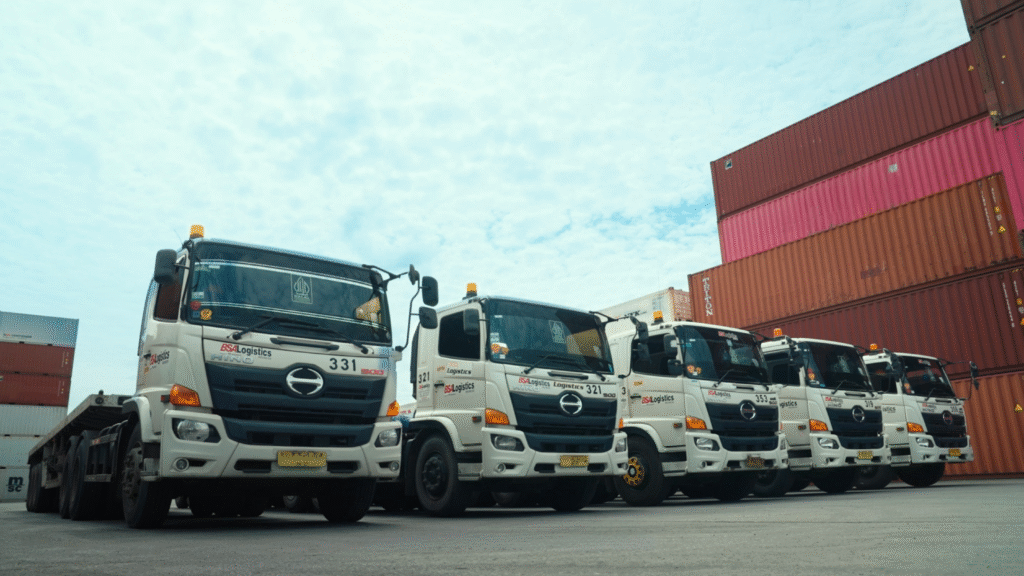




Author: aluna Analytics | Date: 3 April 2026 | Sector: Transportation & Logistics | Recommendation: Cautious Accumulation (Fundamental) / High Volatility Play (Trading)
PT BSA Logistics Indonesia Tbk ($WBSA) approaches the public equity markets at a critical juncture in the maturation of Indonesia’s complex supply chain infrastructure. Operating within the highly fragmented and heavily capital-intensive transportation and logistics sector, the enterprise is conducting its Initial Public Offering (IPO) to raise up to IDR 302.4 billion. Representing a 20.75% equity dilution post-offering, the transaction is structurally engineered to fund an affiliated corporate consolidation, specifically the acquisition of PT Bermuda Inovasi Logistik.
With a final offering price set at IDR 168 per share, following an initial bookbuilding range of IDR 150 to IDR 170, the valuation parameters reflect a demanding price-to-earnings premium that is somewhat offset by a more palatable price-to-book multiple when compared against prominent regional peers in the logistics space.
WBSA
PT BSA Logistics Indonesia TbkDisclaimer: This research report is produced by aluna Analytics for informational and educational purposes only. It does not constitute a recommendation to buy or sell any securities. Market data is analyzed as of April 8, 2026. Investors should conduct their own due diligence and consult with a certified financial advisor before making investment decisions.
The primary investment thesis surrounding the $WBSA public offering requires parsing the dichotomy between its robust top-line revenue generation—which reached a formidable IDR 1.54 trillion in the first nine months of 2025—and the inherent margin constraints typical of multimodal logistics and freight forwarding operations. Furthermore, the transaction operates under the distinct shadow of elite conglomerate affiliations, reportedly tied to the broader Sinar Mas ecosystem, and is heavily influenced by the pre-IPO ownership dominance of Tiga Beruang Kalifornia Pte. Ltd.
As the macroeconomic backdrop features stabilizing domestic inflation and structural tailwinds driven by ambitious industrial downstreaming policies across the archipelago, WBSA’s fundamental durability will be severely tested by aggressive market competition, asset integration execution, and the immense working capital intensity required to scale operations. Evaluating the asset base reveals an organization attempting to bridge the gap between heavy traditional infrastructure and modernized supply chain visibility. By maintaining significant warehousing footprints, including specialized cold storage facilities, alongside proprietary digital dispatch systems, the enterprise commands structural advantages over asset-light digital forwarders.
However, evaluating this IPO from both a fundamental valuation standpoint and a tactical market perspective demands strict adherence to empirical data. The underlying reality of the transaction reveals a capital structure designed primarily for internal corporate reorganization rather than organic capacity expansion, setting the stage for a highly structured, closely controlled secondary market debut.
Transaction Overview & Capital Structure Mechanics
The structural mechanics of the PT BSA Logistics Indonesia Tbk IPO illuminate the strategic capitalization priorities of the existing corporate ownership base. The equity offering consists entirely of primary shares, executing the issuance of 1,800,000,000 new common shares into public circulation. These primary equity instruments carry a nominal par value of IDR 40 per share. Upon the successful conclusion of the distribution phase, the newly issued shares will constitute exactly 20.75% of the enlarged issued and fully paid-up capital of the enterprise. By extrapolating this dilution percentage, the mathematical expansion of the capitalization table dictates a total outstanding share count of approximately 8,674,698,795 shares immediately following the listing.
Key temporal milestones governing the transaction dictate the rhythm of capital mobilization. The preliminary bookbuilding phase, designed to gauge institutional appetite and establish the pricing equilibrium, commenced on March 25, 2026, and concluded on March 27, 2026. During this window, the initial indicative price band was established between IDR 150 and IDR 170 per share. Following sufficient institutional traction, the public offering period was initiated on April 2, 2026, and is slated to conclude on April 8, 2026, with the lead underwriters cementing a final execution price of IDR 168 per share. The final allotment of securities is to be finalized on April 8, 2026, ahead of the electronic distribution of shares by PT Kustodian Sentral Efek Indonesia (KSEI) scheduled for April 9, 2026. The equities are scheduled to officially debut on the primary board of the Indonesia Stock Exchange (IDX) on April 10, 2026.
| Transaction Parameter | Detail / Value |
|---|---|
| Issuer Entity | PT BSA Logistics Indonesia Tbk (WBSA) |
| Total Primary Shares Offered | 1,800,000,000 Shares (18,000,000 Lots) |
| Post-IPO Outstanding Shares | ~8,674,698,795 Shares |
| Percentage of Enlarged Capital | 20.75% |
| Nominal Value | IDR 40 per share |
| Bookbuilding Price Range | IDR 150 – IDR 170 |
| Final Offering Price | IDR 168 |
| Gross Proceeds | IDR 302,400,000,000 |
| Primary Use of Proceeds | ~IDR 215B (71%) for acquisition of PT Bermuda Inovasi Logistik |
| Secondary Use of Proceeds | Working capital and operational financing |
At the finalized execution price of IDR 168, the gross proceeds generated by the offering total precisely IDR 302.4 billion. The capital allocation strategy outlined in the official prospectus is heavily skewed toward inorganic structural consolidation rather than organic capital expenditure. Approximately IDR 215 billion—representing roughly 71% of the gross capital raised—is explicitly earmarked for a major acquisition. The enterprise intends to acquire 191,250 shares, equating to a 99.99% controlling equity stake, in PT Bermuda Inovasi Logistik (BIL), purchasing the asset directly from an affiliated entity, PT Bermuda Nusantara Logistik (BNL). The remaining 29% of the capital pool, constituting the estimated net proceeds after accounting for standard underwriting fees, legal advisory costs, and listing expenditures, will be channeled into general corporate working capital. This residual capital is designated for daily operational financing, systemic liquidity management across the supply chain, and the fortification of the firm’s multimodal logistics capacities.
The transaction is highly notable for its structural simplicity regarding derivative capital instruments. A meticulous review of the transaction framework confirms the explicit absence of structured Warrants attached to the primary shares. Furthermore, documentation regarding the existence, allocation size, or structural dilution impact of a Management and Employee Stock Option Plan (MESOP) or an Employee Stock Allocation (ESA) program is not available within the prospectus disclosures. The pure-equity nature of this offering effectively simplifies the post-listing capitalization table, securely insulating minority public shareholders from the delayed secondary derivative dilution overhangs that frequently suppress post-listing price action in the Indonesian small-to-mid-cap logistics and transportation sector.
Corporate Profile & Business Model
Established under its current corporate framework in March 2021, PT BSA Logistics Indonesia successfully executed a structural transition from a privately held entity to a public company (Tbk) framework in October 2025, adjusting its Articles of Association to comply strictly with Financial Services Authority (OJK) mandates. Operating as a highly integrated supply chain nexus, the firm navigates the intensely complex archipelagic geography of the Republic of Indonesia. The enterprise provides an end-to-end suite of industrial services encompassing multimodal transportation, port management, comprehensive customs brokerage, freight forwarding, trucking fleets, inland container depot operations, warehousing solutions, and heavily regulated bonded logistics center facilities.
The ownership and control architecture established prior to the public offering rests firmly in the hands of a highly concentrated group of strategic sponsors. Pre-IPO, Tiga Beruang Kalifornia Pte. Ltd. commanded an overwhelming 92.5% super-majority stake, with PT Permata Gandaria Indah holding the residual 7.5%. Tracing the ultimate beneficial ownership up the corporate structure reveals the pervasive influence of offshore holding entities, specifically Liberty Holdings Global Limited and Bountiful Investors Limited. The ultimate beneficial owners are identified as Andree (holding an effective 73.65% stake via Liberty Holdings) and Edwin Wibowo Watimena (holding an effective 100% stake in Bountiful Investors). This architecture is deeply embedded within the broader domestic conglomerate ecosystem, with multiple market reports identifying the entity as an affiliate or adjacent operator within the expansive Sinar Mas group.
The corporate governance apparatus is steered by these primary architects. President Director Edwin Wibowo brings substantial academic and operational pedigree, holding degrees from the University of California, Berkeley, while simultaneously functioning as the Group Co-founder and CFO of Tiga Beruang Kalifornia. The Board of Commissioners is led by President Commissioner Andree, possessing chemical engineering credentials and executive education from Harvard Business School, acting as the Group Founder and CEO of Tiga Beruang Kalifornia. The presence of Willson Cuaca—a prominent figure in regional venture capital and Managing Partner of East Ventures—on the Board of Commissioners injects a critical layer of modern technological oversight, juxtaposed against the traditional conglomerate architecture of the enterprise. This specific technological governance is critical to the firm’s strategic push to digitize legacy logistics networks.
WBSA’s fundamental business model is predicated on massive volume aggregation and high-efficiency capacity utilization. As a designated multimodal operator, the enterprise rarely relies on a singular mode of transit. Instead, it orchestrates complex logistical pathways combining maritime ocean freight, terrestrial trucking, and bonded warehousing, consolidated under unified contractual frameworks for heavy industry clients. This comprehensive model generates expansive top-line revenue velocity but introduces substantial variable cost drivers, primarily tied to third-party carrier payments, volatile fuel pricing, and unpredictable port dwell fees.
The firm’s physical operational footprint is formidable, anchored by approximately 150,000 square meters of specialized warehousing capacity located strategically across domestic industrial hubs. This space is carefully segmented into general storage and specialized cold storage units. The strategic inclusion of cold chain capabilities serves as a massive competitive differentiator, allowing the firm to command premium contract rates due to the stringent temperature integrity required for perishable agribusiness commodities and pharmaceuticals. Moreover, the inland container depot operations provide highly lucrative, high-margin ancillary revenue streams. By offering container storage, stuffing, stripping, reefer maintenance, and fumigation services, the company monetizes idle transit time, extracting value from freight even when it is stationary.
Revenue visibility is systematically fortified by deep, long-term corporate relationships. WBSA has successfully embedded itself into the supply chains of heavy-industry constituents, securing sustained, multi-year contracts with primary producers in the pulp and paper sector, alongside dominant palm oil plantation operators. While this ensures cash flow stability, it simultaneously introduces a structural customer concentration risk. The termination or non-renewal of any tier-one industrial contract could trigger rapid capacity underutilization and severe margin decay. To systematically mitigate this dependency, WBSA is aggressively leveraging proprietary information technology systems to optimize fleet availability, routing efficiency, and load matching, effectively binding customers to its ecosystem through digital procurement integration that creates substantial operational switching costs.
Macroeconomic Context
The structural viability and long-term earnings trajectory of WBSA are inextricably linked to the broader macroeconomic parameters governing the Republic of Indonesia. As of the second quarter of 2026, the domestic economy exhibits profound structural resilience, successfully navigating a complex global tapestry defined by disparate regional growth momentums and lingering post-pandemic supply chain recalibrations.
IHSG (Jakarta Composite)
Candlestick chart of Jakarta Composite Index (IHSG) with timeframe 1 Year.
USD / IDR (Rupiah)
Candlestick chart of US Dollar to Indonesian Rupiah (RUPIAH) with timeframe 1 Year.
Authoritative macroeconomic projections indicate that Indonesia’s gross domestic product (GDP) is positioned to expand at an accelerated pace of 5.3% to 5.5% throughout the 2026–2027 window. This projected expansion is predominantly supported by the national administration’s aggressive structural deregulation programs, which deliberately span business licensing enhancements, extensive trade and logistics reforms, and the targeted liberalization of fixed capital investments. For an enterprise fundamentally tied to the velocity of physical trade, these regulatory tailwinds directly translate into expanded total addressable market parameters.
Monetary conditions remain broadly supportive of corporate expansion, though fraught with emerging market complexities. Bank Indonesia (BI) has successfully anchored domestic inflation, with the Consumer Price Index (CPI) registering a tightly controlled 3.48% in March 2026, a figure that maintains the central bank’s confidence in long-term price stability. This stability affords the central bank the necessary flexibility to maintain a moderately dovish policy stance, theoretically mitigating the debt servicing burdens for capital-intensive enterprises like WBSA that rely on structured debt architectures. However, the transmission mechanism of global liquidity remains highly uneven. The expansive fiscal spending mandated by domestic infrastructure and housing programs requires elevated sovereign debt issuance. This dynamic establishes a higher floor for benchmark government bond (SBN) yields. Consequently, corporate borrowers face a domestic pricing environment where debt capital, while accessible, commands a sustained historical premium, requiring corporate treasuries to execute flawless working capital optimization.
A defining macroeconomic variable driving WBSA’s strategic positioning is the geographic shift in global trade corridors. Elevated effective tariff rates imposed in western markets have catalyzed the rapid relocation of manufacturing capacity from primary origin points into lower-tariff Southeast Asian economies. Indonesia stands as a primary beneficiary of this massive foreign direct investment (FDI) diversion. As new manufacturing nodes proliferate across the archipelago, the requirement for synchronized, high-capacity logistics networks becomes incredibly acute.
Furthermore, the national imperative of industrial downstreaming (hilirisasi)—particularly in mining, basic materials, and agricultural commodities—forces raw materials to be processed domestically before export. This sweeping policy shift exponentially increases the frequency, volume, and complexity of inter-regional freight movements, providing a massive, state-sponsored macroeconomic tailwind for integrated multimodal operators. Conversely, measuring logistics costs at the macro level in Indonesia remains problematic due to systemic information asymmetries and a lack of standardized assessment frameworks. The deployment of integrated information technology by firms like WBSA is specifically targeted at bridging this gap, allowing the firm to capture premium pricing by offering transparency in an otherwise opaque national supply chain.
Industry Context
The Indonesian logistics sector operates as a highly fragmented, intensely competitive oligopoly, characterized by extreme barriers to entry regarding physical infrastructure development, juxtaposed against virtually non-existent barriers to entry in the digital freight brokerage space. Macro-level logistical costs in Indonesia remain structurally higher than regional peers, driven by asymmetric infrastructure maturity between the hyper-developed island of Java and the outer archipelagic islands, compounded by severe port congestion and historically archaic customs bottlenecks. Resolving these endemic inefficiencies has evolved into a paramount sovereign priority, directly intersecting with the strategic positioning of modernized operators like WBSA.
The competitive landscape is currently undergoing a severe structural bifurcation. On one end of the spectrum, traditional, asset-heavy trucking and shipping cartels continue to dominate bulk commodity transport through legacy relationship networks. On the other end, highly agile, asset-light digital forwarders are leveraging aggressive venture capital subsidization to capture spot-market retail and e-commerce freight. WBSA is attempting to occupy the highly lucrative, yet operationally complex middle ground: maintaining a massive physical asset base (150,000 sqm of warehouses, inland depots) while simultaneously deploying proprietary IT infrastructure to act as a sophisticated, integrated third-party logistics (3PL) provider. Despite this robust positioning, competitive pressures are rapidly intensifying. The aggressive market entry of well-capitalized Chinese logistics conglomerates, drawn by the e-commerce boom and regionalized supply chains, threatens to structurally compress margins across the fulfillment sector.
In analyzing the industry ecosystem, it is vital to trace the direct, empirical linkage between macro dynamics, the logistics sector, and the business performance of adjacent heavy-industry operators such as PT Ratu Prabu Energi Tbk ($RATU).
Operating within the oil, gas, and energy services sector, $RATU is highly sensitive to capital expenditure cycles driven by global energy demand and domestic infrastructure outlays. The operational viability of energy contractors relies entirely on the seamless, highly specialized mobilization of heavy equipment, massive drilling rigs, and volatile materials. These are services that explicitly require the precise multimodal orchestration, customs clearance, and heavy-lift port management provided by firms akin to WBSA.

Rp 2,440
When macroeconomic variables align to drive domestic energy and basic materials expansion, the immediate secondary effect is a violent surge in demand for specialized logistics throughput. Conversely, supply chain bottlenecks or elevated freight tariffs directly and immediately compress the operating margins of energy producers. Thus, the performance of logistics integrators (WBSA) and energy operators are mutually reinforcing derivatives of the exact same macroeconomic engine. The current environment—characterized by stabilized commodity pricing, aggressive domestic downstreaming, and a sustained push for energy independence—necessitates massive logistical scaling. This creates parallel, synchronized operational tailwinds for both the energy services sector and the multimodal logistics integrators tasked with moving their physical capital. WBSA’s ability to capture this heavy-industry overflow will dictate its ability to defend against the retail-focused margin compression introduced by foreign competitors.
Financial Deep Dive
A rigorous, forensic examination of the financial disclosures available within the prospectus and supporting audited statements reveals an enterprise experiencing explosive top-line revenue velocity, heavily counterbalanced by the acute, systemic margin realities of the physical logistics sector. For the nine-month period ending September 30, 2025, WBSA reported consolidated revenues of IDR 1.54 trillion. This represents a formidable and highly impressive 29.06% year-over-year acceleration from the IDR 1.19 trillion generated in the corresponding period of 2024.
The quality of this revenue growth appears structurally sound, driven primarily by sticky, long-term corporate procurement contracts in the agribusiness, palm oil, and pulp sectors rather than volatile, highly cyclical short-term spot market pricing. However, the cost structure analysis immediately exposes the fundamental constraints of the forwarding business model. Despite generating over IDR 1.5 trillion in gross revenue, net profit for the exact same nine-month period registered at IDR 24.39 billion. While this represents a monumental, exponential percentage increase from the almost negligible IDR 1.54 billion reported in the prior year, the absolute net profit margin remains exceedingly thin at approximately 1.58%. This severe margin compression is systemic to the industry, driven by the extraordinarily high proportion of variable, pass-through costs related to diesel fuel, ocean freight tariffs, port handling charges, and third-party carrier fees. The long-term sustainability of this net margin relies entirely on the successful, flawless deployment of proprietary IT routing systems to claw back fractional operational efficiencies from external vendors.
| Financial Parameter (9M 2025) | Reported Figure | YoY Comparison / Context |
|---|---|---|
| Total Revenue | IDR 1.54 Trillion | +29.06% YoY (from IDR 1.19T) |
| Net Profit | IDR 24.39 Billion | Massive acceleration (from IDR 1.54B) |
| Net Profit Margin | ~1.58% | Reflects high variable pass-through costs |
| Total Current Assets | IDR 1.15 Trillion | Up from IDR 874.06 Billion |
| Total Equity (Pre-IPO) | IDR 564.96 Billion | Solid baseline for future leverage |
| Outstanding MTN Debt | IDR 100 Billion | Rated ‘irA’ with Stable outlook |
A meticulous review of the balance sheet presents a rapidly scaling asset base that mandates exceptionally disciplined working capital management. Total current assets expanded dramatically to IDR 1.15 trillion by the end of September 2025, up significantly from IDR 874.06 billion a year prior. This rapid asset expansion perfectly reflects the massive internal liquidity required to finance the cash conversion cycle inherent in corporate logistics, where operators are frequently mandated to pay third-party sub-contractors and port authorities in advance of receiving final payment settlements from massive, slow-paying industrial clients. Total equity pre-IPO stood at a solid IDR 564.96 billion, providing a stable foundation for corporate leverage.
The capital structure is moderately leveraged but heavily supported by independent external credit validation. Kredit Rating Indonesia (KRI) assigned WBSA a highly respectable corporate rating of ‘irA’ with a ‘Stable’ outlook, concurrently assigning the exact same high-grade rating to the company’s proposed Medium Term Notes (MTN) issuance totaling IDR 100 billion. The presence of this MTN facility indicates a distinct sophistication in capital market utilization prior to the IPO, allowing the firm to effectively match long-term infrastructural asset durations (warehouses) with medium-term debt liabilities, successfully avoiding the catastrophic duration mismatch that plagues many emerging market logistics firms.
From a cash flow behavior and earnings quality perspective, the prospectus reveals specific related-party lending dynamics that warrant significant normalization by potential investors. The financial statements disclose that WBSA extended a dedicated loan facility to an affiliated entity, simply identified as BSA, amounting to IDR 23.4 billion at an annualized interest rate of 8%, generating IDR 1.18 billion in direct interest income. Additionally, a separate loan facility extended to sub-contractor MSU, with a maximum limit of IDR 7 billion, carried a principal balance of IDR 2.33 billion and generated IDR 203.02 million in interest. The prospectus explicitly notes that full repayment for the MSU principal and interest was executed on January 29, 2026.
While these transactions have reportedly been settled or are yielding theoretically above-market rates, the persistent deployment of corporate liquidity into affiliated entities or operational sub-contractors highlights a fluid, highly porous treasury function that is exceedingly common within Indonesian conglomerates. Institutional investors must apply a normalization discount to the earnings quality, ensuring that core operational cash flows—strictly divorced from intercompany interest income—are entirely sufficient to service the IDR 100 billion MTN debt burden and sustain the demanding working capital cycle.
The ultimate post-IPO financial durability of WBSA hinges overwhelmingly on the successful, friction-free integration of Bermuda Inovasi Logistik. With an astounding 71% of the public IPO proceeds allocated directly to this specific M&A event, the public offering functions less as a capital raise for pure organic growth and far more as a balance-sheet recapitalization mechanism engineered to absorb affiliated assets. If the Bermuda entities operate at superior margin profiles or possess highly synergistic cold-storage assets, the consolidation could yield rapid margin accretion. Conversely, cosmetic presentation risks exist if the acquired entities require substantial post-merger capital injections to harmonize legacy operations with WBSA’s modernized IT infrastructure, potentially draining the residual 29% of working capital allocated from the IPO.
Valuation & Pricing
Fundamental valuation of the WBSA IPO requires rigorously contextualizing the enterprise’s robust top-line revenue generation against its ultra-thin profit margins, heavy physical asset base, and expanding equity structure. With 1.8 billion new shares injected into the capital structure, the post-IPO outstanding share count expands to a massive approximately 8.67 billion shares. By annualizing the nine-month net profit of IDR 24.39 billion, we establish a baseline projected full-year 2025 net income of approximately IDR 32.5 billion. Pre-IPO total equity stood at approximately IDR 564.9 billion; incorporating the estimated net proceeds of roughly IDR 295 billion (assuming standard underwriter, legal, and exchange listing fees derived from the gross IDR 302.4 billion), the post-IPO fundamental equity book value scales to roughly IDR 860 billion.
To establish a comprehensive and deeply analytical valuation stance, we model the offering under three distinct price scenarios originally established during the bookbuilding phase: the minimum bound, a tick-size adjusted median, and the maximum bound, concluding with the actual execution price.
Scenario 1: Minimum Price (IDR 150)
At the absolute floor price of IDR 150 per share, the implied post-IPO market capitalization equates to exactly IDR 1.30 trillion. At this capitalization, the enterprise trades at an implied Price-to-Earnings (P/E) ratio of 40.0x annualized net earnings, and a Price-to-Book (P/B) ratio of roughly 1.51x post-IPO book value.
Valuation Stance: At this level, the fundamental valuation is highly attractive regarding asset protection but remains heavily reliant on future margin expansion. The price-to-book multiple is deeply attractive for an asset-backed logistics provider possessing hard real estate, but the earnings multiple remains optically demanding due to current systemic margin suppression.
Scenario 2: Median Price (IDR 160)
Adjusting strictly for IDX tick size parameters, an exact midpoint of IDR 160 presents a balanced, institutional benchmark. At this price, the market capitalization expands to IDR 1.38 trillion. The entity trades at an implied P/E ratio of 42.4x annualized net earnings, and a P/B ratio of roughly 1.60x post-IPO book value.
Valuation Stance: A fair compromise. This pricing accurately reflects the premium assigned to the Sinar Mas affiliated ecosystem and the massive revenue scale, while maintaining a highly rational asset-backing floor that protects downside risk.
Scenario 3: Maximum Price (IDR 170)
At the absolute upper echelon of the initial price band, the implied market capitalization reaches IDR 1.47 trillion. Trading at a P/E ratio of 45.2x annualized net earnings, and a P/B ratio of roughly 1.70x post-IPO book value.
Valuation Stance: Highly demanding. At this valuation threshold, the market is fully and aggressively pricing in the immediate, flawless execution of the Bermuda Inovasi Logistik acquisition and the instantaneous realization of operational synergies.
Final Execution and Peer Benchmarking
The underwriting syndicate ultimately priced the offering at IDR 168 per share, generating an exact market capitalization of roughly IDR 1.457 trillion. This execution results in an effective P/E of ~44.8x and a P/B of ~1.69x. Benchmarking WBSA against IDX-listed logistics and marine transportation counterparts reveals a highly competitive positioning on a pure asset basis, yet highlights the premium demanded for logistics operations.
| Listed Peer Entity | Ticker | Market Cap | Price-to-Book (P/B) | Price-to-Earnings (P/E) |
|---|---|---|---|---|
| PT Ancara Logistics Indonesia Tbk | $ALII | IDR 10.68 Trillion | 5.34x | ~36.93x |
| PT Transcoal Pacific Tbk | $TCPI | IDR 58.88 Trillion | 27.89x | ~308.98x |
| PT RMK Energy Tbk | $RMKE | IDR 12.03 Trillion | 6.54x | ~52.90x |
| PT Batulicin Nusantara Maritim Tbk | $BESS | IDR 4.13 Trillion | 6.28x | N/A |
| PT Cakra Buana Resources Energi Tbk | $CBRE | IDR 3.56 Trillion | 42.98x | N/A |
| PT Mitrabahtera Segara Sejati Tbk | $MBSS | IDR 2.65 Trillion | 0.69x | N/A |
| PT BSA Logistics Indonesia Tbk (At IPO) | WBSA | IDR 1.45 Trillion | ~1.69x | ~44.8x |
Comparatively, WBSA’s final IPO valuation represents a massive, structural discount to the sector average on a Price-to-Book basis, reinforcing the narrative that public investors are acquiring hard infrastructural assets (warehouses, depots) at highly reasonable, defensible prices. Companies like CBRE and TCPI trade at astronomical, detached P/B multiples of 42.98x and 27.89x respectively. However, on a Price-to-Earnings basis, WBSA’s multiple is elevated (~44.8x) but remains fundamentally in line with direct competitors like RMKE (52.90x), accurately reflecting the systemic margin constraints and growth expectations embedded within the domestic logistics industry. The valuation stance at IDR 168 is fundamentally fair, offering a distinct asset-protection floor while demanding flawless future execution to justify the earnings premium.
Regulatory & Lock-Up Assessment
The preservation of corporate control stability and the absolute mitigation of acute supply pressure immediately following the listing are strictly governed by the mandates of the Financial Services Authority Regulation (POJK) No. 25/POJK.04/2017 regarding Restrictions on Shares Issued Prior to a Public Offering.
Under the specific provisions of POJK 25/2017, any existing shareholder who acquires equity in a prospective issuer at a price strictly below the final Initial Public Offering price, within a period of six months prior to the formal filing of the registration statement, is subject to a strict, mandatory regulatory lock-up. These targeted shareholders are legally prohibited from transferring, liquidating, or trading their shares for a duration of exactly eight (8) months from the date the registration statement becomes legally effective.
Given that the core founding entities—including the super-majority holder Tiga Beruang Kalifornia Pte. Ltd. and PT Permata Gandaria Indah, alongside the ultimate beneficial owners Andree and Edwin Wibowo—established their initial equity bases at the nominal par value of IDR 40 per share. This entry point is substantially below the final public offering price of IDR 168 per share. Consequently, the mandatory lock-up applicability is absolute and unavoidable. These immense controlling blocks will be mathematically and legally frozen from entering the secondary market circulation until roughly December 2026, exactly eight months post-listing.
The existence of broad voluntary lock-up agreements extending beyond the statutory 8-month mandate is not explicitly available in the prospectus. However, the sheer density and concentration of the pre-IPO ownership structure inherently isolates the enterprise from widespread internal liquidation events upon the immediate listing.
The implications for secondary market supply pressure are critical. With 1.8 billion shares injected into public circulation, representing a 20.75% free float, the stock will technically exhibit sufficient mathematical liquidity to attract institutional index trackers. However, the prospectus explicitly outlines a severe structural liquidity risk, noting the potential for the newly issued equity to be accumulated by a few specific, non-affiliated funds or proxy accounts that do not actively trade their holdings in the secondary market. If the public float is effectively cornered by friendly institutional hands or shadow affiliates (such as the non-affiliated funds listed in the capitalization table: Watimena L.P., Bali I Limited, Internet Fund VII Pte. Ltd.), the actual tradable velocity of the shares will be severely constrained. This scenario typically leads to extremely high volatility orchestrated on remarkably low trading volume.
Risks & Mitigation
The structural durability of WBSA is actively challenged by several intersecting operational, financial, and systemic macroeconomic risks, necessitating rigorous corporate mitigation strategies.
1. M&A Execution and Complex Integration Risk
With a staggering 71% of public funds deployed directly into the acquisition of Bermuda Inovasi Logistik, WBSA is fundamentally structured as a consolidation play. The risk of failing to achieve technological and operational integration between the two entities is acute. If Bermuda’s legacy systems resist integration into WBSA’s proprietary IT dispatch and routing architecture, the anticipated economies of scale will fail to materialize, destroying shareholder value. Mitigation relies on the pre-existing affiliated nature of the target; Bermuda Nusantara Logistik operates within the same corporate orbit, suggesting that managerial and operational due diligence has been conducted from an internal, highly informed perspective, reducing friction.
2. Customer Concentration and SLA Durability
The business model is highly dependent on long-term contracts with major pulp, paper, and palm oil producers. A macroeconomic downturn in global commodity prices or a breakdown in Service Level Agreements (SLAs) could result in abrupt contract terminations. Because fixed infrastructural costs (warehousing leases, specialized depot maintenance, bonded zone compliance) cannot be shed instantly, the loss of a primary client would geometrically compress net margins. Mitigation is achieved through deep, architectural supply-chain entrenchment; by integrating digital procurement APIs directly into client ERP systems, WBSA establishes extremely high switching costs for its customer base, making the logistics provider functionally indispensable.
3. Predatory Chinese Logistics Market Penetration
The rapid influx of hyper-capitalized foreign logistics entities—primarily hailing from mainland China—seeking to capture the lucrative Indonesian e-commerce fulfillment market introduces severe pricing pressures. These entities operate on predatory pricing models designed specifically to capture market share at the explicit expense of short-term profitability. WBSA fundamentally mitigates this by largely avoiding retail spot-market logistics, focusing instead on high-barrier, capital-intensive heavy industry, cold storage, and chemical multimodal transport where heavy regulatory moats and localized relationship capital override pure, destructive price competition.
4. Margin Compression via Exogenous Tariff Volatility
Operating a massive multimodal network inherently exposes the firm to uncontrollable exogenous variables, including diesel fuel price spikes, erratic toll road tariffs, and violently fluctuating international maritime container spot rates. WBSA systematically counters this structural vulnerability through the strict enforcement of dynamic fuel surcharge (FSC) mechanisms and rigid pass-through pricing embedded directly within its long-term corporate contracts, ensuring that inflationary spikes are absorbed by the client rather than the logistics provider.
Underwriter Analysis
The architectural stability of the bookbuilding and distribution process is managed by a consortium of domestic financial institutions. The underwriting syndicate is structured as follows:
PT Semesta Indovest Sekuritas
Lead Underwriter
PT Indo Capital Sekuritas
Underwriter
PT OCBC Sekuritas Indonesia
Underwriter
Our assessment of the underwriting syndicate yields the following observations: Detailed allocation percentages among the syndicate members are currently undisclosed. Furthermore, specific historical success ratios and algorithmic stability indicators for this particular syndicate composition are not fully available in our primary data feeds. As a result, a definitive quantitative modeling of their secondary market stabilization capacity remains constrained at this juncture. Because granular underwriter strength metrics are currently unavailable, the ability to predict syndicate defense mechanisms or gray-market demand is naturally limited, requiring investors to rely on the observable structural mechanics of the distribution rather than historical reputation.
Conclusion & Recommendation
The overarching investment framework for PT BSA Logistics Indonesia Tbk (WBSA) requires strictly bifurcating the analysis into two distinct paradigms: the long-duration fundamental investor perspective and the highly tactical IPO hunter perspective.
Fundamental Investor View
From a strict fundamental vantage point, WBSA represents a formidable top-line growth engine operating within an industry plagued by systemic margin suppression. The underlying business quality is forcefully validated by expansive, mission-critical infrastructure, including highly rare cold storage assets and deep structural integration into the supply chains of Indonesia’s agricultural and industrial behemoths. Financial strength is highly robust, characterized by an ‘irA’ corporate credit rating, prudent, structured usage of medium-term debt, and an exploding asset base that crossed IDR 1.15 trillion. Valuation discipline is mixed but entirely justifiable; while the execution price of IDR 168 demands a premium price-to-earnings multiple of roughly 44.8x, the highly attractive price-to-book multiple of 1.69x offers an excellent margin of safety against physical assets, pricing the company significantly cheaper than high-flying logistics peers like ALII (5.34x) and RMKE (6.54x). The fundamental recommendation is a cautious, structured accumulation, predicated heavily on management’s ability to drive margin accretion post-M&A.
IPO Hunter View
Through the highly tactical lens of a short-term IPO hunter, the transaction presents specific, highly manipulated characteristics common to sponsor-driven or conglomerate-affiliated capital structures. The pre-IPO ownership is immensely concentrated under Tiga Beruang Kalifornia. The primary use of proceeds (71%) is an intra-ecosystem corporate acquisition (Bermuda Inovasi Logistik), transforming the IPO into a liquidity, reorganization, and consolidation event rather than a pure capital expenditure raise. Furthermore, the mandatory 8-month POJK lock-up entirely removes immediate supply overhang, setting the stage for engineered, high volatility. However, the ability to algorithmically predict syndicate defense mechanisms, retail distribution breadth, or gray-market demand is currently obscured by data asymmetry.
aluna Analytics Rating
Synthesizing the fundamental architecture and the structural transaction mechanics under our comprehensive IPO philosophy yields a consolidated perspective. The business quality parameters score moderately high due to the sheer scale of the multimodal physical assets and the immense structural macroeconomic tailwinds provided by national downstreaming policies. Financial strength registers as highly stable, insulated by long-duration contracts and validated by an investment-grade debt profile, despite the persistent, highly restrictive reality of single-digit net margins. Valuation across the three modeled price layers confirms that the final execution price of IDR 168 highly respects the asset-backed reality of the logistics space, successfully avoiding the severe overvaluation traps seen in adjacent energy logistics IPOs.
However, the final synthesized rating is heavily calibrated by the transactional nature of the offering itself. The allocation of massive public capital to acquire pre-affiliated logistical assets shifts the primary risk profile sharply toward M&A execution and corporate governance transparency, rather than organic market capture. The IPO hunter attractiveness is severely constrained by data asymmetry regarding the syndicate’s distribution power, which is only partially counterbalanced by the hyper-concentration of the locked-up float. The consolidated stance reflects a fundamentally viable, asset-rich enterprise that remains burdened by the severe margin realities of its sector, culminating in a structurally defensive but tactically opaque public offering.
Disclaimer
aluna Analytics is an independent research collective that operates without affiliation to any financial institution, broker, or advisory firm. We do not hold licenses as a securities dealer, investment advisor, or portfolio manager.
All materials published by aluna Analytics are created solely for informational and educational purposes. They reflect independent analytical interpretation and should not be regarded as personalized investment advice, solicitation, or endorsement of any security or strategy.
Market data, opinions, and projections presented herein are subject to change and may not predict future results. Readers remain fully responsible for any financial decisions made based on the information provided. We strongly encourage conducting personal due diligence and consulting a licensed professional before making investment commitments.
aluna Analytics is not regulated by the Financial Services Authority of Indonesia (OJK) and does not offer investment management or brokerage services. All content is presented in good faith, aiming to foster research literacy and informed market perspectives.