
Author: aluna Analytics | Date: 24 April 2026 | Category: Market Intelligence
PT AKR Corporindo Tbk ($AKRA) represents a unique structural asset within the Indonesian macroeconomic landscape, operating at the intersection of critical energy infrastructure, supply chain logistics, and foreign direct investment monetization. The enterprise functions through a dual-engine economic model. The first engine is a highly liquid, cash-generating bulk distribution network for basic chemicals and non-subsidized petroleum products, serving the archipelago’s industrial and mining sectors. The second engine is the Java Integrated Industrial and Port Estate (JIIPE), a massive, capital-intensive infrastructure development in Gresik, East Java, which has transitioned from its initial cash-burn development phase into a highly lucrative monetization phase characterized by land sales and recurring utility revenues.
The financial results for the first quarter ended March 31, 2026, reveal an enterprise operating with absolute systemic dominance. The company successfully navigated a volatile geopolitical environment marked by global crude oil prices approaching $120 per barrel, leveraging its fortress balance sheet to capture market share from undercapitalized competitors. Consequently, consolidated revenue expanded by 26.1% year-over-year to Rp 12.94 trillion. More importantly, this top-line expansion was accompanied by exceptional cash flow conversion. The company generated a staggering Rp 1.418 trillion in net cash from operating activities during the three-month period, driven by a structurally negative cash conversion cycle and rigorous working capital discipline.
Furthermore, the operational leverage inherent in the JIIPE project became fully apparent during this quarter. The Industrial Estate segment recorded a 171.4% year-over-year revenue surge, propelled by the successful handover of 17 hectares of industrial land and steady growth in recurring electricity and utility consumption by anchor tenants. With a heavily fortified balance sheet featuring Rp 7.28 trillion in cash and cash equivalents against negligible net debt, the enterprise is thoroughly insulated against the current elevated interest rate environment. The market’s current valuation of the equity at approximately 11.4x forward earnings and an Enterprise Value to EBITDA multiple of 8.0x fundamentally misprices the long-term net asset value of the JIIPE land bank and the durability of the distribution cash flows. The combination of a highly sustainable 80.8% dividend payout ratio, yielding approximately 6.7%, and an unencumbered balance sheet establishes the company as a premier, high-quality compounder capable of delivering superior risk-adjusted total returns.
Corporate Architecture and Economic Foundations
Deconstructing the corporate architecture and fundamental economic model reveals that the company, founded in 1977 and publicly listed since 1994, is majority-owned by PT Arthakencana Rayatama, which holds a controlling 63.71% stake, while the investing public holds 32.80% of the outstanding shares. The remaining equity is distributed among key management personnel, including President Director Haryanto Adikoesoemo and other members of the Board of Directors. The company operates from its headquarters at the AKR Tower in Jakarta and maintains a sprawling physical footprint comprising 15 major sales offices and tank terminals strategically positioned across Indonesia, from Sumatra to Sulawesi and Bali. As of March 31, 2026, the parent entity and its consolidated subsidiaries employed a permanent workforce of 2,138 personnel.
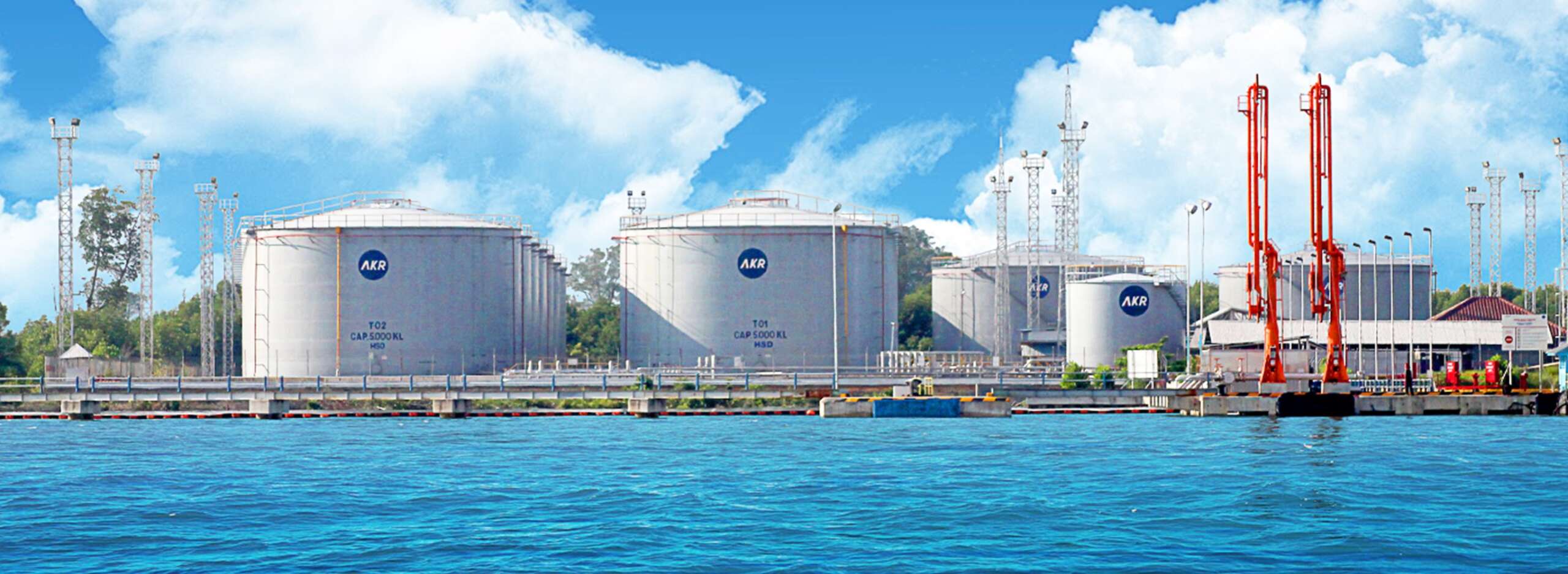
The economic foundation of the enterprise relies on four distinct operating segments: Trading and Distribution, Industrial Estate, Logistics, and Manufacturing. The Trading and Distribution segment is the legacy core of the business. Rather than engaging in speculative commodity trading, the company operates an infrastructure-backed, pass-through distribution model. It secures bulk quantities of basic chemicals, such as caustic soda, sodium sulfate, and PVC resin, alongside massive volumes of non-subsidized petroleum products (BBM). These commodities are stored in proprietary tank terminals and distributed to industrial clients via a specialized logistics network. The economic moat here is derived from physical infrastructure and supply chain reliability. Industrial clients require guaranteed, uninterrupted deliveries of energy and chemical inputs to prevent catastrophic factory shutdowns. By possessing the largest private storage and distribution network in the country, the company acts as the irreplaceable logistical conduit between global commodity producers and domestic industrial consumers. It earns a highly stable volume-driven margin, effectively isolating profitability from the underlying volatility of the commodities themselves.
The Logistics segment operates as the connective tissue for the broader enterprise. Through subsidiaries such as PT UEPN, PT AKR Sea Transport, and PT Andahanesa Abadi, the company provides sea and land transportation, warehouse leasing, bagging, and port handling services. This segment not only serves external third-party clients but ensures the seamless internal functioning of the Trading and Distribution arm. The Manufacturing segment, operated via PT Arjuna Utama Kimia (Aruki), produces adhesive materials. While historically relevant, this segment currently serves as a minor legacy asset and does not materially influence the consolidated valuation or strategic direction of the corporation.
The development lifecycle of such an estate requires massive, sustained capital outflows during its infancy. However, as the foundational infrastructure is completed, the economic model transitions to a high-margin harvesting phase.
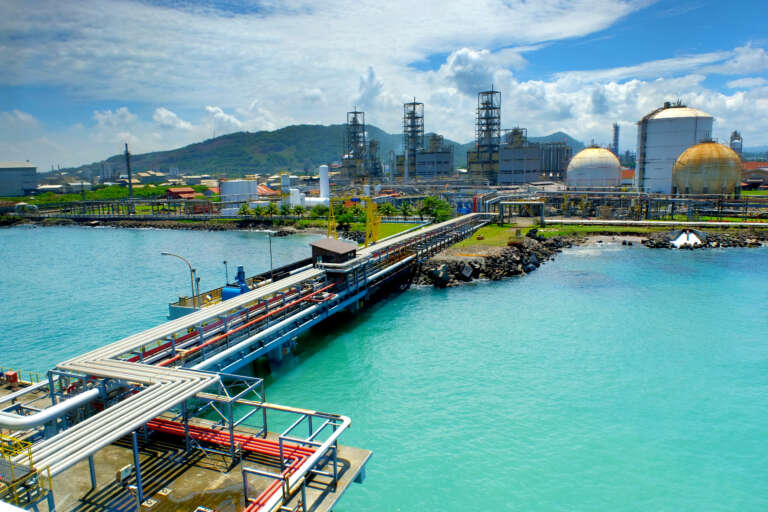
The most transformative element of the corporate architecture is the Industrial Estate segment, centered entirely on the Java Integrated Industrial and Port Estate (JIIPE). Developed through its 60%-owned subsidiary, PT Berkah Kawasan Manyar Sejahtera (BKMS), JIIPE represents a paradigm shift in Indonesian industrial infrastructure. Spanning thousands of hectares in Gresik, East Java, JIIPE integrates a deep-sea port, dedicated power plants, water treatment facilities, and direct toll road access into a single, cohesive ecosystem. Revenue is generated initially through high-value land sales to foreign and domestic manufacturing conglomerates. Subsequently, as these tenants construct factories and commence operations, the estate generates highly predictable, perpetual recurring revenues through the provision of electricity, water, gas, and port handling fees. The strategic designation of JIIPE as a Special Economic Zone (SEZ) by the Indonesian government radically enhances this value proposition. Tenants within the SEZ benefit from corporate tax holidays, streamlined customs procedures, and expedited immigration services, cementing JIIPE as the premier destination for foreign direct investment in Southeast Asia.
Macroeconomic Climate and Industry Positioning
The first quarter of 2026 presented a highly complex and volatile macroeconomic environment, testing the resilience of global supply chains and corporate balance sheets. Global crude oil prices experienced aggressive upward pressure, with Brent crude nearing $120 per barrel. This surge was primarily catalyzed by escalating geopolitical hostilities in the Middle East and maritime blockades in critical chokepoints such as the Strait of Hormuz. These disruptions significantly increased the landed cost of refined petroleum products across Asia.
Line chart of Brent Crude Oil Futures (OIL-BRENT) with timeframe 1 Year.
Within the Indonesian domestic market, the pricing dynamics for fuel are heavily bifurcated. To protect household purchasing power and contain broad-based inflation, the Indonesian government and the Ministry of Finance opted to freeze the prices of subsidized retail fuels, maintaining Pertalite (RON 90) at Rp 10,000 per liter and subsidized Biosolar at Rp 6,800 per liter through the end of 2026. This policy requires the state budget to act as a fiscal shock absorber. However, this subsidy regime strictly excludes industrial, mining, and commercial consumers. State-owned enterprise Pertamina aggressively hiked prices for non-subsidized commercial fuels, with RON-98 Pertamax Turbo reaching Rp 19,400 per liter and commercial diesel variants such as Dexlite and Pertamina Dex climbing to Rp 23,600 and Rp 23,900 per liter, respectively.
The enterprise operates exclusively within this non-subsidized, commercial industrial fuel market. The structural implications of $120 oil are profound for this sector. Elevated commodity prices drastically inflate the working capital requirements necessary to procure, store, and distribute fuel. A single tanker shipment requires significantly more upfront cash than it did in previous years. For sub-scale, regional fuel distributors operating with constrained credit lines, this working capital burden often proves fatal, resulting in an inability to secure supply. Armed with institutional banking relationships and billions of Rupiah in corporate cash, the company easily absorbed this working capital inflation. Consequently, industrial clients suffering from supplier defaults migrated their procurement contracts to the enterprise, allowing it to aggressively capture market share. The alleviation of pricing competition from smaller operators enabled the negotiation of higher supply margins, capitalizing on the premium that industrial clients are willing to pay for absolute supply chain security. Management successfully secured reliable fuel supply contracts extending through mid-June 2026, ensuring uninterrupted service delivery despite the Middle Eastern blockades.
Simultaneously, the macroeconomic environment for foreign direct investment (FDI) in Indonesia remained highly expansionary. The global “China Plus One” supply chain diversification strategy continues to drive transnational manufacturing capacity into Southeast Asia. Data from the Ministry of Industry indicates that 633 industrial companies initiated plans to construct new production facilities in Indonesia during the first quarter of 2026, representing a massive investment pipeline of Rp 418.62 trillion. The basic metals industry dominated this capital inflow, pledging Rp 218.04 trillion across 24 projects, followed by the chemical materials industry at Rp 81.22 trillion.
This manufacturing renaissance directly benefits the JIIPE industrial estate. Heavy industries such as basic metals, chemical processing, and photovoltaic glass manufacturing—exemplified by the successful ignition of Xinyi Solar’s first photovoltaic glass furnace in Indonesia during January 2026—require immense logistical support, reliable baseload power, and deep-water port access. By offering an integrated SEZ environment featuring dedicated power generation and immediate port connectivity, JIIPE bypasses the infrastructure bottlenecks that have historically plagued Indonesian industrial development. Furthermore, with industrial land prices in the Greater Jakarta corridors (such as Bekasi and Karawang) escalating to an average of Rp 2,891,000 per square meter amid growing land scarcity, Gresik offers a highly competitive alternative for large-scale, land-intensive industrial footprints. This favorable comparative pricing, combined with SEZ tax incentives, positioned JIIPE to capture a disproportionate share of the Rp 418 trillion national investment pipeline during the quarter.
Consolidated Income Statement and Earnings Quality Analysis
The Consolidated Statement of Profit or Loss and Other Comprehensive Income for the three months ended March 31, 2026, reveals an enterprise generating high-quality, structurally sound earnings growth. Total revenue from contracts with customers reached Rp 12.87 trillion, augmented by Rp 66.58 billion in rental income, yielding total consolidated revenues of Rp 12.94 trillion. This represents a robust 26.1% year-over-year expansion compared to the Rp 10.25 trillion recorded in the first quarter of 2025. The revenue recognition policy dictates that the vast majority of this top-line, specifically Rp 12.31 trillion, was recognized at a point in time, corresponding to the physical delivery of chemical and petroleum products. Revenue recognized over time, primarily relating to continuous logistical and utility services, amounted to Rp 52.2 billion.
The cost of sales and revenues for the period expanded commensurately to Rp 11.83 trillion, up from Rp 9.32 trillion in the prior year. A granular breakdown reveals that the procurement of basic chemicals, petroleum, and other raw materials constituted the overwhelming majority of this expense, totaling Rp 10.73 trillion. Ancillary costs included Rp 223.4 million for shipping and unloading, alongside non-cash depreciation and amortization expenses applied directly to the cost of goods sold, which amounted to Rp 110.4 billion for property, plant, and equipment, and Rp 21.9 billion for right-of-use assets.
Deducting the cost of sales yields a consolidated gross profit of Rp 1.10 trillion, a 19.2% increase from the Rp 926.6 billion generated in Q1 2025. The consolidated gross profit margin experienced a slight mathematical compression, narrowing from 9.03% to 8.54%. It is vital to interpret this compression correctly. Because the enterprise operates a pass-through model for its trading business, it secures a relatively fixed absolute margin per unit of volume sold. When the underlying cost of the commodity surges—as witnessed with the escalation of oil prices to $120 per barrel—the nominal revenue inflates significantly. The fixed absolute margin therefore represents a smaller percentage of the inflated revenue base. This margin compression is an optical artifact of commodity inflation, not an indicator of deteriorating pricing power or operational inefficiency. In absolute terms, the gross profit generation was exceptionally strong.
Operating expenses were managed with rigorous discipline, highlighting the scalability of the corporate infrastructure. General and administrative expenses increased predictably to Rp 272.8 billion from Rp 222.1 billion, reflecting the expanded operational footprint and inflation adjustments. Conversely, selling expenses exhibited a highly unusual reversal, printing as a positive income effect of Rp 21.3 billion, compared to an expense of Rp 26.6 billion in the prior year. This positive print indicates a reversal of previously accrued provisions or the successful recovery of marketing expenditures that had been reserved in prior periods. Net other operating income, including foreign exchange gains of Rp 5.84 billion and minor gains on asset disposals, further supported profitability. Consequently, operating profit surged by 20.4% year-over-year to reach Rp 825.6 billion.
Below the operating line, the company benefited structurally from the elevated interest rate environment. Finance income climbed to Rp 78.1 billion from Rp 63.9 billion in Q1 2025, driven by substantial yields on massive cash balances. Finance costs simultaneously declined to Rp 14.0 billion from Rp 15.4 billion, reflecting the aggressive deleveraging of the balance sheet. A share of net profit from associates was also recorded, amounting to Rp 8.08 billion, primarily derived from its 40% stake in PT Berlian Manyar Sejahtera (BMS), the entity managing the JIIPE deep-sea port.
Profit before final and income tax reached Rp 882.5 billion. After deducting final taxes of Rp 5.76 billion—which apply specifically to rental income and domestic shipping operations at rates of 10% and 1.2% respectively—and net corporate income taxes of Rp 116.5 billion, the consolidated net profit for the period printed at Rp 760.2 billion. This represents a 25.8% year-over-year increase from the Rp 604.3 billion recorded in Q1 2025.
The net profit attributable to the equity holders of the parent entity, which dictates the public equity valuation, rose by 16.1% to Rp 656.4 billion. The disparity between the 25.8% consolidated net profit growth and the 16.1% attributable net profit growth is entirely explained by the explosive performance of the non-controlling interests. Profit allocated to non-controlling interests skyrocketed from Rp 39.1 billion in Q1 2025 to Rp 103.7 billion in Q1 2026. This metric isolates the phenomenal profitability of the subsidiaries featuring joint venture partners, unequivocally pointing to the JIIPE operating entity, BKMS, as the primary catalyst for outsized margin generation during the quarter.
The quality of these earnings is pristine. The profit growth was entirely organic, devoid of aggressive accounting accruals or financial engineering. The top-line expansion was backed by physical volume delivery and executed land transfers, while the bottom-line performance was supported by unencumbered cash generation, validating the structural sustainability of the business model.
Segmental Economics and Value Creation Drivers
To fully grasp the operational dynamics driving the consolidated performance, a meticulous deconstruction of the four operating segments is required. The segmental disclosures, which analyze revenues prior to inter-segment eliminations, provide a transparent view of the shifting capital flows within the enterprise.
| Operating Segment | Q1 2026 Gross Revenue (Rp Billion) | Q1 2025 Gross Revenue (Rp Billion) | YoY Revenue Growth | Q1 2026 Segment Profit (Rp Billion) | Q1 2025 Segment Profit (Rp Billion) |
|---|---|---|---|---|---|
| Trading & Distribution | 11,999.6 | 9,657.5 | +24.2% | 700.2 | 627.0 |
| Industrial Estate | 638.6 | 235.3 | +171.4% | 176.0 | 79.1 |
| Logistics | 508.2 | 436.1 | +16.5% | 112.6 | 103.3 |
| Manufacturing | 103.7 | 128.1 | -19.0% | 12.3 | 23.6 |
The Trading and Distribution segment remains the undisputed apex of the corporate structure, generating a colossal Rp 11.99 trillion in gross revenue. External sales of petroleum products to third parties constituted Rp 9.85 trillion of this total, while basic chemicals and other products contributed Rp 1.98 trillion. The 24.2% year-over-year revenue expansion vastly exceeded initial management guidance, which had originally forecasted 4% to 6% growth. This outperformance compelled management to formally upgrade its growth guidance for the remainder of the 2026 fiscal year. The segment generated a profit of Rp 700.2 billion, an 11.6% increase from the prior year.
The primary driver of this outperformance was the strategic capitalization of market distress. As global oil prices spiked, the working capital required to fund fuel imports skyrocketed. Smaller, fragmented logistics operators faced severe liquidity crunches and credit contractions, rendering them unable to guarantee supply to their industrial clients. The enterprise utilized its massive cash reserves to seamlessly fund these working capital spikes, absorbing the market share abandoned by distressed competitors. The diminished competitive intensity allowed the command of higher logistical margins, proving that in periods of extreme commodity volatility, supply chain reliability commands a premium price.
The Industrial Estate segment delivered the most spectacular fundamental growth of the quarter. Segment gross revenue surged by 171.4% to Rp 638.6 billion, while segment profit leapt 122.5% to Rp 176.0 billion. The core catalyst for this hyper-growth was the recognition of Rp 343.2 billion in industrial land sales, a stark contrast to the zero land sales recorded in the first quarter of 2025. During the period, the company successfully handed over 17 hectares of premium industrial land within the JIIPE perimeter. While real estate transactions are inherently lumpy and subject to quarterly cyclicality, the execution of these sales validates the intense demand for SEZ-designated industrial space among foreign direct investors.
Crucially, the Industrial Estate segment is rapidly building a formidable base of recurring revenue, insulating it from the volatility of land transactions. Revenue from electricity and other utilities sold to existing tenants reached Rp 218.4 billion during the quarter, representing an 18.2% increase from the Rp 184.6 billion recorded in Q1 2025. As multi-billion dollar factories—such as the Xinyi Solar complex—transition from construction to continuous commercial production, their baseload consumption of power, water, and gas creates a permanent, high-margin annuity stream. This utility revenue acts as a financial stabilizing mechanism, ensuring that the Industrial Estate segment generates reliable cash flow even in quarters where no land sales are executed.
The Logistics segment, which operates closely in tandem with both the distribution network and the industrial estate, reported solid, steady growth. Segment revenue expanded by 16.5% to Rp 508.2 billion, generating a stable profit of Rp 112.6 billion. This segment encompasses the warehousing, trucking, and port operations that facilitate the physical movement of the chemicals and fuels. A significant portion of the logistics value chain is managed through the company’s 40% equity associate, PT Berlian Manyar Sejahtera (BMS). BMS operates the massive 400-hectare deep-sea port at the edge of the Madura Strait, serving as the maritime gateway for the JIIPE ecosystem. During the first quarter of 2026, BMS generated total revenues of Rp 72.9 billion and a standalone net profit of Rp 20.2 billion, of which a proportionate share of Rp 8.08 billion was recognized.
The Manufacturing segment remains a peripheral operation. Focused on the production of adhesive materials via the Aruki subsidiary, the segment experienced a 19.0% contraction in gross revenue to Rp 103.7 billion, and a near halving of segment profit to Rp 12.3 billion. This segment lacks the structural advantages and scale of the other three divisions and functions primarily as a non-core legacy holding.
Working Capital Mechanics and Cash Flow Generation
The definitive measure of corporate sustainability is the conversion of accounting accruals into unencumbered free cash flow. In this critical domain, performance in the first quarter of 2026 was exceptional, demonstrating a level of working capital mastery rarely observed in asset-intensive industries. The Consolidated Statement of Cash Flows reveals that Net Cash Provided by Operating Activities reached a staggering Rp 1.418 trillion. This represents an enormous reversal from the net cash outflow of Rp 123.5 million recorded during the same period in 2025.
Generating Rp 1.418 trillion in operating cash flow from a net profit of Rp 760.2 billion implies a cash conversion ratio approaching 186%. This phenomenal cash generation was driven almost entirely by structural optimizations within the working capital cycle. Specifically, a massive contraction in the trade receivables balance was executed. At the close of the 2025 fiscal year, net trade receivables from third parties stood at Rp 9.54 trillion. By March 31, 2026, this balance had been aggressively compressed to Rp 8.37 trillion. Extracting approximately Rp 1.17 trillion in cash from the receivables ledger while simultaneously growing top-line revenue by 26% is a monumental achievement. It indicates that collection policies were ruthlessly enforced, accelerating Days Sales Outstanding (DSO), and refusing to extend cheap credit to clients despite the inflationary environment.
Conversely, the company maintained a highly advantageous position with its suppliers. Trade payables to third parties increased marginally from Rp 12.27 trillion at year-end 2025 to Rp 12.38 trillion by the end of Q1 2026. The absolute magnitude of this payables balance compared to the receivables balance is the cornerstone of financial efficiency. By sustaining elongated payment terms with global suppliers while accelerating cash collections from domestic clients, operations function with a structurally negative cash conversion cycle, previously quantified at an extraordinary -1 day. In practice, this means cash is collected from customers before it is required to be paid to vendors, effectively utilizing interest-free supplier credit to fund daily operations and creating a synthetic cash float.
This synthetic float provides the liquidity necessary to fund inventory expansions without resorting to external debt. During the quarter, the net inventory balance increased from Rp 2.60 trillion to Rp 2.86 trillion. This accumulation of approximately Rp 264 billion in physical stock represents a direct use of cash. However, carrying elevated inventory in a period marked by Middle Eastern hostilities and volatile energy markets serves as a critical operational hedge. Guaranteeing physical supply is the paramount requirement for industrial clients; maintaining robust reserve levels ensures that contractual obligations can be met even during severe maritime supply chain disruptions.
Cash flows utilized in investing activities remained subdued at a net outflow of Rp 139.1 million. The primary allocation of capital was the acquisition of property, plant, and equipment totaling Rp 143.6 million, offset by minor proceeds from asset dispositions and associate dividends. This highly constrained capital expenditure profile is highly significant. It demonstrates that the period of intense, multi-trillion Rupiah cash burn required to construct the foundational infrastructure of the JIIPE project is firmly in the rearview mirror. The enterprise has completed its transition into a cash-harvesting phase, requiring only minimal maintenance capital expenditure to sustain operations.
The immense operating cash generation empowered the aggressive execution of financing activities, resulting in a net cash outflow of Rp 441.3 million. Surplus liquidity was utilized to systematically deleverage the balance sheet, retiring Rp 196.1 million in long-term bank loan maturities and extinguishing Rp 237.3 million in short-term bank debt. The quarter also saw a reduction in investment by non-controlling interests amounting to Rp 198.4 million. The culmination of these cash movements was a net increase in cash and cash equivalents of Rp 838.0 million. Factoring in positive foreign exchange translation effects of Rp 40.7 million, the final consolidated cash balance expanded to a formidable Rp 7.28 trillion.
Balance Sheet Fortification and Asset Quality Assessment
An examination of the Consolidated Statement of Financial Position confirms a fortress balance sheet, characterized by massive liquidity reserves, unencumbered tangible assets, and an exceptionally conservative capital structure. Total assets expanded to Rp 37.06 trillion as of March 31, 2026, up from Rp 36.56 trillion at the close of 2025.
Current assets form the foundation of the balance sheet, aggregating to Rp 23.36 trillion. Beyond the Rp 7.28 trillion in cash and the Rp 8.37 trillion in pristine trade receivables, the current asset ledger is distinguished by the “Industrial estate land inventory,” which carries a book value of Rp 4.01 trillion. This line item represents fully developed, subdivided industrial plots within the JIIPE perimeter that are immediately available for commercial sale. Crucially, under Indonesian financial accounting standards, this inventory is carried at the lower of historical cost or net realizable value. Given that prevailing industrial land prices in competing manufacturing hubs such as Greater Jakarta currently average Rp 2,891,000 per square meter, the historical cost basis of the JIIPE land bank vastly understates its true intrinsic market value. This creates a massive reservoir of hidden equity that will incrementally hit the income statement as the plots are sold to foreign direct investors.
Non-current assets total Rp 13.69 trillion. The core of this allocation is Rp 6.83 trillion in property, plant, and equipment, net of accumulated depreciation. This represents the physical reality of the logistical moat, encompassing nationwide storage tank terminals, port handling equipment, commercial vessels, and vehicular fleets. The non-current assets also include Rp 1.64 trillion designated as “Industrial estate land inventory for development”. This figure experienced a substantial increase from the Rp 1.42 trillion recorded at year-end 2025, indicating that capital is actively being deployed to clear, dredge, and prepare subsequent phases of the massive Gresik estate for future monetization. Right-of-use assets, primarily representing long-term land leases and port concessions, stood at Rp 986.0 million, reflecting standard capitalization under lease accounting standards.
The liability structure demonstrates exemplary risk management. Total liabilities contracted slightly to Rp 20.87 trillion from Rp 20.95 trillion. Current liabilities amount to Rp 16.06 trillion. However, it is essential to distinguish between operational liabilities and structural debt. The overwhelming majority of the current liabilities—Rp 12.38 trillion—consists of trade payables to third-party suppliers. As established, these payables represent interest-free vendor financing, not toxic leverage. True short-term interest-bearing debt has been aggressively managed down to an immaterial Rp 33.8 billion, sourced primarily from revolving facilities with PT Bank Permata Tbk ($BNLI) and Standard Chartered Bank.
Long-term liabilities total Rp 4.80 trillion, heavily concentrated in long-term bank loans. The current maturity of these long-term loans stands at Rp 1.52 trillion, while the non-current portion is Rp 3.43 trillion. A forensic review of the debt syndications reveals highly favorable borrowing terms. The company maintains an Investment Credit 6 facility with PT Bank Central Asia Tbk ($BBCA) with an outstanding balance of Rp 237.5 billion, a term loan with PT Bank Mandiri (Persero) Tbk ($BMRI) of Rp 201.5 billion, and a working capital facility with PT Bank Negara Indonesia (Persero) Tbk ($BBNI). Furthermore, the BKMS subsidiary utilizes an Islamic Shariah “Ijarah” financing structure (IMBT) with Permata Bank to finance the estate’s gas power plant (PLTMG) and water treatment infrastructure.
When aggregating all interest-bearing obligations, the total gross debt sits at approximately Rp 4.99 trillion. Netted against the massive cash balance of Rp 7.28 trillion, the enterprise operates with a net cash position of approximately Rp 2.29 trillion. This negative net gearing ratio completely insulates the corporation from the refinancing risks and interest expense burdens that have plagued highly leveraged infrastructure developers during the current monetary tightening cycle. The equity base is correspondingly robust, totaling Rp 16.18 trillion, inclusive of Rp 3.36 trillion assigned to non-controlling interests and a treasury stock deduction of Rp 96.0 million stemming from previous share repurchases. The unencumbered nature of this balance sheet provides virtually unlimited financial optionality, allowing for aggressive dividend distributions without impairing operational integrity.
Accounting Policies and Financial Engineering Constraints
The integrity of the financial condition is dependent upon a thorough understanding of the underlying accounting principles and taxation frameworks governing the enterprise. The entity adheres strictly to the Indonesian Financial Accounting Standards (SAK), utilizing the historical cost basis for asset measurement.
The company’s revenue recognition policies conform to PSAK 115 regarding contracts with customers. Revenue from the trading of chemicals and petroleum is recognized at a point in time, specifically when control of the physical asset transfers to the industrial client, typically upon delivery or at the FOB shipping point. Conversely, revenue from logistical services, storage, and utility provision is recognized over time as the service is rendered. For the massive land transactions within the JIIPE estate, revenue is recognized only when the legal title and control of the subdivided plot definitively transfer to the purchasing entity. Advance payments received from tenants prior to the finalization of land transfers are conservatively booked as “Contract Liabilities” on the balance sheet, which stood at Rp 334.1 million for the current portion and Rp 609.2 million for the non-current portion as of March 31, 2026. This conservative deferral of revenue ensures that earnings are not artificially front-loaded.
The tax architecture of the corporation is complex but highly optimized. Several final tax regimes established by the Indonesian government are utilized. Rental income derived from storage tanks, warehouses, and industrial estate properties is subject to a flat, final tax rate of 10%. Domestic shipping revenues incur a minimal final tax of 1.2%, while income generated from the final transfer of land and building rights is subject to a 2.5% final tax. These final tax frameworks provide immense clarity regarding future tax liabilities and prevent aggressive tax-rate escalations on the highest-margin activities.
Furthermore, the financial statements explicitly address the implementation of the OECD Pillar Two framework, enacted by the Indonesian government via Ministry of Finance Regulation No. 136/2024. This regulation imposes a 15% global minimum tax on multinational enterprises. Following a rigorous internal assessment, management concluded that the effective tax rates applied to all jurisdictions where the group operates comfortably exceed the 15% threshold. Consequently, there is no material exposure anticipated to Pillar Two top-up taxes, eliminating a significant source of global regulatory uncertainty.
The company also engages in prudent financial engineering regarding employee compensation and equity management. Following a substantial share buyback program initiated in 2020 to stabilize the stock price, a treasury stock position was accumulated. In 2024, a Management and Employees Stock Option Program (MESOP) was initiated to distribute 156,500,000 of these treasury shares to key personnel to align long-term incentives. The options are structured across multiple phases, exercisable at Rp 499 per share, with Phase I and Phase II fully executed in August 2024 and 2025, and Phase III scheduled for May 2026. The cost of these equity-settled transactions is calculated using the Black-Scholes valuation model and is systematically amortized through general and administrative expenses over the vesting period. This structure limits cash outflows for executive compensation while recycling the treasury stock efficiently back into the float.
Equity Valuation and Capital Allocation Strategy
Line chart of AKR Corporindo Tbk (AKRA) with timeframe 1 Year.
The ultimate synthesis of a company’s financial condition and macroeconomic positioning is its valuation in the public equity markets. A highly compelling valuation asymmetry is presented, wherein the market appears to be systematically mispricing the intrinsic value of the underlying assets.
As of late April 2026, the company’s stock traded near Rp 1,480 per share. At this price level, the equity commands a trailing Price-to-Earnings (P/E) multiple of approximately 11.4x and an Enterprise Value to EBITDA (EV/EBITDA) multiple of 8.0x. To contextualize these metrics, the EV/EBITDA ratio of 8.0x represents a discount to the five-year historical median of 10.3x. When benchmarked against other heavy industry and infrastructure conglomerates in the Indonesian market, such as Bukit Asam ($PTBA) or United Tractors ($UNTR), the valuation appears superficially aligned. However, applying a monolithic earnings multiple fundamentally misunderstands the dual-engine nature of the business.
A pure-play bulk chemical and fuel distributor naturally commands a lower valuation multiple, typically in the 10x P/E range, due to its perceived status as a mature, low-growth logistical intermediary. However, this is no longer a pure-play distributor. The JIIPE project has transformed the enterprise into a premier industrial real estate developer and utility provider. Market peers operating exclusively in the industrial estate sector are frequently valued using Price-to-Net Asset Value (P/NAV) methodologies to capture the massive appreciation of their undeveloped land banks. As previously detailed, over Rp 5.6 trillion of industrial land inventory is carried on the balance sheet at strict historical cost. Given the explosive demand from foreign direct investors and the premium pricing commanded by SEZ-designated infrastructure, the true market value of this land bank is likely double or triple its carrying value. The current 11.4x P/E multiple effectively prices the equity solely on the cash flows of the legacy distribution business, assigning a near-zero option value to the immense, unrealized equity embedded within the Gresik land bank.
This valuation asymmetry is fortified by a highly aggressive and shareholder-friendly capital allocation policy. At the Annual General Meeting held in April 2026, shareholders approved the distribution of a final cash dividend of Rp 100 per share for the 2025 financial year. This translates to a total aggregate payout of approximately Rp 1.98 trillion. Crucially, this dividend represents an 80.8% payout ratio against the 2025 net profit. At the current trading price of Rp 1,480, this dividend equates to an exceptionally attractive yield of roughly 6.7%.
In traditional financial theory, an 80% dividend payout ratio is often interpreted as a warning signal, implying a lack of high-return internal reinvestment opportunities and potential earnings stagnation. However, this high payout ratio is a logical manifestation of the current lifecycle stage. The period of massive, multi-trillion Rupiah capital expenditure required to dredge the JIIPE port, construct the power plants, and lay the foundational infrastructure has concluded. The industrial estate has transitioned from a cash-consumption mechanism into a cash-harvesting mechanism. Because the Trading and Distribution segment is entirely self-funded via its negative cash conversion cycle, minimal retained earnings are required to fund ongoing operations. Therefore, the vast majority of free cash flow can be safely returned to shareholders without starving the business of growth capital or leveraging the balance sheet. A sustainable 6.7% dividend yield, fully covered by organic cash flows and backed by a net-cash balance sheet, provides a formidable margin of safety for equity investors, severely limiting downside risk.
Risk Asymmetries and Vulnerability Analysis
Despite the pristine nature of the balance sheet and the robust cash generation profile, a comprehensive evaluation requires the rigorous interrogation of potential tail risks, operational fragilities, and hidden vulnerabilities.
The most pronounced financial risk originates from the currency mismatch within the balance sheet. The functional currency of the parent entity is the Indonesian Rupiah (IDR). However, a massive proportion of the chemical and petroleum procurement within the Trading and Distribution segment is transacted in US Dollars (USD). As of March 31, 2026, USD-denominated cash and cash equivalents totaled $223.3 million alongside USD trade receivables of $180.6 million, generating total USD monetary assets of $403.9 million. Conversely, USD-denominated trade payables amounted to $333.0 million, with an additional $10.1 million in accrued expenses, yielding total USD liabilities of $343.1 million.
This structure results in a net long USD asset position of approximately $60.8 million. While a net long position technically provides protection from a severe depreciation of the Rupiah, the sheer nominal volume of the USD transactions introduces massive translation volatility into the income statement. To mitigate this, short-term forward contracts are actively utilized to hedge against currency shocks when settling supplier invoices. However, in a scenario involving a sudden, violent devaluation of the Rupiah, a temporary margin squeeze could be experienced due to the inevitable lag in adjusting IDR-denominated sales prices to industrial clients. Furthermore, the reliance on derivative forward contracts introduces counterparty risk with the underwriting financial institutions, a vulnerability that remains non-zero during periods of systemic banking stress.
A secondary structural risk involves the inherent cyclicality and lumpiness of the Industrial Estate land sales. The explosive profit growth reported in Q1 2026 was disproportionately driven by the successful handover of 17 hectares of land, generating Rp 343.2 billion in revenue. Real estate transactions do not follow a smooth, linear trajectory. A quarter characterized by massive land monetization can easily be followed by a quarter with zero transactions, as was observed in Q1 2025. If the market mistakenly extrapolates the Q1 2026 growth rate into perpetuity without adjusting for the cyclical nature of land handovers, the equity may suffer from severe volatility surrounding quarterly earnings releases. The mitigation for this volatility is the steady expansion of the recurring utility revenues, but it will require several years before baseload utility cash flows grow large enough to fully overshadow the lumpiness of the land sales.
Credit risk and counterparty default represent an ongoing operational vulnerability. Despite the exceptional cash collection demonstrated during the quarter, Rp 8.37 trillion in unsecured trade receivables is still carried. The client base is heavily concentrated in the domestic mining, manufacturing, and commercial logistics sectors. If global commodity prices for Indonesian exports (such as coal, nickel, or palm oil) were to collapse, the solvency of these industrial clients could deteriorate rapidly. This is mitigated through rigorous credit limits and a strictly enforced Expected Credit Loss (ECL) matrix. An asset is categorized as in default when contractual payments are 90 days past due, and an ECL provision of Rp 126.0 billion was recorded as of March 31, 2026. However, a systemic wave of bankruptcies in the Indonesian heavy industry sector would inevitably result in write-offs that exceed these provisions, directly impairing equity.
Finally, regulatory and taxation uncertainties pose a continuous threat to the Net Present Value of the JIIPE project. The SEZ status of the estate—which provides the crucial tax holidays and customs exemptions necessary to attract foreign direct investment—relies entirely on the continuity of central government policy. Any populist shift in the Indonesian political landscape that results in the revocation of SEZ benefits, or alterations to the final tax regimes currently applied to rental and logistics income, would fundamentally alter the long-term economic returns of the estate.
Investment Outlook and Strategic Posture
The financial evidence synthesized from the first quarter of 2026 delineates an enterprise operating with absolute systemic dominance within its chosen verticals. The entity is not merely surviving the geopolitical chaos, supply chain blockades, and commodity inflation that define the current macroeconomic cycle; it is actively weaponizing its balance sheet to capture market share and solidify an impenetrable economic moat.
The legacy Trading and Distribution segment continues to function as a highly efficient, cash-generating apparatus. By operating an infrastructure-backed, pass-through pricing model supported by a structurally negative cash conversion cycle, immense economic rent is extracted from the national logistics chain without bearing outright commodity risk. The generation of Rp 1.418 trillion in operating cash flow during the quarter is irrefutable proof of the pricing power necessary to dictate terms to both suppliers and clients.
Simultaneously, the JIIPE Industrial Estate has fundamentally transitioned from a speculative, cash-burning infrastructure development into a tangible driver of high-margin, recurring profitability. The successful execution of land sales to foreign direct investors, coupled with the accelerating annuity streams derived from utility provisions to captive anchor tenants, guarantees a structural upward re-rating of the consolidated corporate margin profile over the coming decade.
From a valuation perspective, the equity represents a high-conviction investment opportunity. The public market is currently pricing the stock at an 11.4x earnings multiple, essentially valuing the entire enterprise as a mature distribution business and assigning a massive, unwarranted discount to the explosive growth and latent land bank value at JIIPE. This profound valuation asymmetry is backstopped by an impenetrable balance sheet characterized by a net cash position and a highly sustainable 6.7% dividend yield.
The business exhibits the definitive characteristics of a high-quality compounder. It is infinitely scalable, deeply entrenched in the national infrastructure fabric, and thoroughly insulated against the punitive effects of rising interest rates. Provided current discipline regarding working capital optimization is maintained and value-destructive, non-core acquisitions are avoided, the enterprise is uniquely positioned to deliver superior, risk-adjusted total returns. The equity warrants a premium valuation in the public markets and represents a foundational, high-conviction holding for institutions seeking exposure to Indonesia’s industrial resurgence.
Disclaimer
aluna Analytics is an independent research collective that operates without affiliation to any financial institution, broker, or advisory firm. We do not hold licenses as a securities dealer, investment advisor, or portfolio manager.
All materials published by aluna Analytics are created solely for informational and educational purposes. They reflect independent analytical interpretation and should not be regarded as personalized investment advice, solicitation, or endorsement of any security or strategy.
Market data, opinions, and projections presented herein are subject to change and may not predict future results. Readers remain fully responsible for any financial decisions made based on the information provided. We strongly encourage conducting personal due diligence and consulting a licensed professional before making investment commitments.
aluna Analytics is not regulated by the Financial Services Authority of Indonesia (OJK) and does not offer investment management or brokerage services. All content is presented in good faith, aiming to foster research literacy and informed market perspectives.