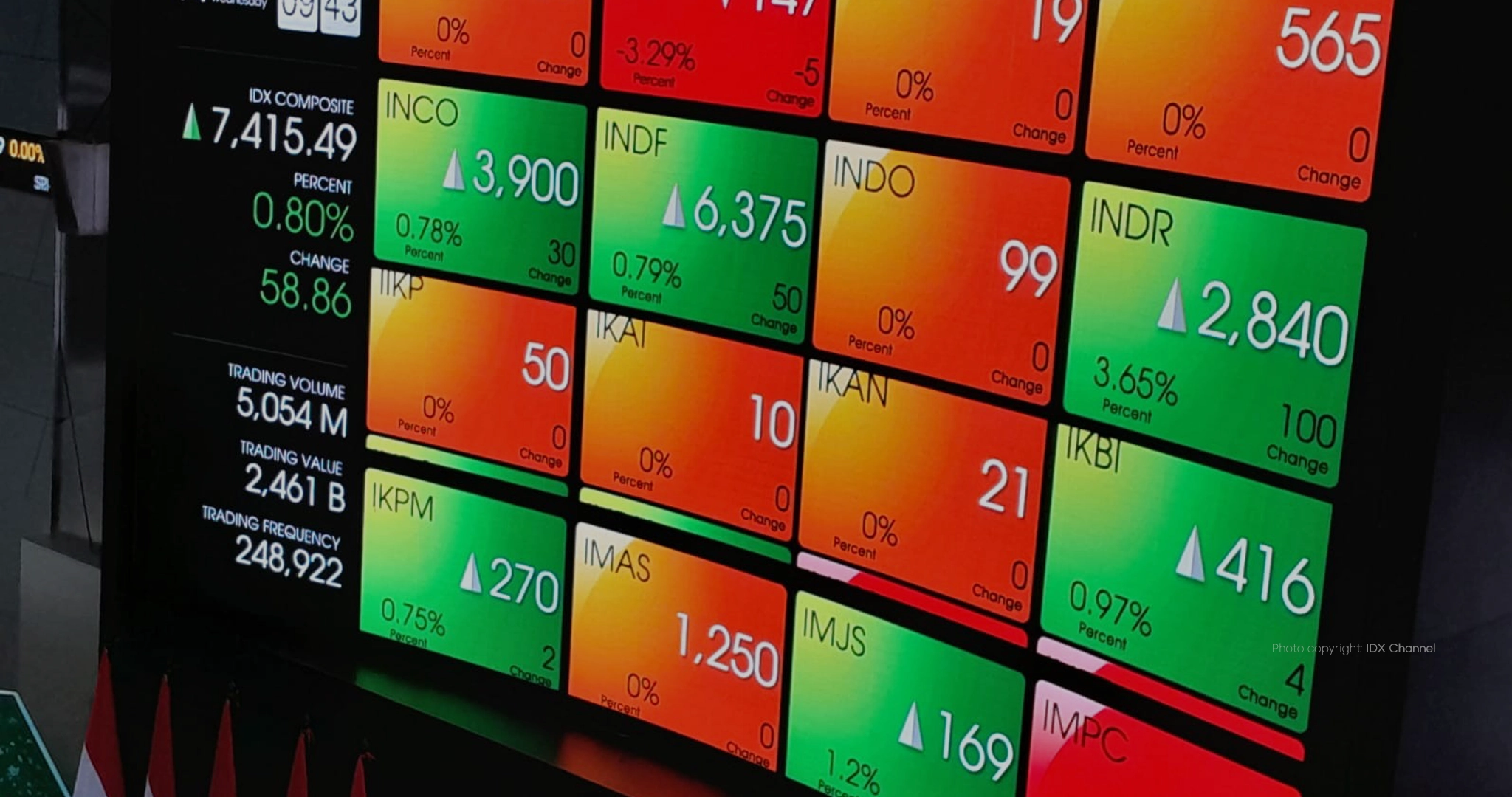

Spanning October 27-31, 2025, the Indonesian Composite Index (IHSG) concluded a tumultuous trading week, with a net loss of -1.38%, closing at 8,163.88. The week was characterized by extreme volatility, with the index first surging to a new all-time high before succumbing to a sharp correction, reflecting a market grappling with peak valuations and heightened sensitivity to a dense schedule of global macroeconomic events.
The week’s trading narrative was defined by several key drivers:
- Record High and Sharp Reversal: The week commenced with a powerful rally that propelled the index beyond the 8,300 milestone for the first time, reaching an intraday peak of 8,354.67. This initial optimism, fueled by strong Q3 2025 earnings expectations, was swiftly erased by a wave of aggressive profit-taking, resulting in the week’s most severe single-day decline of -1.87% on Monday.
- Mid-Week Rebound on U.S. Federal Reserve Action: A decisive market rebound materialized on Wednesday, with the index climbing +0.91%. This recovery was directly catalyzed by the U.S. Federal Reserve’s decision to cut its benchmark interest rate by 25 basis points. The move immediately improved risk appetite for emerging market assets and triggered a massive influx of foreign capital into Indonesian equities, with net inflows reaching a remarkable IDR 3.76 trillion on that day alone.
- Geopolitical Capstone and Economic Headwinds: The latter half of the week was dominated by the closely watched APEC summit meeting between U.S. President Donald Trump and Chinese President Xi Jinping. The resulting trade truce provided a degree of cautious relief, but market sentiment was tempered by Fed Chair Jerome Powell’s less dovish forward guidance and ultimately overshadowed on Friday by the release of a contracting manufacturing PMI from China, which signaled persistent regional economic headwinds and led to a weak close for the week.
- Divergent Investor Behavior: A notable divergence in investor behavior was a key feature of the week. While domestic sentiment appeared more cautious, particularly following the peak, foreign investors acted as significant net buyers. This was most evident on Wednesday and Friday, where substantial foreign inflows were recorded even as the index showed weakness, suggesting that international institutions perceived the market dips as strategic buying opportunities.
The content provided here is for informational purposes only. It is not advice or recommendation. Please do your own research.
IHSG Weekly Performance: A Tale of Two Extremes
The trading week of October 27-31, 2025, will be recorded as a period of significant volatility and pivotal price action for the Indonesian equity market. The IHSG charted an exceptionally wide trading range of 395.5 points, stretching from a record intraday high of 8,354.67 to a low of 7,959.17. This dramatic fluctuation underscores a market at a critical juncture, caught in a tug-of-war between the tailwinds of strong domestic corporate earnings and the powerful, often conflicting, crosscurrents of global macroeconomic policy and geopolitical developments.
The week’s performance data, summarized below, provides the quantitative foundation for the detailed analysis that follows.
| Date | Open | High | Low | Close | Change (pts) | Change (%) | Volume (shares) | Value (IDR Trillion) |
|---|---|---|---|---|---|---|---|---|
| Oct 27 | 8,322.22 | 8,354.67 | 7,959.17 | 8,117.15 | -154.57 | -1.87% | 35.90B | 29.70 |
| Oct 28 | 8,144.42 | 8,151.33 | 8,039.85 | 8,092.63 | -24.52 | -0.30% | 28.29B | 16.36 |
| Oct 29 | 8,107.38 | 8,169.14 | 8,042.63 | 8,166.22 | +73.59 | +0.91% | 24.83B | 22.74 |
| Oct 30 | 8,176.36 | 8,231.88 | 8,145.60 | 8,184.06 | +17.84 | +0.22% | 32.67B | 19.10 |
| Oct 31 | 8,202.52 | 8,215.55 | 8,144.08 | 8,163.88 | -20.18 | -0.25% | 24.54B | 19.10 |
A visual representation of the week’s trading through a candlestick chart would vividly depict this volatility. It would show a long, red candle on Monday with an exceptionally long upper wick, representing the failed attempt to sustain the new all-time high. This would be followed by a small-bodied candle on Tuesday, indicating indecision. Wednesday’s strong green candle would signify the Fed-driven rebound, while the final two days would be represented by small, mixed-color candles, illustrating the market’s struggle for direction as it digested conflicting global news.
Daily Market Chronology: A Blow-by-Blow Account
Monday, October 27: The Peak and the Plunge
The trading week began with a surge of unbridled optimism. Building on momentum from the previous week’s record-breaking performance and buoyed by positive sentiment across regional Asian markets, the IHSG gapped up at the open to 8,322.22. In the opening minutes of trading, the index quickly rallied to establish a new all-time intraday high of 8,354.67, surpassing the 8,300 psychological milestone for the first time in its history. This initial strength was driven by widespread investor confidence ahead of the peak Q3 2025 earnings season, with strong results anticipated from the banking, telecommunications, and commodities sectors.
However, this euphoric rally proved to be unsustainable. Having reached a new peak, the market became a fertile ground for aggressive profit-taking. A powerful wave of selling pressure emerged, triggering a sharp and dramatic reversal. The index plummeted throughout the session, falling over 395 points from its high to an intraday low of 7,959.17 before staging a minor recovery to close at 8,117.15. This represented a staggering loss of -1.87% for the day, erasing all the early gains and more. The conviction behind the sell-off was confirmed by the exceptionally high trading value, which reached IDR 29.70 trillion. The selling was broad-based, hitting blue-chip leaders particularly hard. Within the KOMPAS100 index, notable decliners included PT Dian Swastatika Sentosa Tbk ($DSSA) at -12.83%, PT Rukun Raharja Tbk ($RAJA) at -12.39%, and PT Barito Pacific Tbk ($BRPT) at -9.34%.
The day’s price action constituted a classic “blow-off top,” a technical pattern that often signals the exhaustion of a powerful upward trend. The sequence of events—an initial burst of euphoria leading to a new record high, followed immediately by a massive, high-volume reversal that closes near the day’s low—is a strong indicator of a significant shift in market sentiment. It suggests that the upward momentum had become overextended, making the market vulnerable to a correction as participants who had ridden the rally rushed to liquidate positions and secure profits. This was not merely profit-taking; it was a decisive rejection of higher prices and a temporary capitulation from greed to fear.
Tuesday, October 28: A Cautious Consolidation
Following Monday’s dramatic rout, the market entered a phase of cautious consolidation. The extreme volatility of the previous session gave way to a day of subdued trading as investors paused to assess the landscape. The IHSG traded within a narrow range, opening at 8,144.42 and fluctuating between a high of 8,151.33 and a low of 8,039.85 before closing with a marginal loss of -0.30% at 8,092.63. Trading activity contracted significantly, with transaction value falling to IDR 16.36 trillion. This sharp decrease in volume and value indicated a reduction in the intense selling pressure seen on Monday but also highlighted a distinct lack of buying conviction.
The market’s behavior was primarily driven by a collective holding pattern ahead of two major global risk events scheduled for later in the week: the U.S. Federal Reserve’s interest rate decision and the highly anticipated meeting between U.S. President Trump and Chinese President Xi at the APEC summit. The uncertainty surrounding the outcomes of these events created a climate of risk aversion, prompting market participants to refrain from making significant new commitments. Adding to the cautious mood was a slight depreciation in the domestic currency, with the Rupiah weakening to IDR 16,615 per USD.
The market’s quietness on Tuesday was a clear demonstration of event risk being actively priced in. The low volume and tight trading range were not signs of market apathy but rather the result of deliberate risk management strategies being employed by investors. Participants were collectively holding their breath, awaiting clear signals from global policymakers before deploying capital. This pause in activity was a direct reflection of the market’s heightened sensitivity to external factors, underscoring the degree to which global macroeconomic policy had become the dominant driver of short-term sentiment.
Wednesday, October 29: The Fed-Fueled Rebound and Foreign Invasion
The market’s trajectory reversed course decisively on Wednesday, as a powerful wave of buying interest sent the IHSG surging +0.91% to close at 8,166.22. The recovery was robust and broad-based, with the LQ45 index, which tracks the 45 most liquid blue-chip stocks, climbing an even more impressive 1.71% to 836.71. The session was defined by a massive and targeted influx of foreign capital, which provided the primary impetus for the rally. Total transaction value for the day was a solid IDR 22.74 trillion.
The singular catalyst for this dramatic turnaround was the U.S. Federal Reserve’s decision, announced late Tuesday U.S. time, to cut its benchmark interest rate by 25 basis points to a range of 3.75-4.00%. This monetary easing, aimed at supporting a slowing U.S. economy, acted as a powerful “risk-on” signal for global markets. The move increased global liquidity and made higher-yielding emerging market assets, such as Indonesian equities, significantly more attractive to international fund managers.
The response from foreign investors was immediate and overwhelming. They poured into the Indonesian market, recording a net buy of IDR 3.76 trillion across all markets for the day. The buying was not indiscriminate but was heavily concentrated in large-cap, liquid stocks that could absorb substantial capital flows. The primary targets included telecommunications giant PT XL Axiata Tbk ($EXCL), which saw a net foreign buy of IDR 2.74 trillion, and banking blue-chip PT Bank Central Asia Tbk ($BBCA), which attracted a net foreign buy of IDR 981.2 billion. This day powerfully demonstrated the IHSG’s high sensitivity to global liquidity flows. The Fed’s action effectively opened a liquidity tap, and Indonesia, with its backdrop of stable domestic monetary policy—Bank Indonesia having held its own rates steady—became a prime destination for this reallocated capital.
Thursday, October 30: Digesting the Details
The strong upward momentum from the previous day slowed considerably on Thursday as the market entered a period of digestion and re-evaluation. The IHSG opened higher at 8,176.36, buoyed by the afterglow of the Fed’s rate cut, but struggled to extend its gains throughout the session. After trading in a choppy range between 8,145.60 and 8,231.88, the index closed with a modest gain of just +0.22% at 8,184.06.
The market’s hesitant performance was the result of investors parsing the nuances of two major global developments. First, while the Federal Reserve had indeed cut rates, the subsequent press conference by Fed Chair Jerome Powell was interpreted by markets as being more “hawkish” than expected. Powell explicitly cautioned investors against assuming another rate cut would be forthcoming at the December meeting, stating that further easing was “far from certain”. This commentary effectively tempered expectations for a prolonged easing cycle, reducing the incentive for investors to aggressively bid up risk assets.
Second, the market began to process the initial outcomes of the Trump-Xi meeting at the APEC summit. Reports indicated that the two leaders had agreed to a trade truce and a resumption of negotiations, which was a positive development that removed a significant source of near-term market risk. However, the lack of concrete details and the perception that this was a temporary pause rather than a comprehensive resolution led to a sentiment of cautious optimism rather than outright euphoria. The market demonstrated its ability to look past the headlines and analyze the subtleties of policy communication. The initial, positive knee-jerk reaction to the rate cut on Wednesday gave way to a more sober and forward-looking assessment of the Fed’s future policy path on Thursday. This “buy the rumor, analyze the fact” behavior is characteristic of a maturing market that prices in not just current actions but also the anticipated future decisions of key policymakers.
Friday, October 31: A Weak Close on China’s Woes
The IHSG concluded the volatile week on a negative note, retreating -0.25% to close at 8,163.88. The index traded within a relatively tight range between 8,144.08 and 8,215.55, reflecting persistent uncertainty among investors as they weighed a mix of geopolitical relief and negative economic data. Total transaction value remained robust at IDR 19.1 trillion.
The primary negative catalyst for the day was the release of China’s official manufacturing Purchasing Managers’ Index (PMI). The data showed a fall to 49.0 in October, marking the seventh consecutive month of contraction in the country’s factory activity and signaling persistent economic headwinds. As China is one of Indonesia’s most important trading partners and a key driver of global commodity demand, this weak data stoked renewed fears of a regional economic slowdown, directly impacting sentiment in Jakarta.
This negative economic signal largely overshadowed the more positive geopolitical news. While the trade truce agreed upon by President Trump and President Xi was confirmed, the market’s reaction remained muted. Investors widely viewed the agreement as a “temporary pause rather than a lasting resolution,” and this cautious sentiment was not enough to offset the more immediate concerns raised by the Chinese PMI data.
Despite the index closing in the red, a significant divergence in investor behavior emerged. Foreign investors were substantial net buyers on the day, recording a net inflow of IDR 1.13 trillion across all markets. This counter-cyclical buying suggests that large international institutions were looking through the short-term noise of the PMI data. Their actions indicate a strategic decision to use the market dip, caused by the negative headline data, as a buying opportunity. This “smart money” was likely positioning for a longer-term recovery, viewing the combination of the U.S.-China trade truce, the recent Fed rate cut, and more attractive valuations following the week’s volatility as a compelling entry point. This divergence between the headline index performance and the underlying foreign flows is a powerful indicator of differing time horizons and convictions between different classes of investors.
Analysis of Key Market Drivers
A synthesis of the week’s daily movements reveals that the IHSG’s performance was overwhelmingly shaped by the interplay of global macroeconomic policy, high-stakes geopolitics, and a stable domestic backdrop that made Indonesia an attractive destination for international capital flows.
Global Macroeconomic Dominance: The Fed and the APEC Summit
The week’s trading was a clear testament to the Indonesian market’s integration into the global financial system, with its direction being dictated primarily by events originating in Washington and Busan.
The Fed’s “Hawkish Cut”
The U.S. Federal Reserve’s 25-basis-point interest rate cut on Wednesday was the single most influential catalyst of the week. It was directly responsible for halting the market’s slide, precipitating the powerful mid-week rebound, and triggering a massive surge in foreign capital inflows. However, the impact of the decision was more nuanced than a simple “risk-on” signal. The subsequent commentary from Fed Chair Jerome Powell, which downplayed the likelihood of another cut in December, effectively capped the market’s enthusiasm and prevented a more sustained rally. This sequence of events highlights the market’s deep dependence on the “global liquidity tap,” where the cost and availability of U.S. dollars, as determined by the Fed, are primary drivers of capital flows into emerging markets like Indonesia.
The Trump-Xi Truce – A Cautious Relief
The meeting between the U.S. and Chinese presidents at the APEC summit was the week’s geopolitical centerpiece. The outcome—a temporary truce and an agreement to resume tariff negotiations—was a net positive for the market as it removed an immediate and significant tail risk. However, the absence of a comprehensive, lasting resolution meant that the market’s reaction was one of cautious relief rather than outright celebration. For Indonesian policymakers, such as Coordinating Minister for Economic Affairs Airlangga Hartarto, the key benefit of the meeting was the “clarity on the tariff corridor” it provided, which is vital for national economic planning and attracting foreign investment. The event’s primary impact was a reduction in uncertainty, which is a crucial, albeit intangible, support for market stability.
China’s Economic Shadow
The release of weak manufacturing PMI data from China on Friday served as a stark and timely reminder of the persistent headwinds facing the global and regional economy. For Indonesia, whose economic health is closely tied to commodity exports and Chinese demand, this data point directly contradicted the cautious optimism generated by the trade truce. It was a key factor in the market’s weak finish to the week and underscored the ongoing vulnerability of the IHSG to signs of a slowdown in its largest trading partner.
The Domestic Anchor: Stable Policy and Fiscal Confidence
While global events dictated the week’s volatility, a stable and predictable domestic policy environment provided a crucial anchor, reassuring investors and enhancing Indonesia’s attractiveness as an investment destination.
Bank Indonesia’s Steady Hand
Although it was not an event that occurred during the trading week, Bank Indonesia’s (BI) decision on October 22 to hold its benchmark policy rate at 4.75% provided a critical backdrop of stability. This consistent policy stance, which prioritizes Rupiah stability and the management of inflation, gave investors confidence that domestic monetary conditions would remain predictable and supportive. This stability was a key reason why Indonesia was able to effectively absorb the massive capital inflows that followed the U.S. Fed’s rate cut, positioning the country as a relative safe haven within the emerging market universe.
Successful “Dim Sum” Bond Issuance
A significant, albeit indirect, positive for market sentiment was the Indonesian government’s successful inaugural issuance of a 6 billion yuan-denominated “Dim Sum” bond. The issuance was heavily oversubscribed, with orders reaching three times the offering size, indicating strong demand from a diverse base of global investors. This event served as a powerful vote of confidence in Indonesia’s fiscal management and its strategic efforts to diversify its funding sources away from a reliance on U.S. dollar-denominated debt. While not a direct driver of daily equity market performance, this successful bond sale reinforced the positive underlying sentiment among foreign institutions toward Indonesian assets.
The MSCI “Free-Float Jitters”: An Intraday Stress Test
Monday’s dramatic reversal from an all-time high was amplified by a significant domestic market concern: a consultation paper released by global index provider MSCI regarding potential changes to its free-float calculation methodology for Indonesian stocks. Free float—the proportion of shares available for public trading—is a critical factor in determining a stock’s weighting in MSCI’s influential indices.
The proposal suggested using data from the Indonesian Central Securities Depository (KSEI) as an additional input, which could lead to a stricter definition of free float. This sparked immediate concern among investors, particularly regarding large conglomerate-owned stocks which often have low public ownership. The fear was that a recalculation could reduce the weighting of these Indonesian heavyweights in the MSCI Emerging Markets Index, potentially triggering forced selling by passive international funds that track the index.
The market’s reaction was swift and severe. The IHSG plunged by as much as 3.8% during Monday’s session, its largest single-day drop in over six months. The sell-off was particularly damaging for conglomerate-linked stocks, with PT Dian Swastatika Sentosa ($DSSA) and PT Barito Pacific ($BRPT) among the day’s biggest losers. However, the day’s trading was not a one-way street. After the initial panic-driven sell-off, the market staged a remarkable intraday recovery, closing well off its lows. This rebound indicated that while the MSCI news triggered a sharp, fearful reaction, dip-buyers—both local and foreign—saw the exaggerated drop as a strategic entry point, absorbing the selling pressure and providing a floor for the market. The event served as a sudden stress test, revealing the market’s sensitivity to structural changes but also its underlying resilience.
Investor Flows and Market Internals
A deeper analysis of the week’s trading activity reveals a significant divergence between different investor cohorts and notable rotations across market sectors. Foreign investors, in particular, played a pivotal and counter-cyclical role, providing a strong undercurrent of support even as the headline index experienced significant downward pressure.
Foreign Investor Activity: A Week of Strategic Accumulation
Foreign investors were a dominant and stabilizing force throughout the week. Their trading patterns were not reactive but strategic, characterized by aggressive buying during periods of market weakness. This behavior suggests a strong, fundamentally-driven conviction in the long-term prospects of the Indonesian market, rather than short-term speculative trading.
The peak of this activity occurred on Wednesday, in the immediate aftermath of the Fed’s rate cut, with a massive net buy of IDR +3.76 trillion. This was followed by another substantial net buy of IDR +1.13 trillion on Friday, a day when the IHSG actually closed in negative territory. This pattern of counter-cyclical buying—accumulating assets when prices are falling—is a hallmark of institutional investors with a long-term horizon who are looking to build positions at attractive valuations.
| Date | Net Foreign Flow (All Markets, IDR Trillion) | Net Foreign Flow (Regular Market, IDR Trillion) | Key Event |
|---|---|---|---|
| Oct 27 | Net Sell (Value N/A) | Net Sell (Value N/A) | Profit-taking after All-Time High |
| Oct 28 | — | — | Pre-event Caution |
| Oct 29 | +3.76 | +1.23 | U.S. Federal Reserve Rate Cut |
| Oct 30 | +0.784 | — | Powell’s Hawkish Comments, APEC Summit |
| Oct 31 | +1.13 | +0.857 | China PMI Contraction, U.S.-China Truce |
The specific stocks targeted by these foreign inflows provide further clarity on institutional strategy. The buying was not spread thinly across the market but was heavily concentrated in blue-chip, large-capitalization companies in key sectors such as banking, telecommunications, and commodities. This focus on liquid, high-quality names is typical of large funds that need to deploy significant capital efficiently.
| Date | Top 5 Stocks Bought (Net Value) | Top 5 Stocks Sold (Net Value) |
|---|---|---|
| Oct 27 | 1. $TBIG (+IDR 748.8B) 2. $BBCA (+IDR 352.0B) 3. $BRPT (+IDR 147.1B) 4. $BREN (+IDR 144.8B) 5. $BRMS (+IDR 99.1B) | 1. $BMRI (-IDR 337.9B) 2. $PTRO (-IDR 169.9B) 3. $BBRI (-IDR 164.3B) 4. $CDIA (-IDR 67.3B) 5. $AMMN (-IDR 43.1B) |
| Oct 28 | — | — |
| Oct 29 | 1. $EXCL (+IDR 2.74T) 2. $BBCA (+IDR 981.2B) 3. $BMRI (+IDR 235.4B) 4. $ADRO (+IDR 178.2B) 5. $MDKA (+IDR 152.1B) | 1. $BBRI (-IDR 174.0B) 2. $FILM (-IDR 158.0B) 3. $BUMI (-IDR 87.6B) 4. $ICBP (-IDR 78.2B) 5. $TLKM (-IDR 50.1B) |
| Oct 30 | 1. $BMRI 2. $BBCA 3. $GOTO 4. $MDKA 5. $JPFA | 1. $ANTM 2. $BBNI 3. $BRMS 4. $ARCI 5. $NCKL |
| Oct 31 | 1. $BMRI 2. $BBRI 3. $DSSA 4. $TLKM 5. $AMMN | 1. $ADRO 2. $ANTM 3. $TINS 4. $BRMS 5. $TRIM |
Sectoral Dynamics and Key Movers
The week witnessed significant rotation between sectors as investors reacted to the shifting macroeconomic landscape.
- Monday’s broad-based sell-off hit previously high-flying conglomerate and energy stocks particularly hard, with significant losses in names like $DSSA and $BRPT.
- The mid-week rebound was clearly led by the Financials and Technology/Telecommunications sectors. This was evidenced by the heavy concentration of foreign buying in banking giants $BBCA and $BMRI, as well as the massive inflow into telecom operator $EXCL.
- Thursday saw a shift in leadership, with strength emerging in more defensive or specialized sectors such as Healthcare, Producer Manufacturing, and Energy Minerals.
- Friday’s session highlighted divergence even within sectors. Some commodity-linked stocks, such as poultry producer PT Japfa Comfeed Indonesia Tbk ($JPFA) and copper miner PT Amman Mineral Internasional Tbk ($AMMN), posted gains. In contrast, coal producer PT Adaro Energy Indonesia Tbk ($ADRO) was a top target for foreign selling, indicating that investors were becoming more selective in their commodity exposure.
Among individual stocks, one of the most notable performers was tobacco manufacturer PT Gudang Garam Tbk ($GGRM), which surged an impressive +12.07% on Monday, completely bucking the severe negative trend that dominated the rest of the market.
Market Outlook: Navigating a Path of Cautious Optimism
The Indonesian Composite Index exits a week of extreme volatility in a state of delicate balance. While the index ultimately posted a weekly loss, the strong underlying support from foreign institutional investors, who acted as strategic buyers during periods of weakness, suggests a resilient floor has been established under the market. The IHSG has successfully navigated a period of intense global event risk and has now largely priced in the realities of a less dovish U.S. Federal Reserve and a fragile, though welcome, truce in the U.S.-China trade conflict. The primary takeaway from the week’s trading is that while Indonesia’s domestic economic story remains solid, the market’s short-term trajectory will continue to be heavily influenced by global liquidity conditions and key macroeconomic data from the world’s major economies.
Looking ahead, several key factors will be critical in determining the market’s direction:
- Upcoming Domestic Data: Market participants are now shifting their focus to a slate of key domestic economic indicators scheduled for release in the coming week. These include September trade data, October inflation figures, and, most importantly, the third-quarter Gross Domestic Product (GDP) figures. A strong set of domestic data, particularly a robust GDP reading, could provide a powerful catalyst for the market to decouple from global negativity and re-focus on Indonesia’s fundamental economic strengths.
- Post-APEC Developments: The market will remain highly attuned to any follow-through from the Trump-Xi meeting. While the truce is a positive, the real catalyst would be concrete progress on tariff reductions. Any tangible steps toward a U.S.-Indonesia trade agreement, as alluded to by Minister Hartarto, would be a significant positive driver for investor sentiment.
- Foreign Fund Flows: The continuation of strong foreign inflows will be the most critical indicator of institutional confidence. A sustained pattern of the “buy-the-dip” behavior witnessed during the past week would signal a bullish medium-term outlook and provide a strong buffer against potential external shocks.
What to Expect Next Week
The extreme price swings of the past week—from a record high to a sharp correction and a volatile recovery—demonstrate a market with heightened sensitivity to new information. This “escalation” in movement suggests that while global policy news has been largely digested, the market is now primed for its next major catalyst, which is expected to come from the domestic front.
For the upcoming week, the market’s focus will pivot decisively to the release of crucial Indonesian economic data, including Q3 GDP, October inflation, and September trade figures. These indicators will be the primary drivers of market direction. A strong GDP reading could validate the bullish thesis on Indonesia’s domestic resilience, potentially fueling a rally and allowing the IHSG to decouple from lingering global uncertainties. Conversely, weaker-than-expected data could confirm fears of a slowdown and trigger another wave of selling.
Given the market’s demonstrated sensitivity, reactions to these data points are likely to be pronounced. The continuation of the “buy-the-dip” behavior from foreign investors will be a critical factor to watch; sustained inflows would provide a strong support level, while a reversal could signal waning institutional confidence. Traders should anticipate continued volatility as the market searches for a clear directional signal from these domestic catalysts.
Concluding Assessment
The outlook for the IHSG is one of cautious optimism. The sharp correction from the all-time high has likely cleared out a significant amount of speculative excess, creating a healthier technical foundation for the market. The strong and targeted buying from foreign investors has established a new and credible level of price support. While further volatility should be expected given the uncertain global backdrop, the path of least resistance for the index appears to be skewed to the upside, provided that upcoming domestic data confirms the resilience of the Indonesian economy. In the immediate term, it is anticipated that the index will consolidate within the 8,100-8,250 range as it awaits fresh domestic catalysts to drive its next directional move.
Disclaimer
aluna Analytics is an independent research collective that operates without affiliation to any financial institution, broker, or advisory firm. We do not hold licenses as a securities dealer, investment advisor, or portfolio manager.
All materials published by aluna Analytics are created solely for informational and educational purposes. They reflect independent analytical interpretation and should not be regarded as personalized investment advice, solicitation, or endorsement of any security or strategy.
Market data, opinions, and projections presented herein are subject to change and may not predict future results. Readers remain fully responsible for any financial decisions made based on the information provided. We strongly encourage conducting personal due diligence and consulting a licensed professional before making investment commitments.
aluna Analytics is not regulated by the Financial Services Authority of Indonesia (OJK) and does not offer investment management or brokerage services. All content is presented in good faith, aiming to foster research literacy and informed market perspectives.