
Author: aluna Analytics | Date: 6 November 2025 | Category: Market Intelligence & Regulation
The operational framework of a national stock exchange invariably involves a complex balance between two core, and sometimes conflicting, mandates. The first is the regulatory mandate, overseen by bodies such as the Financial Services Authority (Otoritas Jasa Keuangan, or OJK), to ensure market trading is “orderly, fair, and efficient”. This imperative necessitates mechanisms to protect investors, particularly retail participants, from perceived risks such as excessive speculation, market manipulation, and “irrational price” movements. The second mandate is that of a market operator: to cultivate a deep, liquid, and accessible marketplace that can successfully compete for global capital.
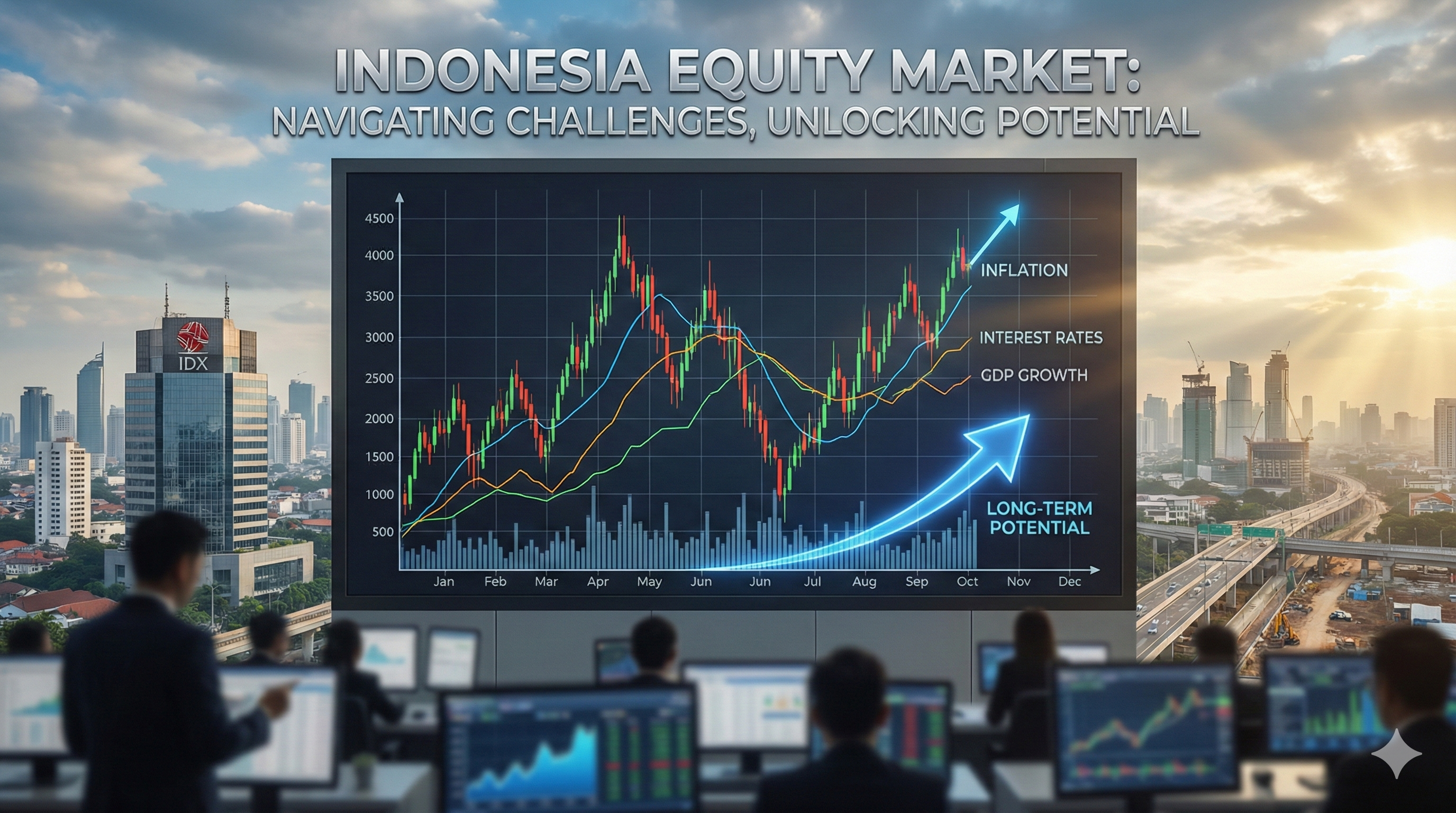
The Indonesia Stock Exchange (IDX), in pursuit of its regulatory mandate, has implemented a specific framework of interventions. This framework includes the issuance of Unusual Market Activity (UMA) announcements, the imposition of temporary trading suspensions, and, most recently, the structural segregation of certain equities onto a ‘Watchlist Board’ (Papan Pemantauan Khusus) governed by a Full Call Auction (FCA) trading mechanism. While the stated objective of this framework is investor protection, these domestic regulatory interventions have generated significant and demonstrable unintended consequences. An analysis of empirical data and specific 2025 market events reveals that these mechanisms have not only impacted domestic market quality but have, more critically, created structural barriers that directly reduce the investability of Indonesian equities for global institutional investors. This conflict has been most pronounced in the interaction between IDX’s regulations and the standardized, global inclusion methodology of index providers, specifically Morgan Stanley Capital International (MSCI), leading to adverse outcomes for high-profile Indonesian issuers and the broader market.
Line chart of Jakarta Composite Index (IHSG) with timeframe 1 Year.
Disclaimer: This analysis is strictly limited to empirical data and market events up to April 2026. Future developments regarding the FCA policy evaluation and MSCI index reviews remain conditional. This content is for informational purposes only and does not constitute financial advice, an offer to sell, or a solicitation of an offer to buy any securities.
Defining the IDX Intervention Framework: UMA, Suspension, and Full Call Auction
The IDX’s intervention framework operates as an escalation ladder, moving from public alerts to temporary halts and finally to a fundamental change in a security’s market structure. Understanding the distinct purpose and impact of each mechanism is essential.
Unusual Market Activity (UMA)
An Unusual Market Activity (UMA) announcement is the initial, informational tier of the framework. It is a public alert issued by the IDX when a security exhibits unusual price movements or trading volumes. The stated purpose of a UMA is not punitive; it does not imply a breach of market regulations. Rather, it serves as an official request for information from the exchange to the listed company, compelling the issuer to clarify whether any undisclosed corporate actions, material facts, or rumors could justify the observed volatility. Market-based event studies on the effectiveness of UMA announcements show that they function largely as intended, serving as a potent information signal to the market. Research indicates that UMAs successfully “restore disrupted market efficiency”. Empirical analysis confirms a statistically significant decline in both abnormal returns and trading volume activity in the periods following a UMA announcement, suggesting the mechanism is effective in “cooling” speculative momentum by forcing an information reset.
Temporary Trading Suspension
The second and more severe intervention is a temporary trading suspension. This is not an alert but a hard stop, where the IDX unilaterally halts all trading in a specific security. This “cooling down” measure is typically imposed following a significant cumulative price change that the exchange deems unwarranted by public information. The stated purpose is to provide market participants with “sufficient time to carefully consider available information before making investment decisions”. During a suspension, liquidity for the security becomes zero, effectively locking in investor positions until the exchange lifts the halt.
The Watchlist Board and Full Call Auction (FCA)
The final and most severe intervention is placement on the Watchlist Board, which constitutes a fundamental and long-term structural change to how a security is traded. The Watchlist Board is a separate listing segment for companies that meet one or more of 11 specific criteria. These criteria are exceptionally broad, capturing companies in diverse situations. They include criteria related to severe financial distress, such as having negative equity, receiving a disclaimer audit opinion, or recording no revenue. However, the list also includes market-based criteria, such as an average price below Rp51.00, or the highly consequential Criteria 10, which relates to being “subject to a temporary trading suspension due to trading activities”—the very “unusual price movement” that also triggers suspensions.
The defining feature of the Watchlist Board is the removal of the stock from the regular, continuous auction market. Instead, it is traded exclusively via a “Full Call Auction” (FCA) mechanism. This system, implemented in its Phase II form on March 25, 2024, fundamentally alters price discovery. It operates as follows:
- No Continuous Matching: Unlike a normal market, bids and offers are not matched in real-time.
- Blind Order Book: Orders are accumulated during a trading session in a “blind order book” where participants cannot see the full depth of bids and offers. Only the best bid and offer prices may be visible.
- Periodic Matching: Orders are matched at a single, algorithmically determined price—the Indicative Equilibrium Price (IEP)—at five discrete, predetermined times during the trading day.
This mechanism creates a direct and significant technical contradiction. The IDX’s stated rationale for the FCA-based Watchlist Board is, counter-intuitively, to “increase share liquidity” and “minimize… unwar(ranted) price formation”. However, the mechanism’s design—a blind, non-continuous auction—is one that inherently reduces order book transparency and limits order flexibility, which academic studies confirm can increase execution risk.
| Mechanism | Type | Stated Objective | Typical Trigger(s) | Market Impact / Trading System |
|---|---|---|---|---|
| Unusual Market Activity (UMA) | Information / Alert | “Restore market efficiency; request clarification” | “Unusual price/volume movement” | Trading continues. Aims to curb abnormal returns. |
| Temporary Suspension | Trading Halt | “””Cooling down”” period; allow market to digest info” | “Significant cumulative price change; failure to disclose” | “Trading is completely halted, liquidity becomes zero.” |
| Watchlist Board / Full Call Auction (FCA) | Market Structure Change | “Investor protection; increase liquidity; better price discovery” | “Meeting 1 of 11 criteria (e.g., negative equity, low price, Criteria 10 unusual price movement)” | “Continuous trading ceases. Replaced by 5 daily blind call auctions. Price discovery and transparency are fundamentally altered.” |
Empirical Market Impact: Stated Goals versus Observed Outcomes
The dissonance between the FCA’s stated goals and its technical design is not merely theoretical. A robust event study and time-series regression analysis of the March 25, 2024 FCA implementation provides clear, empirical data on its actual market impact. The findings of this research directly contradict the policy’s stated objectives.
On the objective of stabilizing prices, the policy’s effect was the opposite. The study found that 80% of sample stocks on the Watchlist Board experienced statistically significant changes in volatility. Of those, 81.4% showed increased volatility. This effect was particularly pronounced for low-priced stocks (those under Rp51), lending support to the Thin Market Hypothesis, which posits that auction mechanisms, when applied in illiquid environments, can amplify price reactions rather than dampen them.
On the objective of improving liquidity, the policy was also unsuccessful. The study found that 55% of stocks showed significant changes in illiquidity, and of those, 95.5% experienced increased illiquidity—that is, a significant weakening of liquidity. Aggregate testing confirmed that the FCA mechanism “significantly weakened liquidity across the sample.” The research concludes that the FCA may have “inadvertently reduced market efficiency by limiting order flexibility and increasing execution risk” under its blind order book structure.
Further analysis reveals a critical policy mismatch. The FCA is a “one-size-fits-all” solution applied to 11 disparate criteria. While the mechanism did show some volatility suppression for deeply distressed-level stocks (Criteria 5) and reactivated some dormant stocks, it achieved this by imposing “heightened trading frictions” on other categories, such as the low-price/low-liquidity stocks under Criteria 1. This blunt-instrument approach, applying a trading system designed for illiquidity to stocks flagged for high volatility, has created new problems. Legal and market analyses have raised concerns that the FCA’s opaque structure introduces “a lack of transparency in transaction data,” which can lead to “potential market manipulation” and “retail investor losses”. This outcome is the precise opposite of the “investor protection” mandate the policy was designed to fulfill.
The Global Consequence: The MSCI Investability Conflict
The domestic impact on market quality, while significant, is secondary to the policy’s catastrophic impact on global investability. The primary channel for global institutional capital flows into Indonesian equities is through benchmark-tracking funds. The most dominant of these benchmarks are the MSCI indexes, such as the MSCI Global Standard Index ($MSCI-Standard).
Inclusion in these indexes is not subjective; it is governed by the rigorous MSCI Global Investable Market Indexes (GIMI) methodology. For a security to be included and remain in the GIMI universe, it must meet strict, non-negotiable criteria on:
- Size and Liquidity: These include requirements for full and free-float-adjusted market capitalization, as well as liquidity metrics like the Annual Traded Value Ratio (ATVR) and Frequency of Trading (FOT).
- Market Accessibility: This is a more qualitative criterion that reflects the experience of international institutional investors in a given market. It assesses factors like the ease of capital flows, operational frameworks, and the stability of the institutional framework.
The IDX’s interventionist framework—particularly a system (FCA) that masks order books, reduces liquidity, and is triggered by a vaguely defined “unusual price movement”—creates a direct conflict with the “Market Accessibility” and “Liquidity” pillars of the GIMI methodology. A market that is opaque, illiquid, and subject to sudden regulatory intervention is, by definition, not fully accessible or investable. This latent conflict erupted into a full-blown market crisis in February 2025.
[aluna_index_data slug=”MSCI-Standard”]
Case Study I: The February 2025 Prajogo Pangestu Stocks Event
Leading into the MSCI February 2025 Index Review, market speculation was high that several large-cap, high-volume stocks affiliated with Prajogo Pangestu—notably Barito Renewables Energy ($BREN), Petrindo Jaya Kreasi ($CUAN), and Petrosea ($PTRO)—would be added to the MSCI Global Standard Index ($MSCI-Standard).



On February 6-7, 2025, MSCI announced its decision. The stocks were not included. MSCI stated that it had applied an “exceptional treatment” to the securities, citing “potential investability issues”.
The market reaction to this non-inclusion was immediate and devastating. The value of Prajogo Pangestu’s portfolio plummeted by an estimated $10.5 billion (Rp 163 trillion) within minutes of the market opening on February 7, 2025. Both $BREN and $CUAN collapsed, hitting their auto-rejection lower (ARB) limits. The sell-off was so severe that it triggered a broad market contagion, dragging the entire IHSG composite index down over 3%.
This event was the catalyst. The market chaos forced MSCI to clarify its vague “investability issues” and explicitly link them to the IDX’s domestic regulations. On April 11, 2025, MSCI issued a critical public announcement and consultation paper. This announcement serves as the “smoking gun” in this analysis.
- It explicitly confirmed the non-addition of BREN, CUAN, and $PTRO was due to concerns that they were “not sufficiently investable,” which included “potential shareholding concentration issues”.
- It then formally proposed a new methodology enhancement specifically for Indonesia: any security that had been “subject to Indonesia Stock Exchange’s Unusual Market Activity (UMA) announcement and/or has appeared on its Watch List Board due to Criteria 10 – relating to unusual price movement – within the past twelve months” would not be considered for addition to the MSCI GIMI.
This was a watershed moment. The February 2025 crisis, triggered by the risk of IDX interventions, forced MSCI to move from a subjective, case-by-case assessment of “investability” to codifying a hard, objective rule. The IDX’s domestic regulatory flags—UMA and Criteria 10 placement—were now officially designated by the world’s leading index provider as a signal of non-investability.
The Result: Formalization of the “Ineligible Alert Board”
Following the April 2025 consultation, MSCI implemented the proposed change, updating its formal GIMI methodology. The methodology now includes an appendix titled “Ineligible Alert Boards”. This appendix lists, by country, domestic regulatory classifications that automatically render a security ineligible for the MSCI Equity Universe. Under the “Emerging Markets” section for “Indonesia,” the methodology now explicitly lists the “Indonesia Stock Exchange” and its corresponding “Alert Board” as the “Watch List Board”.
The consequence of this codification is direct, automatic, and punitive. Any action taken by the domestic regulator (IDX) to place a security on the Watchlist Board automatically triggers its exclusion from the global investable universe. The IDX, in its attempt to regulate its market, is now, in effect, providing a public list of stocks for MSCI to exclude, thereby institutionalizing a barrier to foreign capital.
Case Study II: The November 2025 TINS Exclusion (The “Catch-22”)
The case of PT Timah Tbk ($TINS) in late 2025 provides a perfect, textbook illustration of this new, self-defeating regulatory loop in action.
The Rally: In September and October 2025, $TINS experienced a massive, fundamentals-driven rally. Supported by rising global tin prices, the stock surged 164.22% in the preceding month, attracting significant trading volume. This strong performance and high liquidity made it a prime candidate for inclusion in the upcoming MSCI index review.
Candlestick chart of Timah Tbk (TINS) with timeframe 1 Year.
The IDX Intervention: This rapid, high-volume performance—a sign of a healthy, functioning market—was interpreted by the IDX’s framework as a “significant cumulative price increase” requiring intervention. The full escalation ladder was applied:
- October 9-10, 2025: The IDX suspended trading in TINS.
- Post-Suspension: TINS was subsequently moved to the Watchlist Board, which automatically subjected it to the opaque FCA trading mechanism. This was triggered by Criteria 10.
The MSCI Decision: The MSCI November 2025 Index Review was announced on November 5-6, 2025.
- Expectation: TINS was widely anticipated by the market and analysts to be added to the MSCI Small Cap Index ($MSCI-Small).
- The Exclusion: The inclusion was batal (canceled). MSCI issued a specific announcement on November 5, 2025, identifying TINS by name. The announcement stated that TINS would not be added to the MSCI Indexes because it was “classified as part of an Ineligible Alert Board: Indonesia: Indonesia SE (Jakarta) – Watchlist Board due to Criteria 10”. Analyst commentary immediately confirmed that its recent placement on the FCA board was the sole reason for its last-minute exclusion.
The TINS case demonstrates a perfect regulatory “catch-22” that is acutely damaging to the market.
The sequence is as follows:
- A stock’s strong, fundamentals-driven performance makes it attractive to global investors and a candidate for index inclusion.
- The speed of this positive performance (the “rally”) triggers the domestic regulator’s “unusual price movement” criteria.
- The regulator penalizes the stock for its strong performance by placing it on the Watchlist Board (FCA).
- This placement automatically triggers MSCI’s “Ineligible Alert Board” rule.
- The stock is then formally excluded from the global index precisely because it performed well enough to be noticed by the local regulator.
The IDX’s action, intended to “protect” investors from the rally, ultimately prevented those same investors from realizing the significant and sustainable benefits of MSCI inclusion and the associated foreign capital inflows. The intervention directly “damaged the rally” by codifying its exclusion from global capital.
The BREN/FTSE Paradox: A Crisis of Regulatory Credibility
This conflict between domestic regulation and global standards creates profound regulatory uncertainty, damaging the investability of the entire market. This was clearly illustrated by the BREN/FTSE paradox in June 2024.
The Event: In June 2024, Barito Renewables Energy ($BREN) was added to the Financial Times Stock Exchange (FTSE) Global Equity Index, under the large-cap category ($FTSE-Large). This was described by analysts as a “significant achievement” based on “very stringent” global criteria. This was, in short, a stamp of approval and validation from a major global benchmark provider.
[aluna_index_data slug=”FTSE-Large”]
The IDX Action: Shortly after this global validation, the IDX suspended BREN and placed it on the FCA Watchlist Board.
The Impact: This action created deep “confusion” among investors. As one analyst noted, “BREN’s inclusion in the FTSE reflects growing demand from foreign investors… However, the stock was suspended and then put under the FCA, leaving us confused”. The analyst termed the FCA policy “premature and unnecessary” in this context. The immediate result was a 10% (limit down) drop in BREN shares and a 1.56% contraction in the entire composite index.
This incident highlights a critical divergence. Global investors, following the rigorous FTSE methodology, were receiving a “buy” signal. Simultaneously, the domestic regulator, following its own opaque criteria, was issuing a “penalty.” This divergence signals to the world that Indonesia’s local market rules are not aligned with global standards, making the market unpredictable, confusing, and a more difficult jurisdiction in which to deploy capital.
| Date | Event | Stocks Affected | IDX Action | MSCI Action / Consequence |
|---|---|---|---|---|
| Feb 2025 | MSCI Feb. Review | “BREN, CUAN, PTRO” | Stocks had been flagged with UMA / Watchlist status prior to review. | “MSCI Non-Inclusion. Cites “”investability issues””. Market crashes.” |
| Apr 2025 | MSCI Policy Consultation | All Indonesian Equities | (N/A) | MSCI Policy Proposal. Explicitly links Feb. non-inclusion to UMA/Watchlist status; proposes new rule to bar such stocks. |
| Aug 2025 | MSCI Methodology Update | All Indonesian Equities | (N/A) | “MSCI GIMI Methodology updated. IDX “”Watch List Board”” is formally designated an “”Ineligible Alert Board””.” |
| Oct 2025 | TINS Rally | TINS | “IDX suspends TINS (Oct 9) for “”significant cumulative price increase””. TINS is then moved to the Watchlist Board (FCA).” | (N/A) |
| Nov 2025 | MSCI Nov. Review | TINS | TINS remains on Watchlist Board during review period. | “MSCI Exclusion. Despite meeting criteria, TINS is not added. MSCI explicitly cites its “”Ineligible Alert Board”” status as the reason.” |
Acknowledgment and Unintended Consequences
The mandate for the OJK and IDX to protect investors and ensure market integrity is valid and necessary. However, the evidence from 2024-2025 demonstrates that the implementation of the UMA and Full Call Auction mechanisms, particularly as applied to stocks with high momentum, has been counterproductive and has generated severe, negative, and unintended consequences.
The policy framework has been shown to be flawed on three primary levels:
- Failure of Market Quality: Empirical, academic research on the FCA’s implementation demonstrates that it has failed to achieve its stated goals. It has, on aggregate, increased volatility and decreased liquidity, the precise opposite of its objectives.
- Creation of a “Catch-22”: The use of “unusual price movement” (Criteria 10) as a trigger for placement on the Watchlist Board has created a self-defeating loop. It penalizes stocks for strong, momentum-driven performance, effectively “damaging the rally”.
- Compromised Global Investability: This domestic policy framework has directly caused a structural change in the MSCI GIMI methodology. The formal designation of the IDX Watchlist Board as an “Ineligible Alert Board” has institutionalized a barrier to foreign capital, structurally damaging the investability of the Indonesian market and leading to the direct, high-profile exclusion of stocks like TINS.
The “strong reaction and complaints” from market participants and the significant “investor backlash” have not gone unnoticed. In response, both the IDX and the OJK have publicly announced that they are “reviewing” the FCA policy and will “make adjustments” to the criteria. This regulatory review is an implicit acknowledgment that the policies, as currently designed, have generated severe, unintended consequences that have compromised, rather than protected, the health and global competitiveness of the Indonesian capital market.
Disclaimer
aluna Analytics is an independent research collective that operates without affiliation to any financial institution, broker, or advisory firm. We do not hold licenses as a securities dealer, investment advisor, or portfolio manager.
All materials published by aluna Analytics are created solely for informational and educational purposes. They reflect independent analytical interpretation and should not be regarded as personalized investment advice, solicitation, or endorsement of any security or strategy.
Market data, opinions, and projections presented herein are subject to change and may not predict future results. Readers remain fully responsible for any financial decisions made based on the information provided. We strongly encourage conducting personal due diligence and consulting a licensed professional before making investment commitments.
aluna Analytics is not regulated by the Financial Services Authority of Indonesia (OJK) and does not offer investment management or brokerage services. All content is presented in good faith, aiming to foster research literacy and informed market perspectives.