

Author: aluna Analytics | Date: May 5, 2025 | Sector: Healthcare / Healthcare Providers | Recommendation: Subscribe (Speculative) / Avoid (Fundamental)
The Initial Public Offering (IPO) of PT Cipta Sarana Medika Tbk (ticker: $DKHH) represents a significant capital market transaction within the Indonesian healthcare infrastructure sector, specifically targeting the secondary city hospital market in West Java. Scheduled for listing on the Indonesia Stock Exchange (IDX) on May 8, 2025, the Company enters the public market at a critical inflection point characterized by robust top-line revenue growth tempered by severe bottom-line compression driven by financial costs.
DKHH is offering 530 million new ordinary shares, equivalent to 20.78% of its enlarged issued and paid-up capital, at a fixed offering price of IDR 132 per share. This pricing, which sits at the upper bound of the initial bookbuilding range of IDR 100 – IDR 132, implies a total gross capital raise of IDR 69.96 billion. The transaction is structured as a pure primary issuance, ensuring that 100% of the proceeds (net of emission costs) flow directly into the Company’s balance sheet to fund aggressive capacity expansion and working capital needs, rather than facilitating an exit for existing shareholders.
The investment thesis for DKHH is predicated on the structural undersupply of hospital beds in Indonesia, particularly in satellite regencies like Sukabumi where the Company operates its flagship assets. However, the Company’s financial architecture requires scrutiny; net profit contracted by 59.3% over the ten months ending October 2024, highlighting a urgent need for equity recapitalization.
DKHH
PT Cipta Sarana Medika TbkDisclaimer: This research report is produced by aluna Analytics for informational and educational purposes only. It does not constitute a recommendation to buy or sell any securities. Market data is analyzed as of May 2025. Investors should conduct their own due diligence and consult with a certified financial advisor before making investment decisions.
Transaction Overview & Capital Structure Mechanics
Offering Structure and Pricing Dynamics
The DKHH IPO is structured as a Regulation S (offshore) and domestic offering under the auspices of the Financial Services Authority (OJK). The capitalization table is being restructured to admit public ownership via the issuance of new equity. The selection of IDR 132, the ceiling of the IDR 100–132 bookbuilding range, signals strong preliminary interest or a strategic decision by the underwriter to maximize capital intake for the issuer’s expansion plans. However, pricing at the top end leaves little “money on the table” for immediate secondary market appreciation based purely on fundamental valuation, necessitating the inclusion of warrants to drive aftermarket liquidity.
| Metric | Offering Detail | Implication |
|---|---|---|
| Ticker Code | DKHH | Standard identification on IDX. |
| IPO Price | IDR 132 (Fixed) | Upper bound of bookbuilding range; implies aggressive valuation. |
| Shares Offered | 530,000,000 New Shares | 100% Primary Issuance; capital flows to company. |
| Percentage of Capital | 20.78% (Post-IPO) | Float meets regulatory requirements. |
| Total Funds Raised | ~ IDR 69.96 Billion | Fundraising targeted for CAPEX and Working Capital. |
| Listing Board | Development Board | Typical for mid-sized enterprise listings. |
| Nominal Value | IDR 50 per share | Standard nominal structure. |
Warrant Structure: The Liquidity Engine
A defining feature of this transaction is the issuance of Series I Warrants. Warrants in the Indonesian market serve a dual purpose: they act as a “sweetener” to attract subscription to the underlying equity (especially for smaller-cap issuers) and provide a mechanism for future capital raising upon exercise.
- Ratio: 2 : 1. This ratio is exceptionally generous. Typical ratios for mid-cap issuers often range from 10:1 to 5:1. A 2:1 ratio implies that for every IDR 264 invested (2 shares at IDR 132), the investor receives one option to buy a share at IDR 155. This high ratio suggests the issuer is prioritizing high subscription rates and retail distribution over minimizing future dilution.
- Exercise Price: IDR 155. The exercise price represents a 17.4% premium over the IPO price. This creates a clear target for the stock price; the warrants only hold intrinsic value if DKHH shares trade above IDR 155 during the exercise period.
- Dilution Risk: Full exercise would result in the issuance of 265 million additional shares, diluting the IPO investors by approximately 9.4% relative to the post-IPO shares outstanding.
Use of Proceeds: Analytical Deployment
The prospectus mandates a specific allocation of the funds raised. This allocation is a critical indicator of management’s strategic priorities. DKHH has opted for a growth-oriented allocation rather than a deleveraging one, despite high interest expenses.
| Category | Allocation (%) | Strategic Analysis |
|---|---|---|
| Capex (Building) | 58.28% | Capacity Expansion: Construction of a new building at DKH Cibadak Hospital. This addresses the “capacity ceiling” risk. Hospital revenue is capped by bed count and clinic space; this allocation directly lifts that ceiling to enable future revenue growth. |
| Working Capital | 35.69% | Operational Liquidity: Funding marketing, branding, and pharmaceutical procurement. Hospitals operating under the JKN scheme often face delayed reimbursements (receivables drag). High working capital allocation provides a buffer to manage cash flow mismatches. |
| Capex (Equipment) | 5.17% | Technological Upgrade: Purchase of CT-Scans and other medical devices. Upgrading diagnostic capabilities allows the hospital to claim higher-tier BPJS tariffs (severity levels) and retain patients who would otherwise be referred to Type B hospitals. |
| Renovation | 0.87% | Maintenance: Minor upgrades to existing facilities to maintain service standards. |
Corporate Profile & Business Model
Corporate History and Pedigree
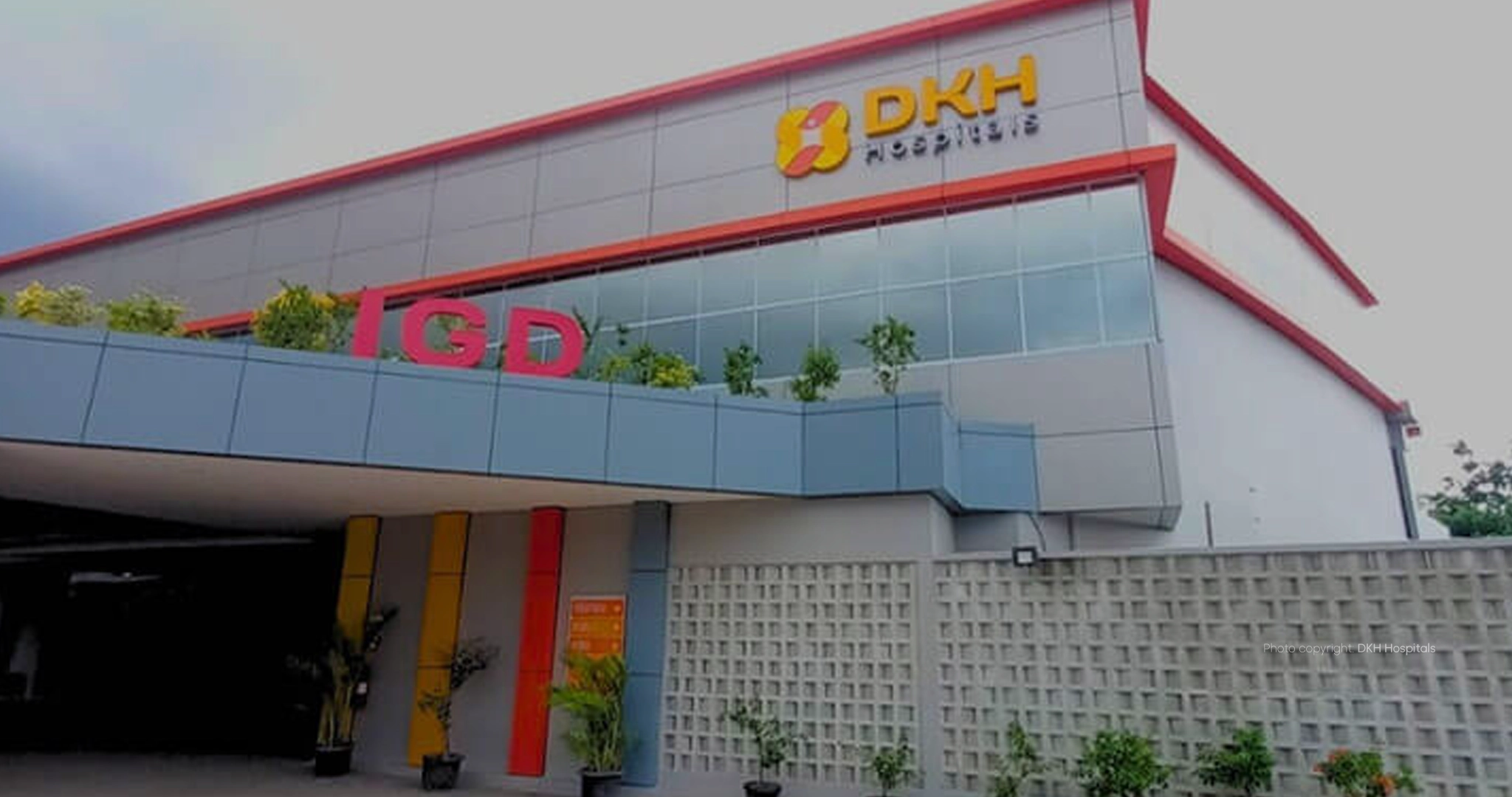
PT Cipta Sarana Medika Tbk was established in 2014 and is headquartered in Cibadak, Sukabumi, West Java. The Company operates under the brand DKH Hospitals. The corporate lineage is notable for its association with the family of Umar Wirahadikusumah (Indonesia’s 4th Vice President), specifically via the values instilled by Ibu Karlinah Djajaatmadja. This pedigree provides a degree of local reputational capital and network access, which is crucial for land acquisition and regulatory navigation in regional West Java.
Business Model: The Type C Niche
DKHH operates primarily within the Type C Hospital classification. In Indonesia’s tiered healthcare system, Type C hospitals are the “workhorses” of the BPJS system in non-metropolitan areas. They are required to have at least 100 beds and four basic specialties (Internal Medicine, Surgery, Pediatrics, OBGYN) plus supporting specialties.
Revenue Drivers (10M 2024 Data):
- Inpatient Services (Rawat Inap): 54.1% contribution. Growth of 5.2% YoY. This is the core revenue stabilizer, heavily correlated with Bed Occupancy Ratio (BOR).
- Outpatient Services (Rawat Jalan): 31.5% contribution. Growth of 12.9% YoY. The higher growth rate here suggests increasing patient traffic and clinic utilization, likely driven by BPJS referrals.
- Ancillary Services: Pharmacy contributed 9.5%, growing at a massive 98.5% YoY. This anomaly suggests a strategic shift, possibly bringing pharmacy operations fully in-house or improved capture of prescription revenue previously leaked to external pharmacies.
Macroeconomic & Industry Context
The IPO takes place in a macroeconomic environment defined by “higher-for-longer” interest rates. The BI Rate stands at 5.75% (as of April 2025). This benchmark rate directly impacts the cost of floating-rate bank loans. For a company like DKHH, which saw interest expenses jump 85.5% in 2024, the high rate environment is a significant drag on profitability.
Market Context: IHSG Performance
Line chart of Jakarta Composite Index (IHSG) with timeframe 1 Year.
Industry Dynamics: The Indonesian healthcare sector is fundamentally driven by a supply-demand mismatch. Indonesia’s bed-to-population ratio is approximately 1.4 beds per 1,000 people, well below the WHO recommendation. In regional areas like Sukabumi, this ratio is often even lower, guaranteeing high utilization rates for existing facilities.
The macro environment creates a divergence. High interest rates hurt DKHH’s current P&L, but the structural undersupply ensures that the new capacity funded by the IPO will likely be filled quickly. The IPO is essentially a financial engineering maneuver to swap expensive debt/growth financing for equity financing to survive the macro headwinds while capturing the industry tailwinds.
Financial Deep Dive (Prospectus-Based)
The following analysis utilizes financial data up to October 31, 2024 (10-month period), compared to the same period in 2023. Double-digit revenue growth confirms strong demand for healthcare services in the Company’s catchment area. The growth is broad-based, with Outpatient (+12.9%) and Pharmacy (+98.5%) outperforming the core Inpatient segment (+5.2%).
Profitability and Margin Sustainability
Net Profit contracted by 59.3% YoY to IDR 2.17 Billion. The Net Profit Margin (NPM) compressed to 1.72% (from ~4.9%). The primary culprit is the financial burden; interest expenses skyrocketed by 85.5% to IDR 9.65 billion. This single line item consumed nearly 7.6% of total revenue, effectively wiping out the operating leverage gained from higher sales. The profitability quality is currently low due to the capital structure. The business operations are healthy (revenue up), but the financing structure is toxic (interest costs eating profits). The IPO is the corrective mechanism.
| Metric | Oct 2023 | Oct 2024 | Growth (YoY) |
|---|---|---|---|
| Total Revenue | IDR 108.95 Bn | IDR 126.03 Bn | +15.68% |
| Net Profit | IDR 5.33 Bn | IDR 2.17 Bn | -59.3% |
| Total Assets | – | IDR 269.1 Bn | – |
| Debt-to-Equity (DER) | – | 1.09x | Deleveraging Expected |
Post-IPO Durability: Raising ~IDR 70 billion increases equity to ~IDR 198 billion. The pro-forma DER drops to ~0.71x. This deleveraging significantly improves the company’s solvency and ability to secure future bank financing at better rates for the construction phase.
Valuation & Pricing Analysis
The valuation assessment is conducted using the fixed IPO price of IDR 132. The Market Capitalization stands at IDR 336.6 Billion.
- Implied PER: ~34.02x. The earnings multiple is demanding given the current profitability pressures.
- Implied PBV: ~2.07x. While the PBV represents a discount relative to Tier-1 industry giants, the earnings multiple is high.
Peer Comparison (Relative Valuation)
DKHH trades at a significant PBV discount (2.07x) compared to peers like Medikaloka Hermina ($HEAL) and Siloam Hospitals ($SILO) which often trade above 3.5x PBV. However, on an earnings basis, it is expensive (34x vs peers ~25-30x). DKHH is priced as a “turnaround growth” stock. Investors are paying a premium for current depressed earnings in exchange for assets that are expected to generate significantly higher returns once the new building is operational.
Comparison chart of HEAL, SILO with timeframe 1 Year.
Underwriter Analysis
The lead underwriter for this issuance is PT MNC Sekuritas (Code: EP).
PT MNC Sekuritas (EP): As the sole lead underwriter, EP is responsible for the bookbuilding and distribution. The selection of the top-end price (IDR 132) suggests they successfully garnered sufficient demand during the initial offering phase.
Regulatory Compliance (Lock-Up): OJK Regulation No. 25/POJK.04/2017 mandates that any shareholder who acquires shares at a price below the IPO price within 6 months prior to the submission of the registration statement is prohibited from selling those shares for 8 months. The controlling shareholder, PT Siliwangi Djajakusumah Hospitals (79.22%), is subject to this mandatory lock-up period. This prevents the majority owner from exiting immediately, ensuring supply stability in the secondary market for the first 8 months.
Regulatory & Risk Analysis
Key Risks:
- Profitability & Leverage Risk: The -59% profit drop is the biggest red flag. If revenue from the new building does not ramp up fast enough to cover the increased depreciation and operating costs, the company could slip into net losses.
- BPJS Dependency: As a Type C hospital, DKHH serves as a vital node in the National Health Insurance (JKN/BPJS) referral network. However, this creates dependency. A stagnation in CBG tariff rates amidst rising medical inflation would permanently compress margins.
- Project Execution Risk: 58% of IPO funds go to construction. Delays in permitting or construction would delay the revenue stream needed to justify the valuation.
Aluna Analytics Recommendation
The “Aluna Scorecard”
We apply a weighted scoring system to determine the attractiveness of the IPO.
| Category | Score | Rationale |
|---|---|---|
| Business Quality | 6.0 / 10 | Essential service (Healthcare) with steady volume demand, but low pricing power and high dependency on BPJS. |
| Financial Strength | 4.5 / 10 | Currently weak due to high leverage and collapsing margins (-59% profit). IPO funds are critical for survival/repair. |
| Valuation | 5.5 / 10 | Attractive on an Asset basis (PBV 2.07x vs peers), but Expensive on an Earnings basis (PER 34x). |
| Underwriter Score | 6.5/10 | Although not proven to give a big number of capital gain, the IPO momentum can be maximised for IPO hunters. |
| IPO Hunter Appeal | 8.5 / 10 | High appeal purely due to the 2:1 Warrant structure and low nominal price volatility potential. |
| Overall Rating | 6.1 / 10 | Speculative Opportunity |
Strategic Recommendation
For IPO Hunters (Short-Term)
Verdict: Subscribe (Speculative Buy). This IPO is structurally engineered for short-term trading performance. The 2:1 warrant ratio is massive. In a bullish market, these free warrants provide significant leverage and downside protection. The nominal price of IDR 132 is psychologically attractive to retail traders (“Penny Stock” appeal). Subscribe for the allocation, look to sell the mother share on the initial pop, and hold the free warrants as a zero-cost option.
For Fundamental Investors (Long-Term)
Verdict: Neutral / Avoid. The fundamental picture is mixed. While top-line growth (15%) is healthy, the severe deterioration in net profit (-59%) and the high PER valuation (34x) make this a risky proposition for value-oriented investors. The company is effectively asking investors to pay a “blue-chip multiple” for a micro-cap turnaround story. Until margin stability is proven in subsequent quarterly reports (Q2/Q3 2025), the risk-reward profile is skewed to the downside.
Final Verdict
The IPO of $DKHH is a classic case of financial engineering meeting real-world infrastructure needs. The business case—building more hospital beds in underserved West Java—is sound and socially necessary. However, the current financial health of the company is strained by debt costs, making this IPO a “rescue and repair” operation as much as a growth story.
For the market, the primary draw is not the immediate earnings yield, but the generous 2:1 Warrant structure. This sweetener is designed to compensate for the fundamental risks and high valuation multiples. Investors should approach this offering with a clear strategy: distinguishing between the short-term liquidity play offered by the warrants and the longer-term execution risk of the hospital expansion.
The Warrants are the main course; the Equity is the side dish.
Disclaimer
aluna Analytics is an independent research collective that operates without affiliation to any financial institution, broker, or advisory firm. We do not hold licenses as a securities dealer, investment advisor, or portfolio manager.
All materials published by aluna Analytics are created solely for informational and educational purposes. They reflect independent analytical interpretation and should not be regarded as personalized investment advice, solicitation, or endorsement of any security or strategy.
Market data, opinions, and projections presented herein are subject to change and may not predict future results. Readers remain fully responsible for any financial decisions made based on the information provided. We strongly encourage conducting personal due diligence and consulting a licensed professional before making investment commitments.
aluna Analytics is not regulated by the Financial Services Authority of Indonesia (OJK) and does not offer investment management or brokerage services. All content is presented in good faith, aiming to foster research literacy and informed market perspectives.