
Author: aluna Analytics | Date: 22 February 2026 | Sector: Macro Strategy / Trade Policy | Outlook: Structural Realignment
Reciprocal tariffs represent a profound structural shift in global macroeconomic policy, fundamentally altering the calculus of cross-border trade and sovereign supply chain management across emerging markets. By definition, a reciprocal tariff framework operates on a punitive first-principles basis, establishing an artificially high baseline import duty designed to systematically destroy the price competitiveness of targeted foreign goods unless immediate diplomatic concessions are secured. The implementation of this aggressive policy by the United States aims to forcibly rectify persistent annual goods trade deficits, leveraging powerful statutory mechanisms such as the International Emergency Economic Powers Act and Section 301 of the Trade Act. The United States explicit targeting of the Republic of Indonesia was mathematically driven by a massive bilateral goods trade deficit that reached a staggering $23.7 billion during the 2025 fiscal period, prompting immediate retaliatory economic posturing from Washington. For an export-dependent emerging market operating within the highly competitive Southeast Asian manufacturing hub, this abrupt policy transition manifests as an acute exogenous shock that threatens to permanently disrupt established manufacturing networks and compel asymmetrical domestic market concessions. The traditional mechanisms of multilateral economic statecraft have consequently been entirely reconfigured, forcing developing economies into precarious bilateral alignment architectures that inherently compromise their autonomous industrial policies simply to preserve terminal market access. The transmission of these violent policy shocks directly into the real economy creates a persistent state of operational uncertainty for domestic manufacturers, who must constantly navigate the dual threats of exclusionary foreign tariffs and the forced liberalization of their own fiercely protected internal consumer markets. Ultimately, this structural friction redefines the risk premium associated with cross-border capital allocations, as multinational corporations and domestic producers alike are forced to rapidly recalibrate their production networks to avoid unpredictable tariff liabilities that can instantly vaporize established operating margins.
Comparison chart of IHSG, RUPIAH with timeframe 1 Year.
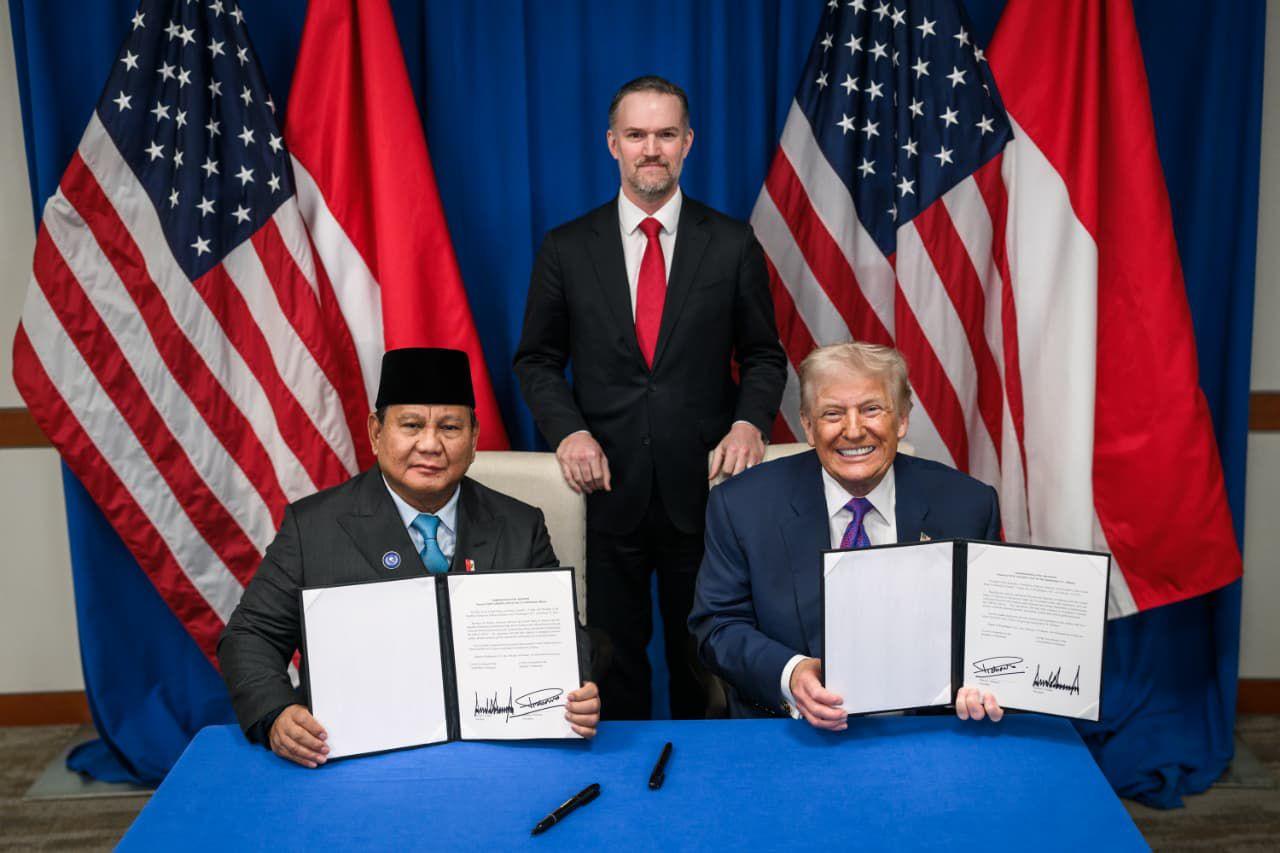
The chronological evolution of the bilateral trade negotiations between the Republic of Indonesia and the United States serves as a definitive institutional case study in the mechanics of modern economic coercion and subsequent structural compromise. The sequence of diplomatic events commenced with a severe cyclical shock on 2 April 2025, when the American administration unilaterally announced the imposition of a blanket thirty-two percent reciprocal tariff on all Indonesian exports, instantly threatening to cripple an export corridor historically characterized by a substantial non-oil and gas surplus. Recognizing the catastrophic macroeconomic implications for domestic employment and foreign exchange reserves, the Indonesian economic apparatus initiated an intense period of diplomatic engagement, deploying chief negotiators to Washington for a protracted series of technical discussions. This persistent engagement successfully delayed the initial implementation deadline to 9 Juli 2025, providing a vital window for structural negotiations that eventually culminated in a joint statement published on 22 Juli 2025, which de-escalated the baseline tariff threat from thirty-two percent to a more manageable nineteen percent. However, this intermediate stabilization proved entirely insufficient for maintaining the global competitiveness of critical Indonesian commodities, necessitating further systemic concessions that were formally ratified in the historic Agreement on Reciprocal Trade signed by President Prabowo Subianto and President Donald Trump on 19 Februari 2026. The final administrative phase, widely referred to as legal scrubbing by the Indonesian Ministry of Trade, was rapidly completed during the week leading up to the summit, ensuring the final text was ready for immediate execution. The architectural core of this finalized treaty represents a highly transactional exchange of sovereign market access, wherein Indonesia successfully managed to secure absolute zero-percent tariff exemptions for exactly 1,819 specific product lines spanning both the agricultural and high-technology manufacturing sectors. This definitive diplomatic achievement effectively transitioned the bilateral relationship from a state of acute cyclical friction into a formalized, legally binding commercial dependency that will dictate the operational realities of domestic manufacturing enterprises for the foreseeable future. The sheer magnitude of the negotiations required to reach this equilibrium underscores the immense structural pressure placed upon sovereign governments, who must continuously balance the preservation of domestic industrial survival against the relentless demands of a transactional international trading system.
| Policy Evolution Phase | Effective Date | Baseline US Tariff on Indonesia | Exempted Categories (0% Tariff) | Key Indonesian Concessions |
|---|---|---|---|---|
| Initial Tariff Implementation | 2 April 2025 | 32% | None specified | None |
| Implementation Delay | 9 Juli 2025 | 32% (Pending) | None specified | Agreement to enter negotiations |
| Intermediate Stabilization | 22 Juli 2025 | 19% | None specified | Initial structural framework alignment |
| Final Agreement Ratification | 19 Februari 2026 | 19% | 1,819 product lines (CPO, tech, spices) | 99% tariff elimination on US goods |
| Tariff Rate Quota Activation | Pending 2026 | 19% (Baseline) | Textiles and Apparel (Conditional) | Minimum 163,000 MT US cotton imports |
In direct exchange for securing these vital zero-tariff export lifelines, the Indonesian government was compelled to execute a profound structural capitulation regarding the protectionist architecture of its own domestic economy. The definitive concession extracted by American negotiators required Indonesia to commit to the immediate and permanent elimination of tariff barriers on over ninety-nine percent of all products originating from the United States, spanning every conceivable sector from agricultural commodities to advanced healthcare devices. This reciprocal market liberalization inherently transitions the bilateral relationship into a highly asymmetrical trade corridor, legally binding Jakarta to a framework that necessitates the continuous, unencumbered absorption of American industrial and agricultural surpluses without the protective friction historically provided by domestic import duties. Furthermore, Indonesia formally agreed to systematically dismantle a wide array of non-tariff barriers that previously shielded local original equipment manufacturers, including the total exemption of American corporations from stringent local content requirements and the unconditional acceptance of federal motor vehicle safety and pharmaceutical standards formulated by the United States Food and Drug Administration. To govern the intricate complexities and inevitable commercial frictions generated by this highly invasive bilateral framework, the finalized treaty explicitly mandates the operational establishment of the Council of Trade and Investment. This dedicated bilateral administrative institution functions as the primary architectural mechanism for continuous policy enforcement, providing a formalized, bureaucratic arena where disputes regarding supply chain origin tracking, sudden localized price escalations, and massive trade imbalances can be adjudicated before escalating into punitive retaliatory tariffs. While domestic policymakers optimistically characterize this council as the institutional engine driving a new golden era of mutual prosperity, critical economic observers recognize it as a structural mechanism explicitly designed to institutionalize American bureaucratic oversight over the sovereign formulation of Indonesian industrial and commercial policy.
A rigorous examination of the specific mechanisms governing the textile and apparel sector reveals a highly complex, conditionally bound architecture designed to systematically subordinate Indonesian manufacturing capacity to the strategic imperatives of the American agricultural supply chain. Rather than granting a blanket zero-tariff exemption for the beleaguered garment industry, the United States imposed a sophisticated Tariff Rate Quota mechanism that strictly tethers the application of the zero-percent reciprocal tariff rate to the embedded volumetric presence of American raw materials within the finished exported goods. This structural mandate explicitly requires Indonesian textile producers to utilize predetermined, heavily audited quantities of American-cultivated cotton and man-made fiber inputs, effectively forcing the upstream segment of the domestic supply chain to pivot its sourcing strategies away from geographically proximate and potentially cheaper regional suppliers. The contractual specifics of this highly coercive arrangement are heavily front-loaded, legally binding the Indonesian commercial sector to import a guaranteed minimum of 163,000 metric tons of American cotton annually over a continuous five-year horizon, with subsequent years requiring sustained import volumes exceeding 150,000 metric tons simply to maintain the baseline tariff exemption. For an expansive industry that directly employs approximately four million laborers and financially supports an estimated twenty million societal dependents, compliance with this rigid raw material mandate is not merely an operational choice but a fundamental macroeconomic prerequisite for corporate survival following a devastating period of mass bankruptcies and localized industrial collapse. The mechanical application of this quota system creates a highly bifurcated export environment, where apparel manufactured strictly in accordance with the American content stipulations enjoys unhindered market access, while non-compliant domestic production remains subject to the punitive baseline nineteen percent tariff that effectively eradicates global price competitiveness. This engineered supply chain integration demonstrates the precise methodology by which the United States utilizes terminal market access as an absolute lever to guarantee captive foreign demand for its domestic agricultural outputs.
In a desperate, highly leveraged attempt to fortify the structural resilience of the national textile apparatus against the dual threats of conditional American tariffs and the relentless influx of predatory synthetic fabrics from rival Asian manufacturing hubs, the Indonesian government has orchestrated a massive sovereign capital intervention. Operating through the strategic investment vehicle of the Danantara sovereign wealth fund, the administration has authorized an unprecedented six billion dollar capital injection intended to unilaterally construct a highly modernized, state-owned enterprise spanning the entirety of the textile value chain. The fundamental economic rationale underlying this aggressive industrial policy is the urgent necessity to bridge the critical vulnerabilities existing within the midstream sector, specifically targeting the technologically deficient spinning, weaving, dyeing, and printing operations that currently force domestic garment manufacturers to rely heavily upon imported intermediate goods from foreign competitors. By establishing a fully integrated, technologically advanced sovereign monolith, policymakers aim to internalize the production of raw materials required to satisfy complex international origin rules, theoretically enabling the nation to scale total textile export revenues from the current baseline of four billion dollars to a highly ambitious forty billion dollars over the next decade. This state-sponsored capacity expansion, however, introduces severe systemic risks into an already fragile domestic ecosystem, generating acute anxiety among independent private sector operators who fear catastrophic capital cannibalization as a heavily subsidized state entity begins to crowd out highly levered commercial manufacturers. The inherent contradiction of this strategy lies in the deployment of sovereign wealth to artificially sustain a mature, labor-intensive industry characterized by structurally declining profit margins, rather than reallocating capital toward high-growth technological sectors possessing inherently superior global productivity metrics. Furthermore, the ultimate success of this monumental intervention remains entirely contingent upon the government’s parallel ability to flawlessly execute defensive trade measures capable of stemming the continuous leakage of illegal, undocumented textile imports that systematically undercut domestic price discovery.
The institutional response to the Danantara sovereign wealth intervention has been deeply polarized, exposing severe philosophical fissures between state planners and entrenched private sector advocates regarding the optimal methodology for industrial revitalization. Prominent industry figures, such as Redma Gita Wirawasta representing the Indonesian Fiber and Filament Yarn Producers Association, have cautiously supported the state-led initiative, arguing that massive capital mobilization is the only viable mechanism capable of upgrading antiquated manufacturing bases toward higher value-added production metrics. However, this endorsement is heavily caveated by the explicit warning that even a six billion dollar technological modernization program will ultimately fail if the national customs apparatus remains entirely incapable of controlling the vast, illicit influx of deeply discounted Chinese textiles that currently saturate the domestic retail market. Conversely, critical macroeconomic analysts from the Institute for Development of Economics and Finance have vehemently condemned the sovereign intervention, arguing that the creation of an entirely new state-owned monolith represents a dangerous overreach into a sector historically dominated by agile private enterprises. These economists caution that the strategic deployment of sovereign capital is mathematically optimal only within emerging sectors characterized by prohibitively high barriers to entry, whereas deploying public funds to directly compete with struggling, highly indebted private textile mills will inevitably precipitate a devastating wave of secondary bankruptcies and mass industrial layoffs. The specter of state-sponsored cannibalization threatens to permanently alienate the existing base of domestic textile entrepreneurs, who now face the terrifying prospect of battling subsidized American cotton quotas on the export front while simultaneously competing against an infinitely funded sovereign competitor within their own sovereign borders. This intense domestic policy conflict perfectly encapsulates the agonizing structural dilemmas imposed upon developing nations when exogenous tariff shocks force rapid, poorly calibrated interventions into deeply established, systemic industrial networks.
Transitioning from the conditionally bound textile framework, the agricultural commodity dimension of the Agreement on Reciprocal Trade presents a fundamentally different structural dynamic, characterized by the absolute, unencumbered zero-tariff classification granted to crude palm oil and its derivative downstream products. The total elimination of the punitive baseline import duty generates an immediate and profound structural pricing advantage for Indonesian plantation operators within the highly lucrative North American consumer market, effectively neutralizing the competitive friction historically imposed to protect alternative domestic vegetable oil complexes. Analytical models projecting the macroeconomic ramifications of this unhindered market access suggest a radical realignment of global edible oil trade flows, with Indonesian exporters theoretically positioned to aggressively capture and dominate up to eighty-six percent of the total United States palm oil import volume under the new tariff regime. However, the absolute capacity of domestic producers to fully monetize this massive external demand shock is severely constrained by a confluence of tightening internal supply dynamics and increasingly aggressive domestic fiscal policies specifically designed to capture sudden export windfalls. The most critical countervailing force operating against this anticipated corporate margin expansion is the impending escalation of the domestic crude palm oil export levy, which the national regulatory apparatus intends to aggressively hike to twelve and a half percent effective strictly from 1 Maret 2026. This aggressive, state-mandated taxation strategy creates a highly complex margin calculus for integrated exporters, who must carefully balance the premium pricing available in the zero-tariff American market against the substantial fiscal drag violently imposed by the Indonesian state at the port of departure. Furthermore, the structural stagnation of overall plantation yields, exacerbated by historical underinvestment in replanting initiatives and the continuous threat of state-mandated land seizures targeting illegal cultivation zones, severely restricts the volumetric elasticity required to quickly satisfy surging international demand.
The empirical transmission of these complex macroeconomic palm oil dynamics into the domestic equity markets reveals a highly differentiated fundamental trajectory for publicly listed plantation operators, heavily dependent upon their specific balance sheet resilience and precise operational leverage. A rigorous financial analysis of PT Astra Agro Lestari Tbk ($AALI) indicates a corporate architecture optimally positioned to capture the tariff-free export premium, with projected core net profit expanding by an impressive twenty-five percent sequentially during the culminating quarters of the 2025 fiscal period. This robust fundamental outperformance is structurally supported by a disciplined executive strategy of aggressive corporate debt reduction, which systematically insulates the enterprise’s bottom line from the elevated interest rate environment while maximizing the operational free cash flow generated by the frictionless new American market access. Correspondingly, established equity analysts maintain a highly constructive outlook on the asset, mathematically deriving a consensus twelve-month target price of Rp 8,297 for the company’s publicly traded shares, reflecting immense confidence in management’s capacity to navigate the evolving global trade parameters. However, exact, finalized full-year 2026 revenue projections for $AALI and its direct exporting peers remain entirely unavailable in the institutional record as of 21 Februari 2026, preventing the formulation of absolute forward-looking financial guarantees. The forward-looking conditional scenario for these integrated plantation equities dictates that sustained multiple expansion throughout the upcoming fiscal year relies absolutely upon the capability of executive management teams to continuously optimize their physical supply chains against the dual complexities of hostile domestic taxation and uncompromising international origin tracing standards. Should these operators successfully navigate this treacherous domestic regulatory landscape, the permanent elimination of the reciprocal United States tariff will undoubtedly serve as an enduring, multi-year catalyst for structural net margin enhancement across the entire capitalized sector.
| Plantation Equity | Projected Sequential Profit Growth (4Q25) | Primary Fundamental Catalyst | Target Price Estimate | Explicit Data Limitations (as of 21 Feb 2026) |
|---|---|---|---|---|
| PT Astra Agro Lestari Tbk | +25% Quarter-on-Quarter | Aggressive debt reduction strategy | Rp 8,297 | Exact 2026 full-year revenue projections unavailable |
| PT Dharma Satya Nusantara Tbk | +22% Quarter-on-Quarter | Delayed shipments & 2-month pricing lag | Data incomplete | Exact 2026 full-year revenue projections unavailable |
| PT PP London Sumatra Indonesia Tbk | +6% Quarter-on-Quarter | Rigorous inventory cost management | Data incomplete | Exact 2026 full-year revenue projections unavailable |
| Requested Ticker: DSIP | Data Unavailable | Analysis provided for DSNG instead | Data incomplete | Institutional record contains no financial data for DSIP |
Continuing the rigorous evaluation of the plantation sector, the operational profile of PT Dharma Satya Nusantara Tbk ($DSNG) exhibits an exceptionally favorable sequential earnings trajectory, with financial models projecting an impressive twenty-two percent profit expansion. This fundamental acceleration is driven explicitly by the strategic realization of previously deferred delivery contracts perfectly timed by executive management to intercept the highly lucrative zero-tariff implementation window opening in the North American market. The unique pricing mechanism meticulously employed by this specific operator, featuring a carefully calculated two-month realization lag, serves as a powerful structural buffer that enables the firm to lock in elevated global free-on-board prices while actively mitigating the immediate margin degradation threatened by the impending export levy hikes scheduled for 1 Maret 2026. In stark contrast, the operational profile of PT PP London Sumatra Indonesia Tbk ($LSIP) reflects a far more conservative, defensive growth vector, characterized by a steady but unspectacular six percent sequential profit acceleration entirely reliant upon stringent inventory cost management rather than aggressive volumetric export expansion into newly liberalized foreign markets. It must be explicitly stated that comprehensive institutional data regarding the specifically requested corporate ticker DSIP ($DSIP) is completely unavailable within the verifiable public record as of 21 Februari 2026, necessitating the substitution of $DSNG to accurately model the macroeconomic trends defining mid-cap plantation operators. Overall, the aggregated total profit for the domestic crude palm oil sector demonstrated extraordinary resilience during the preceding fiscal cycle, expanding by thirty-five percent annually to reach an impressive Rp 9.4 trillion, establishing a formidable capital foundation to absorb upcoming regulatory shocks. The ultimate durability of these exceptional corporate margins will be rigorously tested throughout the 2026 fiscal year, as the absolute benefits of frictionless American market access continuously battle the severe gravitational pull of aggressive domestic taxation policies designed to siphon corporate wealth.



Beyond the highly visible and politically sensitive agricultural domains, the Agreement on Reciprocal Trade injects profound structural momentum into the high-value manufacturing and precision industrial sectors, fundamentally altering the competitive positioning of Indonesian original equipment manufacturers. The comprehensive inclusion of sophisticated electronic components, advanced semiconductor assemblies, and highly specialized aircraft parts within the designated 1,819 zero-tariff product lines represents a decisive macroeconomic victory for the state. This critical regulatory liberalization systematically removes the punitive import duties that previously rendered domestic high-tech exports mathematically unviable within the heavily scrutinized, incredibly competitive United States industrial supply chain, effectively bridging the geographical pricing disadvantage historically suffered by Southeast Asian operators. The global macroeconomic context surrounding this liberalization is utterly defined by the relentless dominance of colossal entities such as Nvidia ($NVDA) and Taiwan Semiconductor Manufacturing Company ($TSM), which dictate the absolute baseline costs of global processing power, while legacy operators like Intel ($INTC) issue deeply disappointing forward guidance that heavily disrupts established automotive and industrial production networks heading into the first quarter of 2026. By guaranteeing permanent, zero-tariff access to the American industrial base, the Indonesian government has engineered a highly potent structural incentive designed specifically to attract sophisticated foreign direct investment from multinational technology conglomerates desperately seeking to relocate marginal production capacity away from escalating geopolitical flashpoints. This strategic economic maneuvering theoretically empowers domestic industrial estates to rapidly ascend the global value chain, transitioning the national export portfolio away from raw, unrefined commodity extraction toward the highly lucrative assembly of critical technological infrastructure required by Western defense and consumer electronics sectors. Ultimately, the permanent removal of these industrial tariffs functions as the singular macroeconomic catalyst capable of transforming the Indonesian archipelago into a viable, secure, and highly competitive alternative node within the increasingly fragmented and highly regulated global semiconductor manufacturing matrix.
Comparison chart of NVDA, TSM with timeframe 1 Year.
A definitive empirical example of this margin enhancement transmission within the broader industrial manufacturing ecosystem is observed through the operational posture of PT Gajah Tunggal Tbk ($GJTL), a massive, vertically integrated domestic tire manufacturer. Possessing an already established and highly regarded commercial footprint within the North American automotive sector through its flagship GT Radial product line, the enterprise is uniquely positioned to immediately internalize the absolute value of the reciprocal tariff elimination without enduring the costly friction of initial market penetration. By leveraging its mature distribution networks across the United States, the corporation can seamlessly transition the reduced border taxation directly into expanded corporate operating margins, significantly improving its fundamental profitability without indiscriminately passing the entire cost reduction downstream to the end consumer. This established retail advantage allows the company to rapidly accelerate its aggressive market share acquisition strategy within the highly lucrative replacement tire segment, mathematically outmaneuvering rival international manufacturers who remain burdened by standard American import duties and elevated cross-border logistical costs. However, maintaining strict analytical neutrality requires the explicit disclosure that precise, mathematically finalized full-year 2026 revenue projections and institutional target prices for $GJTL are entirely unavailable within the public financial record as of 21 Februari 2026. Despite this specific informational limitation, the broader macroeconomic implications for the foundational manufacturing sector remain unambiguously positive, as the absolute elimination of import duties makes prices for diverse Indonesian manufactured goods inherently more competitive across all fifty states. This structural dynamic permanently alters the fundamental risk-reward ratio for domestic industrial conglomerates, theoretically initiating a multi-year cycle of aggressive capital expenditure and capacity expansion explicitly designed to continuously feed the insatiable consumption demands of the liberated American market.

Rp 1,195
MCap: 4.16 T
The profound macroeconomic ramifications of the reciprocal trade framework extend deep into the domestic consumer economy, driven primarily by the critical, non-negotiable concession requiring Indonesia to permanently eliminate import tariffs on ninety-nine percent of agricultural commodities originating from the United States. This sweeping, asymmetrical liberalization fundamentally restructures the foundational cost baseline of the domestic fast-moving consumer goods industry, which remains structurally dependent upon massive, continuous infusions of imported soft commodities to physically sustain its vast manufacturing operations. The sudden, unencumbered availability of zero-tariff American hard winter wheat and raw soybeans introduces a powerful, permanent deflationary catalyst directly into the cost of goods sold for dominant domestic manufacturing conglomerates that produce fundamental dietary staples such as instant noodles, tofu, and tempeh. By systematically neutralizing the severe border taxation previously applied to these critical raw materials, the regulatory shift provides these massive consumer giants with an unprecedented institutional mechanism for structural margin defense against global supply chain volatility. This input cost stabilization is particularly critical within the highly sensitive context of the 2026 domestic operating environment, where persistent localized inflationary pressures and structurally stagnant wage growth threaten to severely restrict the aggregate purchasing power of the expansive middle class. The strategic deployment of these untaxed American commodities directly combats domestic food inflation, allowing consumer goods manufacturers to maintain accessible retail pricing without sacrificing their internal profitability metrics, thereby sustaining the massive volumetric throughput required to generate consistent shareholder returns. Consequently, the forced liberalization of the domestic agricultural import market, while potentially devastating to local farmers, operates as a massive, continuous fiscal subsidy implicitly granted to the largest industrial food processors operating within the national economy.
The empirical financial metrics of the dominant domestic food processors clearly illustrate the critical necessity of this newly implemented raw material cost stabilization mechanism heading into the subsequent fiscal cycles. An exhaustive review of PT Indofood CBP Sukses Makmur Tbk ($ICBP) reveals that domestic sales volumes remained incredibly stagnant during the initial nine months of the 2025 fiscal period, generating a highly anemic annual growth rate of merely 0.8 percent as domestic consumer purchasing power severely eroded. This fundamental volumetric stagnation, combined with previously elevated global soft commodity pricing, severely compressed corporate margins, resulting in a reported net profit of Rp 7.10 trillion, representing a devastating 12.77 percent year-over-year contraction for the undisputed market leader. However, analytical projections utilizing the revised, zero-tariff cost structure indicate a highly favorable conditional scenario for the enterprise, suggesting that the combination of normalized American raw material expenditures and massive anticipated seasonal demand surges during forthcoming religious festivals will catalyze substantial positive earnings revisions throughout 2026. Recognizing this powerful margin expansion potential, prominent sell-side equity analysts have aggressively re-rated the fundamental outlook for the corporation, issuing strong institutional accumulation recommendations and establishing an elevated target price of Rp 11,500 per publicly traded share. Similarly, rival manufacturing conglomerates such as PT Mayora Indah Tbk ($MYOR) are fundamentally positioned to reap extraordinary financial benefits from the identical combination of heavily discounted American wheat imports and the massive, predictable spikes in domestic consumption associated with the Ramadan and Lebaran holidays approaching in the first quarter of 2026. The permanent elimination of import duties on these foundational agricultural inputs mathematically guarantees that a significantly larger percentage of every retail transaction will ultimately flow through to the corporate bottom line, permanently elevating the fundamental valuation parameters of the entire capitalized fast-moving consumer goods sector.
Comparison chart of ICBP, MYOR with timeframe 1 Month.
The positive macroeconomic catalysts generated by the reciprocal trade agreement concurrently transmit immense fundamental momentum into the broader domestic retail and premium consumption sectors, significantly augmenting their operational trajectories heading into 2026. A detailed analysis of the mass-market retail sector, specifically observing the operational metrics of PT Sumber Alfaria Trijaya Tbk ($AMRT), indicates a corporate structure that is heavily reliant upon massive consumer foot traffic and the rapid inventory turnover of affordable, domestically manufactured goods. Despite reporting a slight 3.5 percent year-over-year contraction in net profit to Rp 2.31 trillion during the third quarter of 2025, the enterprise is uniquely positioned to capture the massive surge in consumer spending explicitly enabled by the stabilization of basic food prices following the influx of untaxed American commodities. Furthermore, the aggregate purchasing power of the domestic consumer base is being structurally reinforced by recent, state-mandated increases in the national regional minimum wage framework, providing millions of laborers with the incremental discretionary income required to accelerate their consumption of fast-moving consumer goods at modern retail outlets. Conversely, the operational dynamics of premium dairy and consumption operators, such as PT Cisarua Mountain Dairy Tbk ($CMRY), face a slightly more moderate, indirect impact from the primary macro catalysts, given their strategic focus on higher-margin, inelastic consumer segments that are less sensitive to baseline agricultural commodity fluctuations. Nevertheless, the overarching stabilization of the national inflation rate, directly resulting from the zero-tariff importation of fundamental American agricultural staples, provides a highly supportive macroeconomic environment for sustained corporate expansion across all tiers of the domestic retail hierarchy. The synergistic combination of lowered industrial input costs, mandated wage increases, and the reliable cyclicality of domestic festive seasons creates an incredibly robust fundamental foundation for the entire domestic consumer equity complex throughout the forthcoming fiscal year.
Comparison chart of AMRT, CMRY with timeframe 1 Month.
To financially underwrite the immense geopolitical capital expended to secure the zero-tariff export exemptions, the Indonesian government was ruthlessly compelled to execute a staggering array of sovereign purchase commitments, fundamentally restructuring the baseline architecture of the national import ledger. The finalized treaty is mathematically anchored by a rigid, non-negotiable contractual obligation binding Jakarta to the immediate procurement of fifteen billion dollars in American energy commodities, including seven billion dollars specifically allocated for refined petroleum products, effectively locking the domestic energy matrix into a state of structural dependence on North American supply chains. This massive sovereign capital outflow is concurrently compounded by an ironclad commitment to absorb an additional thirteen and a half billion dollars in commercial aircraft and highly specialized aviation services, specifically benefiting colossal American aerospace manufacturing conglomerates like Boeing ($BA). Furthermore, the agricultural dimension of these forced sovereign purchases guarantees the mandatory importation of at least one million metric tons of American wheat strictly during the 2026 fiscal year, scaling aggressively to a mandated five million metric tons by the conclusion of the decade, alongside mandatory purchases of one million tons of soybeans and 1.6 million tons of corn. Additional strategic agreements negotiated directly alongside the tariff framework include a highly sensitive memorandum of understanding between the Ministry of Investment and Freeport-McMoRan ($FCX) regarding the joint development of critical minerals, as well as an operational partnership between the state oil monopoly Pertamina and Halliburton designed to enhance domestic oil recovery efficiency. The sheer volumetric magnitude of these mandatory, multi-billion-dollar sovereign purchases inherently strains the structural integrity of the national current account balance, effectively neutralizing the highly touted foreign exchange revenues projected to materialize from the unencumbered export of textiles and crude palm oil.
| Sovereign Purchase Category | Financial Commitment / Volume | Key Beneficiaries / Entities Involved | Implementation Timeline |
|---|---|---|---|
| Energy Commodities (Total) | $15.0 Billion USD | US Exporters, Pertamina | Immediate / Ongoing |
| Refined Petroleum | $7.0 Billion USD | US Exporters | Immediate / Ongoing |
| Commercial Aircraft & Aviation | $13.5 Billion USD | Boeing | Immediate / Ongoing |
| US Wheat Imports | 1.0M tons (scaling to 5.0M) | US Agricultural Sector | 2026 (scaling to 2030) |
| US Soybean Imports | 1.0 Million metric tons | US Agricultural Sector | Unspecified duration |
| US Corn Imports | 1.6 Million metric tons | US Agricultural Sector | Unspecified duration |
| Critical Minerals Development | Undisclosed Value | Freeport-McMoRan, Ministry of Investment | Immediate |
The aggressive, asymmetrical liberalization mandated by the Agreement on Reciprocal Trade introduces severe, potentially catastrophic structural risks into the fragile ecosystem of the domestic real economy, specifically threatening the operational viability of countless micro, small, and medium enterprises. By completely dismantling the protective tariff barriers that historically insulated the domestic market from the overwhelming scale and relentless efficiency of the American industrial machine, the government has essentially mandated immediate, unfiltered competition between highly vulnerable local producers and massively capitalized multinational conglomerates. This abrupt, brutal exposure creates a textbook macroeconomic environment for accelerated, premature deindustrialization, where domestic manufacturing capacity is systematically eradicated because local operators cannot mathematically match the predatory pricing strategies deployed by subsidized foreign exporters. The transmission of this existential threat is particularly acute within the foundational agricultural and basic manufacturing sectors, where domestic farmers cultivating fundamental crops such as corn and dairy cattle, alongside localized producers of footwear and simple garments, face immediate, devastating displacement as zero-tariff American commodities violently flood the domestic distribution networks. The fundamental inability of the domestic economy to absorb these massive, state-engineered shockwaves threatens to trigger localized economic depressions within historical industrial heartlands, directly translating structural manufacturing bankruptcies into severe, systemic spikes in permanent unemployment that vastly outpace the absorptive capacity of the broader services sector. Ultimately, the systematic, government-sanctioned destruction of these foundational domestic enterprises represents the hidden, devastating cost of the reciprocal trade doctrine, illustrating precisely how the desperate pursuit of high-value corporate export exemptions inherently requires the sacrificial dismantling of the deeply rooted, labor-intensive industrial networks that currently sustain the peripheral domestic economy.
Beyond the immediate, tangible destruction of physical manufacturing capacity, the comprehensive liberalization framework embeds incredibly insidious, second-order vulnerabilities within the foundational architecture of the domestic digital and financial services ecosystem. A critical, heavily obscured component of the reciprocal agreement forces the unconditional opening of the domestic service sector to overwhelming foreign penetration, specifically mandating the unhindered re-entry and aggressive operational expansion of massive American payment processing behemoths such as Visa ($V) and Mastercard ($MA) into the sovereign transactional network. This forced technological integration directly attacks the systemic viability of indigenous payment architectures, including the National Payment Gateway and the standardized QRIS infrastructure, forcing national banking institutions to dramatically restructure their operational models to accommodate the aggressive market share acquisition strategies of infinitely capitalized foreign competitors. However, the true systemic danger of this concession transcends mere commercial competition, fundamentally striking at the core of national data sovereignty by guaranteeing that the granular, highly sensitive transactional data of nearly two hundred and eighty million Indonesian citizens will continuously flow into offshore servers entirely beyond the jurisdictional reach of domestic regulatory authorities. This massive, unregulated extraction of behavioral economics data provides foreign commercial entities with the unprecedented algorithmic capacity to precisely map, predict, and ultimately exploit profitable segments of the domestic consumption market, generating profound informational asymmetries that perpetually disadvantage domestic retail operators. Furthermore, the treaty includes highly nebulous transshipment rubber clauses that grant the United States the unilateral, uncontested authority to arbitrarily hike tariffs based on mere suspicions of Chinese goods utilizing Indonesia as an illicit transit node, effectively rendering the entire domestic supply chain permanently hostage to the investigative whims of American customs enforcement.
A comprehensive analytical understanding of the Indonesian trade settlement necessitates a rigorous comparative evaluation against the structurally flawed reciprocal trade architecture hastily finalized by the government of Malaysia during the October 2025 diplomatic summit. Driven by a desperate political imperative to immediately secure zero-tariff exemptions for its highly vulnerable palm oil sector, the Malaysian negotiating apparatus capitulated to a series of draconian legal stipulations that fundamentally compromised the sovereign economic independence of the entire nation. The architectural core of this massive diplomatic failure was the uncritical acceptance of highly restrictive alignment clauses contained within Annex III of their agreement, which legally obligated Kuala Lumpur to perfectly mirror all contemporary and future United States trade sanctions, punitive quotas, and structural embargoes. This explicit contractual surrender effectively outsourced the formulation of Malaysian foreign trade policy directly to legislative bodies residing in Washington, systematically destroying the nation’s capacity to maintain independent, non-aligned commercial relationships with rival geopolitical superpowers in an increasingly multipolar world. The structural implementation of this framework allowed the United States to maintain a punishing nineteen percent reciprocal tariff rate on the vast majority of Malaysian imports, generously granting the zero percent rate only to a strictly defined list of essential commodities that directly served American industrial interests. The Malaysian precedent serves as a definitive, highly cautionary institutional case study illustrating the precise methodology through which the United States weaponizes asymmetric bilateral trade negotiations to violently conscript smaller, export-dependent emerging markets into its broader global economic containment strategies.
The immediate realization of this systemic geopolitical vulnerability within Malaysia triggered a massive, highly coordinated domestic backlash from prominent industrial associations, prominent academics, and former political leaders who correctly identified the catastrophic long-term implications of the treaty. Elite economic critics, most notably including former prime minister Mahathir Mohamad, vehemently decried the agreement as a predatory, neo-colonial deal that completely compromised the fundamental sovereignty of the Malaysian state for the sake of temporary agricultural market access. Rigorous forensic analysis of the signed Malaysian document revealed a horrifyingly asymmetrical obligation structure, containing approximately forty-eight highly restrictive provisions beginning with the phrase “Malaysia shall,” juxtaposed against a meager three superficial obligations placed upon the United States government. This mathematically absurd imbalance perfectly highlights the coercive pressure and wildly uneven negotiating dynamics that defined the rushed, opaque dealmaking process, which entirely bypassed longstanding institutional norms regarding transparency and domestic legislative consultation prior to international ratification. The political leadership’s attempts to valorize the agreement as a triumph of bilateral friendship were immediately mathematically discredited by independent think tanks, who demonstrated that the sheer volume of lost policy autonomy vastly outweighed the nominal financial benefits generated by the limited tariff exemptions. Ultimately, the intense domestic polarization surrounding the Malaysian agreement serves as a stark reminder that modern reciprocal trade frameworks are rarely designed to foster mutually beneficial economic outcomes, but are instead precisely engineered to extract maximal geopolitical subservience under the overwhelming threat of total economic isolation.
Despite the strident early assurances issued by domestic trade officials vehemently denying the possibility of accepting restrictive alignment clauses, rigorous institutional analysis of the finalized Agreement on Reciprocal Trade reveals that Indonesia ultimately succumbed to the identical structural trap that previously ensnared its regional neighbor. During the culminating phases of the Februari 2026 negotiations, despite intense, highly publicized warnings from the Indonesian Employers Association urging President Prabowo Subianto to avoid deadly handshake traps, the Indonesian diplomatic delegation was systematically coerced into swallowing the geopolitical poison pill. The finalized treaty explicitly contains a highly punitive termination provision, granting the United States the unilateral, uncontested authority to immediately revoke all zero-tariff exemptions should Jakarta engage in any commercial or geopolitical arrangement deemed to jeopardize Washington’s essential strategic interests. The mechanical activation parameters of this poison pill are intentionally nebulous, providing American policymakers with extraordinary interpretative latitude to weaponize the clause against any Indonesian economic initiative involving rival global superpowers, specifically designed to aggressively isolate Chinese capital from the archipelago. This devastating structural concession fundamentally obliterates the foundational doctrine of non-aligned economic diplomacy that has historically defined Indonesian foreign policy, abruptly transforming the nation from a neutral, independent economic actor into a highly restricted, subservient node heavily policed by the American state department. The enforcement of this compliance architecture generates immense operational friction across Indonesia’s massive bilateral trade corridors with Eastern supply chain partners, forcing domestic corporations to navigate an impossibly complex matrix of geopolitical risk where the procurement of basic manufacturing inputs could theoretically trigger catastrophic American tariff retaliation.
| Diplomatic Feature | Malaysia Trade Deal (Oktober 2025) | Indonesia Trade Deal (Februari 2026) |
|---|---|---|
| Primary Commodity Exemption | Palm oil tariff exemptions (0%) | Textile TRQ (0%), CPO (0%), 1,819 items |
| General Baseline Tariff | 19% | 19% |
| Alignment Clause / Poison Pill | Explicitly requires mirroring US trade sanctions | Grants US unilateral right to terminate agreement |
| Geopolitical Objective | Forcing alignment against US rivals (China) | Restricting relations that “jeopardize” US interests |
| Domestic Business Sentiment | Massive backlash for surrendering sovereignty | Initial warnings ignored; capitulation to US demands |
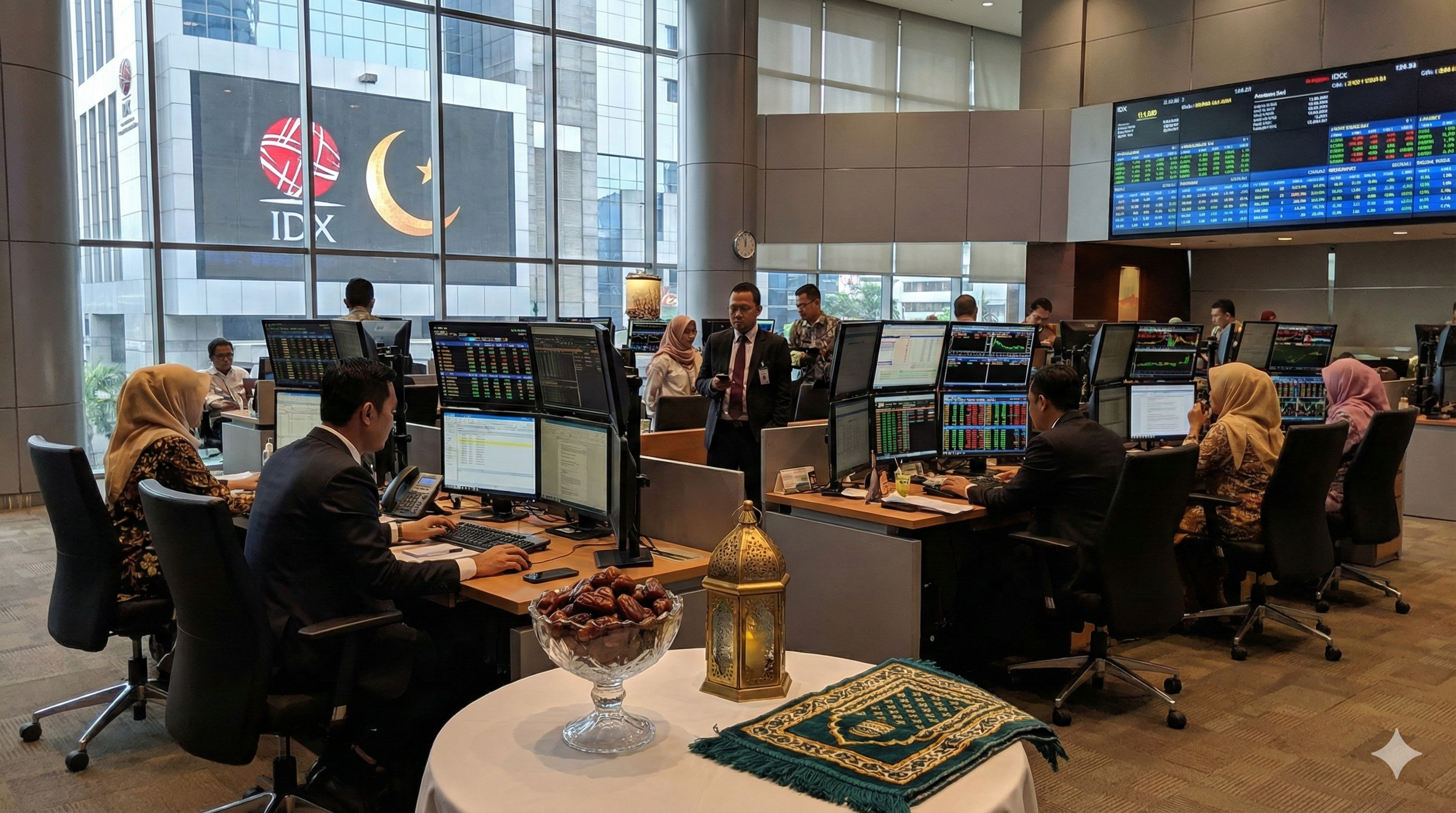
The empirical validation of these incredibly complex macroeconomic policy shifts was immediately observable within the violent price action and elevated liquidity metrics recorded across the domestic capital markets during the highly anticipated trading session on 20 Februari 2026. Responding directly to the official international ratification of the Agreement on Reciprocal Trade, the Jakarta Composite Index ($IHSG) exhibited pronounced structural resilience at the opening bell, advancing steadily by 26 points, or 0.31 percent, to breach and temporarily stabilize at the critical psychological resistance level of 8,300 points. This upward trajectory was underwritten by incredibly robust institutional participation, generating an impressive intraday turnover exceeding Rp 1.1 trillion across a highly active sequence of more than one hundred and sixty thousand individual transactions within the opening minutes of the session. The fundamental market breadth indicators decisively confirmed the systemic, near-term optimism surrounding the treaty, with advancing equities overwhelmingly outnumbering decliners by a ratio of 301 to 176, demonstrating a profound consensus among sophisticated capital allocators regarding the inherent margin-expansion potential of the new zero-tariff export exemptions. However, this domestic euphoria was heavily counterbalanced by severe global geopolitical anxieties, as broader Asian and American equity markets closed significantly lower during the same operating window, driven primarily by escalating crude oil prices resulting from acute military tensions between the United States and Iran. The ability of the domestic index to maintain its positive trajectory in the face of immense international macroeconomic headwinds perfectly illustrates the immense fundamental weight assigned by institutional investors to the permanent resolution of the bilateral tariff hostilities that had plagued the export sector for the preceding twelve months. The immediate financial news flow surrounding this ratification dominated domestic headlines from 19 Februari through 21 Februari 2026, cementing the reciprocal tariff resolution as the absolute primary driver of short-term institutional capital flows during this specific trading window.
This aggressive equity accumulation on the Jakarta stock exchange was simultaneously reinforced by a highly supportive, meticulously calibrated domestic monetary posture executed by the national banking authority. The Board of Governors of Bank Indonesia consciously elected to maintain the benchmark reference rate entirely unchanged at 4.75 percent for the fifth consecutive policy meeting, effectively prioritizing absolute currency stability and rigorous inflation management over the immense political pressure to enact premature monetary easing. By maintaining this disciplined interest rate differential, the central bank provided international institutional investors with the precise macroeconomic predictability required to confidently allocate vast sums of capital toward domestic export-oriented sectors newly liberated from American tariff hostilities. The synergistic confluence of expanding domestic credit growth, which aggressively accelerated to a multi-year high of 9.96 percent year-over-year in January 2026, and the structural guarantee of frictionless access to the world’s largest consumer market established an extraordinarily favorable risk-reward paradigm for domestic equities. Analyzing specific high-capitalization components of the index on 20 Februari 2026 reveals targeted institutional buying, with PT Bank Central Asia Tbk ($BBCA) advancing by 0.70 percent to Rp 7,225, and PT Bank Rakyat Indonesia Persero Tbk ($BBRI) surging by 1.86 percent to Rp 3,840, reflecting immense confidence in the banking sector’s capacity to finance the impending export manufacturing boom. Conversely, certain heavily indebted commodity operators experienced distinct downward pressure, with PT Bumi Resources Tbk ($BUMI) contracting by 2.00 percent to Rp 294, and PT Aneka Tambang Persero Tbk ($ANTM) slipping by 0.24 percent to Rp 4,220, clearly indicating that the market was highly selective, allocating capital exclusively toward entities directly benefiting from the new reciprocal trade parameters rather than initiating a broad, indiscriminate market rally.
The ultimate macroeconomic trajectory of the Republic of Indonesia operating strictly under the severe constraints of the Agreement on Reciprocal Trade must be analyzed through a rigorous matrix of forward-looking conditional scenarios, incredibly dependent upon the precision of domestic policy execution. In a highly optimistic, fundamentally bullish scenario, the successful, absolutely frictionless utilization of the Tariff Rate Quotas by the textile industry, combined with aggressive global market share expansion by zero-tariff agricultural and high-technology exporters, drives a profound structural expansion in corporate operating margins. This massive influx of untaxed export revenue systematically re-rates the multiple valuation of the entire domestic equity market, driving unprecedented capital formation that can be effectively deployed to permanently upgrade the national manufacturing infrastructure. This highly favorable outcome is absolutely contingent upon the bureaucratic capacity of the state to flawlessly implement rigorous origin tracking mechanisms and effectively shield domestic participants from the predatory influx of undocumented rival imports, all while seamlessly navigating the treacherous diplomatic parameters established by the geopolitical poison pill provisions. Furthermore, the immense sovereign capital commitments dedicated to American technology and aviation sectors must successfully stimulate massive secondary technological transfers, ultimately empowering domestic operators to ascend the global value chain through specialized arrangements like the critical minerals memorandum of understanding signed by $FCX. If the state apparatus can flawlessly execute this incredibly complex balancing act, the reciprocal trade agreement will genuinely function as the supreme catalyst for a new golden era of specialized industrial growth, permanently elevating the absolute wealth generation capacity of the Indonesian archipelago.
Conversely, a severe, structurally devastating downside scenario materializes if the sudden, catastrophic eradication of protective domestic import barriers triggers an uncontrollable wave of premature deindustrialization across the foundational small and medium enterprise sector, instantly evaporating millions of jobs and triggering localized deflationary spirals that shatter domestic consumption metrics. In this highly plausible negative reality, the massive structural capital outflows required to strictly satisfy the rigid sovereign purchase commitments of thirty-three billion dollars in American energy and aviation assets quickly overwhelm the incremental foreign exchange generated by the privileged export corridors, driving an acute deterioration in the national current account balance. The fundamental profitability of the vital crude palm oil sector could be utterly suffocated if the implementation of the aggressive 12.5 percent domestic export levy on 1 Maret 2026 mathematically destroys the free-on-board pricing advantage gained in the American market, rendering the entire diplomatic effort financially obsolete. Furthermore, the catastrophic failure of the Danantara six billion dollar sovereign wealth intervention to effectively compete with international textile giants could violently cannibalize the last remaining viable private garment manufacturers, triggering a systemic collapse of the nation’s largest labor-intensive employer. The ultimate terminal risk resides within the nebulous transshipment and alignment clauses; if the United States arbitrarily invokes the geopolitical poison pill to suddenly reimpose punitive thirty-two percent tariffs due to Indonesian commercial relations with China, the domestic economy would instantly suffer a massive, unrecoverable demand shock. The enduring historical legacy of this agreement will thus not be defined by the temporary margin relief granted to specific corporate export sectors, but rather by the permanent, highly dangerous structural integration of the Indonesian real economy into the overarching strategic and commercial imperatives of the United States.
Disclaimer: This content is produced by aluna Analytics for informational purposes only. It does not constitute a solicitation to buy or sell securities.
Disclaimer
aluna Analytics is an independent research collective that operates without affiliation to any financial institution, broker, or advisory firm. We do not hold licenses as a securities dealer, investment advisor, or portfolio manager.
All materials published by aluna Analytics are created solely for informational and educational purposes. They reflect independent analytical interpretation and should not be regarded as personalized investment advice, solicitation, or endorsement of any security or strategy.
Market data, opinions, and projections presented herein are subject to change and may not predict future results. Readers remain fully responsible for any financial decisions made based on the information provided. We strongly encourage conducting personal due diligence and consulting a licensed professional before making investment commitments.
aluna Analytics is not regulated by the Financial Services Authority of Indonesia (OJK) and does not offer investment management or brokerage services. All content is presented in good faith, aiming to foster research literacy and informed market perspectives.