

- Launch & Scale: Launched on February 24, 2025, Danantara is Indonesia’s new sovereign wealth fund (SWF), projected to manage assets from US$600 billion to over US$900 billion, placing it among the world’s largest.
- Dual Mandate: It functions as a “super-holding” company (inspired by Singapore’s Temasek) to reform Indonesia’s State-Owned Enterprises (SOEs) and as a strategic investment vehicle to fund national development projects.
- Strategic Sectors: Key investment priorities include industrial downstreaming (nickel, bauxite, etc.), food and energy security, renewable energy, and digital infrastructure (including AI) to achieve a target of 8% annual GDP growth.
- Centralized Governance: The fund features a unique governance structure that reports directly to the President, bypassing traditional ministerial and parliamentary oversight—a significant departure from Indonesia’s first SWF (INA).
- The Core Gamble: It’s a high-stakes bet on a state-led model. The new “business judgment rule” (Law No. 1 of 2025) aims to empower executives but critics fear it could shield “legal corruption” and political patronage from accountability.
- Daya: An Indonesian word meaning “power,” “strength,” or “energy.” This frames the fund as the primary engine for national progress.
- Anagata: A word of Sanskrit or Pali origin meaning “future” or “not yet to come,” linking the fund to the nation’s long-term aspirations.
- Nusantara: An Old Javanese term for the archipelago, evoking unity, historical grandeur, and national identity.
- Industrial Downstreaming: Processing raw materials like nickel, bauxite, copper, and tin domestically to capture more value.
- Food Security: Investing in food production and aquaculture for national self-sufficiency.
- Energy Transition: Developing renewable and green energy projects.
- Digital Infrastructure: Investing in modern telecommunications and artificial intelligence.
- International Venture: Construction of a Hajj village in Saudi Arabia.
- Domestic Energy: Upstream energy projects in partnership with Pertamina.
- Sustainable Infrastructure: A nationwide push into waste-to-energy (WTE) plants, with 33 projects planned.
- Efficiency and Performance: By imposing professional management, Danantara could force SOEs to become more efficient, profitable, and globally competitive.
- Accelerated Economic Growth: By channeling trillions of rupiah into strategic sectors, the fund could be the engine that achieves the 8% GDP growth target.
- Attracting Global Capital: A massive, professionally managed SWF can act as a powerful magnet for foreign investment, providing a credible local partner.
- Enhanced Financial Stability: A self-funding mechanism for development could reduce reliance on volatile state budgets and foreign debt.
- Political Capture and Corruption: Direct presidential control, combined with political loyalists in key roles, creates an enormous risk of patronage, nepotism, and large-scale corruption.
- Lack of Transparency: Fears that investment decisions will be made behind closed doors, shielding cronyism and poor performance from public scrutiny.
- Bureaucratic Bloat: Instead of streamlining, Danantara could become just another heavy layer of bureaucracy, stifling agility.
- Market Instability: Investor nervousness about the concentration of power and the potential for political priorities to trump sound economic management.
The content provided here is for informational purposes only. It is not investment advice or a recommendation. Please do your own research.
Introduction: The Archipelago’s New Engine
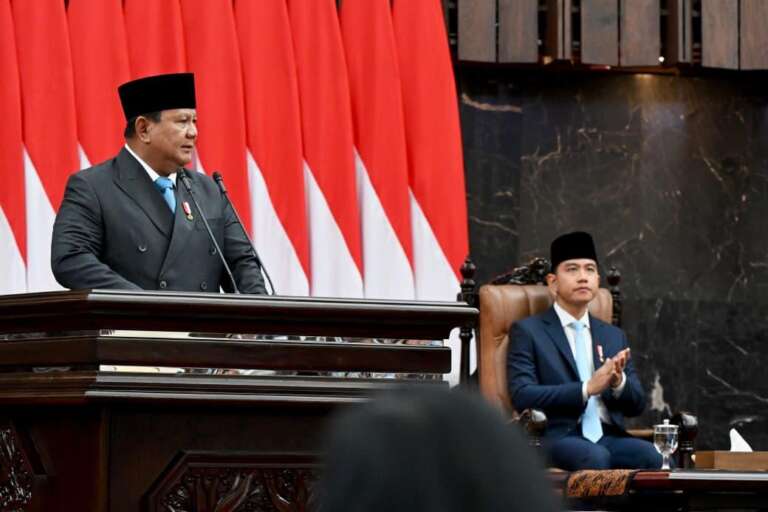
On February 24, 2025, Indonesia launched the Daya Anagata Nusantara Investment Management Agency, or Danantara, an institution of unprecedented scale and ambition. Officially the country’s second sovereign wealth fund, Danantara is far more than a financial vehicle; it represents the central pillar of President Prabowo Subianto’s transformative economic and nationalistic agenda.
The fund’s inauguration was framed as a “historic step” toward national prosperity, resilience, and economic independence. It is explicitly designed to be an “instrument of national development,” tasked with optimizing the nation’s vast wealth under high standards of transparency and accountability.
However, this monumental initiative emerges at a moment of significant national debate over its unique governance structure and potential for political interference. Danantara is not merely an investment fund but a high-stakes national gamble. It is a bet on a state-led development model that concentrates immense economic and political power in the executive branch. The outcome—whether it proves to be a transformative catalyst for the “Golden Indonesia 2045” vision or a colossal vehicle for patronage—will define Indonesia’s economic trajectory for decades.
I. The Vision: Deconstructing “Daya Anagata Nusantara”
The name “Danantara” is not an incidental label; it is a deliberate and powerful act of political branding and narrative statecraft, crafted to legitimize the fund’s unprecedented scale by embedding it within Indonesia’s deepest national mythologies.
Etymology as a Mission Statement
Danantara is a portmanteau of Daya Anagata Nusantara, a phrase reportedly coined by President Prabowo himself:
Together, the name translates to “The Future Power of the Archipelago.” By selecting a name steeped in history rather than purely economic arguments, the administration has constructed a powerful rhetorical shield, making opposition to Danantara appear as opposition to national progress itself.
Invoking Majapahit & Dynastic Vision
The choice of “Nusantara” is particularly resonant, linking Danantara directly to the 14th-century Majapahit Empire—often regarded as Indonesia’s historical golden age. It consciously invokes the legacy of Gajah Mada’s vow to unify the archipelago, lending the project a quasi-mythical legitimacy.
Adding another layer, the core idea for such a super-holding company was first conceived in the 1980s by President Prabowo’s father, the renowned economist Sumitro Djojohadikusumo, casting the project as the culmination of a dynastic vision.
The Twin Pillars: Danantara and IKN Nusantara
The symbolism is inextricably linked to Indonesia’s other mega-project: the new capital city, IKN Nusantara. The shared “Nusantara” branding signals a unified grand strategy. One observer described IKN Nusantara as the new “home” of the vision, while Danantara serves as its “working space.”
This framing suggests a symbiotic relationship: the new capital provides the symbolic heart, while Danantara provides the economic muscle. However, this vision is rooted in a Javanese-centric historical mythology, which, while intended to unify, could also be interpreted as a re-centering of a specific historical narrative.
II. The Architecture of Power: Governance and Oversight
Danantara’s intricate governance structure is a masterclass in political engineering. It is designed to centralize ultimate authority with the Presidency while simultaneously projecting an image of broad-based, expert-led consensus.
A Labyrinth of Boards and Committees
The fund is governed by a multi-layered framework. The presence of international figures like Ray Dalio and Jeffrey Sachs on the Advisory Board is designed to reassure global markets. Similarly, the inclusion of former presidents Joko Widodo and Susilo Bambang Yudhoyono on a Steering Committee aims to project bipartisan legitimacy.
However, operational power lies with the Managing Board, which is staffed by figures with deep political connections to the current administration. This includes CEO Rosan Roeslani (chief of President Prabowo’s 2024 campaign), CIO Pandu Patria Sjahrir (nephew of a key economic advisor), and COO Dony Oskaria (Deputy Minister of SOEs).
| Governing Body | Chairperson / Head | Key Members / Role |
|---|---|---|
| Person in Charge | President Prabowo Subianto | Ultimate authority over the entire institution. |
| Supervisory Board | Erick Thor (Minister of SOEs) | Deputy: Muliaman D. Hadad. Members include the Minister of Finance and multiple Coordinating Ministers, ensuring direct cabinet-level control. |
| Managing Board | Rosan Roeslani (CEO) | Pandu Patria Sjahrir (CIO), Dony Oskaria (COO). The executive team responsible for operations and investment. |
| Steering Committee | Not Specified | Former President Susilo Bambang Yudhoyono, Former President Joko Widodo. Provides legitimacy and a sense of continuity. |
| Advisory Board | Ray Dalio | Helman Sitohang, Jeffrey Sachs, Chapman Taylor, Thaksin Shinawatra. Lends international credibility and financial expertise. |
| Supervisory & Accountability Committee | Not Specified | Heads of KPK, BPK, PPATK, BPKP, National Police, and the Attorney General. A formal oversight mechanism. |
The Unassailable Center: Direct Presidential Control
The most critical feature of Danantara’s governance is its direct reporting line to the President. The President holds the sole and absolute discretion to appoint and terminate all members of the fund’s governing bodies.
This structure effectively bypasses traditional lines of ministerial accountability and parliamentary oversight, concentrating immense economic power directly in the executive office. It’s a significant departure from Indonesia’s first SWF, the Indonesia Investment Authority (INA), which operates under the supervision of the Ministry of Finance.
By placing Danantara directly under his command, the President has created a powerful, off-budget financial entity that answers only to him. This creates a parallel track for economic governance that is faster and more decisive but also inherently less transparent and accountable.
III. The Economic Engine: Mandate, Scale, and Sectors
Danantara has a dual mandate: first, to act as a “super-holding” company to reform Indonesia’s sprawling SOEs, and second, to channel their combined financial might into strategic national development projects.
A Global Financial Colossus
Danantara launched with initial funding of approximately US$20 billion (IDR 320 trillion) from the 2023 dividends of seven large SOEs. However, its total managed assets are projected to be far larger, with estimates ranging from US$600 billion to over US$900 billion (IDR 9,049 trillion to IDR 14,715 trillion). This colossal asset base would immediately place Danantara among the world’s largest sovereign wealth funds.
| Fund Name | Country | Projected AUM (USD) | Primary Funding Source | Primary Mandate |
|---|---|---|---|---|
| Danantara | Indonesia | $900+ Billion | SOE Dividends & Assets | SOE Management, National Development |
| Govt. Pension Fund Global | Norway | $1.8 Trillion | Oil & Gas Revenue | Long-term Pension Savings |
| China Investment Corp. (CIC) | China | $1.33 Trillion | Foreign Exchange Reserves | Diversify State Holdings, Foreign Investment |
| Abu Dhabi Inv. Auth. (ADIA) | UAE | $1.06 Trillion | Oil & Gas Revenue | Secure Future Welfare of Emirate |
| Temasek Holdings | Singapore | ~$596 Billion | SOE Dividends & Assets | Commercial Investment, SOE Management |
The Super-Holding Mandate: Reforming the SOEs
Danantara’s primary operational role is to consolidate and manage Indonesia’s SOEs, a model inspired by Singapore’s Temasek. The initial seven SOEs forming its backbone are giants: Bank Mandiri, BRI, BNI, Pertamina, PLN, Telkom, and MIND ID.
This “super-holding” structure is a radical attempt to solve the chronic inefficiency, fragmentation, and political capture of the state-owned sector. The goal is to impose commercial discipline and transform them from bureaucratic behemoths into agile, profitable corporations.
Investment Strategy: Fueling the National Agenda
Danantara is mandated to channel profits into strategic sectors to achieve President Prabowo’s ambitious goal of 8% annual economic growth. The strategy reflects a deeply nationalistic doctrine focused on “economic independence.”
The explicit goal is to end Indonesia’s role as a mere supplier of raw materials. This indicates investment decisions will likely be guided as much by strategic national interest as by pure financial metrics.
The INA Question: Consolidation or Coexistence?
The establishment of Danantara has created ambiguity regarding the future of the Indonesia Investment Authority (INA). While officials state their roles are distinct (Danantara manages SOEs, INA attracts foreign co-investment), there is potential for overlap. Initial reports suggested INA would be integrated into Danantara, but this has reportedly been paused due to concerns from INA’s existing global partners regarding the governance of the new, politically-led entity.
IV. The Danantara Portfolio: A Comprehensive Overview
Danantara’s role as a super-holding company is anchored by an initial portfolio of seven of Indonesia’s largest SOEs. However, its authority extends far beyond this core group, consolidating a vast array of SOEs that touch nearly every aspect of the nation’s economic life.
| Sector | State-Owned Enterprises (SOEs) Under Danantara |
|---|---|
| Financial Services & Banking | PT Bank Mandiri (Persero) Tbk (BMRI), PT Bank Rakyat Indonesia (Persero) Tbk (BBRI), PT Bank Negara Indonesia (Persero) Tbk (BBNI), PT Bank Tabungan Negara (Persero) Tbk (BBTN), PT Danareksa (Persero) |
| Insurance & Pension Funds | PT TASPEN (Persero), PT ASABRI (Persero), PT Reasuransi Indonesia Utama (Persero), PT Asuransi Jiwasraya (Persero), PT Bahana Pembinaan Usaha Indonesia (Persero) / Indonesia Financial Group (IFG) |
| Energy, Oil & Gas | PT Pertamina (Persero), PT Perusahaan Listrik Negara (Persero) (PLN) |
| Mining & Minerals | PT Mineral Industri Indonesia (Persero) (MIND ID), PT Krakatau Steel (Persero) Tbk (KRAS) |
| Infrastructure & Construction | PT Jasa Marga (Persero) Tbk (JSMR), PT Semen Indonesia (Persero) Tbk (SMGR), PT Pembangunan Perumahan (Persero) Tbk (PTPP), PT Wijaya Karya (Persero) Tbk (WIKA), PT Adhi Karya (Persero) Tbk (ADHI), PT Waskita Karya (Persero) Tbk (WSKT), PT Hutama Karya (Persero), PT Brantas Abipraya (Persero), Perum Perumnas |
| Logistics & Transportation | PT Kereta Api Indonesia (Persero) (KAI), PT Pelabuhan Indonesia (Persero) (Pelindo), PT Pos Indonesia (Persero), PT ASDP Indonesia Ferry (Persero), PT Pelayaran Nasional Indonesia (Persero) (Pelni), Perum DAMRI, PT Djakarta Lloyd (Persero), PT Varuna Tirta Prakasya (Persero) |
| Aviation & Tourism | PT Garuda Indonesia (Persero) Tbk (GIAA), PT Aviasi Pariwisata Indonesia (Persero) (InJourney), Perum Lembaga Penyelenggara Pelayanan Navigasi Penerbangan Indonesia (AirNav Indonesia) |
| Telecommunications & Media | PT Telkom Indonesia (Persero) Tbk (TLKM), PT Industri Telekomunikasi Indonesia (Persero) (INTI), Perum Produksi Film Negara (PFN), Perum Lembaga Kantor Berita Nasional Antara, Perum Percetakan Negara Republik Indonesia |
| Food, Agriculture & Forestry | PT Pupuk Indonesia (Persero), PT Perkebunan Nusantara III (Persero) (Holding), Perum Bulog, PT Rajawali Nusantara Indonesia (Persero) (ID FOOD), Perum Perhutani |
| Healthcare & Pharmaceuticals | PT Bio Farma (Persero) |
| Manufacturing & Strategic Industries | PT Industri Kereta Api (Persero) (INKA), PT Len Industri (Persero), PT Biro Klasifikasi Indonesia (Persero), PT Barata Indonesia (Persero), PT Boma Bisma Indra (PerseDOK), PT Dok dan Perkapalan Kodja Bahari (Persero), PT Dok dan Perkapalan Surabaya (Persero), PT Industri Kapal Indonesia (Persero), PT Primissima (Persero) |
| Consulting & Other Services | PT Virama Karya (Persero), PT Indra Karya (Persero), PT Yodya Karya (Persero), PT Sucofindo, PT Surveyor Indonesia |
V. The Portfolio in Motion: Initial Deployments
While its grand strategy is long-term, Danantara’s investment activities began with significant momentum in late 2025, signaling a clear push to translate its mandate into tangible projects.
Inaugural Capital Deployment
Starting in October 2025, Danantara initiated the deployment of US$10 billion (approximately Rp165 trillion) in capital, to be invested within the final quarter of the year. This first wave, representing half of its initial US$20 billion funding, is allocated with an 80% domestic focus and 20% for overseas ventures.
Strategic Sectors and Global Partnerships
Beyond these initial projects, the fund has forged international partnerships to accelerate its ambitions, securing a US$4 billion co-investment deal with the Qatar Investment Authority and a €2 billion joint platform with the Russian Direct Investment Fund, among others.
| Investment Area | Key Initiatives & Partnerships | Stated Goal |
|---|---|---|
| Domestic Strategic Projects | Upstream energy (with Pertamina), 33 Waste-to-Energy plants, Nickel processing hub | Energy security, sustainable infrastructure, industrial downstreaming |
| International Strategic Projects | Hajj village in Saudi Arabia | Supporting Indonesian citizens abroad, international presence |
| Global Co-Investment | US$4B fund with Qatar Investment Authority, €2B platform with Russian Direct Investment Fund, US$10B green energy deal with ACWA Power | Attracting foreign capital, technology transfer, and expertise |
| Private Markets | Hired former GIC executives to lead global private equity and private credit coverage | Expanding into new asset classes, focusing initially on Indonesian opportunities |
| Capital Markets | Intends to invest in local stocks and act as a liquidity provider for the Jakarta Stock Exchange | Deepen domestic capital markets to support private investment |
A Dual Mandate: Investor and Market Maker
A key secondary objective is to enhance the depth and liquidity of Indonesia’s capital markets. With daily trading volumes on the Jakarta Stock Exchange lagging regional peers, Danantara plans to act as a stabilizing force. Given that its core SOE holdings already represent a third of the domestic market’s value, the fund is uniquely positioned to influence market dynamics.
VI. A New Legal Paradigm: The Business Judgment Rule
The creation of Danantara was enabled by Law No. 1 of 2025, an amendment to the 2003 Law on SOEs. Central to this new legal framework is the strengthening of the “business judgment rule,” a concept that fundamentally reshapes the legal landscape for state-owned commercial activities.
The rule stipulates that financial losses resulting from good-faith business decisions are not automatically classified as criminal state losses subject to anti-corruption prosecution. This is a fundamental shift away from a bureaucratic, audit-focused model—where any loss is a potential crime—toward a modern corporate model where risk is an accepted part of business.
The rationale was to combat a pervasive “culture of risk aversion” that had paralyzed SOE executives, who feared criminalization for any decision that resulted in a loss. The new law is intended to empower Danantara’s management to take calculated commercial risks.
However, in Danantara’s highly centralized and politically connected structure, the ambiguity of what constitutes “good faith” is both its greatest strength and its most dangerous weakness.
The risk is that this rule could become a powerful tool for “legal corruption.” The fund is controlled by political appointees who report directly to the President. Should one of these politically favored projects fail, the business judgment rule provides a formidable legal defense, making it extremely difficult for prosecutors to prove corrupt intent. This effectively creates a shield for patronage disguised as commerce.
VII. The Great Bet: A Balanced Analysis of Opportunities and Risks
Danantara represents a monumental gamble. The debate over its creation is fundamentally a debate about the nature of the Indonesian state and its relationship with the market.
The Bull Case: A Catalyst for Prosperity
The Bear Case: A Colossus of Patronage
The “Techno-Feudalism” Critique
Perhaps the most sophisticated critique frames Danantara as a vehicle for a new form of “techno-feudalism.” This theory argues that Danantara is not merely a modern SWF but a mutated form of Indonesia’s historical patronage systems. It uses the advanced tools of modern finance to consolidate the state’s control over the “commanding heights” of the economy (banking, energy, telecom).
In this view, the state, through Danantara, ceases to act as a neutral regulator and instead becomes the dominant market participant, fusing political and economic power to benefit a ruling elite. The ultimate success of Danantara may therefore have less to do with its financial performance and more with its perceived legitimacy. If it becomes seen as a slush fund, it will lose market confidence and fail, regardless of its raw financial power. The most critical “rate of return” for Danantara will not be financial, but reputational.
VIII. Conclusion: Catalyst or Colossus?
Danantara is undeniably Indonesia’s most audacious economic experiment in a generation. It is a double-edged sword, armed with a powerful national narrative, unprecedented financial scale, and a clear mandate to transform the nation’s economy.
However, its success is entirely contingent on its ability to navigate the profound risks embedded in its design. The overwhelming concentration of power, the potential for political interests to override commercial logic, and the critical need for a level of transparency that has historically been elusive are formidable challenges.
The ultimate question remains: was Danantara designed to be an insulated economic engine, or a politically responsive tool? The answer will determine whether it becomes a catalyst that forges a path to prosperity or a colossus of state-led patronage that ultimately deepens the pathologies of the nation’s political economy.
Disclaimer
aluna Analytics is an independent research collective that operates without affiliation to any financial institution, broker, or advisory firm. We do not hold licenses as a securities dealer, investment advisor, or portfolio manager.
All materials published by aluna Analytics are created solely for informational and educational purposes. They reflect independent analytical interpretation and should not be regarded as personalized investment advice, solicitation, or endorsement of any security or strategy.
Market data, opinions, and projections presented herein are subject to change and may not predict future results. Readers remain fully responsible for any financial decisions made based on the information provided. We strongly encourage conducting personal due diligence and consulting a licensed professional before making investment commitments.
aluna Analytics is not regulated by the Financial Services Authority of Indonesia (OJK) and does not offer investment management or brokerage services. All content is presented in good faith, aiming to foster research literacy and informed market perspectives.