

Author: aluna Analytics | Date: 6 May 2026 | Category: Market Intelligence
The Evolving Corporate Capital Architecture
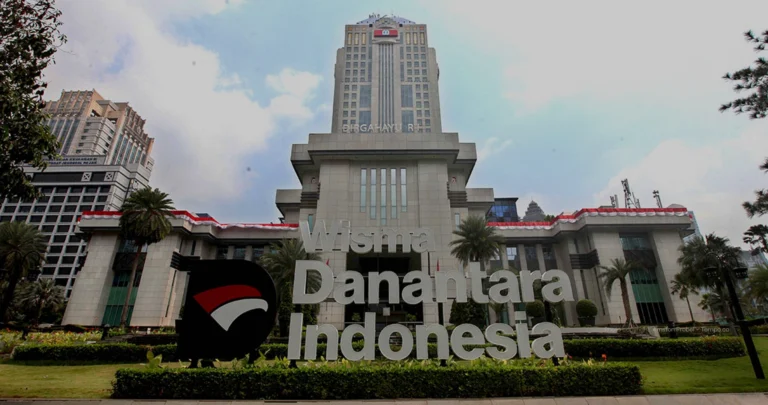
The Indonesian capital market has entered a phase of profound structural maturation, defined primarily by a systemic shift in how large corporate conglomerates interface with public equity markets. Historically, the Indonesia Stock Exchange served predominantly as a venue for primary capital formation, catering to apex holding companies and standalone enterprises seeking initial liquidity. However, the contemporary market architecture is increasingly dominated by the strategic, compartmentalized listing of specific subsidiaries carved out from within massive, family-controlled conglomerates. Driven by a highly accommodative macroeconomic environment in which the benchmark index reached historic highs exceeding 8,329 in early 2026, alongside total market capitalization surpassing IDR 15,046 trillion, domestic corporate groups have aggressively deployed subsidiary initial public offerings to execute sophisticated financial engineering strategies.
Line chart of Jakarta Composite Index (IHSG) with timeframe 1 Year.
The utilization of subsidiary listings represents a paradigm shift in emerging market corporate finance. In the context of the Indonesian market, where ownership concentration remains exceptionally high and opaque pyramidal structures are common, the subsidiary initial public offering serves a multitude of complex objectives that extend far beyond simple capital acquisition. It is a calculated mechanism deployed to satisfy the massive capital expenditure requirements of downstream industrial operations, alleviate consolidated debt burdens at the parent entity level, navigate increasingly stringent environmental and social governance mandates imposed by international financiers, and exploit or mitigate valuation discrepancies inherently assigned to diverse conglomerates by public market investors.
The prevailing market dynamics transitioning into 2026 indicate that regulatory bodies are actively attempting to shape this behavior, shifting their policy focus from raw listing volume toward institutional-grade market quality. This is evidenced by the promotion of lighthouse offerings—entities commanding minimum market capitalizations of IDR 3 trillion with substantial free floats—and the enforcement of stringent retail allocation mechanisms designed to democratize equity distribution. Comprehending the mechanics of these subsidiary listings requires a meticulous deconstruction of how parent conglomerates recycle capital across their portfolios, how the secondary market prices these layered entities relative to their apex holdings, and how the fundamental rights of minority shareholders are structurally preserved or compromised throughout the process.
The Macroeconomic Catalyst for Subsidiary Listings
The aggressive deployment of the subsidiary initial public offering strategy is intrinsically linked to the macroeconomic conditions characterizing Indonesia between 2024 and 2026. The domestic economy has demonstrated remarkable resilience, sustaining gross domestic product growth above five percent despite global geopolitical pressures and trade fragmentation. Growth reached 5.39 percent year-on-year in the fourth quarter of 2025, bringing the full-year growth to 5.11 percent, with projections indicating a continued strengthening to a range of 4.9 percent to 5.7 percent throughout 2026. Concurrently, domestic inflation remained strictly under control, with the consumer price index standing at 4.76 percent in early 2026, aligning with the central bank’s target parameters.
This stable macroeconomic foundation, paired with a robust external sector boasting a trade surplus of USD 49.82 billion and foreign exchange reserves of USD 154.6 billion, created an exceptionally fertile environment for capital market expansion. Investor confidence surged correspondingly, evidenced by the exponential growth in capital market participation. By early 2026, the number of capital market investors reached 21.03 million Single Investor Identifications, encompassing nearly 9 million dedicated equity investors. The average daily trading value on the exchange experienced a massive expansion, rising to IDR 43.76 trillion, fundamentally altering the liquidity profile of the domestic market and providing the deep capital pools necessary to absorb multi-billion dollar subsidiary offerings.
| Economic/Market Indicator | 2024 Context | 2025/Q1 2026 Context | Impact on Conglomerate IPO Strategy |
|---|---|---|---|
| Gross Domestic Product Growth | 5.03% | 5.11% (Q4 2025: 5.39%) | Provided fundamental economic stability, encouraging long-term capital expenditure commitments at the subsidiary level. |
| Trade Surplus | USD 39.84 Billion | USD 49.82 Billion | Supported domestic currency stability, lowering the currency risk premium for foreign institutional investors participating in local IPOs. |
| Total Capital Market Investors | ~15.5 Million | 21.03 Million | Vastly expanded the domestic retail liquidity pool, enabling the absorption of large-scale secondary and primary offerings. |
| Average Daily Trading Value (ADTV) | IDR 12.85 Trillion | IDR 43.76 Trillion | Enhanced secondary market liquidity, satisfying the entry and exit criteria for global tier-one institutional funds. |
| Benchmark Index (IHSG) | ~7,079 | Peak > 8,329 | Elevated baseline valuation multiples across all sectors, making equity issuance highly accretive relative to debt financing. |
Within this environment, conglomerates recognized a generational opportunity. Traditional reliance on syndicated bank loans or parent-level corporate bonds was increasingly viewed as economically suboptimal. The combination of high equity valuations and deep retail liquidity meant that issuing subsidiary equity was the most cost-effective mechanism for funding the capital-intensive transitions mandated by national industrial policies, specifically the downstream processing of critical minerals and the aggressive expansion of renewable energy infrastructure.
Capital Recycling and Balance Sheet Optimization Mechanics
Capital recycling forms the foundational economic rationale for the modern Indonesian conglomerate subsidiary initial public offering. Unlike early-stage enterprises that access public markets to fund operational survival or initial revenue growth, established conglomerates utilize subsidiary listings to monetize mature, capital-hungry, or strategically isolated assets without relinquishing operational control. This structural mechanism allows the parent entity to extract cash from the subsidiary, which is subsequently redeployed into new ventures, utilized for aggressive deleveraging, or channeled as dividend distributions to ultimate family shareholders. The subsidiary, freshly capitalized and possessing its own publicly traded equity currency, assumes the burden of funding its own future capital expenditures independent of the parent’s consolidated balance sheet.
The strategic deployment of this mechanism is vividly illustrated by the Barito Pacific ($BRPT) group. Transforming from its legacy timber operations into a diversified petrochemical and renewable energy behemoth, $BRPT required massive capital outlays to fund its expansionary pipeline. This included the multi-billion dollar secondary petrochemical complex and sweeping acquisitions in geothermal and wind energy. By orchestrating the initial public offering of Barito Renewables Energy ($BREN), the conglomerate successfully raised up to IDR 3.7 trillion from the public equity markets. The mechanics of this capital raise reveal the essence of balance sheet optimization. According to corporate disclosures, seventy-one percent of the proceeds were explicitly earmarked for debt repayment to Bangkok Bank, with an additional thirty percent allocated to settle payment obligations to internal affiliated entities.
Line chart of Barito Renewables Energy Tbk (BREN) with timeframe 1 Year.
By pushing specific debt obligations down to the subsidiary level prior to the listing, and subsequently utilizing the public equity proceeds to retire that debt, the parent entity effectively deleveraged its consolidated balance sheet without utilizing its own operating cash flows. This strategic maneuver substantially improved Barito Pacific’s consolidated leverage metrics. The parent company’s consolidated debt-to-equity ratio was projected to decline sharply from 2.5x down to 1.6x, while its net gearing ratio demonstrated a downward trajectory from 1.5x to 1.0x. Simultaneously, $BREN was provided with the independent financial structure required to pursue a target of 1,000 megawatts in installed geothermal capacity, operating under highly stable take-or-pay contracts that guarantee average selling prices of USD 6 to 7 cents per kilowatt-hour for steam and USD 9 to 10 cents for electricity.
A parallel approach to capital recycling is evident in the strategic maneuvers of the Harita Group through the listing of Trimegah Bangun Persada ($NCKL), operating commercially as Harita Nickel. Capitalizing on Indonesia’s strategic position in the global electric vehicle battery supply chain, the entity raised approximately USD 660 million, representing the largest initial public offering in Southeast Asia at the time of its execution. The underlying operational mechanics required monumental capital expenditures to construct and scale high-pressure acid leach facilities designed to process raw nickel into mixed hydroxide precipitate. Corporate data indicates that capital expenditures expanded rapidly from IDR 7.3 trillion to IDR 8.7 trillion leading up to the public offering.
By conducting a subsidiary initial public offering, the Harita Group efficiently recycled its previous private investments. The conglomerate utilized the newly acquired public market liquidity to repay outstanding loan facilities while securing the necessary working capital to finalize remaining smelter lines and transition toward cobalt sulfate production. The parent conglomerate retained absolute majority control, ensuring long-term dividend streams from the highly profitable downstream operations, while effectively transferring a substantial portion of the financing risk associated with facility scale-up to public equity investors. The deployment of subsidiary listings for capital recycling allows parent companies to overcome the natural debt ceilings imposed by financial institutions. When a conglomerate relies solely on parent-level debt to fund diverse subsidiaries, the aggregated risk profile often results in higher overall capital costs and restrictive debt covenants. Subsidiary listings partition this risk, allowing the newly listed operational unit to be evaluated by the market and creditors based strictly on its specific industry metrics, often resulting in more favorable independent credit ratings and a lowered weighted average cost of capital.
Strategic Spin-Offs and Energy Transition Arbitrage
While traditional capital recycling focuses heavily on funding capital expenditure and structural debt reduction, recent developments in the Indonesian market highlight a more complex iteration of the subsidiary listing strategy: the strategic spin-off designed to circumvent global financing constraints and exploit environmental arbitrage. This phenomenon is most prominently demonstrated by the strategic restructuring of Adaro Energy ($ADRO), a legacy thermal coal producer that executed an elaborate unbundling of its carbon-intensive assets to align with the rapidly evolving mandates of international capital.
Facing severe limitations on access to global banking capital due to institutional coal-exit policies, $ADRO identified that its highly profitable but carbon-heavy legacy thermal coal business was acting as a severe valuation overhang and a barrier to funding its future green economy initiatives. These initiatives included planned multi-billion dollar aluminum smelters and expansive hydropower projects located in North Kalimantan. Financial institutions, notably Standard Chartered and DBS Bank, had previously withdrawn funding commitments for the group’s aluminum smelter project due to the parent company’s consolidated thermal coal revenue vastly exceeding their internal environmental, social, and governance thresholds. To resolve this profound structural impediment, Adaro Energy executed the spin-off of its thermal coal subsidiary, Adaro Andalan Indonesia ($AIDA), culminating in a massive initial public offering in late 2024 valued at approximately USD 2.45 billion.
The mechanics of this transaction reflect a masterful optimization of corporate structure. Adaro Energy declared a special cash dividend of IDR 1,358 per share, specifically engineered to provide its existing shareholders with the necessary liquidity to subscribe to the newly offered shares of the coal subsidiary. Following the completion of the transaction, the parent company rebranded itself as Alamtri Resources Indonesia, retaining only a 15 percent minority stake in the thermal coal entity while maintaining absolute control over its metallurgical coal subsidiary and various clean energy operations.
This strategic maneuver operated simultaneously across multiple financial dimensions. Primarily, it facilitated a massive capital recycling event, generating an estimated USD 2.5 billion to USD 4 billion in net cash at the parent level, which Alamtri Resources explicitly allocated for future mergers and acquisitions in the renewable energy sector throughout 2025 and 2026. Secondly, by systematically reducing its ownership in the thermal coal asset below critical consolidation thresholds, the parent company fundamentally altered its revenue profile under prevailing accounting standards. Consequently, Alamtri Resources no longer records the bulk of thermal coal revenue on its consolidated income statement, theoretically restoring its eligibility for critical financing from global banks operating under strict coal-exit policies.
Furthermore, the spin-off addressed severe valuation layering issues. During the initial public offering, the thermal coal unit ($AIDA) was priced at an implied valuation of 2.7x forward earnings, reflecting the deep discounts globally applied to legacy fossil fuels. Conversely, the market immediately rewarded the parent company’s transition announcement with a substantial share price rally of up to 15.1 percent, indicating that investors were willing to assign a significantly higher multiple to the clean energy and metallurgical assets once they were conceptually and legally decoupled from the thermal coal overhang.
| Metric / Strategic Objective | Pre-Spin-Off Consolidated Entity (Adaro Energy) | Post-Spin-Off Apex Entity (Alamtri Resources) | Post-Spin-Off Subsidiary (Adaro Andalan Indonesia) |
|---|---|---|---|
| Core Asset Exposure | Thermal Coal, Metallurgical Coal, Renewable Energy | Metallurgical Coal, Hydropower, Aluminum Smelting | Pure-play Thermal Coal Extraction |
| Access to Global ESG Financing | Highly Restricted (Breached revenue thresholds) | Restored (Thermal coal revenue de-consolidated) | Zero (Relies on domestic banks and retained earnings) |
| Implied Valuation Multiples | ~5.0x Price-to-Earnings | High single-digit / Low double-digit premium potential | ~2.7x Price-to-Earnings (Deep discount) |
| Primary Capital Allocation | Maintaining legacy operations | Aggressive M&A in renewable energy sector | Sustaining high dividend payouts to parent and retail base |
This specific case establishes a definitive precedent for Indonesian conglomerates holding stranded or environmentally penalized assets. The subsidiary initial public offering, when combined with strategic dividend distributions, serves not merely as a fundraising tool, but as a sophisticated mechanism for regulatory arbitrage and institutional market repositioning. It allows controlling families and strategic holding companies to retain massive economic exposure to highly cash-generative legacy assets through direct shareholder participation, while simultaneously cleansing the public-facing flagship entity to attract sustainable finance and premium equity valuations.
Valuation Layering and the Conglomerate Discount
A critical structural driver behind the subsidiary listing strategy is the phenomenon of valuation layering, commonly manifested in public markets as the conglomerate discount. In the Indonesian capital market, diversified holding companies frequently trade at substantial discounts to the theoretical sum of their individual operating segments. This valuation mismatch creates an inherent arbitrage opportunity that conglomerates attempt to exploit through the partial listing of their underlying assets. The analytical framework most consistently applied to analyze these structures is the sum-of-the-parts methodology, which seeks to aggregate the standalone equity values of each operating subsidiary, apply appropriate minority interest deductions, and subtract centralized corporate holding debt.
Astra International ($ASII) serves as the quintessential example of the persistent conglomerate discount operating within the Indonesian context. Operating across automotive manufacturing, financial services, heavy equipment, mining, agribusiness, and infrastructure, the apex entity represents a proxy for the broader Indonesian economy. Despite maintaining dominant market shares, particularly in the domestic four-wheel and two-wheel automotive segments, Astra International’s consolidated equity frequently trades at a severe discount to its theoretical break-up value.
Line chart of Astra International Tbk (ASII) with timeframe 1 Year.
Market analyses spanning the 2024 and 2025 periods consistently placed the stock at a 13 percent to 26 percent discount to conservative break-up valuations, with sum-of-the-parts targets suggesting a fair value approaching IDR 5,700 to IDR 5,800 per share against heavily compressed market prices. Analysts noted that the public market assigned structurally lower multiples to Astra’s internal segments compared to standalone peers operating in the same industries. For instance, Astra’s financial services segment traded at an implied price-to-book ratio of 1.8x despite generating robust returns on equity ranging from 17 percent to 33 percent, whereas independent multifinance acquisitions in the broader market commanded ratios of 2.2x despite generating substantially lower profitability metrics. Similarly, the internal automotive parts division suffered from compressed price-to-earnings multiples of roughly 5.0x relative to regional adjusted peers trading at 8.3x.
The persistence of this holding company discount forces conglomerates to rethink their fundamental corporate architecture. When a parent company trades at a persistent discount, utilizing its own equity as a currency for acquisitions or employee compensation becomes highly dilutive and economically inefficient. By carving out a fast-growing or highly profitable subsidiary and conducting an initial public offering, the conglomerate attempts to force the market to establish a transparent, market-determined valuation benchmark for that specific asset, hoping the higher subsidiary valuation will mathematically lift the consolidated holding company share price.
Conversely, the market dynamics surrounding the Barito Pacific group and Barito Renewables Energy present an inverse relationship to the traditional conglomerate discount, illustrating the concept of synthetic premium layering. Following its public market debut, Barito Renewables Energy commanded astronomical valuation multiples, heavily influenced by localized speculative trading and the immense scarcity premiums attached to renewable energy assets in Indonesia. Quantitative analyses utilizing rigorous discounted cash flow and relative valuation methodologies indicated that the subsidiary’s intrinsic value was fundamentally detached from its trading price. Intrinsic estimates derived from free cash flow models occasionally fell below USD 0.01 per share while the market price hovered near USD 0.48. The market assigned an enterprise value to earnings before interest, taxes, depreciation, and amortization multiple exceeding 30x, a figure drastically disconnected from global utility averages, while the underlying financial profile revealed elevated leverage ratios, including a debt-to-equity ratio of 3.05x.
In this specific scenario, the subsidiary initial public offering functions as a powerful mechanism for market signaling and synthetic value creation. By floating only a minuscule fraction of the subsidiary’s total outstanding shares—often hovering near the absolute minimum regulatory threshold of free float—the parent company deliberately restricts equity supply. In a liquidity-constrained environment chasing specific thematic narratives, such as the green energy transition, this restricted float generates a massive, artificial surge in market capitalization. The parent company subsequently benefits from the consolidation of this inflated asset value on its own balance sheet, utilizing the highly inflated equity value of the subsidiary as valuable collateral for future debt issuances or strategic joint ventures, regardless of the underlying fundamental discrepancies.
Strategic Timing of Listings and Macroeconomic Synchronization
The timing of conglomerate subsidiary listings is rarely accidental; it represents a highly synchronized intersection of macroeconomic cycles, sector-specific supercycles, and internal capital expenditure timelines. Conglomerates rigorously monitor the domestic interest rate environment, inflation expectations, and global commodity pricing to identify optimal listing windows that maximize valuation while minimizing the cost of newly acquired capital.
The macroeconomic environment leading into 2026 provided the ideal runway for strategic listings. With the central bank successfully anchoring domestic inflation within a target corridor of 2.5 percent plus or minus one percent, and the broader economy adapting to a “New Paradigm” of stable, prudent fiscal policy targeting a deficit well below the three percent statutory threshold, the equity risk premium for Indonesian assets contracted. This macro-stability, coupled with anticipation of monetary easing cycles across global central banks, naturally prompted institutional capital to rotate out of low-yield fixed income and back toward emerging market growth equities, providing a highly supportive backdrop for technology and infrastructure listings.
Beyond pure macroeconomic timing, listings are intricately timed to exploit sector-specific booms. The Harita Nickel ($NCKL) initial public offering was strategically launched precisely as global electric vehicle supply chains sought to secure long-term access to battery-grade nickel, allowing the company to command a market value exceeding USD 5.1 billion at the top of its pricing range. Similarly, the Barito Renewables Energy listing capitalized heavily on the Indonesian government’s formalized commitment to achieving a 23 percent renewable energy mix by 2025 and achieving net-zero emissions by 2060, successfully riding the wave of ESG-focused institutional capital deployment.
The listing of Amman Mineral Internasional ($AMMN) provides a definitive case study in utilizing post-listing strategic timing to manage market perception and consolidate value. Following its highly successful initial public offering, which raised IDR 10.73 trillion, the company navigated the complex transition from being a legacy copper concentrate exporter to a fully integrated downstream producer operating proprietary domestic smelters. In early 2025, precisely timed with the normalization of its massive capital investments and the approach of commercial smelter operations, the company initiated a massive share buyback program authorizing the repurchase of up to USD 50 million in outstanding stock, funded entirely by internal cash reserves.

Rp 4,010
MCap: 290.80 T
The timing of this buyback was explicitly linked to internal reserve discoveries. Corporate leadership publicly asserted that the prevailing market price failed to adequately reflect the underlying value of their asset portfolio, specifically highlighting the Elang deposit. A revised technical report had just increased the Elang deposit’s ore-reserve estimate by roughly eighty percent to an astounding 2.5 billion tonnes, containing 17.8 billion pounds of copper and 26.4 million ounces of gold. By timing the buyback program immediately following this massive reserve upgrade, but prior to the full market realization of its cash flow implications, the controlling conglomerate entities efficiently utilized the public market structure to repurchase severely undervalued equity, thereby consolidating their proportionate economic interest without triggering formal tender offer protocols.
Assessing Primary Motivations: Capital Formation versus Signaling
Evaluating whether Indonesian conglomerate initial public offerings are utilized primarily for genuine capital raising, balance sheet optimization, or market signaling requires distinguishing between the explicit use of proceeds detailed in public prospectuses and the implicit corporate governance strategies operating behind the scenes. The empirical evidence overwhelmingly indicates that these motivations are not mutually exclusive; rather, they are sequenced strategically depending on the maturity lifecycle of the underlying asset and the prevailing regulatory environment.
Genuine capital formation is undoubtedly the primary driver for subsidiaries operating in highly capital-intensive, emerging sectors requiring specialized, globally scaled infrastructure. The listing of Amman Mineral Internasional ($AMMN) exemplifies this motivation. Born out of a highly leveraged buyout of legacy foreign mining assets by domestic conglomerates, including the Salim and Medco groups, the entity required astronomical capital to execute its mandate to construct complex domestic copper smelter facilities. The initial public offering proceeds were absolutely essential to fund the construction of these facilities and to finance the aggressive exploration of future blocks. In this specific instance, the public markets served their fundamental macroeconomic purpose: providing long-term risk capital for massive, nation-building infrastructure projects that far exceeded the prudent, unsecured debt capacity of the private consortium.
However, as demonstrated by the Barito Renewables Energy and Harita Nickel case studies, balance sheet optimization frequently supersedes direct operational capital formation. When seventy to eighty percent of IPO proceeds are immediately routed to commercial banks to retire parent-guaranteed debt or to settle intercompany payables, the primary motivation is the restructuring of the conglomerate’s liability profile rather than the funding of new productive capacity.
Conversely, the market signaling motivation frequently supersedes both genuine capital needs and balance sheet optimization in environments characterized by acute regulatory pressure. The proactive push by the Indonesia Stock Exchange to mandate minimum free float requirements of 15 percent to 20 percent by the end of the 2025 timeline forced many tightly held, privately functioning subsidiaries to conduct secondary offerings or rights issues. Conglomerates executed equity issuances not because they required expansion capital, but solely to maintain their listed status, avoid punitive trading suspensions, and signal compliance with national market deepening agendas. In these scenarios, the equity issuance serves strictly as a regulatory compliance mechanism rather than a strategic financial maneuver, often resulting in temporary valuation depressions due to forced equity dilution.
The introduction of the Lighthouse IPO classification further emphasizes this signaling motivation. By defining premier listings as those exceeding IDR 3 trillion in market capitalization with strong fundamental scale and visibility, the exchange structurally encouraged conglomerates to bundle assets specifically to meet these visibility thresholds, aiming to attract global institutional capital that operates under strict liquidity and market capitalization parameters.
Minority Shareholder Implications: Tunneling, Propping, and Transactions
The proliferation of subsidiary listings orchestrated by dominant family conglomerates introduces profound academic and practical complexities regarding corporate governance and the protection of minority shareholder rights. The Indonesian corporate landscape is historically characterized by highly concentrated ownership structures, often organized through opaque pyramidal hierarchies where the ultimate voting control of a family patriarch diverges significantly from their actual cash-flow rights. When a conglomerate carves out a subsidiary for public ownership, minority retail and institutional investors are essentially purchasing a subordinate, non-controlling position within a much larger, globally integrated machine that is inherently optimized for the financial benefit of the ultimate controlling shareholder.
A primary, systemic concern for minority shareholders in these structures is the risk of expropriation executed through related party transactions. Academic analyses of the Indonesian equity market have consistently demonstrated that related party transactions are profoundly prevalent and carry significant implications for both firm valuation and audit integrity. Comprehensive empirical research utilizing datasets of Indonesian manufacturing and conglomerate entities indicates a statistically significant positive correlation between the volume of related party transactions and aggressive accrual earnings management practices. This suggests that controlling shareholders may systematically utilize internal transfer pricing mechanisms, intercompany loan facilities, and shared corporate service agreements to artificially smooth earnings or shift profitability between the public subsidiary and private entities hidden within the broader group structure.
Furthermore, empirical evidence highlights that independent auditors treat extensive related party transactions—specifically related party sales, purchases, and payables—as high-risk indicators. The presence of significant related party volumes frequently results in the issuance of modified audit opinions due to the inherently elevated risk of material misstatement. From a fundamental valuation perspective, high levels of related party transactions have been empirically shown to negatively impact the overarching market value of the firm, aligning with the academic hypothesis that such transactions are often utilized for tunneling—the systematic transfer of resources and value out of the publicly listed subsidiary into the hands of the controlling private entity.
| Corporate Mechanism | Operational Definition | Common Manifestation in Indonesian Subsidiaries | Impact on Public Minority Shareholders |
|---|---|---|---|
| Tunneling (Resource Extraction) | The transfer of assets or operating profits from a listed subsidiary to the controlling parent at below-market rates. | Subsidiary forced to purchase raw materials from private parent entities at inflated prices; issuing unsecured loans to the holding company. | Highly detrimental; destroys intrinsic value; depresses share price and future dividend potential. |
| Propping (Resource Injection) | The transfer of resources from the parent down to the listed subsidiary to prevent default or artificially boost performance. | Parent entity absorbing toxic debt from the subsidiary; parent guaranteeing subsidiary operational contracts at favorable terms. | Temporarily beneficial; prevents immediate equity wipeouts; masks underlying operational inefficiencies. |
| Strategic Earnings Management | Utilizing intercompany transfer pricing to manage the timing and recognition of profitability across the group. | Delaying related party payables to inflate subsidiary cash flow immediately prior to a secondary equity offering or IPO. | Misleading; creates severe information asymmetry; artificially inflates valuation multiples during capital raising events. |
Despite these heavily documented systemic risks, the legal framework protecting minority shareholders in Indonesia remains functionally constrained. While prevailing corporate laws provide theoretical mechanisms for minority shareholders to file civil lawsuits against boards of directors or commissioners for unfair actions that cause direct, quantifiable financial loss, the practical enforcement and successful litigation of these provisions are exceedingly rare. The legal system currently lacks robust, aggressive mechanisms for criminalizing breaches of minority rights specifically related to complex corporate governance failures, relying instead on civil remedies and nascent class action frameworks that are notoriously difficult to successfully litigate in convoluted tunneling scenarios. Furthermore, while minority shareholders are statutorily entitled to attend and vote in General Meetings of Shareholders, their theoretical ability to influence strategic outcomes is generally entirely negated by the overwhelming voting blocks held by the parent conglomerate, except in specific, rare statutory situations requiring elevated supermajority quorums such as formal mergers or liquidations.
Regulatory Evolution and the Future of Financial Conglomeration
The broader regulatory landscape governing these complex corporate structures underwent a definitive and structural shift with the promulgation of OJK Regulation No. 30 of 2024 concerning Financial Conglomeration. As massive conglomerates increasingly integrated banking, multi-finance, insurance, and digital payment subsidiaries under unified holding structures, domestic regulators recognized that systemic risks were beginning to aggressively cross traditional sectoral boundaries. The new regulation rigidly mandated that controlling shareholders of financial institutions meeting specific asset thresholds—such as total consolidated assets exceeding IDR 100 trillion across multiple financial sectors, or between IDR 20 trillion and IDR 100 trillion across three distinct sectors—must establish a formalized Financial Holding Company by mid-2025.
This regulatory mandate forces conglomerates to completely centralize their risk management protocols, capital adequacy reporting, and corporate governance oversight into a single, highly regulated apex entity. For the subsidiary initial public offering strategy, this introduces profound structural implications. Parent companies can no longer easily obscure the financial health of one subsidiary by leveraging the hidden balance sheet of another unregulated private entity within the group. The absolute requirement for consolidated regulatory oversight ensures that when a conglomerate attempts to spin off a financial subsidiary, the exact nature of intra-group risk exposures, related party loan facilities, and cross-collateralization must be transparently disclosed to the public markets, theoretically compressing the opportunity space for unchecked tunneling and opaque capital transfers.
Simultaneously, the regulatory authorities introduced targeted market architecture adjustments to directly mitigate minority shareholder disadvantage during the primary offering phase. The implementation of OJK Circular Letter No. 25/SEOJK.04/2025 fundamentally altered the distribution mechanics of initial public offerings by mandating that the retail pooling portion be substantially increased from a previous cap of approximately 33 percent to a fixed, mandatory 50 percent allocation. Complementing this allocation shift, a strict concentration limit was imposed, mathematically preventing any single retail investor from acquiring more than 10 percent of the pooled shares. This aggressive regulatory intervention was explicitly designed to democratize access to high-quality subsidiary listings, actively preventing institutional actors affiliated with the parent conglomerate from entirely absorbing the available free float, thereby ensuring a more fragmented, equitable, and resilient secondary market pricing mechanism.
Looking forward, the integration of mandatory Environmental, Social, and Governance reporting standards aligned with the ASEAN Exchanges Common ESG Metrics ensures that subsidiary listings can no longer evade regional sustainability scrutiny. As empirically demonstrated by the Adaro Energy spin-off, global tier-one capital flows are increasingly governed by rigid, inflexible environmental taxonomies. By standardizing these comprehensive disclosures across all listed entities, the Indonesia Stock Exchange is forcing parent conglomerates to make binary choices: either fundamentally reform the operational realities of their carbon-intensive subsidiaries, spin them off entirely to domestic retail bases, or accept structurally permanent valuation discounts and total financing embargoes from international institutional investors.
The evolution of the Indonesian capital market fundamentally alters the strategic calculus of the family-controlled conglomerate. The initial public offering of a subsidiary is no longer a simple transactional mechanism utilized solely to raise operational cash; it has evolved into a complex, multi-dimensional corporate chess maneuver designed to dynamically optimize the consolidated balance sheet, navigate restrictive global ESG financing parameters, and exploit deep valuation discrepancies across diverse industrial sectors. While the mechanics of capital recycling continue to provide the necessary funding for national industrial development and critical infrastructure, the persistent, structural risks of minority expropriation through related party transactions demand continuous and aggressive regulatory vigilance. As the Indonesian market transitions definitively from prioritizing raw listing volume to demanding institutional-grade listing quality and operational transparency, the long-term success of future conglomerate listing strategies will depend less on sophisticated financial engineering and increasingly on transparent corporate governance and sustainable, fundamental operational excellence.
Disclaimer
aluna Analytics is an independent research collective that operates without affiliation to any financial institution, broker, or advisory firm. We do not hold licenses as a securities dealer, investment advisor, or portfolio manager.
All materials published by aluna Analytics are created solely for informational and educational purposes. They reflect independent analytical interpretation and should not be regarded as personalized investment advice, solicitation, or endorsement of any security or strategy.
Market data, opinions, and projections presented herein are subject to change and may not predict future results. Readers remain fully responsible for any financial decisions made based on the information provided. We strongly encourage conducting personal due diligence and consulting a licensed professional before making investment commitments.
aluna Analytics is not regulated by the Financial Services Authority of Indonesia (OJK) and does not offer investment management or brokerage services. All content is presented in good faith, aiming to foster research literacy and informed market perspectives.