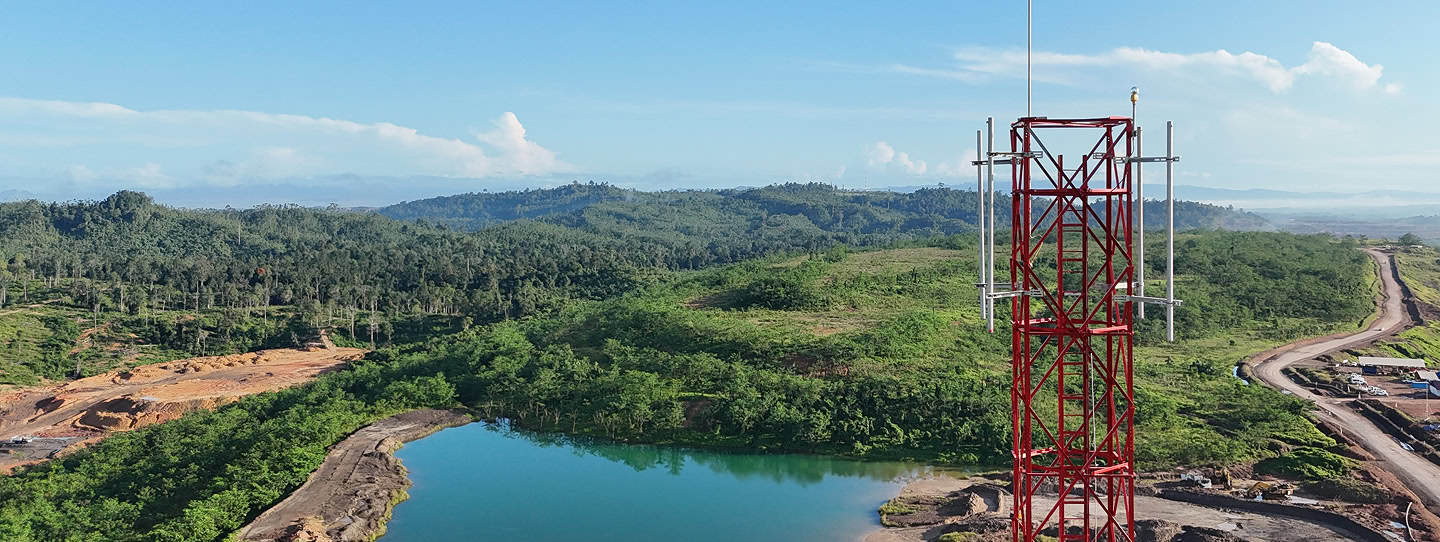


Author: aluna Analytics | Date: 22 June 2026 | Sector: Industrials (Infrastructure & Capital Goods) | Recommendation: Avoid / High-Risk
The Indonesian capital market is presented with the Initial Public Offering of PT Bach Multi Global Tbk ($BACH), an enterprise strategically operating within the dual spheres of generator set distribution and telecommunications infrastructure construction. An evaluation of the transaction architecture reveals a purely primary issuance structured to inject capital directly into the corporate balance sheet. The offering consists exclusively of new common shares issued from the company’s portepel, bearing a nominal value of Rp 50 per share.
The total volume of equity offered to the public stands at 615,000,000 shares, a quantum designed to constitute exactly 15.06% of the company’s enlarged placed and fully paid-up capital following the completion of the offering. The pricing mechanism relies on a bookbuilding process with a formally established price range of Rp 400 at the lower bound up to Rp 500 at the upper bound. This pricing matrix establishes an expected gross proceeds envelope ranging from a minimum of Rp 246.0 billion to a maximum ceiling of Rp 307.5 billion.
The procedural timeline governing this transaction places the initial bookbuilding period between June 22 and June 24, 2026, which functions as the critical window for institutional price discovery and demand aggregation. Following the conclusion of bookbuilding, the company anticipates receiving the effective declaration from the Financial Services Authority (Otoritas Jasa Keuangan) on June 29, 2026, paving the way for the formal public offering phase. The public offering is scheduled to commence on July 1, 2026, and conclude on July 3, 2026, synchronized perfectly with the allotment date where final share distributions are calculated. The electronic distribution of shares into investor portfolios via the Indonesian Central Securities Depository (Kustodian Sentral Efek Indonesia) is slated for July 6, 2026, culminating in the inaugural listing and commencement of secondary market trading on the Indonesia Stock Exchange (Bursa Efek Indonesia) on July 7, 2026.
A rigorous examination of the equity structure confirms the absolute absence of any derivative overhang that could complicate the post-listing capitalization table. The transaction incorporates no warrants, nor does it feature any Employee Stock Option Plan (ESOP) or Management and Employee Stock Option Plan (MESOP) allocations. The explicit absence of these derivative instruments is a structural positive for prospective public investors, as it eliminates the risk of deferred dilution, complex supply pressures, and the unpredictable equity vesting schedules that typically obscure the true outstanding share count in the periods following an initial public offering. Furthermore, specific estimated emission costs and underwriting fees remain undisclosed in the preliminary documents, though they are expected to be deducted from the gross proceeds prior to internal corporate deployment.
BACH
PT Bach Multi Global TbkDisclaimer: This research report is produced by aluna Analytics for informational and educational purposes only. It does not constitute a recommendation to buy or sell any securities. Market data is analyzed as of June 22, 2026. Investors should conduct their own due diligence and consult with a certified financial advisor before making investment decisions.
Strategic Capital Allocation and Utilization of Proceeds
The capital allocation strategy, formally dictated by the prospectus’s use of proceeds mandate, divides the incoming liquidity into two distinct and highly functional streams.
| Transaction Component | Detail |
|---|---|
| Shares Offered | 615,000,000 New Primary Shares |
| Nominal Value | Rp 50 per share |
| Price Range | Rp 400 – Rp 500 per share |
| Gross Proceeds | Rp 246.0 Billion – Rp 307.5 Billion |
| Post-IPO Float | 15.06% |
| Derivatives | Zero Warrants, Zero ESOP/MESOP |
| Use of Proceeds | ~Rp 91.02B Debt Repayment; Remainder Working Capital |
Approximately Rp 91.02 billion is earmarked for immediate balance sheet deleveraging. Specifically, this tranche of capital will be deployed to execute a partial repayment of an Omnibus Revolving Loan facility provided by PT Bank Permata Tbk ($BNLI), which was drawn down during the first quarter of 2026. The residual balance of the public funds, estimated at approximately Rp 213.48 billion assuming execution at the maximum offering price, is designated entirely for working capital purposes. This operational liquidity is strictly allocated to finance the procurement of new generator sets from international suppliers, aimed at expanding both the company’s direct sales inventory and its lucrative operational leasing fleet.
This dual-mandate allocation demonstrates a classic corporate finance maneuver designed to simultaneously alleviate short-term debt servicing burdens while actively funding fixed asset expansion to capture projected industry growth. Retiring the revolving loan facility will immediately improve the company’s current ratio and debt-to-equity metrics, freeing up internal cash flows that were previously consumed by interest expenses. Meanwhile, the working capital injection allows the enterprise to execute bulk purchases of heavy machinery. However, the primary risk embedded within this allocation strategy pertains to the execution timeline of the inventory procurement. Because the generator sets are sourced from overseas manufacturers, the company is exposed to acute foreign exchange volatility. The temporal gap between the receipt of Rupiah-denominated public proceeds and the eventual settlement of foreign-denominated invoices from international suppliers creates a currency mismatch risk that must be actively managed to prevent the erosion of the capital’s purchasing power.
Supply Dynamics and Ownership Incentives
Transitioning immediately into supply, demand, and ownership dynamics provides the primary analytical lens through which the true nature of this transaction must be evaluated. While the offering is technically structured as a pure primary capital raise designed to fund corporate growth, the subterranean shifts in the ownership architecture indicate a vastly more complex reality. Prior to the offering, the capitalization table is heavily concentrated. PT Bach Multi Sukses Investama (BMSI) stands as the dominant majority holder with 61.55% of the outstanding equity, followed by PT Global Telekomunikasi Prima (GTP) holding exactly 30.00%. The remaining 8.45% is distributed among five individual minority founders and executives: Budi Kurniawan (2.01%), Hartanto Rahardja (1.80%), Edy Surianto (1.59%), Zulfahmi Fithri (1.53%), and Hasby Jap (1.52%).
Upon the execution of the public offering, mathematical dilution would naturally reduce these legacy ownership stakes across the board. However, a profound structural mechanism has been embedded in the background, engineered to execute concurrently with the public listing. On January 7, 2026, a binding Option Agreement was executed between the two largest shareholders, BMSI and GTP. Under this covenant, BMSI granted an irrevocable call option to GTP, compelling BMSI to surrender a specific quantum of its holdings. On March 13, 2026, GTP formally issued a written notification exercising this option, legally claiming 1,042,227,300 shares from BMSI’s portfolio.
| Shareholder | Pre-IPO Stake | Post-IPO (Before Option) | Post-IPO (After Option Settlement) |
|---|---|---|---|
| PT Bach Multi Sukses Investama (BMSI) | 61.55% | 52.28% | 26.77% |
| PT Global Telekomunikasi Prima (GTP) | 30.00% | 25.48% | 51.00% |
| Public Investors | 0.00% | 15.06% | 15.06% |
| Budi Kurniawan | 2.01% | 1.70% | 1.70% |
| Hartanto Rahardja | 1.80% | 1.53% | 1.53% |
| Edy Surianto | 1.59% | 1.35% | 1.35% |
| Zulfahmi Fithri | 1.53% | 1.30% | 1.30% |
| Hasby Jap | 1.52% | 1.29% | 1.29% |
The architectural genius of this maneuver lies in its settlement timing and pricing mechanics. The exercise price of the option is explicitly deferred until the conclusion of the public bookbuilding period, effectively pegging the private transaction to the public market’s valuation. More importantly, the transfer is contractually mandated to settle via the negotiated market of the exchange no later than five working days following the official IPO listing date. This orchestrated sequence results in a profound post-listing ownership transformation. Once the option trade settles, GTP will command exactly 51.00% of the enlarged post-IPO capital, cementing its position as the ultimate controlling shareholder of the public entity. Correspondingly, BMSI’s dominant position will collapse to 26.77%, while the public retains its freshly minted 15.06%. The individual minority founders will collectively retain a diluted stake of approximately 7.17%.
The strategic intent underpinning this ownership reshuffle is glaringly evident upon examining the corporate lineage of the acquiring entity. GTP, whose ultimate beneficial owners are identified as Martin Basuki Hartono and Victor Rachmat Hartono, acts as an investment vehicle for the broader Djarum Group conglomerate, specifically aligning with the telecommunications infrastructure giant PT Sarana Menara Nusantara Tbk ($TOWR). GTP initially acquired a 30% stake in the company in August 2023. The option mechanism deployed here allows the conglomerate to secure absolute legal and operational control of the enterprise immediately upon its transition to a public entity, deliberately avoiding the mechanical complications, mandatory tender offer triggers, and minority buyout obligations that might have arisen under Indonesian takeover regulations had the 51% threshold been breached prior to the registration statement.
From a strict supply-demand perspective, this structural reality fundamentally alters the nature of the transaction. While the primary capital raise is genuinely designated for growth funding and debt reduction, the overarching event operates as a sponsor-driven liquidity maneuver. The secondary market transfer between BMSI and GTP indicates that legacy holders are actively monetizing massive portions of their stakes in tandem with the public debut. The critical analytical pivot centers on how the broader market will perceive the 15.06% free float. Optimistic market participants may view this tight float as a scarce, highly contested asset representing a rare entry point into a Djarum-backed infrastructure play. Conversely, institutional pragmatists must recognize it as a precarious minority position, highly susceptible to the whims of a newly entrenched controlling block that utilized the IPO mechanics to facilitate an internal corporate takeover.
Regulatory Lock-Up and Corporate Control Mechanics
This leads directly to the forensic evaluation of lock-up provisions and control integrity, which reveals a severe structural vulnerability regarding secondary market supply. Compliance with the regulations stipulated by the Financial Services Authority under POJK No. 25/POJK.04/2017 forms the bedrock of Indonesian IPO supply constraints. This regulatory framework mandates a strict eight-month trading restriction exclusively for pre-IPO shareholders who acquired their equity at a valuation lower than the established IPO price within the six months immediately preceding the submission of the registration statement. The corporate disclosures within the prospectus explicitly confirm that no existing shareholder executed such an acquisition during the prescribed timeframe.
Consequently, it must be boldly underscored that there are absolutely zero mandatory lock-up provisions applied to any pre-IPO shareholder in this transaction. Furthermore, the prospectus outlines no voluntary lock-up agreements initiated by the founders or the corporate sponsors to signal confidence to the public market. While GTP is structurally incentivized to retain its 51% block to maintain its newly acquired corporate control, the remaining non-public equity is entirely unrestricted. This unrestrained equity—comprising BMSI’s residual 26.77% stake and the 7.17% held collectively by the individual executives—amounts to a staggering 33.94% of the company’s total outstanding shares.
The implications of this legal reality for supply pressure and ownership stability are profound and highly adversarial to the public investor. The absence of a lock-up creates a perpetual, invisible supply overhang that dwarfs the official public float. Retail and institutional participants absorbing the 15.06% primary float on the first day of trading must continuously price in the severe probability that BMSI, having already signaled its willingness to exit via the GTP option, or the minority founders, may choose to liquidate portions of their unrestricted 33.94% position into any emergent liquidity driven by retail momentum. Without a regulatory cliff effect to provide a safe harbor for stable price discovery in the initial months of secondary trading, the effective tradable supply entering the market is entirely unpredictable and completely disconnected from the nominal public float. This represents an extreme post-lock-up selling risk manifesting on Day 1, effectively nullifying the artificial scarcity typically engineered into small-float offerings. The ownership stability rests entirely on the unwritten, opaque intentions of the legacy founders, stripping public investors of standard structural protections.
Quantitative Sentiment and Underwriter Execution Metrics
PT Erdikha Elit Sekuritas (AO): Acting as the Lead Underwriter for the transaction.
An integral component of evaluating the immediate viability of any public offering requires a structured interpretation of quantitative market signals and underwriter execution capabilities. To gauge immediate market sentiment, momentum, and institutional discipline, we analyze the lead underwriter, PT Erdikha Elit Sekuritas (operating under the exchange code AO), to assess their empirical capacity to stabilize a highly precarious float.
According to the historical execution dataset, AO operates under the “Passive Mover” archetype with an overall execution grade of aluna Plus aluna Plus Exclusive This content is exclusive for aluna Plus (Registered Members). Join for FREE to unlock access. Register for Free . They hold a Weighted Winrate of aluna Plus aluna Plus Exclusive This content is exclusive for aluna Plus (Registered Members). Join for FREE to unlock access. Register for Free and a muted Average Day-1 Performance (Avg D1) of just 6.89%, signaling a lack of historical propensity to engineer strong debut momentum for early participants.
Examining the structural supply indicators, AO showcases a Control Score of aluna Prime aluna Prime Exclusive Advanced analytical data is exclusively available for aluna Prime members. Starting from IDR 10K. Unlock Prime Access and a Guardian Score of aluna Prime aluna Prime Exclusive Advanced analytical data is exclusively available for aluna Prime members. Starting from IDR 10K. Unlock Prime Access . While these metrics suggest some capacity to manage allocations, their Liquidity Score sits at a concerning 29.79, indicating poor volume facilitation. Crucially, their Retail Trap Probability is 0.00%, meaning they rarely orchestrate retail exit traps, but this is counterbalanced by a low Absorption Score of aluna Plus aluna Plus Exclusive This content is exclusive for aluna Plus (Registered Members). Join for FREE to unlock access. Register for Free and an entirely flat Hype Realization Rate of 0.00%. Demand formation is historically weak relative to underlying supply.
Aluna Analytics Insight: With these precise quantitative signals painting the picture of a passive underwriter, the preliminary IPO judgment must heavily discount any preliminary assumptions of post-listing price stability. Investors are forced to navigate this debut without the assurance of an underwriter equipped to violently absorb the severe structural overhang of unrestricted legacy equity.
Preliminary Transaction Synthesis
The structural verdict at this juncture is unequivocally perilous. While the entrance of a premier institutional controller in the form of the Djarum Group provides an aura of fundamental legitimacy and long-term viability, the absolute lack of regulatory lock-up mechanisms injects a violently asymmetric risk profile into the immediate transaction. The offering appears highly sponsor-driven, meticulously designed to finalize a corporate takeover via the deferred option agreement while simultaneously relying on fresh public capital to clear existing bank debt. The combination of a purportedly tight 15.06% float paired with an invisible 33.94% unrestrained supply overhang demands an exceptionally cautious approach. Investors are forced to navigate without robust underwriter execution momentum, heavily discounting any preliminary assumptions of post-listing price stabilization.
Enterprise Fundamentals and Strategic Market Positioning
Only after establishing this deeply flawed structural reality is it appropriate to proceed to a fundamental evaluation of the business anatomy and corporate strategy. The enterprise is deeply embedded in the physical architecture of the Indonesian digital economy, operating a bifurcated business model driven by two primary revenue engines: the sale and rental of heavy-duty generator sets, and the provision of specialized construction and maintenance services for telecommunications infrastructure.
The generator segment positions the company as a critical distributor and operational leasing agent for prominent global power equipment manufacturers. The supply chain relies heavily on robust international procurement networks, with Guangdong Westinpower Co. Ltd. (China) and Himoinsa Asia Pacific Pte. Ltd. (Spain/Singapore) serving as the primary hardware suppliers, alongside Agg Power Technology and Jiangsu Ruichang. The enterprise engages in outright equipment sales but also maintains a substantial, capital-intensive fleet for operational leasing. This leasing segment caters specifically to commercial sectors demanding uninterrupted power supply, servicing high-impact clients including the Perusahaan Listrik Negara (PLN) for diesel power plants (PLTD), commercial banking hubs, hospital networks, and remote industrial sites in regions like Halmahera and Bali.
The telecommunications infrastructure segment operates as an end-to-end contractor, engaging in the complex civil, mechanical, and electrical engineering required to erect, power, and maintain cellular base transceiver stations (BTS) and fiber-optic networks. The strategic positioning of this segment has been radically transformed by the evolving ownership structure. Following the initial integration of the enterprise into the orbit of PT Sarana Menara Nusantara Tbk ($TOWR) via GTP’s 30% acquisition in 2023, the company has effectively morphed into an internal infrastructure contractor for the nation’s premier independent tower operator. The company now boasts operations supporting major telecommunications entities including Indosat, Telkomsel, XL Axiata, and Hutchison Tri, heavily facilitated through its parent connections.
This corporate evolution presents a profound duality regarding operational scalability and structural constraints. On the positive vector, integration with the Protelindo ecosystem provides an unprecedented, virtually guaranteed pipeline of construction and maintenance contracts. The revenue visibility is exceptional, shielding the company from the brutal, margin-eroding procurement bidding wars that typical independent contractors face. However, the associated concentration risk is staggering. An analysis of the customer profile reveals that PT Profesional Telekomunikasi Indonesia and PT Solusi Tunas Pratama Tbk—both wholly-owned entities within the Protelindo conglomerate—accounted for 28% of total consolidated revenue in 2025, and an overwhelming 43% in 2024.
This extreme reliance on related parties transforms the enterprise from a fiercely independent market competitor into a captive operational subsidiary designed to service the parent. The structural constraint inherent in this model is severe margin compression; while top-line volume is mathematically guaranteed by the parent’s expansion, pricing power is inherently compromised. When negotiating project rates with the ultimate controlling parent, the contractor cannot extract premium margins. The business model is highly scalable due to the massive capital backing and national footprint of the parent group, but the ceiling on profitability will ultimately be dictated by Protelindo’s desire to optimize its own consolidated capital expenditures rather than maximize the contractor’s independent bottom line.
Macroeconomic Environment and Industry Topography
The macroeconomic environment forms a supportive, albeit challenging, backdrop for the enterprise’s operational execution. The domestic Indonesian economy demonstrated resilient growth, expanding by 5.11% in 2025, supported by controlled annual inflation at 2.92% and a cautious, stability-focused monetary stance by Bank Indonesia, which maintained the benchmark BI-7 Day Reverse Repo Rate at 4.75%. However, the most acute macroeconomic variable directly impacting the company’s cost structure is foreign exchange volatility. Throughout 2025, the Rupiah experienced significant depreciation pressures, touching Rp 16,782 against the US Dollar and experiencing volatility against the Euro and Chinese Yuan. Because the enterprise procures its core generator inventory and critical spare parts from overseas suppliers denominated in foreign currencies, while generating operational revenues almost exclusively in domestic Rupiah, it bears a severe structural currency mismatch. This exposure routinely threatens gross margins, resulting in net foreign exchange losses of Rp 14.7 billion in 2025, necessitating aggressive treasury management or rapid price adjustments to local customers to preserve profitability.
From an industry perspective, the structural growth outlook is highly favorable. The Indonesian generator market, valued at approximately USD 679.46 million in 2024, is projected to expand at a robust compound annual growth rate of 9.09%, targeting USD 1.75 billion by 2035. This acceleration is heavily supported by the government’s drive toward industrial downstreaming in the mining sector, the rapid proliferation of hyper-scale data centers, and the persistent grid unreliability in remote regions outside of Java. Despite the push for renewable energy, diesel and gas generators remain the undisputed fail-safe for critical digital and industrial infrastructure, cementing the company’s hardware division’s relevance.
Simultaneously, the telecommunications tower industry is undergoing a period of intense consolidation and technological upgrade. Driven by the continuous rollout of 5G networks, the densification of 4G coverage, and the aggressive expansion of fiber-to-the-tower (FTTT) architecture outside of Java, major operators are massively expanding their physical footprints. The market value for tower infrastructure is projected to reach USD 1.87 billion by 2026. The competitive landscape among infrastructure contractors is highly fragmented, with numerous mid-tier players vying for regional rollout contracts. However, backed by the Djarum Group’s vast capital resources, existing tower portfolio of over 36,000 sites, and captive demand pool, the company is uniquely insulated from broader competitive friction. This synergy allows it to capture outsized market share in the deployment of rural and ex-Java BTS infrastructure without bearing the customer acquisition costs typical of the sector.
IHSG Market Context
Line chart of Jakarta Composite Index (IHSG) with timeframe 1 Year.
Fiscal Architecture and Earnings Quality Analysis
A rigorous analysis of the consolidated financial statements from 2023 through 2025 based strictly on prospectus data reveals an aggressive trajectory of asset expansion and revenue scaling, heavily subsidized by external leverage and vulnerable to systemic liquidity pressures.
| Consolidated Statement of Financial Position | 2023 (Rp) | 2024 (Rp) | 2025 (Rp) |
|---|---|---|---|
| Current Assets | 579,843,781,178 | 683,343,711,787 | 767,238,988,666 |
| Non-Current Assets | 100,434,130,194 | 132,264,402,454 | 465,391,834,564 |
| Total Assets | 680,277,911,372 | 815,608,114,271 | 1,232,630,823,230 |
| Current Liabilities | 290,674,627,079 | 363,015,902,146 | 595,184,402,062 |
| Non-Current Liabilities | 17,780,281,693 | 18,578,545,408 | 101,492,495,187 |
| Total Liabilities | 308,454,908,772 | 381,594,447,554 | 696,676,897,249 |
| Total Equity | 371,823,002,600 | 434,013,666,717 | 535,953,925,981 |
The balance sheet demonstrates explosive growth, with total assets compounding from Rp 680.27 billion in 2023 to Rp 1.23 trillion by the close of 2025. This staggering 81% expansion over two years is almost entirely attributable to the aggressive accumulation of fixed assets, specifically the procurement of new generator sets to dramatically expand the operational rental fleet. As a result, non-current assets surged exponentially from Rp 100.43 billion to Rp 465.39 billion. Current assets also expanded to Rp 767.23 billion, driven by ballooning trade receivables (Rp 238.64 billion) and work-in-progress inventories associated with ongoing telecommunications construction projects (Rp 229.12 billion).
This highly capital-intensive expansion was inevitably funded through aggressive and potentially precarious debt accumulation. Total liabilities escalated from Rp 308.45 billion in 2023 to Rp 696.67 billion in 2025. The debt architecture relies heavily on revolving credit facilities and time loans from major banking syndicates, including PT Bank Permata Tbk ($BNLI), PT Bank SMBC Indonesia Tbk, and PT Bank DBS Indonesia. The company’s reliance on short-term bank debt to fund long-term fixed asset acquisitions pushed current liabilities to a dangerous Rp 595.18 billion by 2025, outstripping the liquidity available from immediate cash balances (Rp 11.97 billion). This creates a severe liquidity squeeze. The application of the IPO proceeds—specifically the Rp 91.02 billion allocation to retire the Permata Omnibus Revolving Loan—is not merely strategic, it is an absolute mathematical necessity to rectify the current ratio, alleviate short-term refinancing risk, and ensure ongoing compliance with strict banking covenants that mandate a current ratio above 1.1x and a debt-to-equity ceiling of 1.5x.
| Consolidated Statement of Profit or Loss | 2023 (Rp) | 2024 (Rp) | 2025 (Rp) |
|---|---|---|---|
| Net Revenue | 1,004,155,159,435 | 1,240,838,719,683 | 1,732,944,872,499 |
| Gross Profit | 160,805,909,297 | 198,017,973,708 | 311,433,904,623 |
| Finance Costs | (7,998,239,565) | (9,316,010,803) | (19,162,712,509) |
| Profit Before Tax | 65,052,032,792 | 106,046,504,227 | 201,868,371,086 |
| Net Income for the Year | 35,421,014,510 | 78,742,995,252 | 155,550,910,711 |
The income statement reflects the ultimate top-line payoff of this debt-fueled expansion, heavily catalyzed by the integration into the Protelindo ecosystem. Consolidated net revenue experienced a dramatic ascent, climbing from Rp 1.00 trillion in 2023 to Rp 1.24 trillion in 2024, before accelerating massively to Rp 1.73 trillion in 2025. The revenue composition demonstrates a healthy equilibrium but tilts toward the generator segment, which generated Rp 977.95 billion against the telecommunications infrastructure’s Rp 754.98 billion in 2025. Cost of revenues scaled proportionally, yet gross profit successfully expanded from Rp 160.80 billion to Rp 311.43 billion, indicating that despite related-party pricing constraints, absolute volume is driving gross margin expansion from 16.0% to 17.9%.
Earnings quality demonstrates a remarkable stabilization, though it exhibits the rapid acceleration typical of cosmetic pre-listing presentations designed to maximize valuation multiples. Net income geometrically expanded from Rp 35.42 billion in 2023 to Rp 78.74 billion in 2024, ultimately printing a massive Rp 155.55 billion in 2025. This represents a net profit margin expansion from 3.5% to an impressive 8.9% over three years. However, a deeper analysis of cash flow quality reveals the immense operational friction inherent in the contractor business model. Operating cash flows were severely negative in 2023, recording an outflow of Rp 40.90 billion, driven by massive inventory buildups and delayed receivables collections. By 2025, operating cash flow recovered to a positive Rp 131.88 billion, though this still lagged behind reported net income. Investing cash flows remained violently negative, printing at an outflow of Rp 357.80 billion in 2025, reflecting the relentless capital expenditure required to purchase gensets.
The turnaround in cash flow durability relies heavily on the enforcement of strict collection policies against related-party customers and managing supplier payables. Non-recurring items are minimal, though the Rp 14.7 billion foreign exchange loss heavily impacted the 2025 bottom line. The financial durability post-IPO appears robust solely because the primary capital injection will alleviate the oppressive interest burden—which reached Rp 19.16 billion in 2025—allowing the newly optimized, deleveraged capital structure to translate future operating profit more efficiently into distributable net earnings.
Valuation Scenarios and Comparative Pricing
The valuation architecture of the offering demands precise triangulation across minimum, mid-point, and maximum pricing scenarios. This analysis is anchored on the post-IPO base of 4,084,430,000 outstanding shares and the 2025 audited net income of Rp 155.55 billion, juxtaposed against a pre-IPO equity base of Rp 535.95 billion augmented by the estimated net IPO proceeds.
| Valuation Scenario | Min Price (Rp 400) | Mid Price (Rp 450) | Max Price (Rp 500) |
|---|---|---|---|
| Market Capitalization | Rp 1.633 Trillion | Rp 1.838 Trillion | Rp 2.042 Trillion |
| Proforma Post-IPO Equity | ~Rp 771.95 Billion | ~Rp 820.00 Billion | ~Rp 870.00 Billion |
| Price-to-Earnings (PER) | 10.50x | 11.81x | 13.13x |
| Price-to-Book Value (PBV) | 2.11x | 2.24x | 2.34x |
At the minimum boundary of Rp 400 per share, the enterprise commands a market capitalization of Rp 1.63 trillion. This translates to a trailing Price-to-Earnings Ratio (PER) of 10.50x. Factoring in gross proceeds of Rp 246.0 billion and adjusting for standard emission costs, the proforma equity expands to approximately Rp 771.95 billion, establishing a Price-to-Book Value (PBV) ratio of 2.11x at the floor. At a mid-point assumption of Rp 450 per share, the implied PER rises to 11.81x, with a PBV ratio settling at 2.24x. At the maximum offering boundary of Rp 500 per share, market capitalization peaks at Rp 2.04 trillion. The PER elevates to 13.13x, and the PBV ratio reaches 2.34x.
Contextualizing these metrics against the broader telecommunications infrastructure ecosystem reveals a highly pragmatic and opportunistic pricing strategy. The dominant parent entity, PT Sarana Menara Nusantara Tbk, trades at a demanding PER of 16.1x and a PBV of 3.3x. Other prominent infrastructure operators such as PT Tower Bersama Infrastructure Tbk ($TBIG) trade at staggering multiples nearing 30x PER and 3.5x PBV, while PT Dayamitra Telekomunikasi Tbk ($MTEL) commands robust asset valuations.
As a civil contractor and equipment supplier rather than a direct owner of the underlying tower assets, the enterprise inherently commands a lower fundamental multiple. This discount accounts for the cyclicality of construction contracts and the lack of 10-year recurring lease revenues that define pure-play towercos. Therefore, a PER range of 10.5x to 13.1x appears entirely fair and rationally discounted against the parent entity and industry peers. The valuation is not aggressively demanding, reflecting a clear recognition by the corporate sponsors that the business model, while highly profitable, functions ultimately as an auxiliary, lower-margin support mechanism for the parent conglomerate rather than a standalone high-margin technology asset.
Integrated Investment Perspectives
Synthesizing the analysis requires bridging the chasm between the fundamental investment thesis and the mechanical reality of the IPO structure. From a fundamental investor standpoint, the enterprise represents a compelling, highly defensive growth asset. The integration into the Djarum Group’s Protelindo ecosystem provides a virtually impenetrable moat against smaller competitors and guarantees a relentless pipeline of high-value infrastructure contracts. The explosive geometric growth in net income, coupled with a valuation that is fundamentally fair and conservatively discounted against its parent entity, suggests a business of undeniable quality. The capital injection effectively neutralizes the primary balance sheet risk by retiring expensive revolving debt, priming the company to execute its aggressive 50% dividend payout policy slated to begin in 2027. The fundamentals describe a thriving, captive cash-generator heavily insulated from macroeconomic shocks.
However, from an IPO-focused standpoint prioritizing structural integrity, the narrative turns sharply adversarial. The transaction is an undeniable sponsor-driven liquidity maneuver utilizing the public markets. Retail and institutional capital is being actively harvested to fund debt repayment, while the ultimate controllers consolidate their 51% iron grip via the deferred post-listing option settlement. The most critical failure point of the entire offering is the absolute lack of regulatory lock-up provisions. With 33.94% of the shares held by legacy owners completely free from trading restrictions from the opening bell, the purported 15.06% tight public float is a dangerous mechanical illusion.
The risk of overwhelming secondary supply pressure from the original founders—who are heavily incentivized to monetize their unrestricted stakes into any retail-driven liquidity surge on the first day of trading—creates a highly toxic secondary market environment. Furthermore, cross-referencing the lead underwriter’s historical capacity reveals a passive operational style that is ill-equipped to absorb such selling pressure, severely obscuring the structural defense mechanisms available to public investors.
Final Verdict & Aluna Rating
The Initial Public Offering of PT Bach Multi Global Tbk ($BACH) presents a textbook dichotomy between exceptional corporate fundamentals and highly predatory transaction mechanics. The company’s captive operational synergy with the nation’s premier tower operator guarantees revenue visibility, while the valuation remains pragmatically tethered. However, the total absence of mandatory lock-up provisions creates an unquantifiable and severe risk of immediate post-listing supply dumping, transforming what should be a stable infrastructure investment into a highly precarious trading trap.
The transaction must be viewed as a high-risk conditional case. While the fundamental durability is proven, the immediate secondary market dynamics are dangerously skewed against the public participant due to the structural overhang of unrestricted legacy equity and the imminent consolidation of control via the secondary market option exercise.
aluna Analytics Rating: Avoid / High-Risk
The fundamental operational strengths are entirely compromised by the fatal absence of lock-up provisions, establishing a disproportionate and unmanageable risk of severe supply overhang on the first day of trading.
Disclaimer
aluna Analytics is an independent research collective that operates without affiliation to any financial institution, broker, or advisory firm. We do not hold licenses as a securities dealer, investment advisor, or portfolio manager.
All materials published by aluna Analytics are created solely for informational and educational purposes. They reflect independent analytical interpretation and should not be regarded as personalized investment advice, solicitation, or endorsement of any security or strategy.
Market data, opinions, and projections presented herein are subject to change and may not predict future results. Readers remain fully responsible for any financial decisions made based on the information provided. We strongly encourage conducting personal due diligence and consulting a licensed professional before making investment commitments.
aluna Analytics is not regulated by the Financial Services Authority of Indonesia (OJK) and does not offer investment management or brokerage services. All content is presented in good faith, aiming to foster research literacy and informed market perspectives.