
Author: aluna Analytics | Date: 8 June 2026 | Category: Market Intelligence
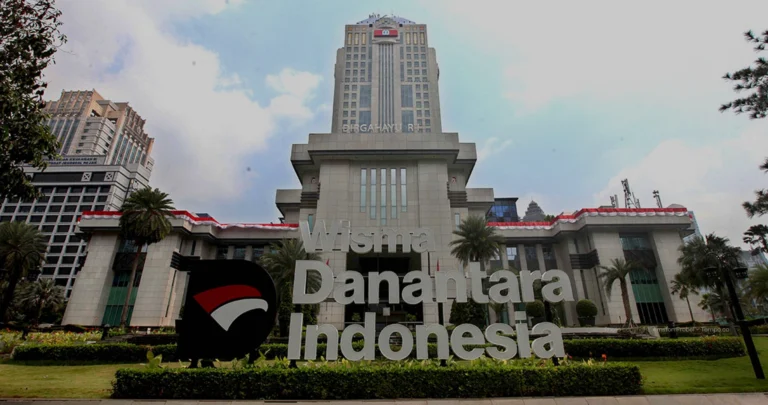
The Indonesian commodity and financial markets stand at an unprecedented critical juncture following a series of defining regulatory pronouncements formalized on the morning of June 8, 2026. Between 10:00 and 11:20 AM, Minister of Energy and Mineral Resources (ESDM) Bahlil Lahadalia delivered definitive statements that fundamentally reconstruct the operational, fiscal, and regulatory landscape for the nation’s natural resource extractors. The policy developments operate on two seemingly contrasting but highly coordinated fronts. On the downstream side, the administration of President Prabowo Subianto has formalized a massive centralization of trade flows by instituting a single-door export mandate for strategic natural resources through a newly empowered state-owned enterprise, PT Danantara Sumberdaya Indonesia (DSI). Conversely, on the upstream side, Minister Bahlil provided profound regulatory relief to the mining sector by categorically ruling out the application of the gross split production-sharing mechanism to mineral and coal (Minerba) contracts, thereby preserving the existing concession framework and stabilizing upstream investment economics.
This dual-policy approach reflects a highly calculated macroeconomic maneuver embedded within Indonesia’s broader framework of resource nationalism, which is anchored in the mandate of Article 33 of the 1945 Constitution dictating state sovereignty over national wealth. By tightening absolute control over the point of sale and foreign exchange capture while maintaining the stability of upstream extraction economics, the administration seeks to optimize state revenues without paralyzing primary production. The immediate market reaction across the Indonesia Stock Exchange ($IHSG) has been characterized by intense volatility, a structural expansion of equity risk premiums, and a desperate recalibration of corporate earnings projections. Understanding the profound implications of these developments requires a meticulous deconstruction of the systemic failures that necessitated the single-door export system, the economic realities of the rejected gross split mechanism, and the granular financial exposure of publicly listed entities heavily dependent on global commodity markets.
Line chart of Jakarta Composite Index (IHSG) with timeframe 1 Month.
The genesis of the single-door export mandate is rooted in chronic systemic inefficiencies and aggressive tax avoidance strategies historically employed within the commodity sector. For years, the Indonesian government has identified substantial, continuous leakages in foreign exchange reserves and state tax revenues stemming from sophisticated transfer pricing and under-invoicing mechanisms. Minister Bahlil explicitly articulated that these practices are not accidental administrative errors but are executed deliberately “by design” to artificially depress the taxable base of exported commodities. The mechanics of these schemes are deeply entrenched in global commodity trading. An extracting entity operating in Indonesia might sell its raw commodity to an offshore affiliated subsidiary located in a low-tax or zero-tax jurisdiction at a suppressed baseline value. For example, a shipment with a prevailing international market value of 1,000 might be invoiced at 700. The offshore subsidiary then resells the commodity to the ultimate international end-buyer at the true market price of 1,000. Through this arbitrage, the corporation captures the 300-point profit margin in an offshore account, entirely bypassing the Indonesian tax net and depriving the state of substantial royalty payments, corporate income taxes, and vital foreign exchange reserves. Government officials estimate that these practices contribute to an annual economic leakage approaching US$150 billion.
This massive capital flight exacerbates broader macroeconomic vulnerabilities, particularly concerning the stability of the Rupiah. The Indonesian currency has faced severe external pressures, testing psychological resistance levels near Rp18,000 per US Dollar. To arrest this depreciation and enforce the repatriation of export dollars, the government previously tightened the Devisa Hasil Ekspor (DHE) regulations, restricting the flexibility of exporters to convert their foreign exchange and mandating specific domestic retention periods. However, without control over the initial invoice value, DHE regulations can only capture a fraction of the true economic value of the exports. The establishment of PT DSI is the ultimate structural response to this vulnerability, designed to physically and administratively insert the state between the domestic producer and the international buyer to guarantee absolute price transparency and optimized revenue collection.
Line chart of US Dollar to Indonesian Rupiah (RUPIAH) with timeframe 6 Months.
Upstream Stabilization: The Rejection of the Minerba Gross Split
While downstream operations face unprecedented regulatory friction with the advent of DSI, the upstream environment received massive fundamental relief during the June 8 announcements. For several months, the domestic mining industry operated under the looming, severe threat of the government imposing a gross split production-sharing model on the Minerba sector. This model was intended to mirror the fiscal regime utilized in the domestic oil and gas (Migas) industry. Market anxiety reached a crescendo when Deputy Minister of ESDM Yuliot Tanjung confirmed that the Directorate General of Minerba was actively studying and finalizing a scheme that would mandate a 70:30 gross split heavily favoring the state.
The mechanics of a gross split model differ fundamentally from traditional concession agreements or cost-recovery production-sharing contracts (PSCs). Under a gross split framework, the state takes a massive, non-negotiable percentage of the top-line physical production or gross revenue, explicitly eliminating any mechanism for the contractor to recover operational and capital expenditures from the state’s share of the resource. Forcing such a system onto solid mineral and coal extraction would have been economically catastrophic for many operators. Unlike the Migas sector, where production costs can be relatively predictable once a well is flowing, solid mineral extraction involves notoriously volatile operational expenditures driven by geological variations, stripping ratios, heavy equipment logistics, and fluctuating fuel costs. A 70:30 split favoring the government would have structurally impaired the sector’s profitability, rendering lower-grade deposits entirely uncommercial and severely depressing equity valuations across the exchange.
Minister Bahlil Lahadalia decisively quashed these institutional fears during his parliamentary press conference on June 8. He explicitly affirmed that the gross split methodology is strictly an administrative doctrine reserved solely for the oil and gas sector, driven by specific presidential directives tailored to the unique risk profiles of hydrocarbon exploration. He guaranteed that existing mining contracts, including the heavily scrutinized Coal Contract of Work (PKP2B) and Special Mining Business License (IUPK) frameworks, will undergo no structural fiscal changes, stating emphatically that it is his administrative mandate to protect these existing agreements “forever”. This definitive announcement immediately compressed the sovereign risk premium that had been weighing down coal and mineral equity valuations, providing a crucial floor for institutional investors who had feared an imminent state appropriation of top-line revenues.
By tightening absolute control over the point of sale and foreign exchange capture while maintaining the stability of upstream extraction economics, the administration seeks to optimize state revenues without paralyzing primary production.
The exclusion of the upstream oil and gas sector from the downstream DSI export mandate further highlights the government’s nuanced, sector-specific regulatory approach. Minister Bahlil noted that the Migas sector operates under entirely different commercial and fiscal architectures. Domestic oil and gas production is predominantly absorbed by internal national energy demands, and the limited volume of export contracts is bound by rigid, state-monitored, long-term production-sharing contracts formalized long before project commercialization begins. Furthermore, the Migas sector has historically exhibited strict compliance with accounting standards, showing no pervasive indications of the under-invoicing or hidden transfer pricing schemes that plague the solid mineral and agricultural sectors. Consequently, the government has exempted the upstream Migas sector from the DSI mandate and from mandatory export proceeds repatriation rules, prioritizing the attraction of exploration capital to curb Indonesia’s US$18 billion annual oil import bill.
Complementing this upstream stabilization for the Minerba sector, the government also announced the indefinite delay of planned statutory increases to mining royalties, acknowledging that a more balanced, sustainable formula is required before imposing higher top-line burdens on extractors in a volatile global pricing environment. Furthermore, acknowledging the macroeconomic reality of global commodity pricing supported by geopolitical tensions in the Middle East, the Ministry of ESDM signaled a willingness to conditionally relax the Work Plan and Budget (RKAB) production quotas for coal and nickel for the 2026 fiscal year. As long as international prices remain stable, the government intends to adopt a highly flexible approach to market supply and demand, ensuring that operators can maximize output and capitalize on favorable spot market conditions without artificial, state-imposed volume constraints. This combination of maintaining existing contract structures, delaying royalty hikes, and offering volumetric production flexibility provides a robust, highly favorable fundamental environment for upstream earnings generation.
Downstream Centralization: The Mechanics of Government Regulation 24 of 2026
The stabilization of the upstream sector serves as the necessary foundation for the government’s aggressive monopolization of the downstream export gateway. Government Regulation (PP) Number 24 of 2026, officially promulgated on May 20 and effective June 1, 2026, establishes a rigid, phased, and inescapable architecture for centralizing the export of what the state designates as Strategic Natural Resource Commodities. In its initial rollout phase, the regulation exclusively targets three commodities that serve as the foundational pillars of Indonesia’s trade surplus: coal, crude palm oil (CPO), and ferroalloys. The economic footprint of these three assets is colossal and systemically vital to the national economy. Combined, they account for approximately US$24.48 billion, CPO adds US$16.49 billion to the national trade balance, supporting a trade surplus that has endured for 71 consecutive months.
The regulatory framework dictates that these specific commodities can only be legally exported by DSI, which acts as the designated special state-owned enterprise (BUMN Khusus). DSI is authorized to act either as the outright owner of the physical commodity through direct purchase or as the sole intermediary facilitator bridging the domestic producer and the international buyer. Crucially, the regulation grants DSI sweeping, unprecedented pricing authority. DSI is empowered not only to determine the final selling price to international buyers to ensure it matches prevailing global indices, but it is also legally authorized to extract a profit margin within undefined “reasonable limits” to cover its operational mandate and generate revenue for the state.
To prevent an immediate paralysis of the global supply chain, the government established a seven-month transition period spanning from June 1, 2026, to December 31, 2026. During this critical window, existing exporters are permitted to utilize their own registered exporter (Eksportir Terdaftar) status and conduct business as usual, but they are subjected to stringent new reporting obligations. Every export transaction must be meticulously reported to DSI through an integrated digital dragnet. The process mandates that independent surveyors issue a Surveyor Report (Laporan Surveyor) through the Indonesia National Single Window (INSW) Simbara system. This data is subsequently integrated with the Directorate General of Customs’ CEISA 4.0 portal, the Ministry of Trade’s Inatrade system, the Minerba Online Monitoring System (MOMS), and the Bank Indonesia integrated foreign exchange monitoring system (SiMoDIS). Through this technological integration, DSI will cross-reference the physical volume leaving the ports against the financial capital returning to the domestic banking system, algorithmically flagging any discrepancies indicative of under-invoicing.
Active sales contracts executed prior to June 1, 2026, are not immune from scrutiny; they must undergo a comprehensive evaluation by DSI to ensure they do not harbor embedded margin-shifting schemes. By January 1, 2027, the single-door mechanism will become absolute, and the clearance and export processes will be fully and exclusively executed by DSI. However, the regulation includes strategic, highly conditional exemption clauses. Corporations that maintain active agreements with the Indonesian government demonstrating concrete, verifiable commitments to capital investment, progressive divestment to domestic entities, or the extensive development of domestic processing and refining infrastructure may be granted waivers from the DSI mandate following a ministerial coordination meeting. This carve-out is a deliberate structural lever designed to incentivize downstream industrialization, essentially penalizing pure extractors with heavy bureaucratic friction while rewarding entities that contribute to localized value creation and industrial ecosystem development.
The Coal Sector: Contractual Peril and Market Displacement Risks
Despite the profound upstream relief provided by the rejection of the gross split mechanism, the downstream implementation of DSI presents severe commercial, operational, and legal risks, predominantly for the coal sector. The Indonesian Coal Mining Association (APBI) has articulated profound, systemic concerns regarding the disruption of existing long-term supply agreements that underpin the financial stability of the industry. The global seaborne coal trade does not operate efficiently on a purely spot-market basis; it relies heavily on rigid, multi-year contracts negotiated directly between producers and massive international power utilities or industrial consumers in markets like China, India, and Japan. These contracts contain meticulous, highly inflexible clauses governing caloric value, moisture content, vessel loading schedules, and the specific transacting counter-parties legally bound to the delivery.
Chart Error: API Error (Yahoo Chart): Not Found
The insertion of a newly formed state enterprise as a mandatory intermediary fundamentally fractures this established direct-trade business model. APBI notes that long-term contracts frequently include strict, punitive penalty clauses for any deviation in shipping timelines or unauthorized changes to the transacting legal entity. Transitioning the complex export clearance process to DSI carries immense logistical risks. A minor administrative delay in document verification, pricing approval, or vessel clearance by the state enterprise could easily trigger massive demurrage costs—often running into tens of thousands of dollars per day per vessel—and severe contractual penalties for the mining companies.
Furthermore, if DSI dictates an arbitrary adjustment to the Free on Board (FOB) price to align with its internal indexation models, international buyers may view this as a unilateral, bad-faith breach of contract. This exposes Indonesian producers to the catastrophic risk of international arbitration and severe buyer claims. In an environment where the global coal market is already experiencing structural oversupply, buyers have alternative options. Analysts point out that if Indonesian coal becomes entangled in bureaucratic delays or arbitrary price floors, major consumers in China and India will rapidly pivot to rival producers. Russia, seeking to divert its energy exports away from Western sanctions, and Australia, possessing highly efficient export infrastructure, are aggressively competing for market share in the Asia-Pacific region. Any friction introduced by DSI directly undermines the competitive positioning of Indonesian thermal coal in this hyper-competitive environment.
To assuage these severe institutional fears, DSI management has communicated that its pricing methodology will not act as a blunt, standardized instrument. The state enterprise promises to utilize advanced data analytics and transparent, accountable methodologies that respect and account for nuanced commercial differences. This includes adjusting baseline expectations for specific quality variations, unique product specifications, specialized logistical constraints, and the inherent structures of legacy contracts. By cross-referencing global indices with historical transaction data, DSI aims to exclusively target egregious pricing anomalies and blatant tax evasion while allowing legitimate, market-aligned contracts to proceed uninterrupted during the transition phase. Nevertheless, until the technological platform and standard operating procedures of DSI are thoroughly battle-tested, the financial markets continue to price in a substantial execution risk premium for the entire sector.
Coal Issuer Exposure and Fundamental Analysis
To quantify the systemic risk across the market, it is imperative to analyze the precise export dependencies and financial positioning of the major listed coal entities. The vulnerability of a corporation to the DSI mandate is directly proportional to its reliance on seaborne export revenues versus its integration into domestic power generation supply chains. The following detailed fundamental breakdown highlights the vastly different risk profiles across the sector.
| Issuer Entity | Ticker | Operational Scale & Q1 2026 Revenue | Export Exposure Profile | Strategic Positioning and Corporate Response Context |
|---|---|---|---|---|
| Adaro Andalan Indonesia | $AADI | Revenue: Rp17.90 Trillion | High Exposure | Stands as the largest revenue generator in the sector for Q1 2026. Management explicitly stated they have not received official regulatory copies, preventing them from assessing impacts on financier agreements and business continuity, though they pledge compliance. |
| Bayan Resources | $BYAN | Revenue: Rp14.08 Trillion | Very High Exposure | The largest pure producer by volume, extracting 68.0 million tons in 2025. Highly dependent on frictionless exports. Issued a formal disclosure stating the financial and operational impacts of DSI remain entirely unquantifiable at this stage. |
| Bukit Asam | $PTBA | Revenue: Rp9.93 Trillion | Balanced (47% Export) | Produced 47.1 million tons in 2025. Total 2024 sales reached 42.89 million tons, with exports growing to 20.26 million tons. Protected by a massive 53% domestic market share, offering a highly defensive buffer against DSI friction. |
| Indo Tambangraya Megah | $ITMG | Revenue: Rp8.53 Trillion | Dominant Exposure | Produced 21.2 million tons in 2025. Hyper-exposed to international markets, heavily reliant on buyers in China (US$575M). Extremely vulnerable to Russian competitive displacement if DSI introduces pricing or logistical friction. |
| Indika Energy | $INDY | Revenue: Rp8.45 Trillion | High Exposure | A top-tier producer extracting 30.5 million tons in 2025. Management released an official statement identical to BUMI, noting the lack of technical guidelines prevents any projection of business impacts. |
| Bumi Resources | $BUMI | Revenue: Rp7.16 Trillion | High Exposure | A massive consolidated producer facing immediate valuation pressure. Management stated they cannot explain their stance or project business continuity impacts until the government delivers the official operational guidelines. |
| Baramulti Suksessarana | $BSSR | Production: 17.8 M Tons | Moderate Exposure | Favored by analysts due to a low price-to-book value (PBV), strong internal cash flow generation, and comparatively lower exposure to the one-stop-shop export policy compared to larger peers. |
| Petrindo Jaya Kreasi | $CUAN | Expanding Operations | Strategic Growth | Aggressively expanding through the acquisition of Singaraja Putra aiming for a 29% stake. Targeting consolidated reserves of 378 million tons and scaling production to 30 million tons annually by 2031, positioning it as a future heavyweight navigating the new DSI era. |




The broader energy sector also features major players like Perusahaan Gas Negara ($PGAS) with Rp15.93 trillion in Q1 2026 revenue, AKR Corporindo ($AKRA) at Rp12.94 trillion, and Medco Energi ($MEDC) at Rp11.46 trillion. However, these entities operate predominantly within the Migas and downstream distribution sectors, insulating them entirely from the DSI Minerba mandate as per Minister Bahlil’s explicit gross split and export exception statements. For the heavily exposed coal entities like $BYAN, $AADI, and $ITMG, the immediate term is characterized by forced compliance and active lobbying to ensure DSI’s digital platforms do not trigger the catastrophic demurrage and penalty scenarios feared by APBI.
The Agricultural Complex: CPO, Administrative Friction, and the B50 Catalyst
The crude palm oil sector faces a uniquely complex macroeconomic equation that differs significantly from the extractive dynamics of coal. The enforcement of DSI export controls on CPO arrives concurrently with major domestic policy shifts and severe global agricultural headwinds. Similar to the coal sector, CPO exporters are highly sensitive to any regulatory layer that could introduce administrative delays or compress operational margins. The global vegetable oil market is fiercely competitive, and the pricing dynamics for Indonesian CPO are closely benchmarked against Malaysian palm oil and global soy oil derivatives. Analysts project that if DSI imposes an operational handling fee or margin extraction equivalent to just Rp100,000 per ton, the net profit of major CPO corporations could erode by 1% to 4% over the 2027-2028 fiscal horizon. Furthermore, working capital turnover is projected to slow down significantly in the second half of 2026 due to potential document verification delays under the single-door system before the required Export Proceeds (DHE) can be officially released by the banking sector.
Chart Error: API Error (Yahoo Chart): Not Found
However, the margin pressure exerted by the single-door policy is heavily counterbalanced by a massive, structural domestic demand catalyst: the accelerated implementation of the B50 biodiesel mandate. Coordinating Minister for Economic Affairs Airlangga Hartarto announced that the mandatory blending of 50% palm-based biodiesel into the national fuel supply will officially commence on July 1, 2026. This policy serves dual macroeconomic purposes of extreme national importance. Primarily, it significantly bolsters national energy security by drastically reducing reliance on imported fossil fuels. The government estimates that the B50 program will reduce fossil fuel consumption by 4 million kiloliters, generating an estimated Rp48 trillion in foreign exchange retention and subsidy savings within just six months of implementation.
Secondarily, and more importantly for the CPO issuers, the B50 mandate acts as a colossal domestic demand sink for crude palm oil. The absorption of millions of additional tons of CPO into the domestic energy matrix fundamentally tightens the exportable surplus of Indonesian palm oil. This domestic diversion is expected to aggressively support global CPO prices by starving the international market of supply, potentially offsetting the administrative friction costs introduced by DSI. In addition to this policy-driven tightening, the sector faces the negative agricultural catalyst of El Nino; low rainfall and persistent drought conditions in the second half of 2026 are projected to severely suppress palm productivity, further constricting supply. For palm oil issuers, the strategic imperative is rapidly shifting toward optimizing supply chains for domestic refiners and biodiesel producers rather than maximizing raw export volumes subject to DSI scrutiny.
CPO Issuer Exposure and Fundamental Analysis
The palm oil sector exhibits highly varied exposure to the DSI mandate, contingent upon the scale of a company’s domestic refining capacity, the age profile of its plantations, and specific corporate strategies regarding international spot markets. Companies with higher direct export exposure are projected to bear the heaviest initial impact.
| Issuer Entity | Ticker | Export Dependency Profile | Fundamental Metrics and Strategic Vulnerabilities |
|---|---|---|---|
| SMART Tbk | $SMAR | 41% Export Exposure | Holds the highest proportional export exposure among major peers. Highly sensitive to any DSI margin extraction or administrative delays in DHE verification that could impact working capital. |
| Astra Agro Lestari | $AALI | 36% Export Exposure | Identified by market analysts as highly vulnerable. If DSI pricing schemes alter the Average Selling Price (ASP), AALI will suffer profound impacts. Recorded an EPS of 260 and a dividend of 233. |
| Sampoerna Agro | $STAA | 35% Export Exposure | Significant reliance on frictionless access to global buyers. Reported a semester I/2024 EPS of 39 and a dividend of 35, with projected 2024 performance metrics indicating strong historical baselines now facing regulatory headwinds. |
| Salim Ivomas Pratama | $SIMP | High Exposure | Grouped with AALI as heavily exposed to DSI implementation risks, particularly if ASPs are artificially regulated downwards. Operates with tighter margins, reporting a lower EPS of 16 and a dividend of 9. |
| Sawit Sumbermas | $SSMS | Moderate/Mixed | Strong historical profitability with an EPS of 40 and high dividend payout of 52. Profitability depends on the ability to pivot supply toward the tightening domestic biodiesel market. |
| Tunas Baru Lampung | $TBLA | Moderate/Mixed | Robust financial baseline with an EPS of 50 and dividend of 52. Highly integrated operations may provide a buffer against raw CPO export restrictions. |
| Prime Agri Resources | $SGRO | Low Exposure | Highly resilient to DSI friction due to a strategic focus on domestic market sales. Primary risk is limited to minor administrative delays impacting working capital turnover, rather than structural revenue compression. |
| Triputra Agro Persada | $TAPG | Strategic Outperformer | Analysts project TAPG as a sector “jawara” (champion). Benefits immensely from a younger crop age profile and lower reliance on pure spot exports, positioning it to capitalize perfectly on the B50 domestic demand surge. |
| Dharma Satya Nusantara | $DSNG | Strategic Outperformer | Similar to TAPG, benefits from excellent plantation maturity metrics. Shielded from the worst of DSI friction while capturing the upside of constrained global supply and elevated prices. |




The performance of these CPO entities through the remainder of 2026 will be dictated by a tug-of-war between the negative friction of the DSI export monopoly and the immensely positive pricing power generated by the B50 mandate and El Nino supply constraints.
Ferroalloys, the Nickel Downstream, and State Alignment
The inclusion of ferroalloys in the initial DSI mandate targets the sprawling and rapidly expanding nickel downstream ecosystem. The export of Nickel Pig Iron (NPI), ferronickel, and other bespoke alloys is a massive revenue driver, contributing US$16.49 billion to the national economy and serving as the crown jewel of Indonesia’s industrialization agenda. Interestingly, the reaction from the nickel sector, particularly from state-affiliated entities, has been markedly cooperative compared to the existential dread exhibited by the private coal sector.
PT Aneka Tambang Tbk ($ANTM), a massive state-owned diversified miner, publicly and enthusiastically endorsed the DSI framework. ANTM’s Corporate Secretary Division Head stated that the policy aligns perfectly with national objectives to enhance the competitiveness of Indonesian downstream products and create an integrated, highly efficient trade ecosystem. This supportive stance is largely insulated by ANTM’s profound, multi-year structural pivot toward the domestic market. As of early 2026, a staggering 97% of ANTM’s consolidated net sales (totaling Rp28.31 trillion) were absorbed domestically, severely limiting its operational exposure to DSI-related export disruptions. ANTM views the consolidation of export governance not as a hindrance, but as positive momentum to increase the added value of mineral commodities and strengthen the global positioning of national products.
For private pure-play nickel downstream operators, the regulatory environment is more complex but highly navigable. Government Regulation 24 of 2026 provides a critical, structural relief valve: companies that have heavily invested in domestic processing and refining infrastructure, or those demonstrating concrete commitments to capital investment, may apply for official exemptions from the DSI export monopoly. Because ferroalloys are inherently the product of massive downstream smelter investments, the majority of the major nickel players are perfectly positioned to utilize this exemption clause.
| Issuer Entity | Ticker | Operational Focus and Strategic Exposure |
|---|---|---|
| Aneka Tambang | $ANTM | Highly insulated. 97% of sales are domestic. Explicitly supports DSI as a mechanism to improve national industrialization and global trade ecosystem efficiency. |
| Merdeka Battery | $MBMA | Massive production scale, recording 73,871 tonnes of Nickel Pig Iron (NPI) production. Primed to leverage smelter investment exemptions to bypass the most restrictive elements of the DSI mandate. |
| Vale Indonesia | $INCO | Legacy producer with deep investments in matte and downstream facilities. Capital expenditure in domestic refining fulfills the state’s criteria for direct export privileges. |
| Trimegah Bangun | $NCKL | Operates extensive High-Pressure Acid Leach (HPAL) and ferronickel facilities. Positioned to negotiate DSI exemptions based on massive localized value creation. |
| Harum Energy | $HRUM | Rapidly transitioning from pure coal to integrated nickel. While its legacy coal business faces severe DSI friction, its expanding nickel smelter portfolio offers a pathway to regulatory exemptions. |
The government’s strategy here is transparent: the state is willing to utilize DSI as a blunt instrument to coerce pure extractors into the downstream ecosystem. By offering exemptions to those who build smelters, the single-door policy acts as a powerful catalyst accelerating Indonesia’s transition into a global battery and electric vehicle supply chain hub.
Financial Market Implications and Institutional Portfolio Strategy
The confluence of these massive regulatory shifts has triggered a pronounced, violent recalibration of institutional portfolios within the Indonesia Stock Exchange. The sudden announcement of the DSI mandate, characterized by a rapid transition timeline and initially opaque technical mechanisms, immediately injected a high degree of structural uncertainty into the financial markets. Global credit rating agencies, including Moody’s and Standard & Poor’s, issued stark warnings that centralizing multi-billion dollar trade flows through a nascent state enterprise without flawless administrative execution risks creating severe market distortions, which could easily exacerbate the existing flight of foreign capital.
Consequently, the equity risk premium for Indonesian commodity exporters has expanded significantly. In the immediate aftermath of the policy rollout, heavyweights such as $AADI, $INDY, $HRUM, and $BUMI experienced sharp, aggressive valuation corrections. Institutional financial models were forced to rapidly factor in heightened bureaucratic costs, potential demurrage penalties, and compressed terminal growth rates resulting from state-mandated margin extraction. The market’s interpretation of the June 8 announcements is largely binary: while the upstream relief on gross splits prevents an immediate collapse of the fundamental mining business model, the downstream friction introduced by DSI introduces a perpetual, unquantifiable drag on operational efficiency and cash flow realization.
Compounding this equity pressure is the broader macroeconomic environment governed by Bank Indonesia. The central bank’s revision of the Devisa Hasil Ekspor (DHE) regulations, which strictly limits the conversion of export dollars into Rupiah to a maximum of 50%, has severely restricted the cash flow flexibility of major exporters. When combined with the potential delays in DHE verification caused by DSI’s new CEISA 4.0 reporting layers, corporations face a liquidity squeeze that threatens dividend payouts and capital expenditure schedules.
For institutional investors, the prevailing strategy has forcefully shifted away from passive, long-term accumulation toward highly tactical, active monitoring. Market analysts strongly advise against panic selling into deep corrections, suggesting instead a highly disciplined approach to capital preservation. The traditional “buy and hold” strategy is currently viewed as obsolete for pure-play exporters. Investors are advised to systematically reduce exposure to entities with rigid operational structures and excessive offshore revenue reliance on any relief rallies. Capital is currently being aggressively rotated into defensive, highly liquid big-cap equities or entities completely shielded by domestic demand.
Within the commodity space, equity selection has become hyper-specific. In the coal sector, $PTBA provides an highly attractive defensive posture due to its substantial 53% domestic market share and robust state affiliations, which insulate it from the worst of the DSI friction. In the agricultural sector, the tactical focus shifts entirely toward operators like $TAPG and $DSNG. Their younger crop profiles and strategic positioning allow them to capitalize perfectly on the impending B50 domestic supply shock, effectively bypassing the DSI export bottleneck while reaping the rewards of higher baseline commodity prices. Conversely, entities like $AALI and $SMAR, heavily reliant on pure export volumes, remain highly precarious until DSI publishes granular, transparent pricing formulas that guarantee the preservation of corporate margins.
Forward-Looking Scenarios and the Trajectory of Resource Nationalism
The long-term trajectory of the Indonesian commodity sector, and by extension the stability of the broader national economy, depends entirely on the operational evolution and bureaucratic efficiency of PT Danantara Sumberdaya Indonesia. The financial markets are currently pricing probabilities between two divergent, highly consequential forward-looking scenarios regarding how the state will wield its new monopolistic power.
In the highly optimistic Base Case Scenario, DSI operates purely as an advanced, frictionless digital auditor. Leveraging its massive integration with CEISA 4.0, SiMoDIS, INSW Simbara, and MOMS, DSI utilizes algorithmic oversight to monitor global indices and instantly detect and block egregious under-invoicing and transfer pricing schemes. It acts as the nominal exporter on official documentation to satisfy sovereign requirements but fundamentally does not disrupt physical logistics, alter existing contract counterparties, or extract punitive financial margins from standard, market-aligned transactions. Under this outcome, the impact on average selling prices (ASPs) across the coal and CPO sectors remains entirely negligible. The friction is confined to slight administrative delays in working capital turnover during the 2026 transition phase, and corporate earnings normalize rapidly by mid-2027 as compliance workflows streamline. Most importantly, state revenues increase dramatically through the establishment of higher, legitimate tax bases and the complete retention of natural resource export proceeds, ultimately supporting the macroeconomic stability of the Rupiah without destroying the underlying industries.
Conversely, the Bear Case Scenario envisions DSI aggressively utilizing its sweeping legal mandate under PP 24/2026 to dictate selling prices and actively extract wide profit margins to fund its own state operations. If DSI imposes artificial price floors that ignore the nuances of caloric values or logistical constraints, it could instantly render Indonesian commodities uncompetitive in a well-supplied global market. This would prompt major international buyers in China, India, and Japan to systematically pivot toward reliable rival producers like Russia or Australia. Widespread contract disputes, international arbitration claims, and compounding demurrage penalties would severely erode corporate cash flows across the $IHSG. For the CPO sector, active state pricing control could completely decouple domestic corporate revenues from global market realities, crushing the profitability of entities like $SMAR and $AALI. This scenario would fundamentally break the investment thesis for Indonesian extractive equities, leading to catastrophic capital flight, the collapse of foreign direct investment in the sector, and a structural devaluation of the nation’s primary economic engine.
The government’s administrative actions and technical clarifications leading up to the December 31, 2026, absolute compliance deadline will definitively dictate which reality materializes. The explicit exemptions granted within the regulation for downstream industrialization indicate a clear, uncompromising strategic objective: the Indonesian state is entirely willing to tolerate severe short-term export friction to coerce long-term domestic value creation. By insulating upstream production from the destructive gross split mechanism while simultaneously squeezing raw export channels through DSI, Indonesia is aggressively accelerating its transition from a passive upstream commodity supplier to an integrated, sovereign industrial powerhouse. The success of this immense, generational macroeconomic gamble hinges not on the legal authority of the state, which is now absolute, but on the flawless bureaucratic efficiency and commercial pragmatism of its new single-door operator.
Disclaimer
aluna Analytics is an independent research collective that operates without affiliation to any financial institution, broker, or advisory firm. We do not hold licenses as a securities dealer, investment advisor, or portfolio manager.
All materials published by aluna Analytics are created solely for informational and educational purposes. They reflect independent analytical interpretation and should not be regarded as personalized investment advice, solicitation, or endorsement of any security or strategy.
Market data, opinions, and projections presented herein are subject to change and may not predict future results. Readers remain fully responsible for any financial decisions made based on the information provided. We strongly encourage conducting personal due diligence and consulting a licensed professional before making investment commitments.
aluna Analytics is not regulated by the Financial Services Authority of Indonesia (OJK) and does not offer investment management or brokerage services. All content is presented in good faith, aiming to foster research literacy and informed market perspectives.