

Author: aluna Analytics | Date: 3 May 2026 | Category: Market Intelligence
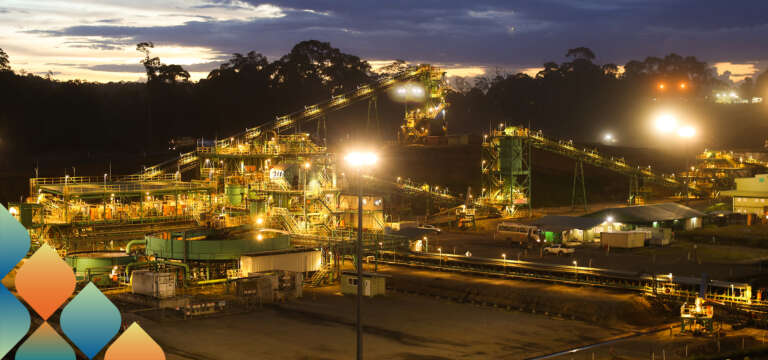
PT Barito Renewables Energy Tbk ($BREN), operating as the primary renewable energy vehicle within the Barito Pacific conglomerate, stands as the preeminent geothermal energy producer in Indonesia and an increasingly vital player in the domestic wind power ecosystem. The fundamental economic engine of the enterprise is built upon the extraction, processing, and sale of geothermal steam and electricity to the state-owned utility monopoly, PT Perusahaan Listrik Negara ($PLN), alongside strategic upstream arrangements with PT Pertamina Geothermal Energy ($PGE). The company’s primary operational footprints encompass the legacy Wayang Windu, Salak, and Darajat geothermal fields located in West Java, which are now augmented by the Sidrap wind asset in South Sulawesi.
The geothermal business model is characterized by exceptionally high barriers to entry, immense upfront capital intensity, and extraordinarily long-tail cash flow duration. Geothermal energy production requires massive initial outlays for subterranean exploration, production well drilling, and the construction of complex fluid-gathering and power generation infrastructure. However, once operational, these assets function as baseload power generators with capacity factors frequently exceeding ninety percent, distinguishing them from intermittent renewable sources such as solar and wind. By securing thirty- to forty-year take-or-pay Energy Sales Contracts (ESCs) that are denominated in or directly linked to the United States Dollar (USD), the company effectively monetizes subsurface thermal reservoirs into highly predictable, annuity-like financial streams. This contractual architecture heavily insulates the business from short-term macroeconomic volatility, commodity price fluctuations, and domestic currency depreciation.
As of the first quarter of 2026, the enterprise is navigating a critical transition from a period of operational stabilization into an aggressive, capital-intensive growth phase. The successful completion of extensive retrofitting initiatives, the commercialization of the Salak Binary unit, and the ongoing construction of major capacity additions such as Salak Unit 7 and Wayang Windu Unit 3 reflect a concerted effort to counteract natural thermodynamic decline curves and expand total generation capacity. Simultaneously, the financial architecture remains heavily influenced by highly complex lease accounting treatments, stringent debt covenants, and a convoluted taxation structure that frequently obfuscates the underlying cash generation capacity. The interim consolidated financial statements for the period ended 31 March 2026 reveal the company’s financial condition, earnings quality, and balance sheet durability within the broader context of Indonesia’s macroeconomic energy transition.

Rp 2,380
MCap: 318.41 T
The Macroeconomic and Regulatory Tapestry
To contextualize the financial performance of the company, it is imperative to examine the broader macroeconomic and regulatory environment governing Indonesia’s power sector. Indonesia possesses extraordinary renewable energy potential, holding approximately forty percent of the world’s total geothermal reserves, and currently ranks as the world’s second-largest geothermal energy producer with an installed capacity of 2.65 gigawatts. The national renewable energy market is projected to expand significantly, growing from an estimated 18.4 gigawatts in 2026 to 37.32 gigawatts by 2031, representing a compound annual growth rate of 15.20%. This expansion is driven by surging electricity demand from industrial manufacturing, downstream nickel processing facilities, and the proliferation of power-intensive data centers.
However, the realization of this potential is heavily constrained by systemic regulatory and infrastructural hurdles. Indonesia’s electricity system remains structurally dependent on domestic coal, which accounts for approximately sixty-eight percent of the nation’s power mix and over fifty-four percent of installed capacity. A relatively young fleet of coal-fired power plants, supported by rigid “must-run” power purchase agreements covering more than forty gigawatts of capacity, forces the state utility to prioritize coal generation, frequently resulting in the curtailment of renewable output during periods of grid oversupply. This dependence on fossil fuels exposes the state to volatile global commodity markets and creates immense fiscal pressures through energy subsidies, prompting the government to maintain a freeze on consumer electricity tariffs through the second quarter of 2026 to protect household purchasing power.
In response to these structural challenges, the Indonesian government has attempted to pivot its policy framework to accelerate the clean energy transition. The deployment of climate-finance inflows, notably the USD 20 billion Just Energy Transition Partnership (JETP), is beginning to ease capital constraints and lower the cost of capital by up to 200 basis points for qualifying renewable infrastructure projects. Furthermore, the Ministry of Energy and Mineral Resources (MEMR) has issued new roadmaps projecting that the total power capacity will reach 443 gigawatts by 2060, with renewable energy sources accounting for a dominant share. Within this shifting landscape, the company’s geothermal assets occupy a highly strategic, privileged position. Because geothermal power provides uninterrupted baseload generation, it does not suffer from the intermittency issues that plague solar and wind, making it the most viable green alternative to coal for powering the continuous operations of Indonesia’s emerging strategic industries.
Revenue Architecture and Lease Accounting Regimes
To accurately assess financial performance and profitability, one must first deconstruct the divergent accounting frameworks applied to the primary geothermal assets. The consolidated financial statements do not merely reflect the volumetric sale of electrons; rather, they represent a highly structured, bifurcated interpretation of lease accounting under the Indonesian Financial Accounting Standards, specifically PSAK 116 for leases and PSAK 115 for revenue from contracts with customers.
The contractual arrangements governing the Salak and Darajat fields dictate that while the company builds, owns, and operates the power generating facilities, the underlying materials and equipment revert to $PGE (acting on behalf of the Government of Indonesia) upon the conclusion of the contract term or upon their integration into the permanent field facilities. Because these contracts transfer substantially all the long-term risks and rewards of the power plants to the off-taker, they are classified on the balance sheet as finance leases. Consequently, a residual value method is utilized to bifurcate the single blended electricity tariff received into two distinct revenue streams: finance lease income, which represents the repayment of principal and interest on the capital invested in the plant, and electricity revenue, which compensates for ongoing operations and maintenance activities. This accounting mechanism front-loads profitability in the early years of the asset’s lifecycle due to higher interest components on the unamortized principal, creating a structural divergence between reported statutory net income and actual cash flow generation.
Conversely, the Wayang Windu operation is classified entirely differently, functioning as an operating lease under PSAK 116. This arrangement does not transfer the risks and rewards of ownership to the off-taker to the same degree, allowing the entity to retain the power generating facilities on its balance sheet as capitalized physical property designated as “Property on operating lease”. Under this framework, revenue is allocated between operating lease income and electricity sales based on relative fair values, and the underlying assets are depreciated on a straight-line basis over the lesser of the Joint Operation Contract term or their estimated useful lives.
This profound bifurcation in accounting policy fundamentally distorts cross-asset comparability within the internal portfolio. The Salak and Darajat assets appear on the balance sheet primarily as massive financial receivables that systematically amortize downward over time, whereas the Wayang Windu asset is capitalized as physical property subject to standard depreciation schedules. Analysis must therefore look past the statutory income statement and focus intently on consolidated earnings before interest, taxes, depreciation, and amortization (EBITDA), as well as operating cash flows, to ascertain the true underlying economic yield of the portfolio. Furthermore, the accounting treatment obscures actual capital intensity, as expansion capital deployed at Salak and Darajat flows through the balance sheet as the origination of a new financial asset rather than as traditional capital expenditure.
First Quarter 2026 Income Statement Dynamics
The first quarter of 2026 demonstrated robust structural top-line expansion, driven by the successful integration of recently acquired wind assets and the continuous technological optimization of the existing geothermal infrastructure.
| Income Statement Metric (in USD ‘000) | 1Q26 (31 Mar 2026) | 1Q25 (31 Mar 2025) | Variance (%) |
|---|---|---|---|
| Revenue | 165,167 | 150,478 | + 9.76% |
| Depreciation and Amortization | (25,751) | (23,557) | + 9.31% |
| Employee Compensation and Benefits | (10,589) | (11,839) | – 10.56% |
| Production Allowance to PGE | (4,743) | (4,550) | + 4.24% |
| Finance Costs | (27,787) | (29,222) | – 4.91% |
| Profit Before Tax | 91,181 | 77,187 | + 18.13% |
| Income Tax Expense | (38,609) | (34,782) | + 11.00% |
| Profit for the Period | 52,572 | 42,405 | + 23.98% |
| Profit Attributable to Owners | 43,009 | 34,241 | + 25.61% |
The 9.76% year-over-year revenue growth to USD 165.17 million is a direct manifestation of both inorganic integration and organic engineering achievements executed throughout the preceding fiscal year. The full-quarter contribution of the Sidrap wind portfolio, acquired through the corporate integration of PT UPC Sidrap Bayu Energi, introduced a new, albeit seasonally variable, revenue vector to the traditionally steady baseload geothermal mix. Furthermore, the operational commencement of the Salak Binary unit and the completion of extensive retrofitting activities at Salak Units 4, 5, and 6 incrementally elevated baseline generation capacity. These engineering upgrades allowed the extraction of greater thermodynamic efficiency and electrical output from existing subterranean steam flows without requiring proportionate, capital-intensive increases in subsurface drilling.
Cost control initiatives yielded tangible margin expansion during the quarter, reflecting a maturation of the corporate structure. Employee compensation decreased by 10.56% to USD 10.59 million, suggesting the realization of post-acquisition synergies and operational streamlining following the rapid organizational scaling and corporate restructuring that preceded the initial public offering. However, this operational leverage was partially offset by a 9.31% increase in depreciation and amortization expenses. This increase is a natural and expected consequence of reclassifying massive balances from the construction-in-progress account into depreciable asset categories as various retrofits and binary plants achieved their commercial operation dates and began generating revenue.
The production allowance paid to the state resource holder rose by 4.24% to USD 4.74 million. This specific line item functions effectively as an overriding royalty interest. It is calculated as a fixed percentage of net operating income—specifically, four percent for the Salak and Wayang Windu operations, and 2.66 percent for the Darajat operations, as mandated by legacy tax frameworks. As net operating income expands through successful capacity additions and operational efficiencies, this variable royalty cost will mechanically scale upward in tandem, acting as a permanent structural cap on gross margin expansion.
Finance costs remain the heaviest single burden on the operational income statement, consuming USD 27.79 million during the first three months of the year. Nevertheless, the 4.91% year-over-year reduction in this expense line points to highly aggressive and successful liability management by the corporate treasury. The company has actively refinanced legacy debt structures, utilized complex derivative instruments such as interest rate swaps to fix previously floating-rate exposures, and executed principal prepayments when excess free cash flow permitted. For instance, the interest rate swap contract initiated to protect the syndicated bank loan from the volatility of the Secured Overnight Financing Rate (SOFR) effectively converted unpredictable floating obligations into fixed, manageable outlays, thereby insulating equity returns from global monetary tightening cycles.
Taxation Mechanics and Earnings Quality
Profitability at the bottom line paints a picture of a highly cash-generative business that is simultaneously masked and constrained by a deeply punitive legacy tax regime. The effective tax rate for the first quarter of 2026 stood at an exceptionally high 42.34%, substantially exceeding the prevailing Indonesian statutory corporate tax rate.
This structural fiscal disadvantage stems directly from the legacy Joint Operation Contract frameworks negotiated in the 1980s and 1990s. These contracts subject the geothermal operators to Presidential Decree No. 49 of 1991, which enforces a rigid 34% all-inclusive tax rate on net operating income (frequently referred to in regulatory literature as the “Government Share”). When this elevated base rate is combined with the non-deductibility of certain holding company overhead expenses and the complex accounting treatment of deferred taxes, the entity inevitably leaks a massive portion of its pre-tax earnings to the state.
Despite this heavy fiscal drag, net profit attributable to owners grew by an impressive 25.61% year-over-year to USD 43.01 million. This robust bottom-line expansion underscores the formidable operating leverage inherent in the baseload infrastructure business model. Once the massive fixed costs of capital deployment and debt service are covered by the baseline tariff, incremental revenues generated from retrofitting efficiencies or binary plant additions flow disproportionately to the bottom line.
However, the quality of these reported earnings must be contextualized by the presence of massive deferred tax liabilities, which amount to a staggering USD 724.03 million. This non-cash liability originates primarily from temporary timing differences between the accelerated depreciation schedules allowed under the JOC tax framework (which utilizes a declining balance method) and the straight-line depreciation utilized for statutory reporting. While this mechanism highly optimizes the near-term cash position by deferring immediate cash tax outflows, it creates a looming, massive future liability that must be carefully modeled into long-term discounted cash flow valuations. As operational assets mature and the accelerated tax shield inevitably diminishes, a steepening curve of actual cash tax obligations will be faced in the out-years.
Cash Flow Generation and Capital Deployment
Because reported accounting profit in capital-intensive infrastructure businesses is frequently distorted by non-cash charges such as depreciation, amortization, and deferred taxes, a rigorous analysis of the cash flow statement is paramount for determining enterprise value. The first quarter of 2026 demonstrated robust cash conversion capabilities, validating the high quality of the reported statutory earnings.
| Cash Flow Metric (in USD ‘000) | 1Q26 (31 Mar 2026) | 1Q25 (31 Mar 2025) |
|---|---|---|
| Receipts from Customers | 159,052 | 154,964 |
| Payments to Suppliers and Others | (33,563) | (34,034) |
| Payment for Income Taxes | (32,239) | (36,198) |
| Payment of Finance Costs | (18,505) | (25,616) |
| Net Cash from Operating Activities | 77,266 | 62,119 |
| Net Cash Used in Investing Activities | (43,838) | (60,632) |
| Net Cash Provided by Financing Activities | 20,263 | 36,998 |
Operating cash flows surged by 24.38% to USD 77.27 million. The delta between raw cash receipts from customers (USD 159.05 million) and recorded accounting revenue (USD 165.17 million) is notably narrow. This tight conversion ratio indicates excellent receivables collection discipline and minimal leakage into working capital bloat. The Days Sales Outstanding (DSO) remains tight, reflecting the state utility’s strict adherence to its contractual 30- to 45-day payment terms. The substantial reduction in cash interest payments from USD 25.62 million in the first quarter of 2025 to USD 18.51 million in the current period further corroborates the tangible success of liability management and deleveraging strategies.
Investing cash outflows of USD 43.84 million were primarily directed toward the ongoing, aggressive expansion of the physical asset base. Expenditures during the quarter included USD 30.62 million in additions to property on operating lease (primarily reflecting the heavy capital deployment for the Wayang Windu Unit 3 construction and associated turbine retrofits) and USD 7.78 million in general property, plant, and equipment. Notably, exploration and evaluation asset additions of USD 4.84 million indicate continued upstream risk capital deployment. This exploration expenditure is likely targeted at the Suoh Sekincau concession or the Hamiding prospect in North Maluku, following the completion of a Preliminary Survey and Exploration (PSPE) assignment in an attempt to prove out entirely new geothermal reservoirs for future development.
Financing activities generated a net inflow of USD 20.26 million, reflecting a continuous optimization of the capital stack. This net figure was driven by a USD 27.48 million drawdown on bank loans, which was partially offset by USD 23.57 million in scheduled debt repayments. The continuous recycling of short-term revolving credit facilities (such as the massive IDR and USD-denominated facilities provided by DBS Indonesia) demonstrates active management of working capital and the use of efficient bridge financing prior to executing long-term project debt syndications.
A minor, yet symbolically important, share buyback program was also executed during the quarter, deploying USD 335 thousand to repurchase 700,000 shares on the open market. This follows a larger buyback program in 2025 that repurchased 6,000,000 shares for USD 1.93 million. While financially immaterial relative to the massive multi-billion-dollar market capitalization, the buyback serves as a potent signaling mechanism to public markets, indicating management’s belief in the intrinsic undervaluation of the equity during periods of acute, volatility-driven price drawdowns.
Balance Sheet Architecture and Sovereign Strategic Investments
An examination of the balance sheet reveals a highly leveraged, exceptionally capital-intensive enterprise that is heavily weighted toward intangible assets and characterized by heavily restricted operational liquidity.
| Selected Balance Sheet Items (in USD ‘000) | 31 Mar 2026 | 31 Dec 2025 |
|---|---|---|
| Cash and Cash Equivalents | 168,676 | 114,985 |
| Restricted Cash and Time Deposits | 297,638 | 314,877 |
| Trade and Other Receivables (Current) | 113,481 | 106,886 |
| Finance Lease Receivables (Total) | 393,214 | 396,289 |
| Property, Plant, and Equipment | 906,475 | 846,074 |
| Property on Operating Lease | 326,244 | 284,624 |
| Intangible Assets | 1,393,813 | 1,458,963 |
| Investment in Bonds | 88,272 | 89,381 |
| Total Assets | 3,941,856 | 3,867,410 |
| Borrowings (Current + Non-Current) | 2,062,351 | 2,059,044 |
| Deferred Tax Liabilities | 724,026 | 729,472 |
| Total Equity | 936,440 | 883,519 |
The asset base is dominated by intangibles totaling USD 1.39 billion, primarily comprising massive goodwill allocations (USD 498.03 million) and undeveloped properties (USD 821.01 million) that originated from historical, transformational acquisitions of the Salak, Darajat, and Sidrap operations. During the first quarter of 2026, USD 64.29 million of undeveloped properties were successfully reclassified into production wells and well facilities within the Property, Plant, and Equipment category. This specific reclassification is a critical indicator of operational progress and engineering success; it signifies that exploratory or previously dormant subterranean steam fields have been successfully drilled, developed, tied into the surface gathering system, and are now commercially producing. They have shifted from an unamortized, speculative intangible state into depreciable, hard-cash-generating tangible assets.
The liquidity profile presents a highly nuanced picture. While gross cash balances appear robust on the surface, a staggering USD 297.64 million is tied up in restricted cash and time deposits. These funds are severely encumbered; they serve as mandatory debt service reserve accounts (DSRA) mandated by the strict covenants of the 2033 Senior Secured Notes and various international syndicated bank facilities. This structural restriction traps a massive quantum of capital that could otherwise be deployed for aggressive shareholder returns or accelerated capacity expansion. The unencumbered, free-floating cash balance of USD 168.68 million is more than sufficient for immediate, day-to-day working capital needs, but the massive restricted balance highlights the rigid, unyielding constraints imposed by a heavily leveraged capital structure.
Perhaps the most notable and analytically fascinating irregularity on the balance sheet is the USD 88.27 million classified as “Investment in Bonds”. This line item represents the acquisition of Long-Term Debt Securities (SUJP) issued by Danantara Investment Management (Persero). Danantara is Indonesia’s newly formed, second sovereign wealth fund, established in early 2025 with an initial mandate to manage state-owned enterprises, optimize government assets, and drive the nation’s low-carbon economic transition, targeting eventual assets under management exceeding USD 900 billion. The acquisition of Series A and Series B of these “Patriot Bonds,” which mature between 2030 and 2033 and carry an exceptionally low coupon rate of approximately 2%, requires deep contextual analysis.
Evaluated through a pure, isolated return-on-invested-capital (ROIC) perspective, this allocation of nearly USD 90 million appears highly sub-optimal. The internal hurdle rates and weighted average cost of capital (WACC) for geothermal development projects are significantly higher than a 2% yield. However, when viewed through the lens of Indonesian political economy, this is a masterstroke of strategic capital deployment. By anchoring the inaugural bond issuance of the state’s premier wealth vehicle, the relationship with the highest echelons of the Indonesian government and the newly formed Danantara administration is deeply entrenched. In a heavily regulated industry that is entirely dependent on state-owned off-takers, state-owned resource managers, and continuous regulatory goodwill for JOC extensions, permit approvals, and tariff negotiations, this investment functions as an unwritten, high-level insurance policy. It serves as a powerful catalyst for future regulatory alignment, ensuring favored partner status within the state’s broader renewable energy architecture.
The liability side of the balance sheet is defined by an immense USD 2.06 billion in total borrowings. The debt stack is a highly complex amalgamation of international bonds (the 2033 Notes, rated BB by Fitch), holding company syndicated loans, and specialized project-level financing for the wind assets. The gearing ratio—calculated internally as net debt divided by total capital plus net debt—stood at a towering 65% at the end of the quarter. While this represents a high absolute level of financial leverage that would be precarious in a cyclical industry, it is largely mitigated by the highly predictable, recession-resistant nature of the ESC cash flows. The strict take-or-pay mechanisms guarantee a minimum revenue floor regardless of actual grid dispatch decisions, ensuring that debt service capabilities remain completely intact even in scenarios of severe macroeconomic contraction or grid oversupply.
Capital Expansion and the 112 MW Growth Pipeline
A highly structured, USD 365 million capital expenditure program is currently being executed, designed to add 112 megawatts of net generation capacity to the portfolio by the end of 2026. This aggressive growth vector is absolutely essential to counteract the natural thermodynamic decline curves inherent in all mature geothermal reservoirs. The “Construction in Progress” (CIP) account, which stood at USD 168.04 million at the end of the quarter, provides a clear, dollar-for-dollar roadmap of this expansion.
The Salak portfolio is undergoing a massive technological and capacity transformation. The Salak Binary project, completed and achieving COD in early 2025 with an investment of USD 45.5 million, represented a critical technological leap. By utilizing advanced organic Rankine cycle technology, the binary plant extracts residual thermal energy from separated brine fluid that was previously reinjected directly into the earth as waste. This innovation generates an additional 16.6 MW of power without requiring the drilling of a single new production well. This zero-marginal-fuel-cost generation represents the highest return on invested capital within the entire operational portfolio.
Building on this success, the ongoing construction of Salak Unit 7—a major 40 MW expansion costing approximately USD 133 million—is progressing steadily, with final commercial completion targeted for the fourth quarter of 2026. The CIP balance specifically allocated for this project currently stands at USD 55.52 million, reflecting a 50% completion status. To support the massive steam requirements of this new capacity, a simultaneous, highly complex make-up well drilling campaign is underway, reflecting an additional USD 29.42 million in CIP.
At the Wayang Windu concession, the development of Unit 3 represents the largest greenfield addition in the current near-term pipeline. Budgeted at USD 106.3 million to deliver 30 MW of new capacity, the project has absorbed USD 52.57 million in capital to date and sits at an advanced 83% completion rate. Simultaneously, the retrofitting of older, less efficient turbines at Wayang Windu Units 1 and 2, utilizing advanced aerodynamic retrofit rotors procured from Fuji Electric and Mitsubishi Power, aims to claw back historical efficiency losses and optimize total steam consumption per megawatt generated.
The integration and continued development of the wind portfolio underscore a strategic diversification away from pure geothermal reliance. The Sidrap wind farm, operating under a separate and distinct Power Purchase Agreement, injects seasonal variability into the cash flows but captures a broader, more diversified share of Indonesia’s renewable energy transition. The cross-collateralization of the bank loan using the shares of the acquired wind entities demonstrates highly sophisticated corporate finance structuring, designed to isolate non-recourse project risk from the core, heavily indebted geothermal cash cows.
Hidden Vulnerabilities, Tax Contingencies, and Institutional Friction
While the core economic engine is incredibly robust, an exhaustive analysis of the financial disclosures reveals several profound structural vulnerabilities, predominantly concentrated in bureaucratic regulatory disputes and escalating tax exposures. The geothermal industry operates precisely at the highly politicized intersection of national energy security, state revenue collection, and environmental policy, making it exceptionally susceptible to institutional friction.
The most glaring risk factor embedded in the balance sheet is the continuous accumulation of unresolved government audit claims. The accounting records and cost recovery mechanisms of the Joint Operation Contracts are subject to rigorous, highly adversarial annual audits by the state’s Finance and Development Supervisory Agency (BPKP) and the Directorate General of Budget (DGB). Fundamental disagreements regarding the deductibility of Parent Company Overhead (PCO) and the calculation mechanics of the Pertamina Production Allowance (PPA) have resulted in decades of unresolved, escalating tax assessments.
At the Salak operation alone, unresolved audit findings amount to a staggering USD 20.36 million related specifically to the PPA, alongside USD 26.55 million related to the PCO. At the Darajat concession, similar disputes total over USD 11 million. At Wayang Windu, outstanding claims exceed USD 23 million. Management adamantly maintains that the PPA—essentially a localized royalty paid to Pertamina—is a legitimate, unavoidable cost of revenue and is thus fully deductible against the 34% Government Share calculation as per standard Indonesian tax law. The government auditors contend otherwise, viewing it as a non-deductible distribution.
While the auditors have not historically forced the immediate cash collection of these theoretical underpayments, the sheer magnitude of these contingent liabilities—exceeding USD 60 million across the entire portfolio—hangs like a persistent Sword of Damocles over the balance sheet. Should the Ministry of Finance decisively rule against the operations and demand retrospective, lump-sum payment, it would trigger a severe, albeit one-off, liquidation of working capital and fundamentally alter the forward-looking cash tax assumptions for all future modeling.
The Darajat operations have already suffered highly damaging legal defeats in this specific arena. The Indonesian Supreme Court’s ultimate rejection of Darajat’s cassation request regarding prior tax assessments forced the recording of full, non-reversible impairment provisions in recent years. This established legal precedent increases the probability that the remaining, massive unresolved claims across the Salak and Wayang Windu operations could similarly crystallize into actual, unavoidable cash outflows in the near future.
Furthermore, reliance on Value Added Tax (VAT) reimbursements introduces a chronic working capital drag. The balance sheet currently holds USD 70.55 million in long-term VAT receivables. The regulatory framework dictates that these amounts are only reimbursable after accumulated tax losses are fully exhausted and the 34% Government Share payments commence. A portion of these receivables includes highly contentious legacy disputes dating back to the year 2000. While the overarching sovereign credit risk of Indonesia is securely investment grade, the bureaucratic friction and administrative delays involved in extracting these refunds from the state severely degrade the present value of the asset.
Operationally, absolute monopsony off-taker risk is present, as $PLN purchases one hundred percent of the generated power. While the ESCs contain ironclad take-or-pay clauses that force payment for capacity regardless of actual grid dispatch, the broader macroeconomic environment complicates this dynamic. Indonesia’s electrical grid, particularly the vital Java-Bali interconnection where the core assets are located, suffers from deep structural overcapacity driven by a massive, historical build-out of legacy coal-fired power plants. Under inflexible “must-run” coal Power Purchase Agreements, coal power must be dispatched, frequently leading to the forced curtailment of renewable sources. While geothermal assets are generally prioritized as vital baseload generation, any systemic financial distress at the state utility—driven by escalating subsidy burdens or the crushing cost of coal overcapacity—could lead to politically forced renegotiations of ESC terms or chronic delays in payment, severely testing the resilience of current, highly favorable Days Sales Outstanding metrics.
Market Microstructure, Valuation, and Capital Squeeze
$BREN occupies an entirely unique, highly anomalous space within the Indonesian capital markets. Its equity valuation is rarely dictated by traditional yield metrics, standard price-to-earnings ratios, or conventional discounted cash flow models. Instead, it trades purely as a scarcity asset—a highly coveted proxy for Indonesia’s broader energy transition, heavily supported by local institutional capital but severely constrained by exceptional, almost unprecedented market technicals.
Line chart of Barito Renewables Energy Tbk (BREN) with timeframe 1 Year.
The most critical factor distorting the public market valuation is the extreme free float architecture. As of late 2024 and continuing into 2026, four massive entities—PT Barito Pacific Tbk, Green Era Energy Pte Ltd, Jupiter Tiger Holdings, and Prime Hill Funds—controlled approximately 95.97% of total outstanding shares. This ownership concentration leaves a functional free float of merely 11.66% (approximately 15.6 billion shares). While this technically meets minimum regulatory listing thresholds, it severely restricts actual daily trading liquidity. This extreme concentration ultimately resulted in punitive removal from the FTSE All-World Index, triggering a wave of forced institutional outflows from passive index trackers.
However, this exact same illiquidity also acts as an unbreakable price floor. Because the supply of actual tradable shares is so heavily restricted, even marginal institutional buying pressure forces the equity price into severe premium territory relative to global independent power producers (IPPs). Trading in the range of IDR 4,600 to IDR 5,400 in April 2026, the equity commands a massive multiple. To mathematically justify historical and current premium valuations, the market is implicitly pricing in a scenario of absolute perfection: perpetual JOC extensions by the government, zero future crystallization of the aforementioned USD 60 million in tax disputes, and the seamless, on-budget execution of the entire 112 MW expansion pipeline.
From an intrinsic, fundamental perspective, the business is undeniably a high-quality compounder, but one that is ultimately constrained by the physical reality of a fixed subterranean reservoir size. Unlike a software or technology enterprise that can scale infinitely with near-zero marginal cost, growth is literally bound by the laws of thermodynamics—the exact amount of steam that can be sustainably extracted without permanently destroying long-term reservoir pressure. The implementation of advanced binary technology and extensive retrofitting demonstrates excellent, world-class capital stewardship to extract maximum financial value from existing thermodynamics. However, doubling the fundamental size of the enterprise from this point forward would require entirely new, massive greenfield discoveries (such as the early-stage Hamiding prospect in North Maluku). These greenfield projects carry immense exploratory risk, exorbitant upfront capital costs, and multi-year gestation periods before the first electron is ever monetized.
Therefore, the core investment thesis rests not on explosive top-line growth, but on the absolute durability of cash flows and the mechanical, gradual deleveraging of the balance sheet. As the massive USD 2.06 billion debt stack systematically amortizes over the next decade, enterprise value transfers directly and predictably from debt holders to equity holders. The thirty-to-forty-year remaining life of the ESCs ensures that this debt will be serviced comfortably, effectively transforming the highly leveraged equity stub into a massive, highly lucrative dividend vehicle in the out-years. The current 65% gearing ratio is a designed feature, not a bug, of this highly leveraged, predictably yielding infrastructure model.
Investment Perspective
The enterprise represents a structurally critical, exceptionally high-barrier-to-entry infrastructure asset functioning within a highly regulated, politically sensitive, but ultimately lucrative contractual framework. The financial disclosures for the first quarter of 2026 confirm that the executive management team is effectively executing its dual mandate: ruthlessly optimizing the cash generation of its mature, legacy geothermal assets while aggressively deploying targeted capital to construct the next generation of baseload capacity. The successful commercialization of the Salak Binary unit and the advanced, on-schedule progress of the massive Wayang Windu Unit 3 project prove that the engineering acumen exists to navigate the complex procurement and construction challenges inherent in deep geothermal expansion.
The profound accounting distortions caused by the PSAK 116 lease treatments heavily mask the true, underlying cash-generative power of the business. When viewed exclusively through a cash flow lens, substantial operating liquidity is being printed, successfully converting top-line revenue into hard cash to smoothly service the massive debt load and internally fund aggressive capital expenditures. Furthermore, the strategic allocation of USD 88 million into the newly formed Danantara sovereign wealth fund’s bonds—while optically dilutive to near-term ROIC—is a masterful exercise in Indonesian geopolitical risk management that likely secures the long-term operating environment and regulatory goodwill.
However, the investment case remains conditional and requires a high tolerance for opacity. The structural vulnerabilities embedded in the balance sheet cannot be ignored. The hanging sword of over USD 60 million in unresolved, escalating government audit claims represents a material, highly probable tail risk that could fracture near-term liquidity if aggressively pursued by the state apparatus. Furthermore, the extreme illiquidity of the public float entirely disconnects the equity price from its intrinsic, discounted cash flow value, making the stock highly vulnerable to sharp technical drawdowns if the controlling syndicate ever decides to monetize its stakes, or if broader macroeconomic shocks trigger a sudden repricing of risk assets across the Indonesian exchange.
The underlying business economics are highly sustainable and fiercely protected by the ESCs, but future equity returns will be dictated significantly more by the mechanical amortization of debt and the successful navigation of regulatory friction than by explosive, uninterrupted top-line growth.
Ultimately, a high-quality, defensively positioned operator trading at a severe scarcity premium has been established. It is not a cyclical business vulnerable to consumer demand shocks, but rather a leveraged bond proxy with embedded, capital-intensive growth options. For institutional capital possessing long-duration liabilities and a mandate for ESG-compliant infrastructure, the underlying asset base justifies a premium valuation, provided the investor can stomach opaque tax disputes and extreme market technicals dictated by controlling shareholders.
Disclaimer
aluna Analytics is an independent research collective that operates without affiliation to any financial institution, broker, or advisory firm. We do not hold licenses as a securities dealer, investment advisor, or portfolio manager.
All materials published by aluna Analytics are created solely for informational and educational purposes. They reflect independent analytical interpretation and should not be regarded as personalized investment advice, solicitation, or endorsement of any security or strategy.
Market data, opinions, and projections presented herein are subject to change and may not predict future results. Readers remain fully responsible for any financial decisions made based on the information provided. We strongly encourage conducting personal due diligence and consulting a licensed professional before making investment commitments.
aluna Analytics is not regulated by the Financial Services Authority of Indonesia (OJK) and does not offer investment management or brokerage services. All content is presented in good faith, aiming to foster research literacy and informed market perspectives.